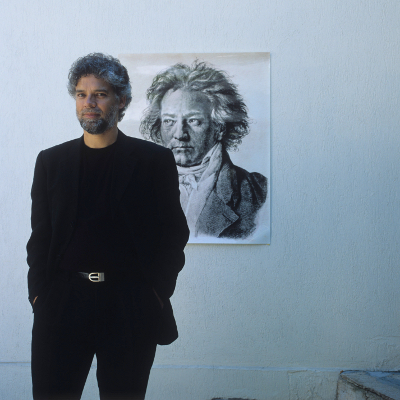
(photo credit: Benjamin Ealovega 2013)

Who or what inspired you to take up the piano and make it your career? 

I don’t remember the inspiration per se; just remember that I liked it from the beginning!

Who or what were the most important influences on your musical life and career? 

Leaving Japan at the age of 18 and coming to the UK.  For a long time I was undecided about whether to stay in Japan to study or to emigrate to see the “wider” world.  I feel the choice I made was the right one and I’m still here.

What have been the greatest challenges of your career so far? 

It often feels like extra work, having to learn pieces that are really hard and that I know I won’t play again for a while, if ever.  Then again, I do this all the time, as I love the so-called rarities so I can’t exactly complain…

On a slightly different note, I had a period when I seriously considered a career-change in the middle of my undergraduate studies.  My confidence level was at a record low then. In the end I came through to the other side and I am glad I didn’t change career only to escape the negative feelings I suffered from.

Which performance/recordings are you most proud of? 

For my latest Haydn disc from Artalinna, I intentionally chose his middle-period sonatas for harpsichord and fortepiano and recorded on a huge Steinway. I think it worked out pretty well.  I’ve been in love with these sonatas ever since I found out about them when I was a teenager and there’s a talk of doing Vol.2.  Please help us to make this happen!

The two great piano concerti (Catoire and Sherwood) I recorded with the RNSO for Dutton back in 2011 are both world-première recordings and I am rather proud of it too.

Which particular works do you think you play best? 

Beethoven: Piano Sonata Op.111

Boulez: 12 Notations

Chopin: Sonata No.3 Op.58

Elgar: Enigma Variations

Grieg: Ballade in G minor

Medtner Sonata minacciosa Op.53 No.2

Parry: “Hands Across the Centuries” Suite

Schumann: Concerto

How do you make your repertoire choices from season to season? 

I love exploring the lesser-known repertoire, both new and old, so if it is appropriate, I like putting together a whole programme with my recent discoveries.  That’s why I love playing in places like the Husum “Rarities of Piano Music” Festival in Germany.  At other times, I tend to recycle my old mainstream pieces as the framework of a programme and insert a few curios.

I am becoming more and more aware that I don’t have forever to learn everything I love, so I try to digest a few pieces from my “Learn by 40” list every season.

Do you have a favourite concert venue to perform in and why? 

Not in particular.

Favourite pieces to perform? Listen to?

I keep finding new favourite pieces.  My pattern is that I obsess over a piece for a while then move onto another obsession.  I remember my first real obsession was Ravel’s La Valse: I would listen to it numerous times day after day when I was 13.  Most recently, I’ve just graduated from Poulenc’s Dialogues des carmélites.

When I want to relax, I might listen to Nancarrow’s player-piano studies: they never fail to make me have a good laugh. Songs by Miyuki Nakajima are also on the list.  She is a singer/songwriter who has an iconic status in Japan.

Who are your favourite musicians? 

In no particular order and just off the top of my head – I’m bound to be missing many more.

Nelson Freire

Roger Muraro

Krystian Zimerman

Oleg Boshnyakovich

Rudolf Serkin

Wilhelm Furtwängler

Glenn Gould

Pierre Boulez

What is your most memorable concert experience? 

This is more to do with the state of mind I would love to be in before each performance: I was preparing to go on stage in Salzburg. My mental conditioning was as best as I could imagine. I was not nervous but felt calm yet so sharp, I could feel I was going to play really well.  Then I went to the bathroom.  The lock in the cubicle was a kind which I was not used to.  And because I was so concentrated on my imminent performance, I couldn’t work out how to open the door and panicked thinking I got locked in.

What do you consider to be the most important ideas and concepts to impart to aspiring musicians? 

I mostly find musicians who have serious non-musical interests inherently more interesting, not only as people but also as musicians.

What are you working on at the moment? 

I’m always trying to raise funds for the next recording projects, which I have so many!  Also just starting to push my new CD of Haydn CD mentioned above.

To coincide with this release, I will be presenting a programme including two of the Haydn sonatas, Nancarrow & Prokofiev in a new festival in Paris Festival Piano-Oxygene on 3 October 2014.


Where would you like to be in 10 years’ time? 

In a South American jungle looking for butterflies and orchids.

What is your idea of perfect happiness? 

I had a great cigar lesson with the great Cuban pianist Jorge Luis Prats recently (with his custom-made Havanas).  As a master of that art like him, one might get close, or at least I was made aware that that was the objective of the cigar culture.  For this knowledge, I thank you, Jorge!  My whole body stank of cigars for the next two days though.

What is your most treasured possession?
 

If music-related, it would be the first edition copy of Medtner’s book Muza i Moda (The Muse and the Fashion) signed by the composer.

Heralded by The Times as “just the sort of champion the newest of new music needs”, while being praised as “impeccable in his pianism and unfailing in his idiomatic grasp” by Gramophone, Takenouchi’s curiosity and a natural penchant for integrity makes his playing and vast repertoire unique amongst his generation of pianists: his love for the music of classical masters – particularly Haydn, Beethoven and Chopin – sits side by side with his passion for the music of Medtner and Rachmaninov, lesser-known British composers such as Sterndale Bennett and Parry, and the contemporary repertoire.

As a soloist, he has recently appeared on many concert platforms including the Wigmore Hall, Tokyo Opera City, the South Bank Centre.  He has also performed at festivals in Bath, Cheltenham and Salzburg and given recitals in the UK, Japan, Austria, Germany, Switzerland, Portugal, Italy and Canada.  His future engagements will take him even further to the Far East, including performances in Singapore and Vietnam.  His more unusual recent appearances include the Rarities of Piano Repertoire Festival in Husum (Germany) and the BBC Four documentary The Prince and the Composer on the life and music of Parry alongside HRH The Prince of Wales. Takenouchi’s discography includes Cosmos Haptic: Contemporary Piano Music from Japan (LORELT) as well as the world première recordings of works by James Dillon (NMC), Edwin Roxburgh (NMC) and Jeremy Dale Roberts (LORELT).  2012 saw two further releases: two piano arrangements of Delius’s orchestral works (SOMM with Simon Callaghan), and a highly acclaimed disc of piano concertos by Catoire and Sherwood (another world première recording) with the Royal Scottish National Orchestra (Dutton Epoch).

Since 2012 Takenouchi has been teaching piano at the Royal Conservatoire of Scotland (Glasgow).  He also returns every summer to give masterclasses at the Poros International Piano Academy (Greece) and Ingenium International Music Academy (UK).


Website:

http://hiroakitakenouchi.com

Facebook page

https://www.facebook.com/takenouchipianist

Twitter

https://twitter.com/giroaqui


I was delighted to be invited to contribute to a very interesting and stimulating discussion on the subject of professionalism in piano teaching at the The Oxford Piano Group  on 29th October 2014. Other contributors to this important debate were Nigel Scaife (Syllabus Director, ABRSM), Lucinda Mackworth-Young and Sharon Mark-Teggart (Evoco) who each gave presentations which explored the many facets of professionalism, including proper accreditation, good business practice, membership of professional bodies and minimum standards of qualifications for piano teachers. After the presentations, there was a round table discussion about professionalism, which touched on other important aspects, including the setting of fees.

My own presentation was based on my personal views on this subject, discussions with friends and colleagues in the profession, and the results of my recent survey Perceptions of Independent Piano Teachers.  The slides which I used as a starting point for my presentation and discussion are below, and you can read the text on which I based my presentation here: OPG presentation (click to download the PDF file)


This slideshow requires JavaScript.


Who or what inspired you to take up the violin and make it your career?

My father is a violinist and my mother a cellist. As a small child I used to play on a spare violin as if it was a cello. When I was eight my father gave me my first five-minute lesson on how to play the violin ‘the right way round’. I liked it so much better and knew that I had to learn this instrument so I could play just like him! In the end, the inspiration to make violin playing my career came from my experience in the National Youth Orchestra. The feeling of being in the middle of such an extraordinary sound was one that I wanted to be a permanent part of my life.

Who or what were the most important influences on your musical life and career?

My violin teachers have all been hugely influential on my outlook. My childhood teachers Joan Penrose and Susan Collier taught me how to love my playing and how to practise effectively and efficiently, as well as giving me a really solid technical start. I always hear the voices of my two music college teachers (Yossi Zivoni and Richard Deakin) in my head while I practise and feel immense gratitude towards them for their great wisdom and encouragement. My parents’ continual love of music and performing for others is a constant inspiration.

What have been the greatest challenges of your career so far?

The greatest challenge was overcoming a long period of performance anxiety. This is something that many performers shy away from talking about, which is a shame. I think we could all help one another if we talk about it more. A few years on, I feel a much stronger and more resilient musician as a result of the experience.

More recently, I performed in Aurora Orchestra’s Prom. We played a Mozart symphony from memory. It was at once completely terrifying and exhilarating.

Which performance/recordings are you most proud of?

Ensemble Matisse gave its Southbank Centre debut in January performing Triada by Christobal Halffter. I doubt I will ever come across a piece of chamber music so techinically challenging. We rehearsed the piece for more that forty five hours! The performance, in the presence of the composer himself, went brilliantly. We all had an enormous sense of pride and satisfaction!

How do you make your repertoire choices from season to season?

I choose repertoire based on two things: what does the concert promoter/ music society want? Which pieces am I longing to play? Then I also try very hard to programme creatively and intelligently so that there is a sense of balance, continuity and variety in every concert. Whenever possible, I try to stretch myself technically and step outside of my comfort zones.

Do you have a favourite concert venue to perform in and why?

I absolutely love playing at the Albert Hall. I think this is mainly because I have many wonderful memories of going to listen to BBC Proms there as a teenager and longing to be on stage. Now that I am often given the opportunity to perform there, I feel so lucky! There is no feeling quite like a standing ovation at a packed Albert Hall.

For chamber music I really enjoy playing house concerts. It can be great to be so close to the audience as you get very direct feedback while you are playing. Large concert halls can feel really impersonal sometimes.

Favourite pieces to perform? Listen to?

Both to perform and listen to: Beethoven’s Violin Concerto. I don’t think I could ever get bored of it.

Who are your favourite musicians?

Leonid Kavakos, Janine Jansen, Ella Fitzgerald, Roby Lakatos…

What is your most memorable concert experience?

Well – I’m afraid this one is memorable for all the wrong reasons and mainly because it was completely ridiculous…

I once accidentally got involved with a performance at an experimental art exhibition. We ended up having to perform one of Brahms’s sublime string quartets a with our wrists all chained to one another’s. It was impossible and impossibly funny. Sorry Brahms.

What do you consider to be the most important ideas and concepts to impart to aspiring musicians?

Some things I wish I had discovered/ realised sooner:

  1. Performing should be about your audience’s enjoyment. Getting too sidetracked by minutiae could be at the expense of them having a good time. Get your priorities in order!
  2. The most important things your teacher will teach you are the things you didn’t even know were a problem. Your teacher should be teaching you to practise. A ‘good’ lesson is not necessarily a lesson where you play well.
  3. Practise is an art. Be proud of being an amazing practiser. I love practising. I wish I had more time for it.

What are you working on at the moment?

I am preparing to give five world premieres written for my group Ensemble Matisse at the New Dots autumn event “Interference Patterns” at Kings Place on the 3rd of November. We will play four works composed in collaboration with film makers by Lisa Illean, Daniel Kidane, Ewan Campbell and Liam Taylor West. We will also give the first performance of ‘Degrees of Freedom’ by renowned Dutch composer Jan Vriend.

What is your most treasured possession?

The most treasured object in my life is definitely my violin, but this does not feel like a possession- rather more that I am its caretaker for a while. Apart from that I think my most treasured possession is my good health.


Violinist Francesca Barritt recently graduated with destinction as a Master of Arts from the Royal Academy of Music in London where she studied with Richard Deakin and was previously a pupil of Yossi Zivoni at the Royal College of Music. Francesca was chosen to lead the symphony orchestras at both the RCM and the RAM. She has held the position of principal 2nd violinist in the prestigious Sainsbury Royal Academy Soloists ensemble for the entirety of her time at the Academy and has appeared with the group at Wigmore Hall and Seoul Arts Centre, South Korea.

She has been the recipient of awards from The Stephen Bell Charitable Trust, Arts and Humanities Research Council and has been awarded the Ian Anderson, Leverhulme Orchestral Mentorship and Marjory Bunty Lempford awards by the Academy. Francesca recently participated in a masterclass with Maxim Vengerov.

Francesca has given chamber and duo performances in venues such as the Purcell Room, St. James’s Piccadilly and the Kings Place, Bath, Norfolk and Norwich and Lake District Summer Music festivals. She is also much in demand to perform with established chamber groups and has recently collaborated with section leaders of the ECO, Halle, LPO and past members of both the Allegri and Lindsay string quartets. In 2011, Francesca performed 1000 bars by Kevin Volans as part of a BBC Proms composer portrait, which was broadcast on Radio3. More recently her performance of Hugh Wood’s Horn Trio at the Bath Festival was broadcast on Radio3.

As a freelance orchestral musician, Francesca is gaining much experience through extra work with orchestras such as the Philharmonia, English Touring Opera and Opera North and her regular work with the much-acclaimed John Wilson Orchestra has included performances at the BBC Proms, various tours of Britain and several recordings for EMI.

Francesca’s recent concerto engagements have included performances of Sibelius and Brahms concertos and a series of five performances of Beethoven’s triple concerto. This season she will perform Beethoven’s violin concerto with the Stamford Chamber Orchestra.

Francesca is a member of Ensemble Matisse.

Meet the Artist……Rozenn le Trionnaire

Ensemble Matisse


What is your first memory of the piano?

My parents moved from Hammersmith to Surrey when I was 3 years old, and the house they bought came with an old grand piano that was left behind! I remember being fascinated by the keyboard and what went on behind the lid. I had my first lesson when I was 5, and remember my response to my father asking me if I wanted lessons being “yes, but will I have to practise?” The rest is history.

Who or what inspired you to start teaching?

I studied with Judith Burton for a decade until I went to the Royal Northern College of Music in 2000. She was so dedicated, and her devotion to every one of her students filled me with admiration. She has certainly been my biggest influence with regards to teaching; I always used to think, “if I can spend my time doing what Judith does, I’ll be happy.”

My path hasn’t always been that clear. I struggled with my relationship to music in my later years at music college, and despite achieving an MMus degree, I left feeling convinced that I would convert to law! After speaking to many people about it, the woman who helped me to see the wood for the trees was my piano teacher at the time, Carole Presland, who said, “if you say you love to work with people, what more privileged position can you be in, than to teach students on a one-to-one basis, where you really get the chance to make a difference?”. That was enough to help me back onto my path and I’ve never looked back.

Who were your most memorable/significant teachers?

They are all memorable and significant!

Judith Burton I have already mentioned. We are still good friends, and she was my biggest influence and guide when I was young.

At the RNCM, I studied with Kathryn Stott for 2 years, then Carole Presland for 3 years.

After graduating, two teachers have really helped me in different ways:

Vera Müllerová is a Czech teacher and concert pianist who I met while teaching on a Summer residential course. She showed me some finger exercises that, in one session, solved technical problems I’d been having with trilling in 3rds for years! I now visit her in Plzen once or twice a year to take lessons.

On the same summer course, I met a jazz teacher, who persuaded me to join his student trio for 15 minutes one evening to learn a blues. I had never played by ear and was terrified! In 5 minutes, he had me playing “Sunny Moon for Two”, improvising round it, and taking solos with the band. I was elated, and it felt like the first time I’d really had fun while playing the piano. His name is Paul Cavaciuti, and he is now my husband!

Who or what are the most important influences on your teaching?

This is a difficult question to answer!

My own state of mind is my biggest influence on my teaching. As a professional musician, it is easy for our music-making to become something we MUST do, and this can become tiresome. Also, finding a good balance between teaching and playing is not easy and needs constant adjustment. I put a lot of time and energy into maintaining my own love of music, feeling inspired, and ensuring that what I pass on to my students, predominantly, is a love of music and playing the piano. My husband is wonderful and helps me a lot with this. His expertise is in helping people rediscover their love of music and also helping with stage fright. I’m so lucky to have him available to me 24/7!

Other influences, among my own teachers, are Horowitz, Dr. John Diamond (an educator in the US who has created his own system which involves using the arts therapeutically), and our record collection. We have thousands of LPs, most of which are jazz and classical, and every time I listen to one, I’m immediately drawn to the piano to play, or come up with ideas for my students! I’m sure it has something to do with the analogue sound production. I never feel the same when listening to digital.

Most memorable/significant teaching experiences?

Every teaching experience is significant, and sometimes we have to trust that what we show our students now, may not sink in until much later on in life. My most rewarding experiences are when I take on a student who has been traumatised by the grade exams, or is about to quit, and within weeks they have found a new approach to playing, and realised that they do, in fact, love music after all. It brings me such joy!

What are the most exciting/challenging aspects of teaching adults?

One of the most challenging aspects is that many adults have pre-conceived ideas of things, so often they want a detailed explanation of why I’m asking them to do something, rather than just rolling with it and seeing where it takes them. I don’t see it as a negative – it’s natural that adults want to understand first and experience afterwards – however it’s not always the best way to learn.

The most exciting thing is seeing adults enjoying themselves through music, and doing something meaningful with their time. In today’s society, many parents offer the opportunity to learn music to their children, but secretly long to play or sing for themselves. I feel so excited when a parent comes to me and says, “can I have a lesson?” Being an adult brings with it so many responsibilities of the “must” kind. It’s great therapy to commit to something (especially something creative) for the love of it. If I can assist with that, I am delighted to.

What do you expect from your students?

Application. That’s it.

I’m not concerned with achievement or standards. Nor do I mind if their attitude isn’t positive for a while. We all have our struggles, and if I can find a way to use music to help them through troubled times, then my work is done.

What are your views on exams, festivals and competitions?

Firstly, the term festival is misused. A festival is a celebration of something, and we use the term to describe competitions. Lose the competitive element, (but keep the constructive, positive adjudications) and I think they would be fantastic occasions!

I think exams and competitions are a disaster. I won’t blither on for too long about this (that’s for a future blog!), but developed societies are obsessed with assessment and quantifying ability. This has absolutely no place in the arts, especially in music, and the rise of grade exams and competitions has contributed to:

  • an increase in competitiveness among musicians and parents, (e.g. children in the playground saying “what grade are you on” instead of “fancy a play sometime?”)
  • an increase in performance anxiety and even stage fright.
  • a focus on skill acquisition without a true understanding of music being a language, and to the detriment of having something to say through playing or singing.
  • in the words of Horowitz, “standardisation”. Everything is now the same, instead of people playing as individuals. The idea of playing correctly and incorrectly shouldn’t be at the forefront of a musician’s mind, and it is only with note-reading that it’s an issue at all.
  • a feeling of self-worth being attributed to achievement. Musicians who receive distinctions in exams are often the ones who won’t play in restaurants, at parties or among friends. I think that’s tragic.

I could go on, but I should probably stop there. As a teacher, I want to spend my time convincing people that learning music for the sake of the music, and bringing people together, is enough. Benchmarks are not necessary to become a great musician!

What do you consider to be the most important concepts to impart to beginning students, and to advanced students?

To both beginner and advanced students, to love playing music. Another important concept is to realise is that the music comes from the person, not the instrument. The instrument is there to help release the music (though some instruments are more of a hindrance!)

What are your thoughts on the link between performance and teaching?

I think they are very complimentary; however I think the importance of their connection differs depending on whether the musician has been professionally trained or not.

A musician who has trained to perform professionally, should perform. There are too many teachers who have stopped playing in public, and project bitterness and envy onto their students. This is the most destructive thing a teacher can do, therefore maintaining a balance, in my eyes, is essential. (I’m not suggesting we should all be playing at Wigmore, but some kind of performance is important – like nourishment!)

The advantage of having performed is the advice that can be imparted from the experience of having done so. Performing does feel quite different to playing to the four walls and the dog.

An amateur musician who teaches because they love to teach, but has never really performed, or had the opportunity to perform publicly, is unlikely to pass any such negativity onto their students. Their relationship to music is probably quite different and unaffected by the rigours and strains of the profession. For this reason, it isn’t important that they perform.

How do you approach the issue of performance anxiety/tension?

I’ve been through the mill with performing-techniques. Been there, done that, bought the T-shirt. The one thing that has helped me more than anything, and that I do to this day, is sing along internally while I play. I do lots of singing aloud at home (and ask all my students to do the same), then on stage, whatever state I’m in, singing under my breath grounds me, helps me to concentrate without thinking too much, and regulates my breathing perfectly – consequently releasing tension. The ceiling could fall in or Jack Bauer could walk past, and I’d stay focused. It really is the best thing, and I learnt it from my husband!

Who are your favourite pianists/pianist-teachers and why?

My favourite classical pianist has to be Horowitz. Every time I listen to him or watch him on Youtube, I sit at the piano for ages afterwards. He’s so inspiring.

For years, my idol was Alfred Brendel. He has an incredible mind, and a wicked sense of humour. He’s a real artist – I’ve been to many of his concerts, and he played differently every time. On a bad day he was great, on a good day, he was sublime. (I went to his final retiring concert at the RFH, and shed tears on and off all the way home!)

In the jazz world, I adore Art Hodes. He was playing in the US in the 30s and 40s, and had the most incredible groove. The amazing thing about him is that his music is often in the spaces between the sounds. He isn’t flashy or a show-off, but boy does he make you want to tap your foot!

Lastly, (I suppose this counts as he was a pianist and a teacher), it has to be Beethoven. Whoever composes music and says, “Music is the mediator between the life of the senses and the life of the spirit” knows his purpose as a musician, and to elevate others to something higher, is a wonderful purpose.

Nadine’s biography

Nadine André’s website

For the Love of Playing – Nadine’s blog

Nadine on Facebook

Follow Nadine on Twitter

Nadine’s contemporary trio, Trifarious

And on Facebook and Twitter

Classical Babies