A portal into the classical music profession, Musical Orbit allows you to learn from the very best musicians in the business through personal lessons, masterclasses and webinars online. From anywhere in the world, you can connect with leading musicians from the finest orchestras across the globe to receive artistic appraisal and tailored, professional analysis of your playing. Also an online hub for the classical music world, Musical Orbit keeps you in the loop with news stories, tips from the top professionals and ticket offers for concerts.

Founder Nicole Wilson says:

“I had such fantastic opportunities when I was growing up as well as throughout and beyond my studies at Royal Academy of Music. With programmes like the Philharmonia String Scheme, I was able to get my foot in the door of the music profession and to build relationships with those who would be my future colleagues in orchestras. I was able to get some really great advice and learn about the business.

There are such limited places on these schemes and they really do enable people to get ahead in the industry. I have been approached by countless violinists asking me to hear them play, to give them advice on playing their audition/exam programmes and to desperately try to get a foot in that firmly shut door. It is a ‘catch 22’ situation for many of them as they leave music college. They have a tiny CV so they aren’t considered for job auditions, so they cannot grow their CV. I feel for them. This is why I created Musical Orbit.”

Nicole adds:

“……we are in talks with schools in the Middle East, Far East and Africa about setting up regular lessons and masterclasses and also talking with summer music Festivals in Miami and Reykjavik about masterclasses there as well”

Already Musical Orbit is enjoying a global reach, enabling people to connect and study with some of the top musicians in the world.

Sign up to Musical Orbit is completely free, and once you’re a member you can access free webinars and masterclasses, and also book a lesson with the best musicians in the business.

www.musicalorbit.com

Musical Orbit was founded by principal violinist Nicole Wilson. After a career spanning 20 years in London, as a first violinist of the London Symphony Orchestra, a principal violinist of English National Opera, a film/tv session orchestra fixer and CD producer, Nicole has enjoyed working with nearly all the major UK orchestras and has built friendships with many principal players across the nation and throughout the world. 

Having come across many music students who needed help preparing for auditions, concerts and exams, she realised the difficult situation many of those people were in. Unable to speak to and learn from the right people, build up their CVs and ultimately get to play for the jobs they were interested in, these students were in a no-mans land. 

Nicole has used her extensive connections in the classical music business to bring together these students and the movers and shakers in the classical music world, regardless of work schedules and distance so that anyone can learn from these world class musicians. 

Nicole will feature in a future ‘Meet the Artist’ interview
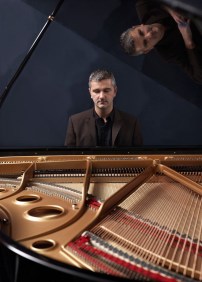
I was expecting to hear a friend of mine, Charles Tebbs, perform Bach’s ‘Goldberg Variations’ at the delightful Sutton House Music Society on Sunday evening, but sadly Charles was unwell. A frantic call for a replacement went out on Facebook, which I happened to see and respond to. I am not suggesting for one moment that I “saved” the concert, but serendipitously, Daniel Grimwood whom I suggested as a replacement, was available and stood in at very short notice to perform an all-Bach programme. It is a mark of Daniel’s professionalism that he betrayed not an ounce of unpreparedness. He introduced the programme engagingly, highlighting various aspects of the music and describing the first half of the programme (Bach’s Italian Concerto and the fifth French Suite in G) as being “the jolly music”.
The Italian Concerto was indeed jolly, with precise yet sprightly passagework, crisp articulation and nuanced voicing. Daniel also plays the harpsichord and this is evident in his sensitive touch and terraced dynamics. The middle movement had a sombre grandeur, with an elegantly-turned improvisatory melodic line floating atop the bass. The closing movement poured forth like an exuberant mountain stream, rich in orchestral textures and vibrant contrasts.

More of the same in the Fifth French Suite, whose Sarabande shares the same soundworld as the Aria from the Goldberg Variations, and which Daniel played with grace and delicacy. Other notable features were the most charming and spontaneous ornaments in the repeated sections of the movements. The closing Gigue had the necessary forward propulsion, a dancing column of energy running through the entire movement.

After the interval, the Sixth Partita in sombre E minor. This, as Daniel explained, is Bach’s nearest equivalent for the keyboard to the St John Passion or the B-minor Mass, and is a work of great seriousness, mystery and profound musical thought. The opening Toccata begins with a dramatic “rocket” figure, a rising arpeggio flourish which colours the first section before the music moves into a darkly dramatic four-part fugue. All the movements display vocal textures, particularly the closing Gigue, whose rhythmic anomalies Daniel demonstrated in his introduction. This was an authoritative, thoughtful and vibrant performance, providing a wonderful contrast to the more positive music of the first half.

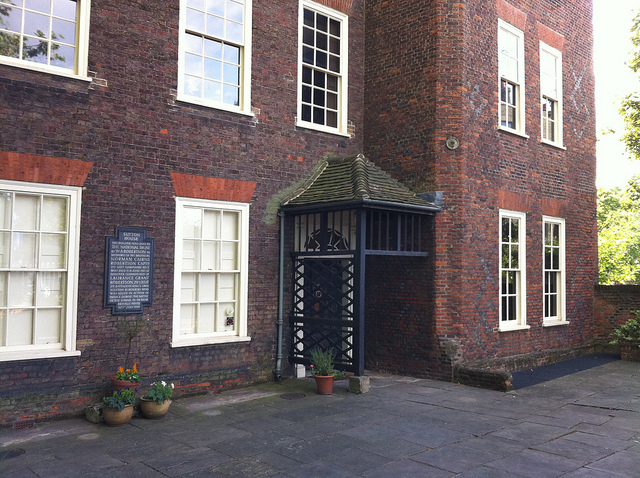
Sutton House Music Society is based at Sutton House in Hackney, east London, which is owned by the National Trust. Built in 1535, the house holds a fascinating juxtaposition of oak-panelled Tudor rooms, Jacobean wall paintings and Georgian and Victorian interiors, and audience members can enjoy a tour of the houseahead of a concert. The music society attracts both established and up-and-coming artists, performing a wide variety of repertoire, and the 2014/15 season concludes with a concert by the Roskell Piano Trio in music by Mozart, Shostakovich and Schumann. Concerts take place in Wenlock Barn, an early 20th-century addition which was built specially for events such as concerts.

Further information about the concert and the Society here

Meet the Artist……Daniel Grimwood

A guest post by Bernard Kerres, founder/CEO of HelloStage


The world has changed significantly over the last twenty years. The development of the internet and its almost virus-like spread into all corners of the world as well as our lives has an impact on society not yet fully understood. Who will need a musician in tomorrow’s world when you can chose between the holograms of Arthur Rubinstein, Vladimir Horowitz, Glenn Gould or Friedrich Gulda playing for you in your home “live” – or at any concert stage for that matter? Why waste time on music education when a robot can play flawlessly and adapt to the style of your preferred pianist?


We are not quite there yet. But we can be sure that the scenarios described above are technically entirely possible in the not-too-distant future. The only thing that will take longer is for a robot to develop its own interpretation. I doubt that it will ever be possible for robots develop emotions – at least not in the near or medium term future.


Nevertheless, the scenarios mean that the reproduction of music, including classical music, will enter completely new realms never even thought of. This is actually good news. This means that more music will be consumed and music will become an even bigger part of every day life. 


But what happens to live music? My view is that the more people who are listening to music anywhere the more will also listen to live music. There a lots of examples in human behaviour where individuals get more into a subject the more they are in contact with the subject matter.


Often classical music makes it very difficult for new audiences to attend. There is a whole unwritten code about behaviour in a concert – from how to dress to when to clap. This is a huge entry barrier for new music lovers. Many people have developed a taste for classical music, have listened to it on the radio or in recordings, but they still shy away from going to the opera or to a concert.


So technology gives us these amazing opportunities but we, the classical music community, build up barriers against really utilizing these opportunities.


Nevertheless, technology also allows us in the classical music community to communicate and collaborate with each other in completely new ways. The author and readers of this blog have developed a great interest in news and thoughts around the piano. We at HELLO STAGE are providing tools for those in the classical community to engage with each other.


From experience I know that people in the music world are generally very self-focused. They have to be. They have to really believe  in their music, in their concerts and in their performances. But if we all change just a tiny little bit, using some of the technology available to us, to write, speak, blog, tweet etc. about classical music in general, we could create an amazing network effect.


I personally have the great advantage of seeing one of the most amazing network effects at work. I have relocated to Silicon Valley in California at least for four months, if not longer. Within days of arriving, I saw an amazing network driven by the belief in technology and a passion for entrepreneurship. Everyone here speaks about the latest app they have seen, a cool start-up they came across, or an inspiring team. Only after several questions, they might actually also speak about their own start-up or investments. 


At HELLO STAGE we initiated the hashtag #classicalbuzz. The idea behind it is simple. As a first step each one of us shares one comment about a performance we have just heard or a recording which has inspired us with the hashtag #classicalbuzz. Second, we all share at least one post with #classicalbuzz. Can you imagine the fast spread of #classicalbuzz and therefore classical music in the world? It is an easy step that we all can easily join in with. It can be the beginning of a classical music revolution. 


Let us create a #classicalbuzz together, perhaps also a #pianobuzz driven by our love for classical music. I am looking forward to sharing your posts and tweets with these hashtags. I am greatly looking forward to reading more and more ideas about how people around the world lower the barriers of entry into our concert halls and opera houses and make them welcoming for so many new music lovers out there. Thanks for being part of that.

Bernhard Kerres is the founder and CEO of HELLO STAGE – an innovative independent online platform for the classical music community, connecting musicians, ensembles, managers, and promoters in the classical music world.

Bernhard started his career as an opera singer, before graduating with an MBA from London Business School. After five years in strategy consulting for Booz & Co. in the high technology, internet and telecom sectors, he subsequently became CEO, CFO, and COO of various technology companies in Europe. From 2007 to 2013, he was the CEO and Artistic Director of the Wiener Konzerthaus, one of the most active concert houses in the world, with over 800 events and over half a million visitors per season.

Read more about Bernard here

Who or what inspired you to take up the piano and pursue a career in music?

It was a combination of different influences.  At around the age of 13 I was introduced to Glenn Gould’s recording of the Goldberg variations (the 1955 recording). I was fixated with it, and for many months I listened to nothing but Bach! I suppose my passion and energy for music arose from then.

Who or what were the most important influences on your musical life and career? 

There are too many to count! Tom Waits, The ‘Heiliger Dankegesang’ movement from Beethoven String quartet op 132, Mahler’s 6th Symphony, Oscar Peterson, Strauss’s Metamorphosen, Schubert songs. The list is always growing….

What have been the greatest challenges of your career so far? 

Performing Stockhausen’s ‘Mantra’ with my piano duo (the Francoise-Green duo) was especially memorable. It was 70mins of extremely difficult piano music, as well as playing crotales, a wood block, ring modulators and a radio! But generally, I don’t look back, I am always looking forward to the next challenge.

Which performance/recordings are you most proud of?  

I am proud of my latest CD ‘Dialog mit Mozart’, with the Austrian violinist Daniel Auner. We recorded 3 Mozart violin sonatas on the Gramola label. We approached the project by studying the original manuscripts, and discussing in detail how Mozart should be played naturally and instinctively.

Which particular works do you think you perform best? 

I have always insisted on performing lots of different repertoire. There is so much great music, that it is a crime not to try it all in a life time. This month I have performed works by Strauss, Schubert, Mozart, Stravinsky, Saints-Saens and Steve Reich, so my musical life is always extremely varied. I have a huge passion for chamber music from the Classical era and try to perform this as often as possible. I am very happy that I will be performing the Beethoven Cello Sonatas this season with my good friend Christian Elliott, the cellist of the Zehetmair quartet.

How do you make your repertoire choices from season to season? 

This very much depends on which concerts/festivals I am invited to, and who I will collaborate with. This coming season, I will perform a number of concertos for the first time, including the Mendelssohn Double concerto in Japan.

Do you have a favourite concert venue to perform in and why?

Performing at Wigmore Hall is very special. It has an astonishing Steinway piano, and a magical acoustic. I was also very excited to play in Berlin recently at the Piano Salon Christophori. There is a concert series in a working piano factory, where the owner has over 120 pianos! It is a magical atmosphere and a very attentive audience. There were over 250 people, and half the audience was under 40. A good sign for 2015.

Favourite pieces to perform?

Whichever piece I am about to play.

Who are your favourite musicians?

Whoever I am about to play with.

What is your most memorable concert experience?

I once played at the BBC Proms with the European Union Youth Orchestra on the organ! We played ‘Tarus Bulba’ by Janacek, which includes very exposed solos. That was my first time playing an organ, so it was quite an overwhelming experience! Perhaps I can officially retire as an organist now I have played at the Royal Albert Hall.

What do you consider to be the most important ideas and concepts to impart to aspiring musicians? 

Never stop learning, never stop working and never stop dreaming. When the cellist Casals (then age 93) was asked why he continued to practice the cello three hours a day, he replied, “I’m beginning to notice some improvement.”

Where would you like to be in 10 years’ time?

Doing exactly what I am doing now.

‘A light touch and an engaging tone’ (The Strad magazine), Robin Green enjoys a busy career as a soloist, chamber musician, conductor and ensemble pianist.

Robin’s first CD, ‘Dialog mit Mozart’ with the Austrian violinist Daniel Auner, released on the Gramola label, was ‘Editors choice’ in the December 2014 issue of the Strad Magazine.

Robin has performed recitals in many of the world’s most important concert venues including the Wigmore Hall and the Vienna Musikverein. His festival appearances have included the Festspiele Mecklenburg-Vorpommern, the ‘Interlaken Classics Festival’, Davos Young Artists Festival, the International Musicians Seminar ‘Open Chamber’ Festival at Prussia Cove, the Pharos Trust, Festival de Radio France et Montpellier and Le Jardin Musicaux Festival.

As a concerto soloist, Robin directed a performance of Poulenc´s ‘Aubade’ from the piano with the European Union Youth Orchestra. Other concerto highlights include the Martinu Double Concerto with Sinfonia Cymru and Camerata Nordica at the Small Nations Big Sounds festival.

Together with the pianist Antoine Françoise, Robin is part of the Françoise-Green piano duo. The duo are the first prize winners of the Royal Overseas League Chamber music competition, and the Concours Nicati in Switzerland. In 2015, the duo were finalists of the YCAT competition at Wigmore Hall.

A passionate chamber musician, Robin has collaborated with Gordan Nikolitch, Michael Collins, Thomas Carroll, Rolf Hind, the Cavalieri String Quartet, members of the Zehetmair quartet, Llyr Williams, the Rambert Dance Company and the Mercury Quartet, where he is a guest conductor.

Former recipient of the Leverhulme Chamber music fellowship at the Royal College of Music, Robin is now a piano professor at the Royal Academy of Music Junior department. Supporting his studies at the Royal College of Music and the Mozarteum, Salzburg, Robin has participated in masterclasses with Vladimir Ashkenazy, Menahem Pressler, Ivry Gitlis, Ferenc Rados, Stephen Kovacevich, Dénes Várjon, Imre Rohmann, Peter Lang and Rainer Schmidt.

Robin is the former pianist of the European Union Youth Orchestra, having won the Chairman’s award. As an ensemble pianist, Robin has performed with Orchestre National de Radio France, Aurora Orchestra and Nouvel Ensemble Contemporain.


