

Who or what inspired you to take up conducting and pursue a career in music?
There were a number of “wow” moments that inspired me as a kid. I still remember the first time I heard an orchestra live (it was my local youth orchestra playing Shostakovich 5). I was only three, but that moment stuck with me and I started going to grown-up concerts very young, maybe five or six years old (worth noting given recent controversies about kids at concerts). There were other pieces, like the Shostakovich, that had a huge impact on me when I first encountered them- symphonies by Mahler, Beethoven and Bruckner for example.
My parents bought us a wonderful series of LPs called “The Stories of the Great Composers Told Through Their Music.” I must have played the Mozart, Bach and Beethoven records hundreds of times.
I was not a very motivated young pianist (it’s a pity nobody told the seven-year-old Ken about the link between keyboard proficiency and conducting), but I loved the cello, and when I started playing real repertoire in good orchestras, that was a major turning point. I still remember playing Schumann 2 for the first time in my high school orchestra, and when James Smith took over my youth orchestra that was an eye opener. I’d never played under a great conductor before. That was the first time I understood what an orchestra can be when everyone is giving their best.
Who or what were the most important influences on your musical life and career?
My teachers, chamber music coaches and mentors. My main cello teachers, Parry Karp (Pro Arte Quartet), Lee Fiser (LaSalle Quartet) and Fritz Magg (Berkshire Quartet) had a huge impact on me. Their teaching went way beyond cello playing, and taught me a lot about score study and chamber music. Henry Meyer (LaSalle Quartet) and Peter Oundjian (Tokyo Quartet) were very important chamber music mentors- my whole approach to conducting was shaped in significant ways by studying and performing the string quartet literature. Gerhard Samuel was incredibly generous with me when I was his conducting student in Cincinnati. Take one more step beyond the scope of the teachers I saw every week as a student, and the list of important mentors gets absurdly long, but they’re all important and inspiring.
What have been the greatest challenges of your career so far?
The hardest thing about being a conductor is that your time with the orchestra is always finite. I’m glad I can pick up a cello and play Bach without having to raise money, go to committee meetings, or set a rehearsal schedule. There’s so much great repertoire that one wants to learn (more than you could do justice to in three lifetimes), and so much that one could do in rehearsal, and yet the clock is always ticking. I’d love to be able to work with really great orchestral colleagues in the kind of detail we do in my string trio, but nobody wants to pay an orchestra to rehearse so it’s always a balancing act.
Which performances/recordings are you most proud of?
I’ll always remember conducting my first complete Mahler symphony (the Second) with the Oregon East Symphony. That was a huge undertaking for everyone involved- so many people worked very hard and the concert felt like a real spiritual coming together. The final concert with Orchestra of the Swan in our Gál/Schumann cycle was memorable and moving- the end of a fantastic journey through that repertoire, and they played out of their skins.
For me, one of the joys of playing in a chamber group is revisiting pieces over and over until we feel like we really own them. When Ensemble Epomeo play the Schnittke String Trio, it’s always an event for us, and it felt much the same whenever my string quartet used to play Bartók no. 2. When you’ve invested years in a piece with your colleagues, you know you have to savour every performance together.
As far as recordings– the Gál/Schumann discs have been special. Gál was a recent discovery I felt lucky be entrusted with, but I’d wanted to do the Schumann symphonies since I was a teenager. The recent Nimbus recording of Philip Sawyers’s Second Symphony, Cello Concerto and Concertante was also a labour of love. Introducing unknown music to a wider public is surely the most important thing a recording can do, and Philip’s music is wonderful and very important.
Which particular works do you think you play/conduct best?
I find a huge range of music both rewarding and challenging. I don’t believe in specialities, because everything not on the list of things you do particularly well then suffers. I’m an intense guy, and I suppose I’m most at home in music that uses that intensity constructively.
How do you make your repertoire choices from season to season?
It’s a balance of what I want to do (some works stay on my wish list for 15 years before I get a chance to programme them), what my colleagues and employers want me to do, and what we have to do to stay in business.
Do you have a favourite concert venue to perform in and why?
My friends from home will laugh because it’s not a great venue, but Mills Concert Hall in Madison, Wisconsin. It’s where I first heard an orchestra when I was tiny. I’ve given recitals, played in all kinds of cello sections, played concert concertos, chamber music, heard amazing performances by friends and teachers, conducted and taught. It’s where music was born for me as a kid.
Favourite pieces to perform? Listen to?
As a listener, I tend to cycle through obsessions. I might listen voraciously to late Shostakovich, Schumann piano works, Debussy and Ravel, or early Beethoven string quartets, for two or three weeks, then not touch it again for a couple of years.
Who are your favourite musicians?
I like musicians who combine a certain amount of serious mojo with craftsmanship and honesty. My favourite performers are the ones who can put across a distinctive point of view about the music they play. My favourite composers engage heart, head and guts.
What is your most memorable concert experience?
Hearing Shostakovich’s Seven Romances on Poems of Alexander Blok with the Dubinsky’s and Fritz Magg with soprano Gloria Davey at Indiana University when I was 18. I still don’t think I’ve recovered.
What do you consider to be the most important ideas and concepts to impart to aspiring musicians?
Cultivate a love of music that will sustain your efforts as an instrumentalist- too many young musicians are more interested in playing their instrument than in the music they play.
Rhythm is the foundation of music. Playing in time is hard, but you can only play with true freedom if you’re in total command of tempo, pulse, meter and time.
What is your idea of perfect happiness?
Camping with Suzanne and the kids (while knowing that I’ve got something nice in the diary when we get home)
Kenneth Woods conducts the English Symphony Orchestra at St John’s Smith Square on 24th April in a concert of music by Handel and W F Bach which explores the origins of Mozart’s Requiem. Further information and tickets here
Hailed by Gramophone as a “symphonic conductor of stature,” conductor, cellist, composer and author Kenneth Woods has worked with the National Symphony Orchestra (USA), Royal Philharmonic, Cincinnati Symphony, BBC National Orchestra of Wales, Budapest Festival Orchestra, Royal Northern Sinfonia and English Chamber Orchestra. He has also appeared on the stages of some of the world’s leading music festivals such as Aspen, Scotia and Lucerne. In 2013, he took up a new position as Artistic Director and Principal Conductor of the English Symphony Orchestra, succeeding Vernon Handley.
A View from the Podium – Kenneth Woods’ blog

 Musical Orbit was founded by principal violinist Nicole Wilson. After a career spanning 20 years in London, as a first violinist of the London Symphony Orchestra, a principal violinist of English National Opera, a film/tv session orchestra fixer and
 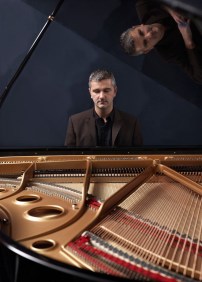 I was expecting to hear a friend of mine, Charles Tebbs, perform Bach’s ‘Goldberg Variations’ at the delightful Sutton House Music Society on Sunday evening, but sadly Charles was unwell. A frantic call for a replacement went out on Facebook, which I happened to see and respond to. I am not suggesting for one moment that I “saved” the concert, but serendipitously, Daniel Grimwood whom I suggested as a replacement, was available and stood in at very short notice to perform an all-Bach programme. It is a mark of Daniel’s professionalism that he betrayed not an ounce of unpreparedness. He introduced the programme engagingly, highlighting various aspects of the music and describing the first half of the programme (Bach’s Italian Concerto and the fifth French Suite in G) as being “the jolly music”.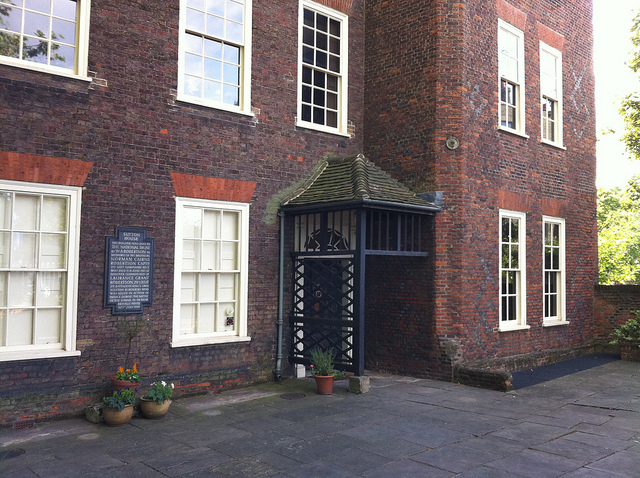





 The Cross-Eyed Pianist