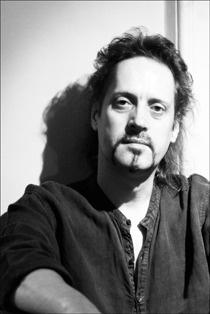
(Photograph by Marco Borggreve)


Who or what inspired you to take up the piano and make it your career?

My family owned a piano but no one was playing it. I was somehow intrigued by it and began to pick out all kinds of cheesy radio tunes and later tried to harmonize them. The piano is a very friendly instrument if you are 5 years old and eager to make a sound, much more so than the violin which makes you practically languish for months until anything more than a scratch is heard. But more than that, I particularly remember how gloriously rewarding it felt to be able to add my own crude chords to those tunes and to literally touch the magic that is melody and accompaniment.                                                                                                                          

Who or what were the most important influences on your musical life and career?

I was very lucky to have a rich musical education from a very early age and the opportunity to study not only piano but also composition and improvisation since I was about 9 had a big influence, I feel, on the way music seemed to me. I would like to think that it enabled me to look at music also through the eyes of the composer and not only from the angle of the performer.

But I was also emotionally affected a lot by the life stories of the great composers, particularly Mozart (Amadeus had just come out as a movie and I went to see it 3 times! At the part where they sing the finale of The Abduction from the Seraglio I completely forgot I was at the movies and started applauding vigorously – I can still remember all those heads turning back at me…) and Beethoven (a dog-eared copy of a book on the lives of composers included a heart-wrenching account of the miseries of his childhood which left me devastated).

Later on, it was mostly recordings that I listened to endlessly as well as a few unforgettable concerts I was lucky enough to be taken to, that made me feel that music was an inseparable part of who I am.

What have been the greatest challenges of your career so far?

The greatest challenge for any performer is to reach the feeling that he or she was able to bring across exactly what they see and feel in the piece and that the audience has been there with them in it throughout. The second greatest challenge is to persist in this quest without being distracted or discouraged by the more mundane aspects of the music business, which are inescapable in their own way.

Which performance/recordings are you most proud of? 

The performances that make me feel most satisfied are the ones where I felt as if (and I repeat, as if!) I was creating the piece as it goes along. Doesn’t happen too often, unfortunately but that’s the goal. As for recordings, I don’t really listen to my own recordings after they are finished because one’s views of pieces naturally changes with time and, of course, once a recording is done, it’s done…

Which particular works do you think you perform best?

I try to avoid seeing works I play this way, because the ones I feel closest to also tend to be ones you spend a lifetime with and never cease to study. But in recent years, I have gravitated towards Mozart, Beethoven and Schubert to a certain extent.

How do you make your repertoire choices from season to season?

I try to start with a main piece that I feel an uncontrollable urge to learn and then see what could go with it in a way that would either illuminate it in an interesting way or that would provide an intriguing contrast to it. I also try to keep a healthy mix of new and less new pieces, as much as possible.

Do you have a favourite concert venue to perform in and why?

There isn’t a single one, but of course there are some that immediately come to mind, with very special acoustics and atmosphere, such as Wigmore Hall in London, to pick a famous example. But also places like Sala di Notari in Perugia, Italy – which is not a full-time concert hall but is absolutely ravishing.

Favourite pieces to perform? Listen to?

I don’t get to listen to music nearly as much as I would like, but when I do I am always in the mood for one of the Mozart da Ponte operas, for example. But there are many others.

Who are your favourite musicians?

What is your most memorable concert experience?

As a child growing up in Israel, one of the concerts that really left a mark was a recital by Radu Lupu which felt like a transformative experience in real time. Another was the first time I heard the Brahms D Minor Piano Concerto. I actually don’t remember the circumstances at all, but I vividly recall the terrifying bang of the timpani and horns in the very beginning and the overall impression that the opening tutti made on me, as if I was being let into the darker realms of music for the very first time.

What do you consider to be the most important ideas and concepts to impart to aspiring musicians?

That what we think we are doing is often perceived very differently to outside listeners and that learning how to listen that way to yourself while you are playing is single most important thing any musician can ever strive to accomplish.

What are you working on at the moment?

More Schubert, as well as Haydn (one of the pieces is subtitled “It takes Eight to sterilize a Sow”…), some Mozart, some Ligeti…

www.shaiwosner.com

© Paul Body

On the centenary of the death of Russian composer Alexander Scriabin, American pianist Garrick Ohlsson concluded his two-concert “Skryabin Focus” at London’s Wigmore Hall with a recital of works which spanned the final two decades of Scriabin’s life.

It is hard to explain exactly what makes Scriabin’s music so compelling: far easier to explain why his music is not for everyone. It is the music of excess, ecstasy, tumult and passion. It is excessive, overripe, decadent, heavily perfumed, languorous and frenzied, lacking in structure and sometimes downright bizarre. The music of extremes, it is hyper everything, and as such it defies description or categorization. Its language is complex, often atonal and frequently almost impenetrable. For some listeners, and artists too, it is this “over-the-top-ness” that is off-putting; for others, myself and my concert companion included, it is this sense of excess and rapture that is so compelling. By his own admission, Garrick Ohlsson is a true Scriabin fan, the result of hearing Sviatoslav Richter perform the Seventh Piano Sonata. Ohlsson’s studies with a Russian teacher enabled him to regard Scriabin as “mainstream repertoire” and the composer’s music remains a mainstay of his repertoire.

Read my review here

Piano courses for adult amateur pianist are very popular now, in part thanks to Alan Rusbridger’s book Play It Again. (For many years, Alan was a regular at what he described as “piano camp” – Lot Music, based in the Lot-et-Garonne region of France.)

So what is the attraction of a piano course? I think most adult pianists would agree that in addition to the opportunity to study with some top-class teachers and international concert artists, the social aspect is very appealing. As pianists we spend a lot of time alone with only dead composers (mostly) and that box of wood and wires that is our instrument for company. Many of us like the solitude, but it is also important for us to connect with other pianists. A course is one of the best ways to meet other pianists, to hear one another play, share repertoire, receive expert tuition in a friendly and supportive atmosphere, indulge in piano chat, and have fun. I have formed firm, lasting friendships with people I have met on piano courses, and some of us return year after year because we gain so much from the experience. If you are preparing for an exam, diploma, competition or audition, a course is also a great way of receiving invaluable feedback from a skilled teacher and the other participants, and is an opportunity to run a programme by an informal and sympathetic audience ahead of the big day. Some courses aim to combine expert tuition with a “piano holiday” (partners are welcome too), and there is plenty of time to relax, explore the local area and food, or simply chill out by the pool in between masterclass sessions and tutor recitals. Other courses have a special focus on particular composers and/or repertoire, others on duo or chamber music, and most cater for pianists of all levels and ages.

Many courses are organised in a “masterclass” format – the “private lesson in public” – with group activities too. If you have never attended a piano course before, the masterclass experience can be daunting, and I know from my own experience that hearing other people play very well can be quite unnerving, especially if you lack confidence as a performer. However, most teachers go out of their way to be sympathetic and encouraging to novice or nervous students, and the masterclass can be one of the most rewarding and interesting ways of receiving tuition, for you gain not only the input of the teacher but also useful feedback from other pianists. This interaction can be particularly useful in helping you to evaluate how you practise and study, and watching others play and problem-solve at the piano, with the support of a teacher, can be enlightening and thought-provoking. For piano teachers, observing others being taught offers plenty of food for thought as one is exposed to new ideas and methods.

Another excellent benefit of piano courses is the chance to share and explore new repertoire. On every course I have attended I have discovered new music, from Cyril Scott’s sensual ‘Lotus Land’ to works by contemporary composers such as Stephen Montague and Peteris Vasks. I’ve even attended a course where one of the participants performed his own compositions, written for his young daughter and played with warmth and affection.

And then there is the opportunity to perform, which for many amateur pianists can be one of the most nerve-wracking things one will ever do, and also one of the most rewarding and inspiring. Performing to a group of people whom you have got to know over the course of a weekend or a week-long course allows you to perform in a ‘safe zone’, and can be less stressful than a more formal concert setting. The preparation, both musical and emotional, is the same, but it can be hugely less stressful, and there are usually opportunities to discuss aspects such as memorisation, organising page turns, and strategies for coping with nerves.

Above all, piano courses can be great fun, and I can think of few better ways to spend a long weekend than in the company of a bunch of equally fanatical pianophiles, all unashamedly in love with the instrument and its literature. I wouldn’t want to do it every weekend, but twice a year it is, for me, the pianistic equivalent of going on a retreat, and in addition to the very useful advice and skills I pick up during the course, as a pianist and teacher, I return to my piano with renewed enthusiasm and focus. And playing for one another at a course also reminds us of the primary reason why music was created in the first place – for sharing.

Piano Courses in the UK and Europe

Alan Rusbridger goes to piano camp

On the centenary of the death of Alexander Scriabin, a guest post by David Gordon

Musicians who write about playing music can easily get themselves into hot water, but in this case I’m happy to bathe in the opportunity to gather my thoughts about the latest project I’ve embarked on with my jazz trio, entitled ‘Alexander Scriabin’s Ragtime Band’.  We are of course celebrating the life of Alexander Scriabin on the centenary of his death, at the same time trying to locate his music in the context of popular music in and around 1915.

I first came across Scriabin’s music in the 1980s through a beautiful interpretation of his A minor Prelude Op. 11 no. 2 by the jazz giant Chick Corea www.allmusic.com/album/trio-music-live-in-europe-mw0000188008.  Clearly this is an area that has continued to interest him, and in a recently posted video, Corea workshops his ideas about another of Scriabin’s preludes in front of an audience.

This represents a harmonious meeting between the totally distinctive soundworlds of Scriabin and Chick Corea.  With a far less distinctive personal soundworld I’ve even tried this myself with a Scriabin-inspired composition, ‘Snakes and Ladders’ which the trio recorded on the CD ‘Angel Feet’ (Guild Records ZZCD9819).

With this current project, what started as whimsy – noticing that the ‘Prelude for Left Hand Op. 9 no. 1’ lent itself to an interpretation calling upon early tango and the jazz style of Errol Garner, and then noticing that a project that would include ragtime could bear such a fortuitous (for us) name – has become a more serious study of the connections between Scriabin’s music and popular music of the time.

The first concerns geography.  Whilst the life of the wretched five year-old Israel Berlin fleeing with his family for the USA from some far-flung burning village in Russia could hardly be more different experience from Scriabin’s rarefied aristocratic Moscow upbringing, perhaps we can ascribe something to a sense of place.  That is, if we accept that part of where music comes from is the land, the air, the birdsong, the language, then, by dint of geography, the music of Irving Berlin and Scriabin might be loosely connected by these things at least.  And it was not just Berlin but many of the other originators of the Great American Songbook who hailed from Russia or Russian immigrants.

Meanwhile the estimable anthology ‘Jazz in Print 1856-1929’ by Karl Koenig gives one example after another of how Afro-American musicians looked to the Russian people, and their folksong in particular, as a model for culture-building that inspired many of those involved the ragtime revolution.  And in a recent interview the Cuban pianist genius Chucho Valdes cites Rachmaninov’s music as one that naturally fits with, and can be seen as part of the heritage of, the vast and cosmopolitan tapestry that is Cuban music.

But now to brass tacks: let me enumerate some of the specific technical considerations that unite these two worlds.

  1. Scriabin makes use the AABA form, with each section 8 bars long, so beloved of Tin Pan Alley and Broadway songwriters. And, going back to geography, ‘I Got Rhythm’, regarded as a template for this type of song, was written by the child of then recently-arrived Russian immigrants, George Gershwin.*
  1. Altered dominant harmonies, rightly regarded as Scriabin’s pioneering achievement.  But it also prefigures a great deal of jazz harmonic theory, and Scriabin’s harmonic system reads more easily when viewed in that light.  The so-called ‘Mystic Chord’ turns out to be just a specific voicing of the 7#11 chord. Scriabin’s use of interlocking tritones, so tonality-threatening to early 20th century ears, are water off a jobbing jazz musician’s back. And the octatonic – for jazz musicians, the diminished – scale is often in the background of, and occasionally present in some of his later music.  This scale which once appeared so tonality-obscuring, is now heavily associated with dominant harmony in mainstream jazz circles – indeed, a jazz musician’s best friend.
  1. Scriabin’s use of ‘rootless’ harmonies happens to be one of the innovations credited to jazz pianists such as Bill Evans in the 1950s.  The harmonies themselves were used by composers as far back as Liszt, but hearing these chords without their bass note, as Scriabin used them, was at that time unprecedented, as far as I know. The opening of the left hand part of Scriabin’s Fourth Sonata, for example, could easily pass for a transcription of Evans’s playing.  Did he know Scriabin’s music? (We notice that Bill Evans was half Russiann from Ukraine; the speculations start to pile up).
  1. Some of Scriabin’s later music prefigures even more advanced jazz innovations. The ‘Dance languide, Op. 51, no. 4’ seems to recall, or predict, the uncompromising sound-world of Thelonius Monk.  And a very slight configuring of the harmony of ‘Prelude Op. 67 no. 2’ gives us the hard edged dark harmonic world of the ‘60s or even later to produce an improbably hip post-bop workout.

These are to some extent naïve, not researched, connections, but they enable us to dream when approaching his music from a jazz standpoint.  The fact that this or that signature in the music reminds us of something – the ‘Album leaf Op. 45 No. 1’ works well as an early funk or Motown groove, because of its descending chromatic figure in the bass – in itself may not be good enough reason to play it thus.  On the other hand it might!  But interpreting some of his pieces as choro, jazz-samba or north European style modal jazz, etc. allows them to speak to us in a different way and, when we record and perform it in this way, should give his music a new public (albeit a small one, given the size of the jazz audience!)  And I very much look forward to putting some popular music from 1915 alongside this music: we will attempt ragtime, of course, but also, tango, choro, danzón, perhaps – if we can find a way – even the Original Jelly Roll Blues, published in that same year.

Would Scriabin have liked jazz, which his early death deprived him of hearing, by a whisker?  Perhaps the earliest jazz of his time would not have appealed, and it’s hard to see the blues doing much for him. But perhaps it’s not too far-fetched to think that the unstoppable, transcendent flow that the best modern jazz achieves, the ecstasy and transformative power it strives for – the fire and air elements that characterize e.g. Keith Jarrett’s playing – yes, it’s possible.  And if his music helped in some way to shape that language, perhaps that should come as no surprise.

Finally, I have just put the finishing touches to our signature song, Alexander Scriabin’s Ragtime Band, which is a light-hearted summary of the whole project, and finds the trio in full-throated song.  I am very excited by this new project, which is unlike anything I’ve tried before, and which I hope will be as entertaining for the listener as it has been instructive for me.

Work in progress video:

*For those of us who like to take things as far as they will go, doesn’t the Rêverie Op. 49 No. 3 bear a resemblance to Gershwin’s ‘Nice Work if you can Get it’? Or am I just imagining things?

www.davidmusicgordon.com


