Geoffrey Saba

Two concerts in as many days, both in beautiful deconsecrated churches and both featuring the piano music of Franz Schubert. The first concert was at St John’s Smith Square, a church in the heart of Westminster regarded as one of the finest examples of English Baroque architecture. The venue also offers one of the finest acoustics for piano music in London, performed on this occasion by pianist Geoffrey Saba.

The programme opened with Schubert’s Sonata in B D575. Written when the composer was twenty and cast in four movements, it is suffused with sunshine and joy and Schubert’s special gemütlich, elegantly nuanced by Saba who played with a genial tone and acute sense of Schubert’s intimacy. The Four Impromptus D935 followed, and again we were treated to playing which was sensitively shaded and tastefully voiced, from the plaintive duetting fragments of the first Impromptu, through the long-spun theme and variations of the third to the sprightly and folksy flavours of the fourth. After the interval came the Sonata in A, D959, Schubert’s penultimate piano sonata, composed in the last year of his life. Much has been written and debated about Schubert’s last three sonatas, in particular their length, the cyclic and motivic elements which they share, and, with regard to the A major Sonata, the extraordinary Andantino second movement, which is quite unlike anything else Schubert wrote.

For those who assert that this is Schubert’s “most serious” sonata I would highlight Mr Saba’s keen sense of the work’s life-affirming qualities, particularly in the final movement which unfolded with warmth and wit. In the opening movement there was a clear sense of the contrasting architecture and fastidious attention to articulation, while the Scherzo’s arpeggiated chords sparkled, contrasting with the more pastoral elements of this movement. Mr Saba observed all the Da Capo repeats (which many pianists choose to omit), lending a greater sense of significance to this movement and creating balance across the entire work. The slow movement opens with a melancholy barcarolle or folksong. Spare pedalling allowed us to appreciate the profound simplicity of this section before the “acute emotional disturbance” (Alfred Brendel) of the middle section. This was refined playing, always alert to Schubert’s lyricism, combined with a willingness to allow the music to speak for itself.

Geoffrey Saba will feature in a future Meet the Artist interview

www.geoffreysaba.com

Alan Schiller

On Sunday afternoon more Schubert at St Mary’s Perivale, a tiny 12th-century former chapel in west London. This venue is home to a lively and varied series of concerts, and attracts fine artists, both established and younger musicians. On this occasion we were treated to music for piano 4-hands by the Schiller-Humphreys Duo (Allan Schiller and John Humphreys). Both acclaimed in their own right as soloists, Schiller and Humphreys have been playing as a duo for over thirty years – and it shows in their relaxed yet perfectly synchronised style and evident enjoyment of the music they play. I page-turned for John and Allan at a concert at Steinway Hall in June 2015 and was afforded a rare and at times entertaining insight in to the “special relationship” of the piano duo.

John Humphreys

Sunday’s programme featured what is arguably the greatest work for piano duo, Schubert’s Fantasie in f minor, D940, to which John and Allan brought a keen sense of the narrative of the work while also highlighting the special characteristics of each movement. The rest of the concert featured music for piano 4-hands by Mozart (at his most profound and reflective in the Sonata K521 and rather more lighthearted and witty in the Andante and Variations K501), Hindemith’s Sonata for Piano duet which contained interesting echoes of the Schubert in its first movement, Ravel’s ever-popular Mother Goose suite and three Hungarian Dances by Brahms. The pianists, through their relaxed and friendly manner, created a convivial atmosphere, helped in no small part by tea and cakes after the concert, giving audience members a chance to mingle and meet the artists. An entirely satisfying and civilised way to spend a Sunday afternoon.

More on St Mary’s Perivale here

At the Piano with John Humphreys (interview)
28df4592f99ded89dca7871a3de4f187

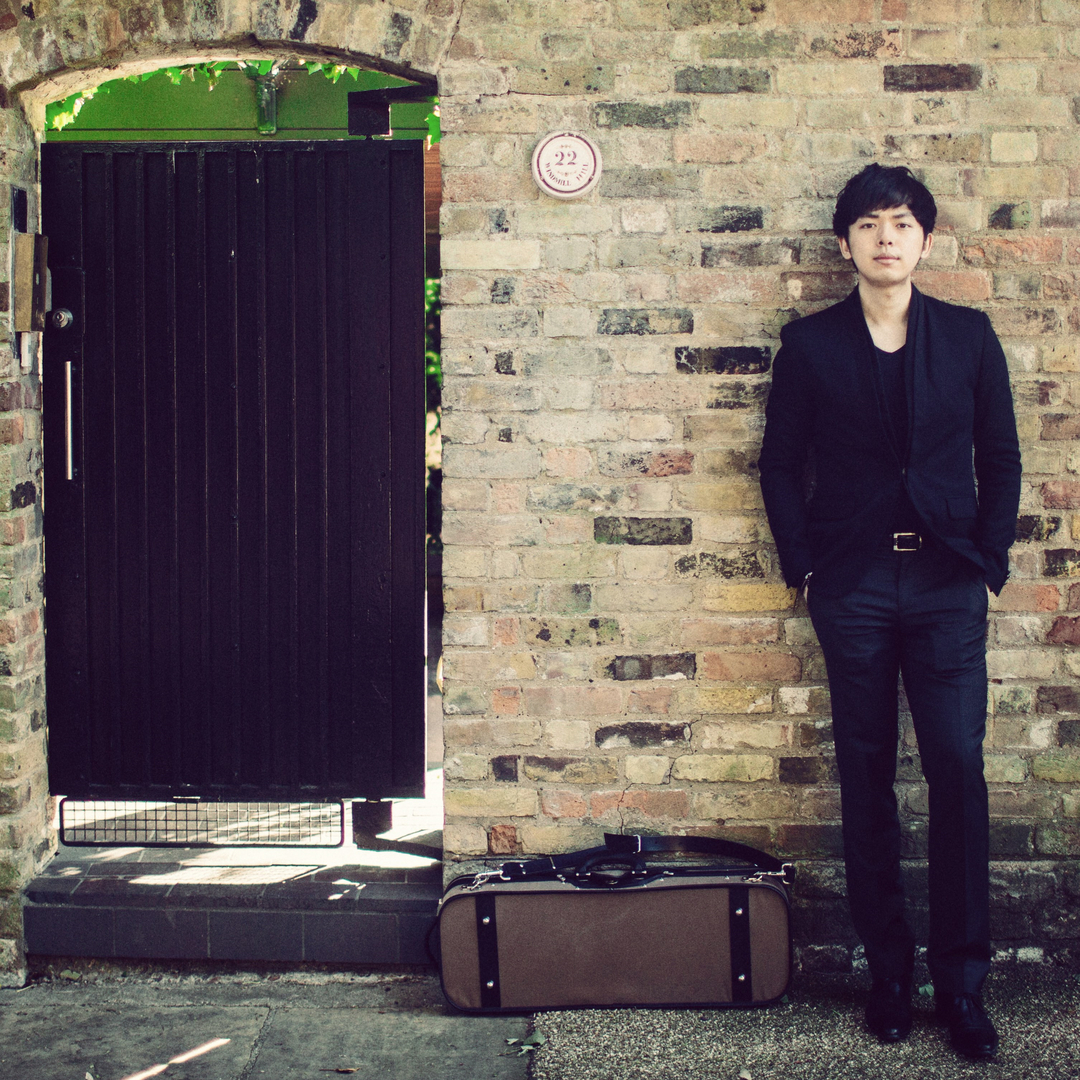
Who or what inspired you to take up the violin, and pursue a career in music?

On my fifth birthday, my parents surprised me with a cute tiny violin as my birthday present, it was like love at first sight. I remember I always took it everywhere with me and tried to play music on that toy instrument. Over 20 years later, I can honestly say that my passion is still the same and very much alive. I fall more in love with music every day because it allows me to experience deep emotions, express indescribable feelings and in my mind, it’s the most raw and spiritual connection you can have with people.

Who or what have been the most important influences on your musical life and career?

When I was about 10 years old, I watched a masterclass documentary “Playing by heart” on TV about violinist Maxim Vengerov in which he was teaching violin in a way I’d never seen before. The violin under his chin and the music under study was so vivid and enjoyable: he was the first to show me that music can be used to communicate a story or a scene. Suffice to say, I started to enjoy practicing right after that day. Two years ago during my study at the Royal Academy of Music I had a masterclass with Vengerov and that was like a childhood dream come true. I still remember the excitement that he inspired me, and I continue to use it to motivate me in my playing.

What have been the greatest challenges of your career so far?

Finding and embracing my own musical voice. Music is a very personal thing, so when I was growing up, I found it hard sometimes to let myself completely go to that vulnerable place. As I grow more mature, I’m more capable of thinking musically, which helps me communicate my ideas to my audiences. Also, I had my first arm injury earlier this year and I had to rest for a few month without daily physical practice routine. During my recuperation, I did a lot of visualising techniques and mental practise to learn new repertoire. It was very efficient and I never felt better when I picked up my violin again learning a new piece.

Which performance/recordings are you most proud of? 

Performance: A charity concert series I did in China called “Under the Same Sky”, staging concerts in support of underprivileged youths. Since 2012, more than 200 students have benefited from this charity and have been able to continue their education.

Recording: My upcoming debut album “Tango Embrace”. The disc is a collection of classic tango pieces by Astor Piazzolla, the renowned Argentinian tango composer.

Which particular works do you think you play best?

I personally enjoy works from the Late Romantic era the most, but music from all different periods offers the opportunity for personal musical exploration and growth. I also enjoy playing my own arrangements and compositions.

How do you make your repertoire choices from season to season?

I always choose repertoire that I am willing to perform. I think of the audience first, then the venue of the concert. For a recital, I try to combine classical repertoire with lesser-known contemporary works, as well as with works from various cultures, such as traditional Chinese music. For a recording project, I try to choose the pieces that I feel well connected with which can be very personal choices, such as my upcoming “Tango Embrace” album, I have wanted to record it for a few years.

Do you have a favourite concert venue to perform in and why?

I’ve been fortunate enough to have played in many amazing concert halls all around the world, but Carnegie Hall is, and will always be, a special place for me. The lights, the acoustic, the feeling I got from that hall is not something I think I will ever be able to describe – simply surreal.

Favourite pieces to perform? Listen to?

I like to perform and listen to things that combine many musical elements. An initial connection is important for me because if I can’t connect to the work, I can’t deliver a convincing performance.

Who are your favourite musicians?

Henryk Szeryng, Itzhak Perlman, Maxim Vengerov, YoYo Ma

What is your most memorable concert experience?

A multi-cultural concert at Sydney Opera House where I was playing with musicians from all around the world. The collaboration was very moving for me because of this cultural bridge. It was a wonderful experience to be able to share music no matter what countries we are from, what languages we speak; music brought us together.

What do you consider to be the most important ideas and concepts to impart to aspiring musicians?

I think it is really important for a 21st century classical musician to embrace different musical elements, and be open to exploration. I learnt from my mentors and those great musicians that it’s crucial to be honest with your musical intentions, and be present so that you get to enjoy the performance.

Where would you like to be in 10 years time?

Ideally I would like my music to be recognised by wider audiences, at the same time I would like to be a more influential musician and strengthen the bridge between Asian and European culture. I would also like to continue more charity works to help people in need.

Yijia Zhang’s debut album, Tango Embrace, is released on 10 October 2015.

www.yijiazhang.com

A guest post by the creator of Throwcase blog

Journalists worldwide have been swept off their feet by a flurry of idioms bursting upon the scene. Unwilling to tackle the problem like a rugby player or box of fishing equipment, they have instead long-grassed it, much like the process of photosynthesis that leads inexorably to the growth of grass. As a result of their cloudy-sky thinking and light-switch-behind-the-bed methodology, they have effectively kicked this cup-of-tea problem for six, opening a Pandora’s box of speech figurines.

Police everywhere are asking the public to stay calm. “We’ve blue-skied this as an actionable problem event, and hope to resume going forward as soon as we can. Whatever you do, don’t dimension this, not even a little bit.” Ripping Babushkin, famous music critic and concert promoter, was disturbed by the outbreak. “It is all we can do to keep these horrible expressions contained. Where are the bums on seats? What is a new audience, exactly? How do you curate a creativity hub to dialogue with communities? These are the sorts of things I interrogate, like a detective.”

John Man, journalist and cleaner of think-tanks, has been collaborating inwardly on solving the problem. “This is the iconic problem of our age,” he said, “and I mean ‘iconic’ in the sense of a small Russian painting of religious significance unadorned with the illusion of three-dimensional perspective but rather infused with the direct embodiment of the Light of Tabor. We must deliver a vision, or something.”

Now that these phrases are running amok, we can expect to see a lot more men in tweed jackets strolling across fields intoning the word “flourished” while discussing some shit like poetry in the middle ages or Flemish steel-craft. “It’s a diarisable phenomenon for the collective for sure,” said Sally McNally, as she drank her latest edition of totemic, artisanal coffee. “Things like this give us many learnings.”

Police are urging people to approach the idioms cautiously, if it all. “There are just so many dangerous pleonasms out there,” said Sergeant McGruff. “We urge people not to be caught where the hand of man shouldn’t set feet with its mouth.”

Read more like this at Throwcase

(Photo: Jamie Jung)
(Photo: Jamie Jung)

Who or what inspired you to take up the violin, and pursue a career in music? 

I have liked the sound of the violin as long as I can remember. Also, my parents are both musicians but neither play the violin, so by choosing this instrument they couldn’t tell me what to do…

Who or what were the most important influences on your musical life and career?

My parents, who have both had a life in music and made me believe that it is possible to have a life in music; my teacher at Juilliard, Sylvia Rosenberg, who has been a great influence in shaping how I think of music; and pianist Joseph Seiger, who encouraged me to always find more colors in music.

What have been the greatest challenges of your career so far? 

Just playing the violin… I find it very challenging. Also I find that combining physical relaxation with musical tension while playing is a constant challenge.

Which performance/recordings are you most proud of?  

I really try to avoid listening to recordings of myself (except ones I make for myself in the practice room), so I don’t know… So far I’ve only released one commercial album, my debut CD Portrait, (released August 2014 in Europe and February 2015 in the US).

Which particular works do you think you perform best? 

There seems to be a gap between what I think I play well and what other people think… I think I play Brahms well, but others think Schubert fits me very well.

How do you make your repertoire choices from season to season? 

I’m always trying to find a balance between new works that I want to learn, keeping enough works that I already know in my repertoire so that I don’t overbook myself, and putting together what I think are interesting programs. Also, it is important for me to include new works in my programs, and lesser known works, especially from the 20th century, which I think deserve to be heard.

Do you have a favourite concert venue to perform in and why? 

I absolutely love Suntory Hall in Tokyo and the Seoul Arts Center, because of their acoustics. I feel that these halls add new colors to my sound, which are not possible to find in a practice room. The auditorium at the Israeli Conservatory of Music is very special for me though, because I grew up in that institution, and so is the Israel Philharmonic Hall in Tel-Aviv, because as I child I dreamed of performing there.

Favourite pieces to perform? Listen to? 

There are some pieces that I just feel privileged to play. Ones that pop into my mind at this moment are Mendelssohn’s Violin Concerto, Mozart’s 5th Concerto, Prokofiev’s 1st Concerto and Cesar Frank’s Sonata. I usually prefer not to listen to violin music, so I listen mostly to piano music and sometimes orchestral music. Late piano pieces by Brahms are a particular favorite.

Who are your favourite musicians?

Has to be composers – Schubert, Brahms, Tchaikovsky, Shostakovich, Ravel, Ligeti and many others…

What is your most memorable concert experience? 

Hearing Ravel’s Sonatine for the first time, at a student’s concert at the conservatory in Tel-Aviv. The beauty of this music brought tears to my eyes instantly.

What do you consider to be the most important ideas and concepts to impart to aspiring musicians? 

Playing an instrument and making music is not easy, and I don’t know anyone who doesn’t encounter hardships on the way. One has to work hard in order to improve, and I somehow find that understanding that the process isn’t supposed to be easy, and that everyone is going through difficulties, is quite comforting. Also, on stage always try to make music, no matter how nervous you are. The audience is there to enjoy and to feel, and if one plays in order not to miss a note, it doesn’t mean much to the listeners, and one tends to miss more, in my experience…

Born in Tel-Aviv in 1985 to a family of musicians, Itamar Zorman began his violin studies at the age of six with Saly Bockel at the Israeli Conservatory of Music in Tel-Aviv. He graduated in 2003 and continued his studies with Professor David Chen and Nava Milo. He received his Bachelor of Music from the Jerusalem Academy of Music and Dance as a student of Hagai Shaham. He received his Master’s of Music from The Juilliard School in 2009, where he studied with Robert Mann and Sylvia Rosenberg, and received an Artist Diploma from Manhattan School of Music in 2010, and an Artist Diploma from Julliard in 2012, studying with Ms. Rosenberg. Itamar Zorman is currently a student of Christian Tetzlaff at The Kronberg Academy.

www.itamarzorman.com


