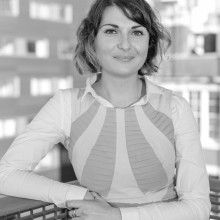
soosan-220x220Who or what inspired you to take up composing, and pursue a career in music? 

I always enjoyed music as a child and played recorder and then oboe growing up. I only really got into composing at the age of 16 when I was experiencing such horrific stage fright that it became clear I needed a different outlet. However, I came from a completely non-musical family so had no concept of how to turn this thing I enjoyed doing into an actual career. Perhaps the penny dropped at some point in my third year of undergraduate – studying Social and Political Sciences – when I realised that composing gave me the greatest pleasure of any activity in my life, and that if I wasn’t doing something creative I would lose my mind.

Who or what were the most significant influences on your musical life and career as a composer? 

All of my teachers who have helped me more than I can say, but especially Cecilia McDowall, Oliver Leaman, Dominic Murcott, Stephen Montague and Reza Vali. Also, hearing ‘Atmospheres for Orchestra’ by Ligeti completely changed my life.

What have been the greatest challenges of your career so far? 

Believing that I can do it, having the courage to make an artistic statement, dealing with failure, organising my life and work despite the total absence of a schedule, making money.

What are the special challenges/pleasures of working on a commissioned piece? 

Commissioned pieces are wonderful because you know you are working with people who are excited about contemporary music and keen for a challenge. There is always that worry that you’re going to deliver something that they will absolutely hate, but you can’t think about that, as then you will simply never write anything. You just have to believe that if you do something with enough integrity, it will work as a piece of art.

What are the special challenges/pleasures of working with particular musicians, singers, ensembles and orchestras? 

I’ve done quite a bit of work with children and voluntary musicians so that has its own challenges in terms of how difficult you can make the parts, but also how interesting they have to be too. If you’re writing for an orchestra of children and you make the trombones count 200 bars rest then it’s likely those trombonists will be put off contemporary music forever. I feel that in a case like that, I have a duty to make their parts interesting so in the past I have experimented with handheld percussion and singing in the context of a large ensemble. The great thing about working with an ensemble like The Hermes Experiment is that you feel nothing is off limits. When I told them I wanted to write a piece that combined the melodies of Iranian classical music with Renaissance Counterpoint, they didn’t even bat an eyelid. And that was wonderful.

Which works are you most proud of?  

The pieces where I held onto an artistic idea in spite of being terrified it wouldn’t work; working my way through that vulnerability and coming out the other side intact always makes me feel quite proud.

Who are your favourite musicians/composers? 

Ligeti is my shining beacon of inspiration at all times. Also Stravinsky, Berio, Morton Feldman, Rebecca Saunders and Xenakis. And I believe Bach is good for the soul.

What is your most memorable concert experience? 

Memorable concerts seem to either be incredibly exciting or make me sob uncontrollably. One was Johannes Moser playing the Lutoslawksi Cello Concerto and then a Bach Cello Suite as an encore (I sobbed in my cheap seat). Another was Lisa Batiashvili performing Shostakovich’s 1st violin concerto which was just incredible. And also a rehearsal of the Berlin Phil conducted by Simon Rattle performing Mahler 2 (I couldn’t get a ticket for the performance), in which I cried throughout.

What do you consider to be the most important ideas and concepts to impart to aspiring musicians? 

That self-doubt is both productive and good and will make you a better artist in the end. That you should strive at all times to do something new, whatever that may mean. To remember to be nice to people, as everyone in music is baring their soul and doing the best they can. To not neglect your personal life and relationships: practising the piano for 8 hours a day may make you a great pianist but it won’t ultimately make you happy, only people can do that.

Where would you like to be in 10 years’ time? 

I actually wrote a 10 year plan as an exercise with some friends last year. It involved composing, teaching, travelling and love. I don’t want to tell you the details as for some reason I’m scared it won’t then come true.

New works by Soosan Lolavar will be premiered by The Hermes Experiment at The Forge, Camden, London on 16th February, together with works by Giles Swayne, Ed Scolding, Claude Debussy and Richard Rodney Bennett. Further information

Soosan Lolavar is a British-Iranian composer, sound artist and educator who works in both electronic and acoustic sound, and across the genres of concert music, contemporary dance, installation, film, animation and theatre.

Her work has been performed at the Royal Festival Hall, V&A,  National Maritime Museum,  ICA, Chisenhale Gallery,  LSE New Academic Building, Blackheath Concert Halls,  Jacqueline Du Pré Music Centre,  Bonnie Bird Theatre, Circus Space and broadcast on BBC Radio 3.

In 2013 she was selected as one of two Embedded composers in residence at the Southbank Centre and received funding from Arts Council England, Jerwood Charitable Foundation and Iran Heritage Foundation to pursue ‘Stay Close’, a ten-month project exploring contemporary classical music as a means of cultural exchange between the UK and Iran. In 2012 she won the John Halford Prize for Composition awarded by Ian Pace and was selected as part of the Adopt a Composer scheme funded by PRS for Music Foundation and run by Making Music, in partnership with Sound and Music and BBC Radio 3.

She holds degrees in Social and Political Sciences (University of Cambridge), Musicology (University of Oxford) and Composition (Trinity Laban Conservatoire of Music and Dance) and her research interests include the politics of gender and sexuality, post-colonialism and the music industry and postmodernism in electronic musics. She has worked as an Assistant Lecturer at Trinity Laban Conservatoire, leading a course on music, gender and sexuality and at City Lit Adult Education college where she teaches classes on music and opera appreciation, film music and music gender and sexuality.

www.soosanlolavar.com

(photo: K Miura)

In a concert celebrating 25 years since his Wigmore Hall debut, Polish pianist Piotr Anderszewski presented a programme of music with which he is most at home – works by Bach, Schumann and Szymanowski, with an encore by Janáček. By his own admission, Anderszewski “cannot play just anything” and chooses to perform only those composers he feels a strong urge to play. By the standards of most pianists active today his repertoire might be regarded as “narrow”, but it is this limited focus which results in playing which is both fastidious (without fussiness) and spontaneous, and such spontaneity is clearly the result of a long association with the music coupled with a patient, thoughtful study of it.
Read my full review

Guest post by The Bard of Tysoe

I inherited my musicianship and my love of music from my mum. Many of her first musical memories are religious – as are mine. Hers include pumping the bellows for the organist at the Methodist church in Yorkshire where my grandad was a lay-preacher. Mine, sitting astonished in the congregation of Blackburn Cathedral – then still a building site – waiting for my audition for the choir: wondering if this amazing noise was also what filled heaven. (I was never religious, in any sense: but the compositions and architecture inspired by all faiths will never cease to amaze and inspire me.) I was four.

Forty years later, I also inherited my mum’s deafness – although mine has been accelerated, and deepened, by other medical issues. After a lifetime of singing, playing, composing, conducting, listening… in some ways the loss of music was worse than the main disability which accompanied it. I felt bereft, and grieved for a very long time. Even the ‘familiar’ works on my music server (which has over 20,000 tracks on it – ranging from plainchant to punk; serialism to soul) could not console me. For several years, music was something I accidentally bumped into; never actively sought out; and always came away from more disappointed than before.

When I obtained my first hearing aids (properly called hearing ‘instruments’), a very talented and patient audiologist spent an afternoon with me at home cycling through some of those many pieces, in many different genres, adjusting these little life-savers over and over again until one of their four programmes was specifically set up for listening to music. However, not all harmonies are born equal – there is a reason iPods come with so many equalizer settings, I discovered – and, eventually, I realized that I needed to know the music note for note (often helped by a score resting on my lap) for it to make ‘sense’ to me. It also helped if the composition was sparsely scored. (Thank goodness for chamber music – especially Bartók’s magnificent six string quartets – which I now have so many different recordings of, I have lost count!)

As my hearing rapidly worsened, the technology could not keep pace. Concerts were always painful – and listening to the piano (my own instrument) always sounded especially dissonant: the clash of harmonics confusing the processing of both my digital hearing aids and my analogue brain.

However, I kept reading about improvements to hearing technology; and, as my first set of ‘instruments’ were no longer powerful enough, late last year I was granted a new pair. Initial technical and customer care problems rendered them almost uselessalmost useless. However, thanks to another thoughtful audiologist, I am now progressing well on my return to the musical world, with a much wider and deeper soundscape. (It takes a while to get the fine-tuning right with these things: but I feel that I am more than halfway back to the best the sound can be for me. And what we have achieved is already a massive leap forward.)

It is so long since I played (the family Bechstein upright now resides with my son: another keen musician – those genes are obviously dominant); composed (my Mac, with all my part-finished digital manuscripts, is in storage – along with multiple backups, of course); and I am no longer fit enough (physically or aurally) to conduct: so I simply assumed that any future I had with music would be passive – although immensely enjoyable – as a ‘mere’ listener.

I had, though, started writing reviews of the plays I regularly attended at the RSC – aided enormously by the access provision there: including captioned performances. These were posted on my blog, which had initially been about life in my remote Warwickshire village, both scenic and politic; but which had expanded eclectically to cover more wider culture, as well as life from my slightly warped point of view. And, although I was writing mainly for myself, and happy just to be occupied in some sort of creative act, it really had not occurred to me at all that my previous experience as an amateur musician could similarly be applied.

However, ever since we moved to this area of the world, we have been on the mailing list of the inspirational Orchestra of the Swan (OOTS), also based in Stratford-upon-Avon. And, encouraged by my partner, over the last few months, I have attended quite a few of their concerts. This was an extremely tentative – and somewhat daunting – exercise, at first: but, as I have grown accustomed to my new instruments (which, at first, were bass-heavy and treble-light: my hearing loss has a large neurological component, which is not easily adjusted for), I felt compelled to write about my experience, dubbing it “this journey (nay, this pilgrimage) back to live music that I am on”. This was something I needed to do, it seemed – especially as it brought together the things I loved. And it was helped by the fact that OOTS is a small ensemble – as is Eboracum Baroque, who I accidentally discovered on my trek – both of whose sound is tremendously transparent.

Of course, as with the plays’ scripts, re-reading, re-learning the scores, has helped tremendously – although I have not yet had the temerity to experiment with referring to them during a concert: despite never meeting with resistance to this as a student; nor, nearly four years ago, when I followed Elgar’s The Dream of Gerontius – a work I know better than most; but at a time when my hearing had failed badly – on my iPad in the grand tier of Birmingham’s wondrous Symphony Hall.  (In fact, many other enthusiastic Elgarians told me that it gave them the courage to try something similar: so I probably will return to this practice in the future – although I worry that it may detract from my usual somewhat immediate, emotional response.) Such familiarity also helps; and I am fortunate that, once absorbed, the musical notation often floats through my head whilst listening: bringing me improved clarity.

As with the listening, though, so with the resultant writing. Much professional music – and drama – criticism leaves me cold; does not give me what I crave from not being there (basically, regret…); does not enlighten the mind nor accelerate the heart. But, as I was – I believed – writing for myself, I hesitantly attempted to rectify these faults by producing the sort of review, I would like to read myself – not yet aware that there were those in the wider world who had similar feelings (principal amongst them, of course, this blog’s generous host, Frances Wilson). I was therefore surprised by the reception: not just from other concert-goers – but from musicians (and others) who I admired. (Special mention must go here to David Curtis, artistic director of OOTS: who not only welcomed my different approach, but embraced it with his habitual enthusiasm; and who continues to encourage and help me re-immerse myself in this refreshed world of constant magic.)

After writing a very thorough (i.e. customarily lengthy, detailed and discursive) critique of one of David’s concerts with the (non-professional-but-most-awesome) Cheltenham Symphony Orchestra – not a small ensemble, at all: not for Brahms’ Second Piano Concerto (and with my hero, Peter Donohoe), and Shostakovich’s Fifth Symphony… – I was still gobsmacked to find the number of hits on the review increasing almost before my eyes: rapidly gaining more viewings and feedback than any other post I had authored. It seemed that I had, unwittingly, serendipitously, hit some sort of target, some sort of nerve: fulfilling a similar need to my own, but, moreover, for many others.

This took a while to sink in – and, me being me, the only way I could deal with it was to write about it. I therefore penned an article on my motivations: what music criticism means to me; what I think it should be; but, principally, what drives me to write in the way I do – and why it is so different to what others (might) produce.

To be honest, I published it assuming I would be condemned (not that I truly minded) for my amateurishness; for treading on the toes of those more ‘qualified’ to produce such writings (although I do have a background in professional journalism – albeit covering technology…). But, again, the positive feedback opened my eyes: and I feel not only have I found some sort of vocation (and one that I enjoy); but that music – as it frequently does – has started to connect me with those who, with much more expertise and experience than me, too wish to promote it in their own inclusive, collegiate, enthusiastic way.

This is only the beginning, though. Not only do I believe that there is a wider audience to be reached by writing with my own, peculiar brand of passion – as do others – additionally, I hope that my experience can encourage and help others who may have also ‘lost the music’ in their lives (for whatever reason) to try and find a way back in for themselves. Without making light of it, my deafness now helps me appreciate music so much more. I therefore hope that I have also inherited my mum’s longevity

The Bard of Tysoe is a peculiar animal: often to be found limping around parts of Warwickshire at night – as well as in the daytime – he is said to be addicted to all things artistic; and can be found blogging about not quite all he encounters (it just feels that way) at http://tysoebard.blogspot.co.uk/.

What matters most to him are beauty, truth and fairness – in whatever myriad forms they occur. His favourite occupation is thinking.

The transfer of the International Piano Series to St John’s Smith Square while the Southbank Centre undergoes a facelift is proving successful and popular. An elegant venue with a fine acoustic and a beautiful Steinway piano, coupled with one of the UK’s most gifted pianists active today, made for an evening of music making of the highest calibre, in a diverse programme which opened with Schubert and closed with Rachmaninov.

Steven Osborne
(photo: Benjamin Ealovega)

Schubert’s second set of Impromptus D935 are less frequently performed than the first set, with the exception of the third of the set (a set of variations based on the Rosamunde theme). The first and the last, both in F minor but very contrasting, were presented in this concert. The word “Impromptu” is misleading, suggesting a small-scale extemporaneous salon piece or album leaf. Schubert’s Impromptus, composed in 1827, his post-Winterreise year of fervent creativity, are tightly-structured and highly cohesive works.

There is nothing “small scale” about the opening of the first of the D935, and Steven Osborne‘s account of this was brisk, almost terse, and bold, with a grandeur redolent of Beethoven at his most expansively gestural. But Schubert does not linger in this territory for long and soon the music moved into a far more introverted realm. The middle section, tender duetting fragments over an undulating accompaniment, was poetic, intimate and ethereal. By contrast, the other F minor Impromptu was infused with Hungarian flavours, with offbeat rhythms and twisting scalic figures. Osborne pulled it off with a modest bravado, alert always to Schubert’s miraculous harmonic shifts and fleeting moods.

Read my full review here


