Last weekend I ran a masterclass for members of the Hitchin Piano Club who are taught by a teaching friend of mine. It was the first time I’d taught adults in this format and I found the experience hugely enjoyable and stimulating – and I think the participants did too. In addition to one-to-one coaching while the others observed, we covered warm up exercises away from the piano, managing performance anxiety and finished the day with a listening game in which participants were asked to try to identify nationality, period and style of a selection of pieces chosen from Spotify. The day ended with me giving my friend a brief lesson, which was interesting for both of us and an important test of mutual respect and trust.

The commonest issue with adult amateur pianists tends to be performance anxiety – by which I don’t mean the fear of playing in an actual concert, but simply playing in front of other people. This anxiety has its roots in a number of places, including negative musical experiences in childhood and the simple, and entirely understandable, fear of making mistakes and feeling a fool in front of one’s peers. Whenever I discuss performance anxiety with any student, I stress that such feelings of anxiety are normal, natural and common – even amongst top-class professional musicians. Until fairly recently, performance anxiety – like injury – was not discussed amongst professionals. It was considered taboo to mention it for fear of admitting to a weakness, but recent projects such as Charlotte Tomlinson’s Beyond Stage Fright and interviews with leading musicians who have revealed their own anxieties and how they deal with them, has led to greater openness. Personally, I find a state of acceptance about the symptoms of performance anxiety, coupled with solid preparation of one’s music, can lead to greater confidence in performance, whether this involves playing in someone’s living room on a Sunday afternoon, as at our Piano Day, or in a formal concert.

The participants in Sunday’s piano day had not been taught in a masterclass format before and I tried to ensure that even while I was giving individual coaching, everyone found something useful in what I was saying and doing with the other student. In fact, the masterclass format can be one of the most useful and inspiring ways of being taught – one can learn a great deal by listening and observing, and I encouraged the others to comment on one another’s playing, including differences in sound and touch. We covered a number of technical aspects, such as rotary motion and lateral arm movement to help certain players release tension in their hands and arms, and to help them achieve the kind of sound they envisaged.

My main aim when teaching is to help students to achieve the sound and emotional content they desire in their music and to enable them to play with colour, expression and confidence. To achieve this, I use visualisation techniques in my teaching, asking students to explain what they like about the music they are playing, to describe the character of the music and ascribe a narrative or mental picture to it to help them create a vivid portrayal in their playing. Technique, such as a cantabile legato or particular type of staccato, gives us the tools to create timbre, mood and emotional impact in music, and technique must always be seen as something with a clear musical purpose. Combine solid technique with imagination and the rather elusive “artistic vision”, and one can create wonderful music, and play with confidence and authority.

It was a thoroughly enjoyable and very stimulating day and a pleasure to work with a group of such engaged and receptive students.

Repertoire played:

Mozart – Fantasy in D minor, K.397

Philip Glass – Metamorphosis 3

Beethoven – Sonata in F minor, Opus 2, No. 2 & Sonata in D, Opus 10, No. 3


Further reading

Masterclasses without tears

More than hobbyists – the world of amateur pianism
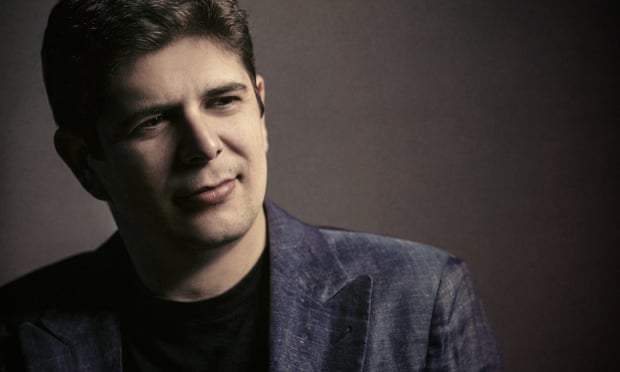
 

(Photograph: Josep Molina/PR)

Who or what inspired you to take up the piano, and pursue a career in music? 

I actually took my first musical steps playing the clarinet in the marching band of Nerva, the village where I grew up.  This was the first instrument I ever learned, and I could see myself taking it further.  But then an aunt introduced me to the incredible sound world of the piano and from the beginning. I was absolutely fascinated .  As for the second part of the question, I feel that things have always progressed very naturally: I never had to make any decision as to whether or not to pursue a career in music.

Who or what have been the most important influences on your musical life and career? 

I’m really lucky in that I’ve always had extraordinary teachers: Julia Hierro (my first teacher), María Ramblado, Ana Guijarro, and Josep Colom have been a source of wisdom and inspiration throughout my student years. I’ve also had the chance to get great advice from Daniel Barenboim, Richard Goode, or Alicia de Larrocha, all of whom I deeply admire.

What have been the greatest challenges of your career so far? 

Every new piece I learn – I like to think of that as the greatest challenge!

Which performance/recordings are you most proud of?  

It is quite hard to pick a particular concert or recording, but perhaps for its special significance maybe I’d pick having taken part in one of the last concerts of the Tokyo Quartet during their farewell season, doing the Brahms and Schumann Quintets. It was a highly emotional experience and unforgettable for me as I was a long-time admirer of the Quartet.

Which particular works do you think you play best?

I prefer to leave that to audiences, but I also like to think that what I should play best is what I’m performing or working on at the moment.

How do you make your repertoire choices from season to season? 

One consideration is to link recording plans with the launching of recordings with Harmonia Mundi and, on the other, to consider particular requests from promoters as well as any lines of programming that orchestras and conductors might have. In any case, when I work on devising a recital program I like to find some unifying principle and/or connections amongst the works being presented.

Do you have a favourite concert venue to perform in and why? 

It’s difficult to choose just one among so many extraordinary concert halls where I’ve had the great pleasure to perform. Suntory Hall in Tokyo presents a very special combination between its admirable acoustics and great audience capacity; another wonderful hall that is a favourite for its forward-looking conception is the New World Center in Miami. And how to forget the magic and tradition one can feel in temples of music like London’s Wigmore Hall, Amsterdam’s Concertgebouw or New York’s Carnegie Hall.

Favourite pieces to perform? Listen to? 

I hesitate to even begin answering the first question: the repertoire is so vast, rich and varied! Like I said before, perhaps whatever piece I’m working on or performing at the moment becomes my favourite. As to my listening habits, let me just give you a small glimpse through my iPod playlist: Granados’ Goyescas with Alicia de Larrocha, Tchaikovsky Symphonies with St. Petersburg Philharmonic and E. Mravinsky, Brahms Symphonies with N. Harnoncourt, Chopin Nocturnes with MJ Pires, the last Schubert Sonatas with Radu Lupu, Beethoven Sonatas with Daniel Barenboim, Mozart piano concertos with Mitusko Uchida, Schubert Trios by the Beaux Arts, Debussy by Michelangeli and a very long etcetera.

Who are your favourite musicians? 

As a pianist I’m such an admirer of many of today’s musicians such as Barenboim, Pires, Lupu or Sokolov. At the same time, I must also say that I’m fascinated by past musicians like Schnabel, Lipatti, Michelangeli, Rubinstein, Myra Hess, Hoffman, Cortot, etc. If we add to the list other instrumentalists, singers, and conductors the list would prove to be endless!

What is your most memorable concert experience? 

In addition to my collaboration with the Tokyo Quartet during their farewell season I should single out my debut in Lucerne with Zubin Mehta, my recent collaborations with Tabea Zimmermann, Beethoven’s Emperor with Daniel Barenboim, Ravel’s G Major with Daniel Harding and the London Syphony, the Schumann with Michael Tilson Thomas, and my debuts with Yuri Temirkanov and Maazel, among many others. I greatly cherish those memories.

What do you consider to be the most important ideas and concepts to impart to aspiring musicians? 

Honesty, dedication, personality, work and passion.

Where would you like to be in 10 years’ time? 

I’d like to be exactly the same but of course with the maturity, experience and depth ten years will bring!

What is your present state of mind? 

Searching, exploring, discovering and delving deeper!


www.javierperianes.com

Saturday 9th April, Drayton Arms Theatre, London SW5

Opera in small spaces is not new, though I must admit I only discovered the Drayton Arms Theatre in South Kensington last winter when I attended Euphonia Opera Company’s splendid production of ‘Don Pasquale’. The space really is tiny – a handful of rows of banked benches, upholstered with old pairs of jeans, and an area not much bigger than an average-sized living room for the stage. Covent Garden it ain’t – and much the better for it, for Euphonia is a company of young professional singers who seem to actively relish the challenge of performing in spaces like Drayton Arms Theatre. Their pared-down productions, with the minimum of setting and costumes, and only a digital piano to provide the music, bring the opera right up close and personal.

Euphonia’s 2016 Spring season has included ‘La Traviata’ and a new production of ‘Iphigénie en Tauride’, Gluck’s powerful setting of Euripides’ play. I went with two opera-loving friends,  regulars at ROH and ENO and far more seasoned opera-goers than I. The narrative teeters on the brink of tragedy until almost the very end, when Iphigenia realises that the man held captive and about to be sacrificed is in fact her estranged brother Orestes. All’s well that ends well.

In the tiny space of Drayton Arms Theatre the action was intense and intimate. The singers are only a few feet away and when they sing, you can really feel the air crackle with the power and emotion of their voices. Without the support of elaborate sets and costumes, the action is far more immediate, pulling you into the heart of drama from the outset. When we went downstairs to the noisy pub for the interval, it felt as if we had been yanked out of an alternative reality, and as one of my friends remarked, you realise how removed you are from the action when sitting in the dress circle at the Coliseum. The entire cast sang with passion and commitment. Stand out performances, for me, were by Turiya Haudenhuyse in the title role, and tenor Joseph Doody, who played Pylades.

For those who are less familiar with opera, or who are reluctant to venture into ROH or the Coliseum, Euphonia’s pared down productions are a great introduction to the form. Productions are sung in their original language, with English surtitles, and you can nip down to the pub in the interval for a pint, and take your drink into the theatre.

This season’s productions have also included pre-performance interviews with legendary opera director John Copley CBE (Patron of The Drayton Arms Opera Series) and Euphonia President, the distinguished scientist, broadcaster and author, Professor Robert Winston.

Euphonia Opera Company

script-letter-m-402608Dial M for Mompou

Whenever I introduce the under-championed Federico/Frederic Mompou (1893-1987) to friends, the reaction is often, “he doesn’t sound particularly Spanish”. This is somehow a requirement of Spanish composers; I’ve yet to see similar charges brought against, say, Boulez for faint Frenchness, or Pärt for evincing insufficient Estonianism. It could simply be that Mompou’s Catalan origins explain this phenomenon, but Albéniz was also Catalan. The difference is that he sought out Andalusian and Castillian flavours, whereas Mompou seemed more contentedly Catalan. Three Catalan folk songs, El Noy de la Mare, El Testament d’Anelia & Canço del Lladre open his ‘Canço i Danzas’ numbers 3, 8 & 14 respectively.


Mompou’s musical language? Thematic development didn’t really feature; variation fulfilled his dramatic needs. His harmony was unmistakably tonal, though you have to peer through lovely mists to site the tonic. Modes, pedals (frequently offbeat), chords built on fourths, widely spaced, extended ‘jazz’ harmonies all conspire to cloud the harmony of what is essentially simple and often innocent music.

The following example illustrates several of these points.

‘Tres Variacions’ has a short, almost childlike modal (and unbarred) Tema. The first variation, Els Soldats (The Soldiers) ends with a little fanfare whose last three notes are harmonised in fourths. Offbeat pedal notes add interest without compromising simplicity. The second variation, Cortesia has something of French Music Hall in its sad waltz gestures. I like the little pun in the score where the movement depicting ‘courtesy’ ends with the words “répétez, je vous prixe”. Mompou veers into much more modern harmony in the closing Nocturne, almost as though Keith Jarrett were paying tribute to Mompou’s beloved Chopin. The wide-spaced pianism seems to owe much to Chopin who, like Mompou, wrote mostly for piano. Notice how the appearance of a yearning inner-melody necessitates a third stave.

For more direct tribute to Chopin I heartily recommend this:

Or, again, does the subsiding nature of this remind you of a certain Prelude in E minor Op 28 No 4?

Pianists – a challenge: try to emulate the sound of bells while alphabetically avoiding Big Ben, Christmas carols, Ding-Dong etc. etc. Mompou worked in his fathers bell foundry and the resonant ratios rang on? Try the opening of this:

or the closing bars of this:

Mompou’s magnum opus is arguably his ‘Música Callada’ published in four volumes from 1959-67. The puzzlingly oxymoronic combo of silent music can be overcome simply by switching the notion of silence for stillness: ten of its twenty-eight short movements begin with a single note; ‘Calme’ and ‘Lento’ dominate tempo indications. My personal favourite is XIX Tranquilo. Its quiet yearning seems informed by that most searching of ‘jazz chords’ the minor with major 7th – all the more yearning here for the wide spacing.

Alan Coady

Further reading:
Le Jardin Retrouve. the Music of Frederic Mompou

Alan began his musical studies, aged six, on the piano and switched to guitar aged eleven. After studying at the then Huddersfield Polytechnic, Alan began life as a peripatetic guitar instructor for East Lothian Council (Scotland) where he remains to this day. Huddesfieldian modernism exerts a lasting influence and favourite piano listens include the works of Ligeti, Kurtág and Messiaen. Favourite pianists include Piotr Anderszewksi, Steven Osborne and jazz giant Brian Kellock.


