
Who or what inspired you to take up the piano and pursue a career in music?
I fell into piano chamber music and accompaniment, whilst in the enrolment queue at Cardiff University, where I read music as an undergraduate. I was chatting to another first year student who I thought was very cosmopolitan and confident, a violinist, who wanted to perform the Grieg Sonata. Did I know it, he asked, and would I like to play it with him. Of course I knew the Grieg violin sonata, I lied, and I agreed to play it.
As we were the first in our year to play in a concert at university, a lot of people then started asking me to play for them too, which I did, with pleasure. I became a sort of default accompanist, which was no bad thing. This led to learning a lot of repertoire, and meeting some very lovely people along the way.
My earliest inspiration around this time was a fantastic pianist based in Cardiff, Michael Pollock. His first class playing aside, he also showed, by example, never instruction, how to work “with” your fellow musicians. Michael has this amazing ability to draw from people their best qualities, both as musical performers, and as individual personalities.
Who or what were the most important influences on your musical life and career?
Three people have had a very strong impact on my musical life and career, after coming to London, where I studied at the Royal Academy of Music.
My teacher since I moved here, Christine Croshaw, has been a constant source of inspiration, support and motivation. She is the most rigorous musician I have ever worked with, but in the sense that she gently coaxes more and more from you. It’s only when you walk away, feeling a little light headed, that you realise you’ve been there for over two hours and have a mind full of ideas. Her own playing is also something quite magical.
I enjoy performing contemporary scores a lot. I love the complexity, but also the freedom afforded to us by a new score, which has no preconceptions attached to it. My first real foray into this world was when we had a work written for us by the late Alun Hoddinott, one of the leading British composers of his time. We quickly became friends. I enjoyed his kindness, his humour and of course, as Britten and Pears described, the ‘legendary hospitality’ of Alun and his wife Rhiannon.
Alun taught me that, as with the written word, the written note can only ever be a rough guide, and that often composers rely on us musicians to take a particular effect further than perhaps notation allows. He reminded me often, that once the ink is dry on the manuscript, the piece belongs to the performer, and we have to make as much of the music, as we think the music requires. It is a liberating concept which helps us try to create our own interpretations, and have belief in their validity.
My third and final influence would have to be a duo partner, as this is the work I do, mainly. The soprano Claire Booth and I have commissioned, performed and recorded together for over ten years. She has a phenomenal capacity for learning music at a very quick pace. Yet she is never satisfied with this. Claire always delves deeper and deeper into the music, until she finds what she believes is the point of the composer’s intentions. She is also an unflinchingly supportive colleague and friend, which I think you have to be when you put yourselves out there in performance or on record. It’s a question of trust.
What have been the greatest challenges of your career so far?
I don’t think my challenges have been particularly great, or greater than those of my colleagues. I know my strengths and, like most musicians, I can give you a blow by blow account of my weaknesses.
I’ve never much enjoyed sight reading, which is weird for an “accompanist”. It used to be very good, until I started delving deeper into scores, wanting to understand them as well as, in my case, the singer I am partnering.
So, for me, as my own level of skill as a pianist increased, my sight reading seemed to fall back a bit. I can read through most scores at sight in rehearsals of course, but I don’t have the nerve to get up and sight read in public as some of my colleagues might. I have huge respect for this, but it’s not how I am wired. I need to “get” the score, and what the singer is doing, so I can have the peace of mind to sit back and react, in the moment, with my own technical trials mastered.
Navigating a route in this respect has been unique I suppose, but truthfully, every person has a unique carer route, be they musicians, lawyers or whatever. Just stay true to yourself, your strengths and work with these in mind.
Which performance/recordings are you most proud of?
This is tricky as I listen to my own recordings with frequent coughs and uncomfortable twitches, as I hear things I’m not happy with. I would never listen to anyone else’s recordings in this way, just my own, so I’m not perhaps the best person to answer this.
Our CD of song cycles by Jonathan Dove has done very well, and I am pleased we did his scores justice, and that they are “out there” more now as a result of our recording.
As for a performance I am proud of, I suppose it would be a recital we did in 2013, at the Southbank Centre, to mark the Britten centenary. I had always wanted to perform the canticle for tenor, horn and piano, ‘Still falls the rain’ (Sitwell texts), and performing it with my longtime duo partner Nicky Spence and French horn Jedi Richard Watkins, in the city where the “rain” fell, was a moving privilege. I also played a large solo piece on this occasion for the first time, professionally and in public, which was written for me. It felt very strange walking out on to a concert platform alone, and yet also very free. I enjoyed it, and the piece went down very well (I’m recording it this year in fact) but I missed having someone else there to react to. Enough time is spent alone, practising, for me, so it’s a joy to rehearse and perform with another spirit on the platform
Which particular works do you think you perform best?
Again that tricky to answer. Often we perform a piece in concert or on a disc, and what we think is “the” piece, that really shows what we can do, someone will say “yeh, that’s ok, but I LOVED this other one” and I think “really?!”.
I love anything contemporary by the composers I admire, but I also have a real passion for French composers, as their subtle complexity appeals to me. I love how an apparently simple gesture by Debussy sometimes involves huge technical, forensic (!), labour from the pianist. Yet the effect is almost nothing. This irony fascinates me, and I find it a little addictive.
How do you make your repertoire choices from season to season?
Repertoire choices for me often come from singers, unless I am curating something, and I might be in a position to suggest some music, as well as take on new scores. A few nights ago Claire Booth and I performed Grieg’s ‘Haugtussa’ songs, with Folksongs by Percy Grainger and then melodies by Fauré. All of them were new to me, and they were just a joy to explore and perform.
Favourite pieces to perform? Listen to?
I love the Southbank Centre, and always enjoy playing there. The audiences always seem open to new ideas sitting alongside something “established”. After concerts they often come up to me and say something so perceptive: “wow, the Knussen and Debussy worked well…some of those Debussy harmonies could be contemporary…” And I think how absolutely spot on that comment is. Great music often transcends period, or time. Occasionally, one of my Trinity Laban students will play some Bach, and I am astounded at how outrageous some of the harmonies are even in 2015. I often think listening to his music is like hearing something in 3D, so I can’t imagine how it must have sounded at the time Bach was actually writing it. Mesmerising.
Who are your favourite musicians?
So many inspire me, from legends who are seemingly untouchable, to a student in my performance class who might play something in a way that’s so “right” that I am amazed.
But in terms of people who I turn to, or listen to, for inspiration, the first names that come to me are Martha Argerich and Jacqueline du Pré. They have such immediacy., even when coming out of speakers.
As musicians there are thoroughly prepared technically and just let it go. By nature they remind me of a great jazz musician, like Oscar Peterson or Ella Fitzgerald, who have total technical command but allow themselves to play in the moment, almost unplanned. Thrilling.
As Claudio Arrau observed, when we walk on to the concert platform, ‘I don’t know what will happen, but I trust it will be wonderful‘. Of course he means the experience. He allowed himself to react to that experience, trusting he had the tools.
As I work with so many singers, I have to say that the late Welsh soprano, and compatriot, Dame Margaret Price, is an artist who had the ability to sing Schubert lieder, Dove sono or Verdi Requiem, and control her voice for each so that it was absolutely “right” for that particular piece of the repertoire. Her sound, basically, was double cream, served in a cold silver jug, presented on a velvet cushion. Rich, beautiful, but with a slight, and quite wonderful, edge.
Of the people I have been fortunate to work with personally, I love Christine Croshaw’s ability to suspend time, Roger Vignoles’ conductor-like sense of space and breadth, and Patricia Bardon’s gloriously fruity mezzo. There are so many more, but we have a word limit here I’m sure…
What is your most memorable concert experience?
My most memorable experience, was giving the premiere of Hoddinott’s last work for voice and piano, which he wrote for Claire Booth and me, with Michael Pollock joining me for the piano duet accompaniment. Towy Landscape, was written towards the end of Alun’s life, and the work’s sentiments reflect this; it was also one of the last premieres of his own music that the composer attended. That particular evening seemed to bring together a few personalities who mean a lot to me to this day.
What do you consider to be the most important ideas and concepts to impart to aspiring musicians?
Know what your strengths are, trust them, celebrate them, and seek to develop them further. Remember, music is not a career, it is an addiction. There is no career path, no pension plan or guaranteed salary increase every 12 months. Today’s musicians must be performers, coaches / teachers, curators, producers. It is all connected, it is valid work, and each skill will inform the other.
Be versatile, open minded, work hard and be a good colleague.
What is you idea of perfect happiness?
Happiness for me is a good meal and glass of wine with someone I love, with not a piano in sight.
Andrew Matthews-Owen’s first solo disc, Halo, is available now and includes works by Joseph Phibbs, Dobrinka Tabakova and Hannah Kendall. More information
Andrew Matthews-Owen is among the most sought after collaborative pianists of his generation, regularly appearing in concert, and on commercial recordings with some of the finest classical artists of our time. Recent engagements include appearances at the Southbank Centre (Queen Elizabeth Hall and Purcell Room), Wigmore Hall, Kings Place, Birmingham Symphony Hall, St. David’s Hall, Warehouse and National Portrait Gallery with singers including Patricia Bardon, Claire Booth, Anne-Sophie Duprels, Helen Field, Gail Pearson, Natalya Romaniw, Nicky Spence, Katie Van Kooten, Sir Willard White, French horn player Richard Watkins, percussionist Joby Burgess and the Allegri and Brodowski String Quartets.
Andrew broadcasts for BBC Radio 3, most notably from a Purcell Room concert, on St David’s Day, which included the London Premiere of Alun Hoddinott’s A Contemplation upon Flowers with his regular duo partner Claire Booth. Andrew’s debut CD of song cycles by Alun Hoddinott (Naxos) was ‘Recommended Recording of the Month’ in Gramophone magazine, and a recent disc of world premiere recordings of song cycles by Jonathan Dove (Naxos) was Editor’s Choice in Gramophone magazine. Andrew will feature on a Debut Disc being released in 2014, for the NMC label, with soprano Claire Booth. His recordings are frequently broadcast on BBC Radio 3 and Classic FM.
A passionate commitment to contemporary music has seen Andrew commission, and give first performances of, major scores from some of the most distinguished composers of the 21st century including Michael Berkeley, Charlotte Bray, Philip Cashian, Laurence Crane, Jonathan Dove, Alun Hoddinott, Simon Holt and Arlene Sierra. Andrew studied at the Royal Academy of Music, where he was recently elected an Associate, generously supported by the RAM Trust, S4C Wales Television, Sir Edward Heath, Coutt’s Bank and the Rayne Foundation. He has also studied privately with Christine Croshaw, Roger Vignoles and Eugene Asti. Competition successes include a coveted Sir Henry Richardson Award for Accompanists (MBF/Help Musicians), John Ireland Trust Prize, Elisabeth Schumann Lieder Prize and the Ryan Davies Memorial Award. Andrew was recently honored, with the inaugural T.Glanville Jones / Leo Abse and Cohen Award, by the Welsh Music Guild, for his ‘Outstanding Contribution to Welsh Music’. Andrew is a Fellow of the Royal Society of the Arts.
www.andrewmatthews-owen.com

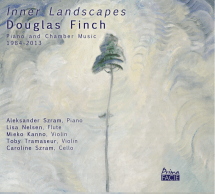 Inner Landscapes, the first ever recording of composer and pianist Douglas Finch’s piano and chamber music, is a compelling collection of ten works which capture an ‘inner world’ of a particular landscape – in Canada, Germany, North Wales and New York. Finch was drawn to the art of Canadian painter Emily Carr (1871-1945), who has long been one of his favourite painters, in particular for her landscape paintings of the west coast of British Columbia which evoke feelings of “loneliness and quiet rapture”, and his music explores similar themes of solitude, mourning and spiritual longing.
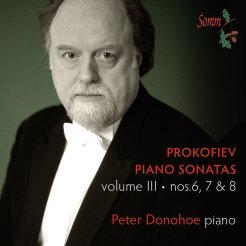 Piano Sonata No. 6 in A, Op. 82 (1940)




 The Cross-Eyed Pianist