Guest post by Cheyney Kent (originally published in a shortened form on medium.com)

Twelve years ago I stood opposite a sculpture by the American abstract artist Donald Judd at Tate Modern. The sculpture was a box. A lime green perspex box, the size of a large domestic water tank, but simply a box nonetheless.

It seemed rather disappointing — until I began to feel myself falling into it.

Nothing violent had happened. I’d not slipped, or been pushed. Instead, I’d tried putting my cynicism aside. The result wasn’t revelation or enlightenment. Instead I discovered a different relationship to the piece (and the exhibition – and sculpture in general).

Last week I hovered on all sorts of thresholds. I had been attending the Southwell Music Festival, a classical music festival in the East Midlands. I was there as both a performer and also social media liaison.

Having two roles means that I occupy different spaces. I can be in the centre of the room as a performer. I can be in the centre of the room as the audience. I can be inside the room but with a liaison’s – a functionary’s – purpose; taking notes, turning pages, operating a camera. I can be outside the room, looking in; and occasionally in a different room listening to a relay or watching on a screen.

There are so many proximities or grades of engagement. The threshold – the often arbitrary or imaginary demarcation between them – is a nice idea to scratch at.

You get thresholds inside the music you’re listening to as well. There is an evanescent but substantial one in Elgar’s The Dream of Gerontius (performed as the central event of this year’s Southwell Music Festival). Approaching the denouement, a narrating Angel tells the eponymous Soul

And now the threshold, as we traverse it utters aloud its glad responsive chant

and the music changes, with dynamic and harmonic doors opened (not unlike the theatrically labelled ‘Transformation Music’ in the parallel passage of Wagner’s theosophical drama Parsifal). The music introduces a different space, with a concomitant change of view, and perhaps even of energy or temperature. It is a physical change. Of course, we’re all still sitting in our seats or standing to sing. We’ve not gone anywhere.

Being in the same space as the musician to whom you are listening is a remarkable, elastic experience. It’s typical to breathe at the same time as a good performer and to feel their rolling with the camber of the music, as they perform it.

Volume is neither here nor there: you can have the same experience of being oppressed or beckoned by a musical gesture from row Z.

But this experience isn’t available behind a certain threshold. Perhaps that’s a smartphone screen. Maybe you’re standing outside the room, where performer and audience alike are like goldfish at a fair, commodified in a venue-bag where the acquisition of the memory negates the experience that won it.

I have my own experience from the same week to share.

Early during the Festival I’d walked close up to a performance of Strauss’ Metamorphosen to take a couple of photographs for social sharing. I was concentrating on my job. As I turned to leave however, I began to hear – to engage with – the music. The physical connection to this acoustically unmediated sound, this fine playing of fine music actually stopped me from walking away, as if I were tethered. I hadn’t followed the drama or narrative of the music (as I would with Elgar the following evening) as I wandered inside the notional and actual extremities of the performance space. In a moment I was reminded that I had passed these topographical thresholds to get my pictures: my intent – and relationship to the performance – had changed as I put down the camera.

All of this is representative of my experience of being in different places, and different roles, in a performance space.

I really like and value the potential of socially-shared media to create a platform and context for performance. I like that there’s a way to create an opportunity to discuss an experience. There’s value in capturing images or sounds that trigger the stored physical experience of being in the audience.

They’re slippery though. They can also offend – that’s not too strong a term – other people who occupy the same physical space but don’t share your intent. The complex physical manifestation between physicality and acoustic sound in an aesthetic context, which is the spaghetti of thought I’m trying to hold in the inadequate ‘threshold’ idea, means that not everyone has the same sensation at the same time. As performers are listen to one another in ensemble, so we have to be kind to one another in audiences!

The point about thresholds is that they are real but they are not obvious. Distance is no threshold in itself. It’s the authenticity and intent of our apprehension that dictates whether we’re really present for the performance or not. It’s OK to stand in a room opposite a perspex box asking what the point is, if that is the only authentic thought you can grab hold of. If you snap it on a phone to try and work it out later, you may have missed the point.

(Photo credit: Nick Rutter)

*

Cheyney Kent works in singing and social media for arts: cheyneykent.co.uk

You can read Cheyney’s blog at songstageandstory.blogspot.co.uk 
jane_booth

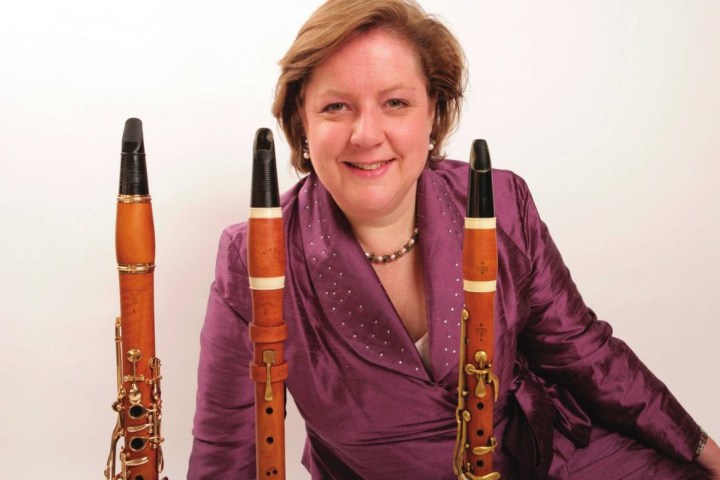
Who or what inspired you to take up the clarinet and make it your career? 

My father used to take me to hear concerts at Middlesbrough Town Hall given by what was then called the Northern Sinfonia Orchestra. I loved the sound of the the clarinet in that orchestra and declared it my chosen instrument – apparently!

Who or what were the most important influences on your musical life and career? 

During my teenage years I loved making music in a variety of settings. The combined energies, harmonies, rhythms and colours from orchestras, wind bands, dance bands and pit bands gave me a  hunger for performing that has never left!  Chamber music, solo playing, orchestral playing now fill many of my days (and evenings), and the sense of fulfilment just gets stronger.

What have been the greatest challenges of your career so far? 

As a performer on historical instruments I find that I need to have many different instruments in good working order and ready for performance at any one time. Sometimes lining up 10 or 12 different clarinets, basset horns or chalumeaux in the run up to a range of concert programmes can be quite challenging – not to mention ensuring that I have good working reeds for all of them too! But each instrument has its own tonal colour, depth and dynamic range to explore and this also informs my music making so the down sides all have a really positive flip side to accompany them.

Which performance/recordings are you most proud of? 

I’m really excited about the new CD with one of my chamber groups ‘Ensemble DeNOTE’, an ensemble formed by my husband and fortepianist, John Irving. We often play historical arrangements of eighteenth and nineteenth century favourites, so this CD celebrates that repertoire with two Beethoven ‘selfies’ – his trio arrangement of the Septet (clarinet, cello, fortepiano) and a piano quartet version of the Op. 16 quintet for piano and wind. With the beautiful added decorations in the Op. 16 I’m enjoying the piano quartet version rather more than I ought to! With ensembleF2 I’ve recorded a second album of chamber music by Franz Danzi. Returning to his two wonderfully operatic sonatas (one for clarinet with fortepiano and the other for basset horn and fortepiano) with Steven Devine has been great fun, especially using the Fritz fortepiano at the Finchcocks museum and its very special percussion pedals!

Some years ago I was thrilled to take part in the first ‘historical instrument’ performances of Wagner Operas with two different orchestras and under two conductors.  Daniel Harding and Sir Simon Rattle each brought their own insights to this repertoire, the results were thrilling for players and audiences – such a privilege to be a part of this particular journey of rediscovery.

Which particular works do you think you perform best? 

Mozart ‘s Gran Partita, Requiem and of course Concerto really are enjoyable to perform and I’ve had plenty of opportunities to indulge myself in these works in recent times. Again, the instruments we use are so very special for these pieces and I’m lucky to have very well made (hand made) copies that are as close to the instruments that Anton Stadler played as I think it is possible to have. My basset clarinet was made by Peter van der Poel, it plays really well and is modelled on the picture of Stadler’s instrument from a Riga concert announcement.  My basset horn was a recent purchase from Guy Cowley whose instruments just get better and better – it sings so sweetly and is a joy to play.

How do your make your repertoire choices from season to season?

A new bass chalumeau by Guy Cowley and a basson de chalumeau by Andreas Schöni have promoted me to explore a number of baroque composers recently leading to a new programme of music for chalumeaux, voice and continuo with works by Vivaldi, Bononcini, Graupner, Zelenka,  Telemann and others. The soprano chalumeau in particular blends so sweetly with a voice – and fits very conveniently into a coat pocket!

Do you have a favourite concert venue to perform in and why? 

My favourite hall of the moment is The Anvil at Basingstoke. With the OAE (Orchestra of the Age of Enlightenment) we have played large symphonic programmes such as Berlioz Symphonie Fantastique as well as chamber performances of classical wind serenades. The sound in the hall is exceptional and it is so rewarding to perform in such a wonderfully warm and vibrant atmosphere. The people of Basingstoke and the surrounding region may not realise just how lucky they are!!

Favourite pieces to perform? Listen to? 

I love playing great choral works such as Mozart’s Requiem, Haydn’s Creation, Bach/Mendelssohn St. Matthew Passion and others. Performing the texts and sentiments of these great works is always inspiring and there are several great choral ensembles around these days that lift the music to incredible heights – I’m lucky to have the opportunity to work with some of them. Brahms Symphonies, Tippett’s A Child of our Time and Schubert’s Lieder would also be on my desert island disc list.

Who are your favourite musicians? 

Playing in TWO chamber groups on a regular basis affords me many wonderful opportunities to play with musicians whose playing I adore, who inspire and challenge me and with whom I can explore ideas and repertoire to my heart’s content.  Beyond the lives of those ensembles, I feel most inspired when I’m on stage with people who put the music and their enthusiasm first, leaving their egos outside the room…… A number of them work alongside me at the Guildhall School!

What is your most memorable concert experience? 

I’ve enjoyed many different performing settings but many concerts with Toronto’s Tafelmusik stand out for me as having incredible energy, consensus and excitement. Under Bruno Weil, Tafelmusik’s exploration of Beethoven Symphonies brought me immense pleasure and fulfilment – even through the recording sessions which so often in other settings can sap the joy out of the music.

What do you consider to be the most important ideas and concepts to impart to aspiring musicians? 

Technique only has value if you can use it to convey something from your heart.

Where would you like to be in ten years’ time? 

In 10 years’ time I’d like to be working one-to-one with more students and directing even more of my own musical projects.

 Jane peforms Mozart’s Clarinet Quintet K.581 on a period basset clarinet and Crusell Quartet Op.2 No. 1 in a concert on October 5th with Consone Quartet, St Leonard’s Church, Shoreditch, London E1 6JN. Free entry with retiring collection

Jane is a specialist in the early clarinet and chalumeau. In addition to her work as Head of Historical Performance at the Guildhall School of Music & Drama, London, regular masterclasses and international adjudicating, she has pursued a busy international career, playing all over the world with many renowned ensembles including the Orchestra of the Age of Enlightenment, Tafelmusik and The Academy of Ancient Music. Her repertoire is vast and extends from the works of Handel, Telemann and Vivaldi through to Wagner, Mahler and Debussy – all on historically appropriate instruments.

After some fifteen thrilling years as principal clarinet of the Orchestre des Champs-Elysees Jane turned her focus towards chamber music. She has performed in the UK, North America, Japan, Australia and Europe with Robert Levin, Ronald Brautigam, Eybler Quartet and Les Jacobins, and currently performs regularly with her Ensemble DeNOTE and Ensemble F2. Concerto performances include baroque concertos by Fasch, Telemann, Graupner, and Molter, Mozart’s Concerto for basset clarinet and Weber’s Concertos performed Europe-wide.

Jane has recorded for Analekta (Canada), ATMA (Canada) and sfz music (UK) performing Mozart’s Clarinet Quintet, solo repertoire for the Basset Horn, wind music by Gossec and Méhul, and a programme of Lieder by Schubert. A DVD documentary on Mozart’s Kegelstatt Trio with Ensemble DeNOTE (Optic Nerve) is complemented by a new recording of Beethoven’s Trio Op. 38 (Omnibus Classics). A second CD of the chamber music of Franz Danzi is in preparation with ensembleF2 on the Devine Music label.

janebooth.net

denote.org.uk

ensemblef2.com


Competitions are for horses, not artists

Bela Bartok

Whether or not you agree with Bartok’s statement, or indeed approve of music competitions, they are an integral part of the culture and landscape for today’s up and coming musicians. Major competitions such as the International Tchaikovsky Competition (held every 4 years), the Leeds International Piano Competition (every three years) or the Chopin Competition (every five years) reveal new talent and have launched the international careers of some of the finest pianists active today. The competition format is by no means perfect – for some it is a highly subjective and artificial way of judging musical talent – and it comes as no surprise that some feel moved to comment on the system, including these recent observations on a blog by Pavel Kolesnikov, the young Russian pianist who himself was Prize Laureate of the Honens Competition in 2012.

British pianist Peter Donohoe, recipient of the Silver Medal in the 1982 International Tchaikovsky Competition, serves on the juries and adjudicating panels of many piano competitions worldwide and has years of experience in this particular sphere of the international piano world. Here he responds to Pavel Kolesnikov’s comments:

I think the anti-competition lobby needs to be very careful not to tar us all with the same brush. Competition prizes have sometimes been won by people who have gone on to make great contributions to the world of music, and in most cases they would not have been in a position to do so without those prizes. On the other hand, some juries have obviously been better than others, and results speak for themselves.

The degree to which the organisers of competitions have been clueless, thoughtless, arrogant, self-important, financially motivated, and interested in neither young musicians nor indeed music is variable, and needs to be balanced against the number of genuinely concerned people who want their competition to contribute to the music world, to make a good future for those who enter, to help those who do not win, and to work tirelessly to improve year after year the way their events are organised.

I have to say that the majority of those who have invited me on their juries have been members of the latter group, and I may have many faults, but naïveté is not one of them.

I have had issues with certain of the results to which have contributed a single vote, but that is either because I was wrong – or at least in a minority – or it is a flaw in the democratic voting system, which is, I promise, virtually impossible to make work totally fairly. After all, my own country has just had a referendum, so many people have had a taste of what happens when you consult a group of people with varying degrees of knowledge about a specific result.

We are trying, I promise, to make the system better and better. There is after all now no effective alternative for young musicians – other than comprising yourself of a good business opportunity for large companies, connections, financial backing, networking and good luck. There are too many, for sure, there are some very strange results sometimes, and jury members vary in their ability to spot potential long term talent – the choice of jury members is of course a testament to the quality of those running the competition.

But by and large they are good things, they are occasionally great things, they create goals for young people, stimulate media and public interest, and are a representation of life in the real world once you leave the protection of family and teachers.

That some people let the system down is almost inevitable, but please don’t give the impression that all prize winners have won because of their teacher being a jury member, or that we are all as stupid and manipulative as that unfortunate minority who apparently spoil it for everyone else. I could point out that I had never met any of the 1982 Moscow jury – in fact I had never even heard of most of them, and there was no jury member from the UK at all – so I have a personal reason for railing against the widely-held view that competition prize winners are by definition well connected.

Two more points:

It is obvious that no jury member should try to excuse some poor decision on the basis that someone either included the posthumous variations of the Etude Symphoniques or didn’t, or any similar ludicrously irrelevant observation. That is a truly pathetic and self-important issue when you are there to try to discover and support a young talent. That sort of person should never ever be on a jury.

The second is to mention that if someone is a genuinely great teacher, they are quite likely to be invited onto several juries, their students are likely to enter multiple competitions, and those students are likely to be very good ones. That a student of one of the jury members is in the competition must not place that competitor at a disadvantage; that would like a boss refusing to give a job to a woman because she is attractive. If you exclude teachers from competition juries where their pupils are entering, there will be virtually no one left worth asking; that I have no one-on-one students myself – because I am not really confident to be a good private teacher – makes me an exception; the vast majority of good jury members are experienced teachers. How could it be any different?

(source: Peter Donohoe, via Facebook. Reproduced with Peter’s kind permission.)

Here is a very considered response to both Pavel Kolesnikov’s article and Peter Donohoe’s comments by my friend and colleague Andrew Eales via his Piano Dao blogPiano Dao blogPiano Dao blog

Those fortunate enough to have studied with acclaimed pianist, teacher and writer Graham Fitch will be very familiar with his intelligent, insightful, inspiring and highly accessible approach to piano playing. The internet allowed Graham to share his expertise and knowledge initially via his very popular and readable blog ‘Practising the Piano‘. This was followed by the hugely successful eBook series. Now Graham’s tried and tested methodologies are taken to the next level with the Practising the Piano Online Academy, a comprehensive library of lessons, video masterclasses, articles, and other material combined with insights from other leading experts. Aimed at piano teachers and pianists, these materials are presented in an intuitive, interactive and accessible manner, and provide a comprehensive range of resources to support pianists of all levels, and piano teachers too. The result of many years of experience teaching at the highest level in specialist music schools, conservatoires and universities around the world, and privately, Graham draws on his own practice tools, strategies and techniques, which he has tested and refined in his work with students of varying ages and levels of ability, to offer a significant new online learning resource.

For those unable to see Graham personally for one-to-one lessons, the Practising the Piano Online Academy offers an extensive and regularly updated library of lessons, articles and resources which:

  • Illustrate Graham’s methodologies and approach in more depth with multimedia contentinteractive features and resources such as musical examplesworksheets and annotated scores which can be downloaded and printed.
  • Expand on practice tools and strategies with masterclasses and tutorials applying them to popular pieces in the repertoire, exam syllabuses and specific technical challenges.
  • Share the expertise of guest experts on subjects including applied theoryimprovisation and healthy piano playing.
  • Be regularly updatedeasily searchable and allow for personalisation with bookmarking and notes.
  • Be shaped by your input, responding to your questions and suggestions for new content to meet your needs.

Here are a couple of features which I feel are really valuable, especially to those pianists who are studying alone without the support of a regular teacher:

Learning Pieces section – collections of popular or favourite piano repertoire (for example, Grieg’s Lyric Pieces, Schubert’s Opus 90 Impromptus, Ravel’s Sonatine and Bach’s WTC, Book 1). Each work is presented as a mini-masterclass or lesson (called a “walk through”) with detailed guidance on specific technical issues, productive practising and some contextual and historical background. There are excerpts from scores and video clips to demonstrate and clarify the instructions. An additional feature for this section will eventually be links to annotated study editions, which will offer comprehensive information on how to approach the music, technically and artistically.

Technique – exercises – jail-breaking Hanon. For devotees of piano exercises, and those who are unsure about using them, this section explains and adapts Hanon’s exercises contained in The Virtuoso Pianist to make them relevant for today’s pianist and teacher. As with the “walk throughs” of pieces, these exercises are accompanied by explanatory video clips and score excerpts.

Practising. Here specific aspects of practising – slow practise, mastering polyrhythms, skeleton practise – are explained and demonstrated, with accompanying video clips and worksheets which can be downloaded to print out or saved to a tablet for use at the piano. In the Mastering Polyrhythms section, for example, the reader is not overloaded with information: instead, the subject is introduced and then explored through separate articles, allowing one to build one’s expertise gradually through intelligent, incremental practise.

Overall, the information is presented in an attractive and easy-to-read format, both on desktop computer and tablet, and the site is easy to navigate with clear menus, search functions and links, plus the ability to bookmark and save material to your personal library. The Practising the Piano Online Academy is an impressive addition to online piano study and piano teaching materials. The site is intended as a growing resource and also integrates with Graham’s blog, ebook series and forthcoming Annotated Study Editions. For more information and to sign up, visit https://informance.biz/products/practising-piano-online-academy/

Highly recommended.

At the Piano with Graham Fitch (interview with The Cross-Eyed Pianist)

slow-practice-screen-shot


