Established in 2012, the weekly Meet the Artist interview slot, in which musicians and composers reflect on various aspects of their creative lives, has gone from strength to strength and is now an integral and very popular part of The Cross-Eyed Pianist’s content. To celebrate this, Meet the Artist now has its own dedicated website.

Meet the Artist interviews will continue to appear on this site every Thursday, while the new site will act as a supplement with a growing catalogue of interviews with both well-known classical musicians and composers and young and up-and-coming artists. Do consider following the site in order to receive updates every time a new interview is released. In addition to interviews there will also be news, reviews and other articles relating to the artists featured on the site.

I feel very privileged to have the opportunity to share so many fascinating and often unexpected insights from such a wonderful range of musicians and composers, and I would like to take this opportunity to thank everyone who has taken part in the Meet the Artist project so far for their contributions to the series.

header


news-3412Who or what inspired you to take up composing and pursue a career in music?

I was surrounded by music from a young age and went to a music school (city of Edinburgh Music school, then St Mary’s Music School) where everyone was encouraged to compose. It’s difficult to put my finger on what exactly inspired me to pursue composing but I think it was this ethos combined with individuals such as the pianist, Peter Evans and ecat (Edinburgh Contemporary Arts Trust at the time)taking an interest and performing as well as commissioning me.

Who or what are the most significant influences on your musical life and career?

Coming to London and studying with Julian Anderson and Edwin Roxburgh made a real shift. They introduced me to so many composers as well as ideas and techniques, and this really instilled me with a desire to always be ambitious with he music I write. Studying in Tanglewood (2008) and working closely with composers Oliver Knussen, Augusta Read Thomas and others was also a very important time for me, not least because I was immersed in the music of Elliott Carter during their celebration of his centenary.

What have been the greatest challenges/frustrations of your career so far? 

Having my son, in 2013, has been a real challenge, although not a frustration. I was used to devoting any or all my time to composing and this had to change, I’m much happier for it though!

What are the special challenges/pleasures of working on a commissioned piece? 

Each commission has its own challenges, this may be linked to a brief. It often feels like you have to learn composing anew for each piece and that’s tough. Another challenge can be the pressure you feel to produce your best work and not to let the commissioner/organiser/individual/performers down, this can be very daunting at the beginning of the composing process.

What are the special challenges/pleasures of working with particular musicians, singers, ensembles and orchestras?

Working with musicians for the first time, whether soloists, singers or orchestras can be very exciting but also completely nerve racking. I want so much for them to respond well to what I’m doing and also enjoy learning and performing my music. My music (everyone tell me) is pretty difficult and detailed, even when I fell I’m doing something very simple. I know it takes a huge amount of energy and time to embrace a new sound world and am always incredibly grateful when musicians seem to get what I’m doing and really believe in it.

Which works are you most proud of?

It takes me a long time to feel really comfortable with a piece and it might take several years and different performances for me to let go and enjoy it. For this reason it’s a difficult question, also, how I feel about a piece can be linked to other people’s reactions at the time or the performance. I think I’m most proud of some chamber pieces such as Aviary Sketches for string trio and my Three Whistler Miniatures for Piano trio. I am proud of my Violin Concerto just now, but it’s not receiving its premiere until December so I will have to wait and see! Often I’ve had particular compositional challenges in these works but don’t feel I’ve had to compromise on my language or original vision for the piece.

How would you describe your compositional language?

My language is detailed and intricate. I am drawn to rich harmonies, initially influenced by Messiaen, Takemitsu and Boulez, and long expressive musical lines. I love to create different layers in my music and often slow music exists at the same time as fast music. Clarity and focus, as well as a dedication to always get exactly the right notes, are always paramount for me.

How do you work?

I work in a spare bedroom and spend a lot of time sketching on manuscript and using piano. Once I have developed and discarded a lot of material as well as discovered what I want to try to achieve in a piece, I start using Sibelius software alongside, always moving back and forth manuscript to rework and draft passage. This is usually pretty extensive.

Who are your favourite musicians/composers?

Difficult to say, but Ravel, Stravinsky, Janacek, Byrd, Bach,Ligeti, Knussen feature pretty highly- obviously there are many others, living and dead, but these are composers whose music I love in its entirety.

What is your most memorable concert experience?

Berg violin concerto with Christian Tetzlaff when I was an usher at the Usher Hall during the the Edinburgh International Festival.

What advice would you give to aspiring musicians and composers?

To always keep a core of self belief and never ever give up, even in really tough times. Keep an open mind but always be true to your musical identity and don’t compromise on that.

What is your idea of perfect happiness?

Snuggled by an open fire with a good glass of red and a good book on a winter day.


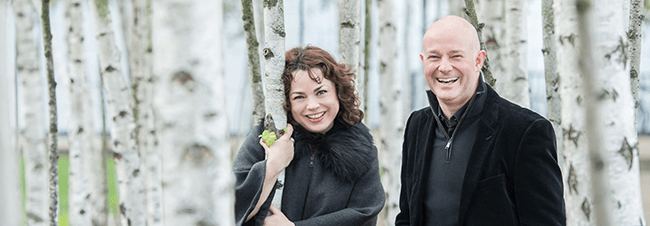
Born in 1981, Helen studied oboe with John Anderson and composition with Julian Anderson and Edwin Roxburgh at the Royal College of Music. In 2003 she won a British Composer Award for her Oboe Concerto, and was awarded the intercollegiate Theodore Holland Composition Prize in 2003 as well as all the major composition prizes in the RCM. In 2008 she was awarded a Leonard Bernstein Fellowship to study at the Tanglewood Music Center where she studied with John Harbison, Michael Gandolfi, Shulamit Ran and Augusta Read Thomas. Grime was a Legal and General Junior Fellow at the Royal College of Music from 2007 to 2009. She became a lecturer in composition at the Department of Music at Royal Holloway, University of London, in January 2010.
 
Helen has had works commissioned by some of the most established performers including London Symphony Orchestra, BCMG, Britten Sinfonia, BBC Scottish Symphony Orchestra and the Tanglewood Music Center. Conductors who have performed her work include Daniel Harding, Pierre Boulez, Yan Pascal Tortelier and Sir Mark Elder. Her work Night Songs was commissioned by the BBC Proms in 2012 and premiered by the BBC Symphony Orchestra, conducted by Oliver Knussen. In 2011 she was appointed Associate Composer to the Hallé Orchestra for an initial tenure of three years. Her first commission for them, Near Midnight, was premiered on May 23, 2013 and a recording of her orchestral works performed by the Hallé was released as part of the NMC Debut Disc Series in 2014, which was awarded ‘Editors Choice’ by Gramophone Magazine. 
 

I was delighted to have the opportunity to attend some of the events and concerts at the inaugural London Piano Festival, conceived and directed by pianists Katya Apekisheva and Charles Owen. For the opening edition of the festival, the directors invited artists who they admired and worked with personally. As Charles and Katya stated in the Festival programme:

“Pianists meet each other far too rarely in the real world, mostly at auditions and competitions when we take our first steps in the music profession, and then at each other’s concerts. The professional soloist’s life is, by its very nature, a demanding and often solitary one. [The festival] is especially designed to bring these soloists together…..”

And it was perhaps a mark of the organisers’ success in achieving this aim that so many eminent pianists and music lovers were in the audience for the concerts, including Stephen Hough and Alexandra Dariescu, amongst others.

img2171sim-canetty-clarkecurated
Katya Apekisheva and Charles Owen

The festival was held in the stylish, contemporary concert spaces at London’s Kings Place, fast becoming a popular hub for culture and arts in the newly-redeveloped area around King’s Cross station. The sense of “music by friends and for friends” was very clear from the warm atmosphere in and out of the concert halls, and the two-piano gala concert on Saturday evening, which was at the heart of the festival, was a wonderful celebration of musical friendship and collaboration. I attended two concerts with pianist friends, always enjoyable as we discussed what we had heard during the intervals and after the events. As one of my pianist friends remarked when I met her for the two-piano gala concert, “I feel completely intoxicated by music!”. I can think of no better endorsement for this wonderful weekend of piano music.

My reviews are on the Bachtrack.com site – follow the links below to read them:

‘Liszt’s b minor Sonata – from exuberance to asceticism’: lecture by Alfred Brendel and performance by Denes Varjon

A feast of phenomenal pianism: two-piano gala concert


jakubhr_852420ar20-20please20credit20zbynek20maderyc20-20resized
(photo credit: Zbynek Maderyc)

Who or what inspired you to take up conducting and pursue a career in music?

There were lots of influences. Examples of many famous and less famous conductors. Among all, I’d mention the American Leonard Bernstein and in my own country Jiří Bělohlávek, whose conducting I could observe personally. It happened when I was a teenager. I found out for myself then that I wanted MUSIC to be a central point of my life. My psyche and specific talents somehow indicated conducting would be the best path, although at that time I could imagine to go into many other professions.

Who or what were the most important influences on your musical life and career?

Definitely my parents and grandparents at first (even though no one in my family is a professional musician), then my music teachers (especially my trombone and other brass instruments teacher at a primary art school Jiří Vrtek who was also a very skilled and passionate leader of many sorts of wind bands in which I played already as a kid), then the conductor of my student symphony orchestra in Brno Tomáš Krejčí who gave me my first, highly desired conducting opportunities and found me a conducting teacher – and finally aforementioned Jiří Bělohlávek with whom I studied at the Academy of Performing Arts in Prague after I had graduated from what we call “gymnasium” (a grammar school in English). And obviously a lot of splendid (and less splendid) recordings – LPs, cassettes, later CDs.

What have been the greatest challenges of your career so far?

There is a lot of details which I cannot mention. Difficult to choose. Some of my “jump-in” experiences (Carmen or La bohème without rehearsals), some of the difficult operas, even if rehearsed (Mihalovici’s Krapp or The Last Tape, for example), some of the contemporary premieres (lately Olga Neuwirth’s percussion concerto Zero-Zone, for instance), first Le Sacre also wasn’t as easy. These particularities shouldn’t cover the substantial challenge, though: to find the most direct and inspirational way how to communicate with every orchestra one leads so that both the players and the audiences are enriched and happy…

Which performance/recordings are you most proud of? 

I think both Má vlast recordings I’ve made so far – the first with The Prague Philharmonia, taken live in 2010 at the Prague Spring Festival, and the second the brand new now with the Bamberg Symphony – are both quite representative. That’s as for recordings. I cannot say about the performances. There were too many (and too many details!) which I really loved. I was rather proud as I graduated ambitiously from the Academy in 2004, performing my beloved Asrael Symphony by Suk by heart. I kind of tasted where my abilities could go.

Which particular works do you think you perform best?

Works with great intelligence and highly emotional contents.

How do you make your repertoire choices from season to season?

It’s always a complex decision. I’m personally putting a great deal of new pieces for me to learn each season, to make progress in my knowledge (and enjoyment) of a wide repertoire. “My” orchestras (such as Bamberg now) have their own portfolios with which I’m working closely and sensibly. As soon as the main focuses are clear, I’m also trying to enable myself (and my orchestra[s]) to get deeper in the pieces – and that means repeating them, also at various places. And I have been trying to find the right balance for years now between orchestral stuff and opera. Some seasons are more operatic, some less. (I think my programmes are very well balanced in terms of Czech/Slavic/European/international music now. The same for all possible styles, even if, roughly put, years 1750–1950 prevail.)

Do you have a favourite concert venue to perform in and why?

Several of them. I would definitely mention some of the older halls in Europe and America, above all my national “home” at Rudolfinum in Prague, Musikverein in Vienna, Concertgebouw in Amsterdam or Severance Hall in Cleveland. And then some of the newer marvels: Suntory Hall in Tokyo and the Symphony Hall in Osaka, Philharmonie in Berlin, Gewandhaus in Leipzig, the new Helsinki Music Centre, the Los Angeles Walt Disney Concert Hall… I like my professional home in Bamberg, too. And I’m looking forward to performing at the Philharmonie in Paris where I haven’t been on stage yet. I liked it in the audience a lot.

Who are your favourite musicians?

So many that it wouldn’t fit on one page.

What do you consider to be the most important ideas and concepts to impart to aspiring musicians?

Never to stop working hard – but in a relaxed manner. And to be personal – without wilfulness.

What about your new position at Bamberg excites you the most?

The amazing and open-minded musicality of the players there – combined with great characters (in playing/music and in psychology). And the city’s devotion to culture.

What is your idea of perfect happiness?

A complete balance – of mind (brain), emotions and spiritual connections, of work and doing nothing, of pleasing myself meaningfully and serving others, of Dionysian and Apollonian……And that also accompanied by sounds of blissful music.

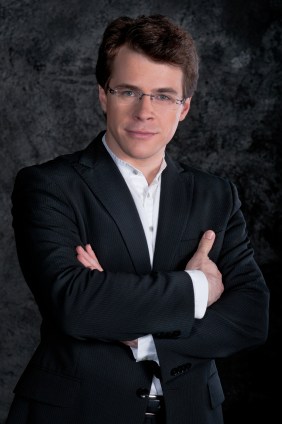
Born in the Czech Republic and described by Gramophone as ‘on the verge of greatness’, Jakub Hrůša is Chief Conductor of Bamberg Symphony, Permanent Guest Conductor of the Czech Philharmonic, Principal Guest Conductor of Tokyo Metropolitan Symphony Orchestra (TMSO), and served as Music Director and Chief Conductor of PKF–Prague Philharmonia from 2009 to 2015.

He is a regular guest with many of the world’s greatest orchestras. Recent highlights have included Bohemian Legends and The Mighty Five – two major series specially devised for the Philharmonia Orchestra; a two-week focus on Martinů and Roussel for Orchestra Philharmonique de Radio France; and performances with the Leipzig Gewandhaus Orchestra, The Cleveland Orchestra, Vienna Symphony, DSO Berlin, The Philadelphia Orchestra, and Los Angeles Philharmonic. Last season, he made his débuts with the Royal Concertgebouw Orchestra and Filarmonica della Scala.

www.jakubhrusa.com