… it is in our idleness, in our dreams, that the submerged truth sometimes comes to the top

– Virginia Woolf

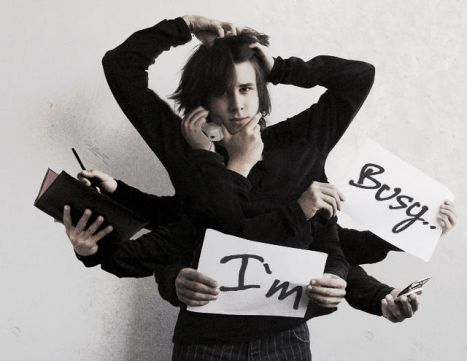
We are all so busy these days. Musicians, by necessity, tend to be busy people – busy practising, performing, creating performing opportunities, meeting and working with colleagues, applying for funding, teaching, preparing lesson plans, doing admin….. The peripatetic nature of our working lives means that we are often trying to keep a variety of balls in the air at the same time, and many of us feel that being busy validates what we do. As a fellow musician tweeted on Christmas Eve,  “does anyone else find Christmas slightly angst-inducing? Feels odd not working.” Because for most musicians work shapes every hour of the day.

But that’s not all….

In today’s modern society many of us seem caught in a “busy trap” – and one which is almost entirely of our own making. Idleness, or doing little or nothing, is considered A Bad Thing because it is perceived as unproductive, while being busy reassures us that we are doing something useful or purposeful with our time. Many of us are busy because of our own ambition or anxiety, or because we’ve become almost addicted to being busy and dread what we might have to face without it. Telling others that we are busy also helps to endorse our activities: I have a concert pianist colleague who emails me on a fairly regular basis to tell me how busy he is with concerts, reeling off lists of works and venues. At first glance, this seems terribly exciting and wonderful that he is keeping so well-occupied doing the thing he loves. On another level, I wonder if it is a perverse form of attention-seeking, a complaint disguised as a boast. In an ideal scenario, I suspect he’d prefer to do less, to have more time to listen to and enjoy music, go to concerts rather than always be the one giving the concert, read, spend time with family and friends, and maybe even embrace idleness now and then as an antidote to the relentless, and self-imposed, treadmill of his profession.

Of course as musicians we need to practise: this article is absolutely not a suggestion that we stop practising and simply loll around in our practise rooms eating chocolate truffles. Music students can often get very quickly caught up in the “busyness” of practising, where things are “done” – scales and exercises rattled off, pieces played through relentlessly –  and these habits of practising are carried forward into their professional lives, with little consideration whether such a regime is truly productive. In our working lives, where so many of us are freelance and peripatetic, it is often necessary to accept work because you don’t know when the next lean patch will come. This can result in us becoming suffocatingly over-scheduled, which in turn can lead to ill-health and anxiety.
being_busy

Social media doesn’t help either: seeing what others are posting, sharing details of their exciting concerts, events and activities, and broadcasting their seemingly vibrant and busy lives across Facebook and Twitter et al may make the rest of us wonder if we are really doing enough. In addition, there’s an avalanche of email that needs to be read and replied to right now, because turning on an auto-reply message may look as if we’re not busy nor sufficiently engaged…….And smart phones, tablets and laptops mean we remain connected 24/7 with no division between our working day and time off. Filling our lives with activity can be exhilarating and invigorating – until that activity, that busyness, becomes overwhelming.

So maybe some of us need to reappraise how we use our time. Sometimes a life event forces such a reappraisal: a friend of mine had a gardening accident at the beginning of 2016 and had to have surgery on her back. While recuperating at home, unable to do much more than potter around her house, she made several important decisions about her working life. The result of this enforced period of reflection led her to leave a job she disliked and set up her own consultancy business. She now works from home – and she works less and achieves more, with a much better work-life balance, with time for her family, herself, and extra-curricular activities such as music and sport which she enjoys.

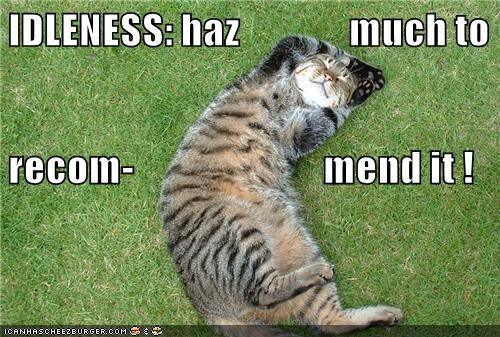
Much is made of “me time”, but too often this feels hard won, desperately shoe-horned into our over-scheduled days as a rare indulgence rather than something that might actually be beneficial, enabling us to work and function better. Taking time off, a “me time” day, can feel like a guilty pleasure, when all around us others are keeping busy. But idleness is good for us: not just an indulgence nor a vice, it is in fact indispensable to the brain, and the space and quietness of idleness can create unexpected connections, resolution of seemingly intractable problems, and those Eureka! moments of inspiration which are crucial to the creative person’s day-to-day life. In addition, our brains require down time to process the information with which we are deluged every day, consolidate memory, reinforce learning, and to recharge the batteries. Even Seneca, writing in the first century, recognised busyness as both a distraction and a preoccupation:

“No activity can be successfully pursued by an individual who is preoccupied … since the mind when distracted absorbs nothing deeply, but rejects everything which is, so to speak, crammed into it”

From the outside, creative people – musicians, writers, artists – quite often seem to be “doing nothing” when they are not actively and, more importantly, obviously engaged in making music, attending book launches, or exhibiting their paintings. But it is that very idleness which triggers new ideas, sparks creativity, and helps develop more focused attention – all important considerations for the musician.

For the idle pianist, may I suggest the following ‘unbusy’ activities which may actually be beneficial:

  • Practise intelligently. We’re constantly being reminded of the benefits of intelligent practise, but all to often we engage in mindless, repetitive note-bashing, which may feel like practising, but is rarely truly productive
  • Exercise more self-compassion and be kind to yourself. So what if you didn’t complete the full three hours of practising this morning because you’re tired from last night’s concert? Allow yourself time to recuperate and recharge: your practising will almost certainly be more productive as a result.
  • Take time away from the practise room to enjoy music. A number of professional pianists whom I’ve interviewed as part of my Meet the Artist series have expressed frustration at the demands of a profession which can rob them of their love of music. Re-connect with the music you love through listening or going to concerts.
  • Time away from the instrument reading scores, listening and simply thinking about the music (playing through sections in one’s head, for example) is always useful and allows one to stand back from the music and consider it more objectively
  • Take regular exercise. This seems obvious too, and yet many of us are too busy to include exercise in our daily routine. Walking or swimming can be particularly beneficial to the musician: it is enforced time away from the instrument while the rhythm of repetitive physical activity can free the mind to process issues encountered during practise, allowing us to work through them in a more considered way.
  • Schedule “doing nothing” time, or even a day off, into your working week, in the way you schedule a task like practising, and don’t feel guilty about it.

My New Year resolution for 2017 is to do less, to be more selective about which events and concerts I attend, to make time for regular exercise, to not feel guilty if I don’t always get in as much practise time as I would like, and to enjoy periods (if only 10 minutes in a day) of idleness. Already this new regime seems to be working: my head is full of new ideas for blog posts and I’ve been inspired to learn some new music from simply spending time listening rather than playing.
idleness
(Lolcat by Sylvia Segal)


Who or what inspired you to pursue a career in music?

I honestly don’t remember the moment that I decided to start playing because I was about two and a half years old, but I do remember my mother teaching the piano for long hours and music always playing in the car. Even now, I hear pieces of music that I didn’t realise that I knew and know them back to front from childhood without knowing what it was!

The decision to pursue music as a career was really made when I was about four; my life already at that point was entirely scheduled around the piano. During my teenage years I made that decision again as a young adult. I rediscovered music on my own terms and realised that there was no way that I could live without music.

Who or what were the most important influences on your musical life and career?

Well this one is easy! In terms of my technique, personal standards, and foundation to becoming a musician my first serious teacher, Jimmy Gibb was invaluable. Douglas Finch has had and continues to have an enormous impact on my musical wellbeing and continues to inspire me. My humanities teacher in New York; John Pagano who teaches at Columbia and Manhattan School of Music in his “Genius and Madness” elective as well as “The Fantastic Imagination” shaped and reinvigorated my belief in the arts. Finally Russ Titelman, the producer of my album about to be released by Sony. His vision, deep understanding, knowledge and love of art is extremely special and I am honoured to have and be continuing to work with him.

What have been the greatest challenges of your career so far?

The greatest challenges have by their very nature been my times of growth and from which I have learnt the most. Rediscovering why I wanted to do music in my teenage years of my own accord and the bridge from child to adult artist was challenging certainly. Believing and rebelieving in one’s own ability and voice is something that I think we all go through. The classical music world is full of exciting and vibrant people at the moment and I think that there is huge potential and hope for a revolution of the whole industry! Being a female has also presented its own challenges throughout my career; I am proud to identify as a feminist.

Which performance/recordings are you most proud of? 

I personally am very fond of the live recording in the finals of the Trinity Soloists’s Competition because it is Prokofiev 3rd piano concerto, probably my favourite piece of music, played with nothing other than pure conviction. Sure, there are flaws, it’s not the world’s best piano, and it’s unedited, but it’s real. Other than that, the album that I have just completed for Sony which is my first commercial album and representative of where I want to go as an artist and where I want to take my audience: Through the doors of perception.

Which particular works do you think you perform best?

I’m very comfortable and happy in the 20th Century. That’s a huge spectrum but I love playing Prokofiev, Shostakovich, Stravinsky, Ligeti, Lutoslawski etc.

How do you make your repertoire choices from season to season?

I’d say a combination of instinct, demand, and what opportunities present themselves to me. It’s generally a balance of things booked long in advance because someone has heard you play a particular piece and would like to hear it again in two year’s time, or sometimes there’s a composer’s anniversary which ties into a theme. Other times I’ve been waiting for a really long to time to have the right programme to fit a piece that I really want to play and then that programme happens naturally and that’s wonderful!

Do you have a favourite concert venue to perform in and why?

I have had many wonderful venue experiences but really it’s down to the audience as to what a place feels like at any given time. A generous audience anywhere makes that the best venue!

Who are your favourite musicians?

I love so many I could go on forever but Martha Argerich for her organic relationship with the piano, Jack White for his innovation and talent, David Bowie for being the master of many faces and never frightened to push a boundary. Jim Morrison for his poetry and reawakening of William Blake, my favourite poet.

What do you consider to be the most important ideas and concepts to impart to aspiring musicians?

To listen to and read as much as humanly possible across the genres, and to be truthful to the reasons that you pursued it in the first place. I am a founding member of the HoneyB Corps, an international civil society comprising skilled practitioners who volunteer their time to rehabilitate communities’ developmental needs like food, water, shelter, and health, and skilled artists who volunteer their time to rehabilitate communities’ formative needs: socially/relationally/artistically/therapeutically/spiritually. The HoneyB Corps is an exceptionally multifaceted and multi-dimensional community that supports and nurtures civil artists, but also deploys them across the world to touch lives, “cross-pollinate” ideas and creativity, and influence genuine conviviality through the cosmic force of art.

What is your present state of mind?

At the moment I am the happiest that i have ever been in my life. People spoke about 27 being a wonderful age and it really has been. Musically I am developing and growing and, most importantly, I am challenged and inspired by those around me.

Harriet’s debut album is due to be released in Spring 2017

Harriet Stubbs began piano studies at the age of three, performing in public a year later. At the age of five she was awarded a full scholarship to the Guildhall School of Music and Drama given by the Elsie and Leonard Cross Memorial Foundation.  She studied with James Gibb, Guildhall’s Emeritus Professor and Ronan O’Hora, Head of Keyboard and Advanced Performance Studies. At the age of seven she had passed all eight piano exams with distinction. 

Read more about Harriet here


I Musicanti, an ensemble formed in 2013 by double bass player Leon Bosch (formerly principal double bass with the Academy of St Martin-in-the-Fields Orchestra), launched their triptych of concerts at St John’s Smith Square with an afternoon recital featuring the world premiere of a new work by South African composer Matthijs van Dijk as the centrepiece. This arresting piece was bookended by Mozart’s Piano Quartet No. 2 in E flat, K493 and Schubert’s evergreen Quintet in A D667, the ‘Trout’.

I Musicanti includes artists who are all distinguished performers, who play in and with the best orchestras in the world, as soloists and chamber musicians. Sunday’s line up featured pianist Peter Donohoe, cellist Richard Harwood, violinist Tamás András and violist Robert Smissen, with Leon Bosch on double bass.

cw-14719-medium
Leon Bosch (photo: Hyatt Studios)

St John’s Smith Square (SJSS) is now my favourite London venue, alongside Wigmore Hall, and while I and my concert companion were waiting for the recital to begin (there was a slight hiatus due to some mysteriously missing piano music, which was, luckily, found!) we perused the SJSS programme of forthcoming concerts and decided what we would like to hear next….. It really is a lovely venue, with a fine acoustic for chamber music, solo piano, choral and orchestral music, and its staff are friendly and helpful.

This elegant programme was guaranteed to dispel any lingering post-Christmas blues. The Mozart was elegantly-turned, warm and affectionate, while the Schubert rippled along as cheerfully as the eponymous fish, all holiday melodies and sunlit rhythms, with some charming interplay between the piano and the other instrumentalists. Peter Donohoe’s touch was bright and joyful, as befits the character of the music. Throughout the concert, there was a very palpable sense of all the musicians thoroughly enjoying both the music and the act of performing together, creating a lovely atmosphere in the venue. When I commented on this to Leon Bosch after the concert, he declared “I can choose who I work with” and he must be applauded for selecting musicians who display not only equal talent but also a shared sense of purpose and musical friendship.

The new work by Matthijs van Dijk, But All I Wanna Do Is Dance, was composed as a response to the extraordinary and unsettling events of 2016 which seem, in the composer’s own words, to have unleashed “a never-ending wave of anger, frustration, hate and bigotry in all shapes and sizes – all issues that need to be addressed, of course, and, once one is aware of them, unable to ignore”. The work is not intended as “a joyous declaration”, but rather a plea against the enormity of world events, an elegy to our inner child, and a wish to be allowed to forget what is going on, if only momentarily.

A haunting solo on the viola begins the work before it begins to open up with the addition of the piano and the rest of the ensemble. This meditative section is interrupted by febrile rhythms, suggesting lively dancing but always tempered with a sense of frustration and a yearning for the innocence of childhood, a time when one didn’t really know or understand what was happening in the world…..

I Musicanti returns to St John’s Smith Square on 5 March with an afternoon concert featuring another world premiere by South African composer Werner Bosch. Further details here

dantobinsmith-432-h1100-q90-rz3-b75Xenakis

Iannis Xenakis (1922-2001) – composer, architect, boffin. Fearsomely experimental, he linked his disciplines by writing and designing co-dependent music and listening spaces. He arguably laid the foundations for modern electronica. And he was one of the first composers to use mathematical theory in creating music.

iannis-xenakis-008
(photo: Ulf Andersen/Getty Images)

Why does Xenakis belong in a pianist’s alphabet? Because his first longer-form work for the instrument has been called ‘the most difficult piano piece ever written’. Clearly seeing this as underperformance of some sort, 12 years later he produced a second piece for solo piano that is, strictly speaking, ‘impossible’. What’s not to like?

In both pieces, Xenakis uses certain mathematical techniques or theories to shape and generate the music. When I heard about this kind of composition in my teenage years, I was suspicious in my ignorance. 1: If it was all down to maths, was it really composition at all, or just some kind of automated exercise? And contrarily, 2: Surely all music – including the really tuneful, harmonious stuff – has mathematical perfection at its root… so why does THIS have to sound so deranged?

I recently decided to go back to Xenakis’s piano music, purely as a listener. I wanted to satisfy myself that without considering ANY of the scientific background – deploying my ear over my brain – it still worked for me, had something non-clinical to offer.

Here is the earlier piece, ‘Herma’:


and the later one, ‘Evryali’:


I was genuinely surprised by some of my reactions.

* I found both pieces enjoyable and invigorating – but I wasn’t expecting to hear such a world of difference between the two. I think in ‘Herma’ you hear the maths, and in ‘Evryali’ you hear the music.

* The unpredictable dance to the extremes of the keyboard in ‘Herma’ make it feel like performance art – raindrops one minute, rubble the next. As a result, the piece attains a kind of spiky ambience.

* In ‘Evryali’, however, I think the sweeping curves in the structure are audible, the notes – however dissonant – seem to belong together, journey with each other. The images it conjures up in my head are geometric, symmetrical – spirals, waves.

There’s a twist in the tale, however. ‘Evryali’ is ‘impossible’ partly because in places it’s written using more than two staves (as you can see on the YouTube video). The pianist must create their own version based on which notes they want to cover and which they can live with leaving out.

Of all things, this reminds me of jazz. Jazz has very little to do with mayhem; rather it is (as the critic Whitney Balliett put it) ‘the sound of surprise’ – the unexpected choices players make within the established parameters. With ‘Evryali’, we seem to have a truly original hybrid: a composed framework through which the pianist can follow their own unique path. I love the idea that from mathematical principles, Xenakis has created a piece dependent, like so much other music, on flexibility, spontaneity and feel.

Adrian Ainsworth

Adrian Ainsworth writes for a living, but mostly about things like finance, tax and benefits. For light relief, then, he covers his obsessions – overwhelmingly music, but with sprinklings of photography and art – on the ‘Specs’ blog, which you can find at

Twitter:


(letter picture Dan Tobin Smith)


