Beyond the Notes

…a virtuoso was, originally, a highly accomplished musician, but by the nineteenth century the term had become restricted to performers, both vocal and instrumental, whose technical accomplishments were so pronounced as to dazzle the public.

Music in the Western civilization by Piero Weiss and Richard Taruskin

Google “virtuoso pianist” and the image search will throw up pictures of Richter, Brendel, Rubenstein, Argerich, Arrau, Rachmaninoff, Liszt, Ashkenazy, Barenboim, Lang Lang, Yuja Wang, Trifonov, Pollini, Cziffra, Gould, Kissin, Uchida, Hough, Pires, Ogdon, Schiff, Cliburn, Hamelin, Schnabel, Cortot, Horowitz, Hess, von Bulow, Andsnes….. The list is seemingly endless, with every significant or “great” pianist of today and previous eras afforded the accolade of “virtuoso”. Along with the pictures there are 100s of articles ranking pianists – the 25 greatest pianists of all time, the 10 greatest living pianists, 50 legendary virtuoso pianists……
martha-argerich
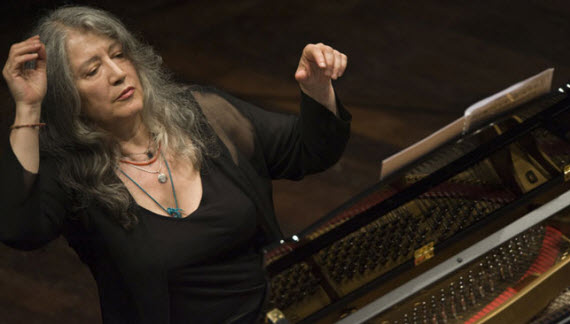
Martha Argerich

The word “virtuoso” literally means “a person who is extremely skilled at something, especially at playing an instrument or performing“. It describes an individual with exceptional and extraordinary technical and musical abilities, but as the opening quote notes, the word is more usually associated with dazzling displays of piano pyrotechnics.

Today virtuosity in the sphere of classical music has become almost synonymous with an over-developed technical facility without a comparable level of musical understanding/interpretation or broader musical education. The word has been misappropriated and more often than not is now attached to the performer who simply plays very fast and loud, or one who attracts more attention to themselves than the music (I am sure we can all think of a few examples…..). It troubles me when the word is used to describe young children playing (seemingly) complex piano repertoire, whose irritating videos are posted across the internet. How many of these “piccoli virtuosi” will actually grow up to be true virtuosi, in the purest, most romantic sense of the word? As we gasp in amazement at these pianists’ fleet fingers and glittering pianistic athleticism, the word has come to mean something rather superficial and derogatory.

Virtuosos are constantly tempted to indulge in an undue exhibition of their wonderful technic, and as many have succumbed to the temptation, the term virtuoso has come to be considered by many as slightly depreciatory, and the greatest artists usually object to having it coupled with their names

W.L. Hubbard et al, 1908

For me, and I suspect others who appreciate the art and craft of pianism, virtuosity transcends technique. It is less about the ability to play the fastest, most treacherous passages of Rachmaninoff or Liszt or to scale the high Himalayan peaks of works like Gaspard de la Nuit or Islamey, or to perfectly execute thousands of scales and other ‘technical exercises’ with amazing dexterity, but rather an aggregate of many skills which enable the pianist to play a million different passages, and to adjust finger and arm weight and touch accordingly to achieve particular effects and sounds, as well as learning to ‘speak’ the language of music through one’s playing and an ability to stand back from the music to allow it to speak on its own terms. Nor is it about flashy piano pyrotechnics and extravagant gestures, which may wow the audience but do not serve the music. Indeed, a number of pianists whom I regard as true virtuosi are also some of the most “immobile” in the profession – Marc-André Hamelin, Murray Perahia and Stephen Hough being notable examples.

A true virtuoso “must call up scent and blossom, and breathe the breath of life”

Franz Liszt

Franz Liszt is usually held up as the first great virtuoso pianist, yet for many he remains merely a “showman” whose virtuosity was a negative attribute. A poseur and a charlatan, superficial and bombastic, whose playing and music was affected, grandiose and vulgar. But Liszt was no superficial showman: in addition to playing his own music, he played all the best music of his day and all the best music which had been written for the piano. He was “the very incarnation of the piano”. In addition, he was a pioneering conductor, concert promoter and champion of young composers (notably Wagner, who described him as “the most musical of all musicians”). His musical outlook in general was noble, transcendental, sacred, orchestral and metaphysical – surely attributes to be admired rather than denounced?

With Liszt, one no longer thinks of difficulty overcome; the instrument disappears and music reveals itself

Heinrich Heine

The virtuoso appreciates and understands that each performance is a “critique” in the purest sense of that term; it is a profoundly thoughtful, insightful, penetrative response to the music in which the performer invests his or her own self in a symbiotic process in which he/she becomes not a re-creator but a collaborator with the composer. The virtuoso respects the demands placed upon him/her by the composer by playing the music with passion, poetry and extraordinary technical ability.

In concerts, the virtuoso approaches each performance, each interpretation as a unique occasion – something I feel is increasingly hard for performers when high-quality recordings are so readily available, benchmarks by which pianistic prowess is measured and which lead audiences to expect a certain manner of playing in live concerts. The virtuoso appreciates that there is no one “perfect” rendition of a Beethoven Concerto or Chopin Étude; that one should never aspire to have the “last word” on any work. It is for this reason that many of us seek out the same virtuoso performers in the same repertoire, either on disc or in concert, to hear how their view of certain works changes and develops over time. Yet for some musicians the constant revisiting of certain works (the Beethoven piano sonatas, for example), or playing them on different instruments (fortepiano, for example) suggests an overly reverential or literal attitude to the composer’s “intentions” as they perceive them, and a wish/need to make a final statement on this music and set it in stone. Such performances, for me at least, may come across not as virtuosic but rather as academic, mannered or overly precious.

…the further a performance must travel to reach the origin of the music, the more the artist demonstrates the measure of both his conscience and his genius: his virtuosity

Mark Mitchell, Virtuosi!

The virtuoso takes risks in performance – by which I do not mean coming to the stage ill-prepared. Indeed, the most risk-tasking, vertiginous, exciting or profound performances are often the result of many long hours – nay, years – spent living with the music. Even a flawed virtuoso performance can excite, delight and enthrall far more than a perfect non-virtuosic performance: technique over artistry nearly always fails to impress.

The virtuoso understands that while there is no “definitive” performance, one can create, in that “existing in the moment” of the live concert experience a performance whose communicative and emotional power renders it “perfect”. Audiences know this too – these are the performances during which we enter a state of wonder, from which we emerge speechless, hardly able to put into words what we have just heard (often the hardest concerts to review, in my experience!) because the experience of the performance has awakened in us what it means to be a sentient, thinking, feeling, living, breathing human being. I would cite concerts by Maurizio Pollini (in Pierre Boulez’s Second Piano Sonata), Steven Osborne (in Messiaen’s Vingt Regards), Marc-André Hamelin (in Liszt, Ives and Stockhausen) and Richard Goode (in Schubert’s last three piano sonatas) which transported me into that particular state of wonder.

The miracle of an aristocratic performance lies in its capacity to vaporize everything that surrounds it, and in particular all efforts to appropriate it.

Mark Mitchell, ibid.

And there’s more – because for me true virtuosity goes beyond the notes. It includes the ability and willingness to tackle a wide range of repertoire. By which I do not mean playing a lot of pieces, as some younger performers feel they should be doing, but rather playing a broad range of music. One of the chief exponents of this art is, in my humble opinion, Maurizio Pollini. Not many pianists would programme Chopin’s 24 Preludes, a selection of Debussy’s Preludes Book 1 and Pierre Boulez’s Sonata No. 2 in the same concert. Stephen Hough and Marc-André Hamelin are also notable examples in their championing of lesser-known repertoire and their own compositions.

People will always be impressed by fleet fingers and noisy piano acrobatics, but for me the most profound musical experience often comes in the quietest, slowest or most intimate moments in music when a venue as large as the Royal Festival Hall shrinks to the size of Schubert’s salon through the pianist’s power of expression and musical intuition and understanding. That is true virtuosity.
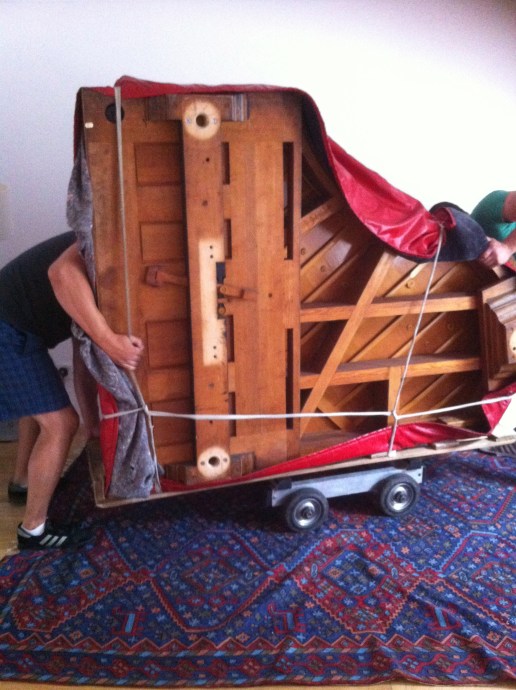


Moving house can be a stressful business without the additional worry of moving your piano (grand or upright). A specialist mover can help make the process much easier, ensuring your precious instrument is properly cared for before, during and after its move……

10 ways to protect your piano during a house move

Your piano is one of your most precious possessions – and could well be the most valuable. So it’s fair to assume to don’t want it to get so much as a scratch during a house move. Here are some tips on protecting your piano that will help your move go without a hitch – and keep your instrument pristine.

IMG_1951

1. Don’t move the piano on its casters

These tiny wheels look nice. But they’re only designed to move the piano very short distances, and won’t take the weight for long.

2. Check whether your home insurance covers you for moving

Some insurance policies will cover your piano during transit, but many don’t. Check the small print on your insurance policy. Or, better, call your insurance company and double-check. If you’re not covered automatically, you might want to consider paying an extra supplement.

3. Choose an experienced removal company

A good, professional removal service makes all the difference. The more experienced, the better. Try to compare at least three different movers to get a range of quotes. That way, you can rule out any that are suspiciously low.

4. Let the removal companies visit your house to assess the move

Once you’ve spoken to a few movers, let them come to your house to do an assessment in person. That way they can see how big your piano is – as well as how many stairs are involved, plus any access issues outside your property. Removal companies need to know this so they can work out how many movers and what size vehicle to send on moving day, as well as what equipment they’ll need. Speaking of which…

5. Check your removal company has the right equipment

An experienced mover will want to protect your piano using a padded piano bag or think blankets. Ask if they have padded piano bags of the right size. Do they also have a piano shoe (also called a piano slipper)? This is a heavy-duty wooden sledge with straps used to securely move your piano in your house or flat. They also need a piano skate, dolly or trolley. These are to move your piano from your property to the van. Whatever wheeled conveyance your removal company has, ask if it has brakes.

6. Check your removal company’s insurance

Your removal company must have public liability and goods in transit insurance. The latter will cover you in the event that your piano is damaged during the move. But make sure to check how much the company is covered for. Smaller removal companies may need to call their insurers to arrange for more cover when transporting an expensive grand or baby grand piano – so be sure to check.

7. Review your removals company’s terms and conditions

Before making the final choice on your mover, check their term and conditions. While it’s tempting to pack or wrap your piano yourself to save money, this could make it harder to claim on your mover’s goods in transit insurance in the event that anything does go wrong. In most cases, if your mover doesn’t see the condition of piano before the move, you won’t be able to make a successful claim. Discuss this with your removal company.

8. Prepare for the move ahead of time

Before moving day, take care of the basics. Lock the lid of your piano if you can to keep the keys protected. Before the movers arrive, clear a path in your house or flat so they can manoeuvre the piano more easily. If you can, make sure the path is clear in your new property as well.

9. Take photos of your piano before the move

This will help you check the condition of your piano once the move is done. And it will also alert you to any existing scratches or chips that you might not have spotted – so you don’t blame the removal company for something that isn’t their fault!

10. Get your removal company to check out the piano after the move

Good specialist piano removers will do this as a point of honour. Many of them will even tune your piano after the move as part of the service. This is a nice touch that ensures your piano is not only in good physical condition, but ready to play as soon as you are. If in doubt, ask. Even a good smaller or non-specialist remover will likely have an agreement with a local piano tuner so they can offer this service.

These top tips have been compiled by buzzmove.com, a site for people to easily compare removal companies in one place.


This is a sponsored post. All information was supplied by buzzmove

Disclaimer: The Cross-Eyed Pianist does not necessarily endorse organisations that provide sponsored posts which link to external websites, and does not endorse products or services that such organisations may offer. In addition, The Cross-Eyed Pianist does not control or guarantee the currency, accuracy, relevance, or completeness of information found on linked, external websites. However, every effort is made to ensure such information contained on this site is accurate at the time of publication.

A personal journey through Schubert’s penultimate piano sonata (read previous posts here)

With a good deal of reading, of both the score and books and articles on this sonata and Schubert’s piano music in general, and listening, and thinking, by late November 2014, it was time to embark on some serious note learning……

As noted in an earlier post, Schubert’s late piano sonatas are large-scale works: their first movements alone, with exposition repeats intact, can last as long as an entire sonata by Beethoven, and this “heavenly length” can pose problems for the performer in terms of stamina (it takes me around 43 minutes to perform the D959 in its entirety, with repeats), retaining a clear sense of the cyclic elements which recur throughout the work, and appreciating the overall narrative of the work. From my reading of the score, and other materials, I had concluded that the second movement, the infamous Andantino was the most “difficult” (though this is all relative when considering such a large piece of music!). This is the movement which provokes the most discussion and theorising amongst pianists, musicologists, critics and audience members, many of whom believe this movement is the clearest indication we have of Schubert’s emotional and mental instability, probably due to his advanced syphilis. Musically, it feels like an aberration in the overall scheme of the D959, which is generally warm-hearted and nostalgic in its character and prevailing moods, and it is unlike anything else Schubert wrote. “Its modernity is incredible even today” (Andras Schiff, Schubert Studies). It has a “desolate grace behind which madness lies” (Alfred Brendel), the lyricism of the outer sections providing a dramatic foil to the savage intensity of the middle section. Its position in the overall structure of the sonata creates a striking contrast between the majesty and expansiveness of the opening movement and the quirky, playful Scherzo which follows it. In my own practical approach to this movement, I decided to ignore much of the psychobabble and work with what is given in the text.

The movement is in straightforward ABA (ternary) form, the A section reprised with a more intricate left-hand accompaniment and a haunting triplet figure in the treble.

The middle, B, section unfolds initially like a Baroque fantasia (bars 73-86), with descending diminished seventh arpeggios which take the music into C-minor. Gradually all the elements speed up (Schubert indicates this through note sub-divisions, striking modulations and volume of sound) and the music continues to build with increasing savagery via extreme registers and the use of trills to sustain tension, eventually arriving at C-sharp minor and culminating in dramatic fortissimo chords (bars 120/121). A short recitative-like section follows, interrupted by dramatic chords, before a serene passage reminiscent of the G-flat major Impromptu (D899/3). The A material returns at bar 159.

The opening A section combines a barcarolle bass line with a right-hand melody redolent of several of the Heine songs and ‘Der Leiermann’ from Winterreise, while its expressive qualities and character relate to the song ‘Pilgerweise’, also in F-sharp minor. Some pianists like to treat this movement as a barcarolle with a storm in the lagoon (the middle section). Daniel Barenboim has called A section “a melancholy folksong”, a description which I particularly like: the lilting style of a folksong is implied by the recurring bass figure and the simple melody from which is unleashed the turbulent and chaotic middle section.

A rather chilly, tread-like quality in the bass is created through the use of staccato on the first note and the slur on the second and third notes, with the third note lighter (although this is not indicated specifically after bar 2, we can safely assume that this is what Schubert intended throughout). I found it helpful to think of this in terms of a cello or bass pizzicato figure: it needs resonance but should also be balanced with the right-hand melody. I don’t sustain the staccato note with the pedal here, and indeed the pedal is used sparingly throughout this section. The repeated use of falling seconds and a limited range, together with largely understated dynamics, create a feeling of stasis and melancholy contemplation. With so many repetitive elements in this section, it is necessary to create contrasting musical colour (for example between bars 1-8 and 9-12). At bar 19 the music moves into A Major, one of those magical Schubert moments where the mood seems at once warmer and yet even more poignant because it is expressed pianissimo. I like to use the una corda pedal for this pianissimo passage, and the corresponding passage at bars 51-54 to create a sense of other-worldliness.

getfileattachment
Page 3 of the Andantino with my annotations
Other details worth noting throughout this section (bars 1-32) are the inner voices in bars 7, 15, 16, 25, 29 and 31 (and then at bars 39 and 57), and the ornaments which should be played on the beat (though many celebrity pianists prefer to do otherwise, admittedly to beautiful effect). For example, in bar 15, the A sounds with the E sharp on the beat and the turn at bar 23 begins on the note above, but need not be pedantically with the bass C sharp. (See David Montgomery Franz Schubert’s Music in Performance for more on ornaments.)

At this point I feel it’s important to mention the overall tempo of the movement. It is marked Andantino, and needs a sense of forward propulsion. Despite this, some pianists tend more towards Adagio, and at this speed there is, in my opinion, a very fine line between the music sounding meditative or funereal, or even boring, which I do not feel is appropriate. I have aimed towards a metronome mark of quaver = c90 bpm. A quick browse through Spotify reveals quite a broad range of tempi, with some versions of the Andantino coming in at well over 8 minutes (Schnabel, Pollini, Uchida, Perahia) and others at around or under 7 minutes (Lupu, Schiff, Goode).

Here is Uchida

And Lupu


And so on to the B section, which leads to the most passionately and extraordinary part of the movement and indeed the whole sonata. It is typical of Schubert to create sections in the music which are vividly contrasting yet also complementary: the A sections are reflective in their lyrical subject while the middle section completely destroys this frame of reference, only for it to return at the reprise of the A section. It is the strong contrast between the A and B sections which makes this movement so arresting and so powerful.

The bridging passage begins at bar 69, and is preceded by three bars whose dark, descending chords mirror in their reverse movement the chords which form the opening sentence of the sonata (and a figure which recurs elsewhere). I like to create a sense of mystery in bars 69-72 with a wetter pedal effect and a little rubato to suggest improvisation as the music unfolds. The main difficulty I encountered in the entire B section was maintaining a sense of the underlying 3-in-a-bar pulse and clarifying the different note hierarchies, while also continuing the improvisatory/fantasia feel. In order to achieve this, I drilled the section strictly with the metronome for several weeks, a tedious but necessary task for once the note hierarchies and subdivisions were well learnt, I could let the music break free, particularly in bars 102-122, to create a rising sense of hysteria. 

A clear sense of pulse is required through bars 124-146, as the recitative section takes over. After all the “busyness” of the previous page, I like to create a sense of the music being restrained once again, with the contrasting disruption of the FFz chords. At bar 147 the music arrives in C-sharp major in a passage which seems directly drawn from the G-flat Impromptu. At bar 159 the A section returns, this time with the more elaborate LH figure and the triplet figure in the RH, which should have the quality of a separate, “other” voice. Throughout this section, it is important to retain a sense of the opening melody and a similar lightness in the LH to that in the opening bass figure (note the demi-semiquaver rests at the end of each bar). Bars 177-182 the RH accented E’s sound as tolling bells above the melody, and once again I like to use the una corda pedal here to give a more ethereal quality and to create contrast with the forte chords in bars 185/66 and the descending figure in bar 187. The movement closes with dark, arpeggiated chords which echo those at bars 65-68, and which are transformed into sparklingly joyful spread chords in the Scherzo which follows. I try to keep these in tempo until bars 198/9 at which I introduce a rit. to signal the close of the movement. The dynamic landscape here is very quiet and muted, and I feel una corda is perfectly acceptable in these closing statements.

It took me three months of fairly consistent work to bring the movement to a point where I felt confident enough to perform it for others (for friends at home). I then “rested” it for some weeks while I turned my attention to the first movement, the subject of the next article.

… it is in our idleness, in our dreams, that the submerged truth sometimes comes to the top

– Virginia Woolf

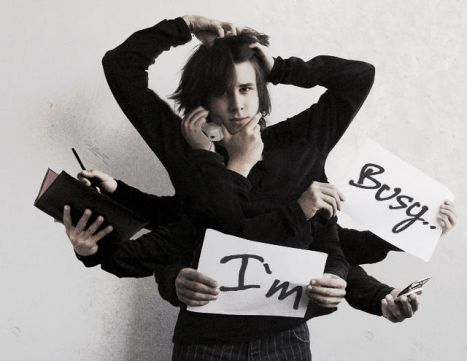
We are all so busy these days. Musicians, by necessity, tend to be busy people – busy practising, performing, creating performing opportunities, meeting and working with colleagues, applying for funding, teaching, preparing lesson plans, doing admin….. The peripatetic nature of our working lives means that we are often trying to keep a variety of balls in the air at the same time, and many of us feel that being busy validates what we do. As a fellow musician tweeted on Christmas Eve,  “does anyone else find Christmas slightly angst-inducing? Feels odd not working.” Because for most musicians work shapes every hour of the day.

But that’s not all….

In today’s modern society many of us seem caught in a “busy trap” – and one which is almost entirely of our own making. Idleness, or doing little or nothing, is considered A Bad Thing because it is perceived as unproductive, while being busy reassures us that we are doing something useful or purposeful with our time. Many of us are busy because of our own ambition or anxiety, or because we’ve become almost addicted to being busy and dread what we might have to face without it. Telling others that we are busy also helps to endorse our activities: I have a concert pianist colleague who emails me on a fairly regular basis to tell me how busy he is with concerts, reeling off lists of works and venues. At first glance, this seems terribly exciting and wonderful that he is keeping so well-occupied doing the thing he loves. On another level, I wonder if it is a perverse form of attention-seeking, a complaint disguised as a boast. In an ideal scenario, I suspect he’d prefer to do less, to have more time to listen to and enjoy music, go to concerts rather than always be the one giving the concert, read, spend time with family and friends, and maybe even embrace idleness now and then as an antidote to the relentless, and self-imposed, treadmill of his profession.

Of course as musicians we need to practise: this article is absolutely not a suggestion that we stop practising and simply loll around in our practise rooms eating chocolate truffles. Music students can often get very quickly caught up in the “busyness” of practising, where things are “done” – scales and exercises rattled off, pieces played through relentlessly –  and these habits of practising are carried forward into their professional lives, with little consideration whether such a regime is truly productive. In our working lives, where so many of us are freelance and peripatetic, it is often necessary to accept work because you don’t know when the next lean patch will come. This can result in us becoming suffocatingly over-scheduled, which in turn can lead to ill-health and anxiety.

being_busy

Social media doesn’t help either: seeing what others are posting, sharing details of their exciting concerts, events and activities, and broadcasting their seemingly vibrant and busy lives across Facebook and Twitter et al may make the rest of us wonder if we are really doing enough. In addition, there’s an avalanche of email that needs to be read and replied to right now, because turning on an auto-reply message may look as if we’re not busy nor sufficiently engaged…….And smart phones, tablets and laptops mean we remain connected 24/7 with no division between our working day and time off. Filling our lives with activity can be exhilarating and invigorating – until that activity, that busyness, becomes overwhelming.

So maybe some of us need to reappraise how we use our time. Sometimes a life event forces such a reappraisal: a friend of mine had a gardening accident at the beginning of 2016 and had to have surgery on her back. While recuperating at home, unable to do much more than potter around her house, she made several important decisions about her working life. The result of this enforced period of reflection led her to leave a job she disliked and set up her own consultancy business. She now works from home – and she works less and achieves more, with a much better work-life balance, with time for her family, herself, and extra-curricular activities such as music and sport which she enjoys.

Much is made of “me time”, but too often this feels hard won, desperately shoe-horned into our over-scheduled days as a rare indulgence rather than something that might actually be beneficial, enabling us to work and function better. Taking time off, a “me time” day, can feel like a guilty pleasure, when all around us others are keeping busy. But idleness is good for us: not just an indulgence nor a vice, it is in fact indispensable to the brain, and the space and quietness of idleness can create unexpected connections, resolution of seemingly intractable problems, and those Eureka! moments of inspiration which are crucial to the creative person’s day-to-day life. In addition, our brains require down time to process the information with which we are deluged every day, consolidate memory, reinforce learning, and to recharge the batteries. Even Seneca, writing in the first century, recognised busyness as both a distraction and a preoccupation:

“No activity can be successfully pursued by an individual who is preoccupied … since the mind when distracted absorbs nothing deeply, but rejects everything which is, so to speak, crammed into it”

From the outside, creative people – musicians, writers, artists – quite often seem to be “doing nothing” when they are not actively and, more importantly, obviously engaged in making music, attending book launches, or exhibiting their paintings. But it is that very idleness which triggers new ideas, sparks creativity, and helps develop more focused attention – all important considerations for the musician.

For the idle pianist, may I suggest the following ‘unbusy’ activities which may actually be beneficial:

  • Practise intelligently. We’re constantly being reminded of the benefits of intelligent practise, but all to often we engage in mindless, repetitive note-bashing, which may feel like practising, but is rarely truly productive
  • Exercise more self-compassion and be kind to yourself. So what if you didn’t complete the full three hours of practising this morning because you’re tired from last night’s concert? Allow yourself time to recuperate and recharge: your practising will almost certainly be more productive as a result.
  • Take time away from the practise room to enjoy music. A number of professional pianists whom I’ve interviewed as part of my Meet the Artist series have expressed frustration at the demands of a profession which can rob them of their love of music. Re-connect with the music you love through listening or going to concerts.
  • Time away from the instrument reading scores, listening and simply thinking about the music (playing through sections in one’s head, for example) is always useful and allows one to stand back from the music and consider it more objectively
  • Take regular exercise. This seems obvious too, and yet many of us are too busy to include exercise in our daily routine. Walking or swimming can be particularly beneficial to the musician: it is enforced time away from the instrument while the rhythm of repetitive physical activity can free the mind to process issues encountered during practise, allowing us to work through them in a more considered way.
  • Schedule “doing nothing” time, or even a day off, into your working week, in the way you schedule a task like practising, and don’t feel guilty about it.

My New Year resolution for 2017 is to do less, to be more selective about which events and concerts I attend, to make time for regular exercise, to not feel guilty if I don’t always get in as much practise time as I would like, and to enjoy periods (if only 10 minutes in a day) of idleness. Already this new regime seems to be working: my head is full of new ideas for blog posts and I’ve been inspired to learn some new music from simply spending time listening rather than playing.

idleness
(Lolcat by Sylvia Segal)