 I believe it was the pianist Claudio Arrau who said that passion intensifies with age, and I am sure this is the case when one hits a significant birthday, as I did last winter.
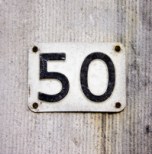
50 – it feels like a large number. It’s half a century, and for a while leading up to my Big Birthday, it felt very significant. Admittedly, I felt the same when approaching my 40th birthday – in fact, I felt worse because at that time I was going through a difficult period in my life, trying to find my identity after emerging from the fog of the early years of motherhood and feeling invisible to everyone but my child. But at 40 I returned to the piano seriously, with a passion, after a break of over 15 years, and I quickly realised I had been waiting for this creative impulse to awaken in me again. Repressed for the years while I was first working in London, moving house, getting married, starting a family, it now re-emerged with the maturity which comes from age and experience, and which has, over the last ten years, led me to fully immerse myself in music and writing, which is where I had always truly wanted to be.
When I was a teenager I wanted to be a professional musician (I also wanted to be a published writer….), but a dismissive comment by a school music teacher quickly scotched that desire. Looking back, he was probably being realistic, but the comment stung and has remained with me into adulthood, becoming the spur which urged me into the place where I am now, professionally (a piano teacher and writer on music). I’m neither a concert pianist nor a novelist, but I do perform, gaining satisfaction and pleasure from doing so, and this blog and my concert reviewing and other writing more than satisfies the writerly itch. Now, at 50, I am realistic about my capabilities, but I do not feel that the entry into my second half-century should be a time when I sit back and rest on my laurels.
The decade of my 40s was an interesting one. It was a time when I learnt that the boundaries of one’s emotional life are not completely impermeable, and that being married does not make one immune to another person’s attention and admiration. It was also the decade during which I established an identity (and not just my writerly nom de plume), now that my son was growing more independent, and I could explore and re-explore the things that I cared about as a teenager and young adult (music, art, literature). Establishing this blog (in 2010) marked my decision to share my activities with others in a wider public forum, and it has led to many fascinating and inspiring encounters with wonderful musicians (via the Meet the Artist series) and forging new connections and friendships with fellow writers, bloggers, concert reviewers, teachers, amateur pianists and music lovers.
***
As a musician, maturity (in terms of years, rather than attitude) gives one perspective, the ability to take the long view, and not sweat the small stuff quite so much (because there is Big Stuff looming: old age and what that brings with it…). I think the “passion” Arrau speaks of comes from the realisation that one has a finite amount of time left, that one should seize the day and make the most of it. For me this has led to a greater sense of mindfulness about what I do, being fully “in the moment” when I play the piano (and indeed elsewhere in my life), trying to always look forward rather than going back over what has been, combined with a maturity of outlook which enables me to really appreciate what I have now.
Maturity can also bring confidence and the self-assuredness of knowing one has found one’s niche and metier. In my musical life, the single most significant and confident step I have taken as I’ve matured is that I’ve ceased constantly comparing myself to others (a toxic habit which can fuel resentment, jealously, and lack of self-esteem), and instead try to follow Schumann’s advice:
“As you grow older converse more with scores than with virtuosi“
As we mature, it is important to recognise the value of what we have to say, personally, as musicians and to measure that against the score, rather than other people’s perceptions, preconceptions or interpretations of the music. Thus the challenge becomes between oneself and the music, rather than constantly seeking or needing validation from peers, audiences or colleagues (though I do have a handful of trusted friends, colleagues and a teacher/mentor whose opinions I value and respect), and one appreciates that it is more important to gain approval from the works themselves by living with them and in them.
I have much to look forward to in the next decade (and beyond, I hope), with a number of personal projects on the horizon this year which will offer new challenges, both intellectually and musically. And, all things considered, 50 is just a number……





 The Cross-Eyed Pianist