Brahms and Messiaen do not immediately strike one as natural concert programme companions: Brahms teems with polyphony and darkness while Messiaen is about light, timbre, vertical chords, vibrant colour – indeed Messiaen hated Brahms, declaring that “it’s always raining” in Brahms’ music.

But unlikely or daring juxtapositions can create interesting and unexpected contrasts and connections, as one work shines a new light on another, enriching both listener and performer’s experience – and this was certainly my take on this remarkable concert by Pierre-Laurent Aimard and Tamara Stefanovich at St John’s Smith Square which combined Brahms’ Sonata in F minor, Op 34b with Messiaen’s Visions de l’Amen.

If there are connections to be made between the music that made up this large-scale programme it is that both works are mighty musical edifices, two great mountains which transcend mere notes on the page and which demonstrate each composer’s wish to remain in long moments of emotional distress, relaxation or ecstasy. Both works also display a high level of perfectionism in their structures and organisation, replete with many details, motifs and musical pathways which could easily become blurred in a lesser performance.

Read my full review here


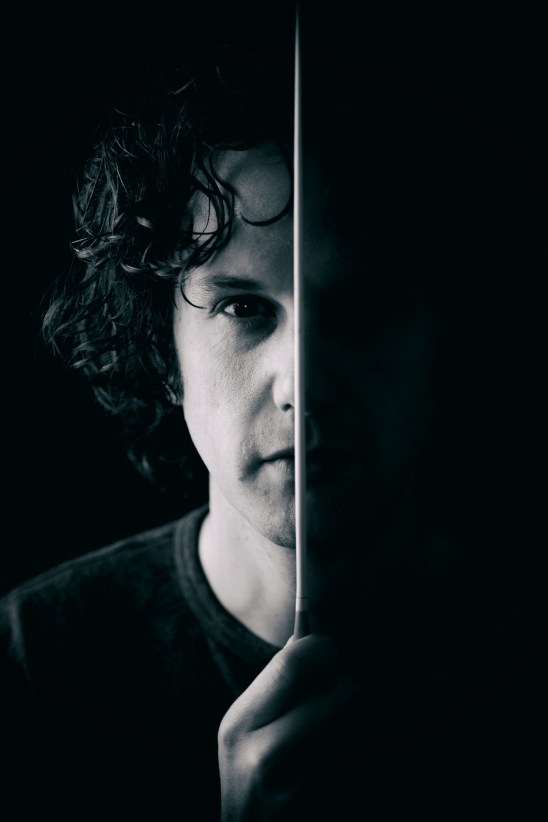
(picture credit Neda Navaee)


The Southbank Centre (SBC) yesterday announced its 2017/18 programme and there’s an embarrassment of riches for lovers of the piano and its literature with concerts featuring established international artists and rising stars. I am particularly looking forward to performances by Maurizio Pollini, Vikingur Olaffson, Leif Ove Andsnes, Mitsuko Uchida and Artist-in-Residence Pierre-Laurent Aimard, who will be performing Ligeti’s Etudes.

Young virtuosos

This year’s rising stars, Katia Buniatishvili, Alice Sara Ott and Benjamin Grosvenor offer a kaleidoscope of contrasting personalities and styles, while Bertrand Chamayoux makes his International Piano Series debut in the opening concert of the season.

Music from the North

As part of the festival Nordic Matters, Vikingur Olaffson makes his debut in this year’s series  with Brahms’ Piano Sonata No.3 and its five movements containing echoes of Beethoven’s fifth symphony, alongside that most quintessential of Nordic performers, the Norwegian Leif Ove Andsnes.

The unmissable virtuosos

Enjoy a tremendous range of musical masterpieces while being thrilled by virtuosity with world-famous figures such as Maurizio Pollini, Stephen Hough and Paul Lewis.

A new partnership

Two recitals continue Southbank Centre’s partnership with Mitsuko Uchida. Renowned for her outstanding interpretations of Schubert, this piano legend embarks on the first of her recitals featuring the piano sonatas, from the boundless energy of the G major Sonata to the emotional depths plumbed by the sonata in B major.

Offering a different perspective, Southbank Centre Artist in Residence, Pierre-Laurent Aimard, throws light on 20th century scores with his performance of Ligeti’s Etudes as part of a weekend to celebrate the composer’s music.

These events go on general sale at 10am on Thursday 23 February.

Source: SBC website

Who or what inspired you to take up composing, and pursue a career in music?

My parents were both professional violinists, so the likelihood is that I was an embryo even as my mother played in the midst of all the instruments- quite an introduction to music! In addition my aunts were also musicians and so it seemed that music was the stuff of life.

To be a composer was the earliest desire I recall having for myself, although after that I tried many other ambitions as a growing adolescent, including going into politics.

I think a turning point came when I discovered Mahler at age 16, that’s when I understood what music can be more fully than before. Then when I went to study at the Royal College of Music, I was introduced to the avant garde of that time, i.e. Stockhausen etc, and I saw how music can be at the cutting edge. Since then I have attempted to redefine the cutting edge as once again melodious and to rededicate music to what it does best – the expression of emotion.

Who or what were the most significant influences on your musical life and career as a composer?

I would cite the late romantic era as the single greatest influence – the grandeur and vision combined with the emotional intensity are hall marks of that era.

But as a child of the mid 20th century I was also deeply influenced by film music Bernard Hermann, John Barry, John Williams, Ennio Morricone – and of course these were in turn influenced by the late romantic.

I would also mention the great American musicals

Amongst people who have influenced me, firstly my parents who provided an environment in which music making was like the air I breathed, whether it was my parents accompanying one another on violin and piano or playing the Bach double for two violins or my father playing the accordion, or both with my aunts on piano or violin not forgetting my brother on drums, or my older cousin Paul Lewis who is a distinguished composer of TV and film music and now increasingly of concert music. Then I should mention my extraordinary piano teacher in Brighton, the late Christine Pembridge. She taught at Roedean girl’s public school and privately at home in Port Hall.

A remarkable musician and teacher, she transmitted her passion for music with a northern directness. It was she who animated my ability to play and through her I gained direct exposure to the great music of Bach Beethoven Schubert Debussy and Rachmaninov. Among her other pupils, before me, was composer Howard Blake of ‘The Snowman’ fame. Her fine teaching prepared me for the Royal College of music which was my next great field of influence. Here I met contemporaries and great friendship with William Mival, now head of composition there. William was a devoted connoisseur of new music and introduced me to Tippett, Stockhausen and Boulez. I would later go on to rebel against the atonal establishment as I came to see it, but the initial stimulus of exposure to its heartlands and the decade I then spent exploring and writing in its styles was the essential formative experience that made my later enlightenment possible.

Once this rebellion happened I was in trouble but almost immediately found a distinguished friend in the form of the great Estonian composer Arvo Pärt. I was introduced to him in the mid 90s by his publisher and we got on immediately. I believe he identified with my struggle having had a struggle himself to escape the Soviet Union. He liked my music and gave me very direct help by splitting a commission fee with me to write music for the 900th anniversary of Norwich Cathedral. He wrote ‘The True Vine’ and I wrote my Missa Brevis. A remarkable man of vision and personal humanity.

Then a few years later, while working with South Bank Sinfonia I discovered their patron was the legendary Vladimir Ashkenazy when he came to conduct them. I asked for and was given an introduction. We found affinity immediately on the issue of tonality and he wrote to me positively about the music I was writing for the orchestra. Within a couple of years he arranged for my Symphony ‘Elixir’ to be recorded and released on Naxos. He remains a great friend and support.

Another great friend was the actor the late Corin Redgrave of the Redgrave clan.He produced my opera Manifest Destiny at the Tricycle Theatre and Ralph Steadman designed the sets. Corin, an activist campaigner along with his sister Vanessa Redgrave and wife Kika Markham( my close friend) have all supported my sometimes controversial pathway. Without them it would have been much more difficult and lonely.

What have been the greatest challenges/frustrations of your career so far? 

For the first decade of my career broadly my twenties i ran an ensemble for the performance and commission of new works, The Grosvenor Group. We made some radio 3 recordings and were well supported by various trusts. Then as I approached 30 I underwent a Road to Damascus type conversion to Tonality as I began to compose more full time myself.

Simultaneously I understood that the unmitigated tonalism of my works would not be acceptable to the new music establishment as serious new music and thus began the greatest challenge of my career.

The establishment view was – and remains – based in the atonal paradigm. To challenge this is the same as challenging any establishment- very dangerous.

I felt that I needed not only to produce the work but at the same time to speak out- or even demonstrate. In particular I became involved in a group who booed a Birtwistle opera in 1994.This produced the most incredible outcry and rumble in the press that went on for years

This was captured on television here

and eventually led me to have to sue News International for libel which I did successfully in 2000.

The in 2003 I wrote with playwright Dic Edwards my opera ‘Manifest Destiny’ about suicide bombers who renounce violence and become peace makers. The press nevertheless accused me of glorifying terrorism , a serious criminal offence. Again I sued this time the Daily Mail Group. I won in the High Court but was defeated at Appeal and bankrupted by Associated Newspapers Ltd

What are the special challenges/pleasures of working on a commissioned piece?

Knowing that it will be performed and I will be paid.

What are the special challenges/pleasures of working with particular musicians, singers, ensembles and orchestras?

Having the opportunity to work within a dialogue in which changes and adjustments can be made as part of the working process

Of which works are you most proud?

I would have to cite first ‘Manifest Destiny’. This is a work which aspires to reflect and process the current geo-politics and translate then into a convincing human drama and then transmute the content onto a higher plane of transcendence. In this regard the opera seems to serve its purpose having had over 30 performances and several productions. With Dic Edwards the librettist we also managed to produce a work which has proven prescient to this day.

Also ‘The Year’s Midnight’, a meditation on the Holocaust which was broadcast on radio 4 on the first Holocaust memorial day in 2001; my music in memoriam the 51 people who drowned in the Thames in the Marchioness river boat disaster of 1989, Requiem for the Young; and my music in memoriam the former Leader of the Labour Party John Smith,  ‘A Live Flame’ .

How would you characterise your compositional language?

Super Tonal

How do you work?

I type straight into the computer like writing a letter, with no sound, just hearing in my head

Who are your favourite musicians/composers?

Prince, Miles Davis, John Barry, Eminem, Mahler, Bruckner, Wagner, Bach, Elgar, Rachmaninov, Debussy, Mozart, Schubert, Schumann, Brahms, Scriabin

What is your most memorable concert experience?

Karl Bohm conducting the last three Mozart Symphonies with the Vienna Philharmonic in the Royal Festival Hall in 1978 – life changing visionary experience.

What do you consider to be the most important ideas and concepts to impart to aspiring musicians?

Music is a unique portal into the human soul

Keith Burstein was born in Brighton, England. He came from a musical family; both parents were classical violinists who played for Sadlers Wells Ballet, The Royal Philharmonic Orchestra, the BBC Ulster Orchestra and the Halle Orchestra as well as for the Royal Opera House. (Originally of Russian-Jewish extraction, the family name had been anglicised to Burston). Burstein held two scholarships at the Royal College of Music in London where he studied composition with Bernard Stevens and John Lambert. Post-graduation, he continued his composition studies with Jonathan Harvey. This was a period of great discovery for him.

Read more about Keith Burstein here

Beyond the Notes

…a virtuoso was, originally, a highly accomplished musician, but by the nineteenth century the term had become restricted to performers, both vocal and instrumental, whose technical accomplishments were so pronounced as to dazzle the public.

Music in the Western civilization by Piero Weiss and Richard Taruskin

Google “virtuoso pianist” and the image search will throw up pictures of Richter, Brendel, Rubenstein, Argerich, Arrau, Rachmaninoff, Liszt, Ashkenazy, Barenboim, Lang Lang, Yuja Wang, Trifonov, Pollini, Cziffra, Gould, Kissin, Uchida, Hough, Pires, Ogdon, Schiff, Cliburn, Hamelin, Schnabel, Cortot, Horowitz, Hess, von Bulow, Andsnes….. The list is seemingly endless, with every significant or “great” pianist of today and previous eras afforded the accolade of “virtuoso”. Along with the pictures there are 100s of articles ranking pianists – the 25 greatest pianists of all time, the 10 greatest living pianists, 50 legendary virtuoso pianists……

martha-argerich
Martha Argerich

The word “virtuoso” literally means “a person who is extremely skilled at something, especially at playing an instrument or performing“. It describes an individual with exceptional and extraordinary technical and musical abilities, but as the opening quote notes, the word is more usually associated with dazzling displays of piano pyrotechnics.

Today virtuosity in the sphere of classical music has become almost synonymous with an over-developed technical facility without a comparable level of musical understanding/interpretation or broader musical education. The word has been misappropriated and more often than not is now attached to the performer who simply plays very fast and loud, or one who attracts more attention to themselves than the music (I am sure we can all think of a few examples…..). It troubles me when the word is used to describe young children playing (seemingly) complex piano repertoire, whose irritating videos are posted across the internet. How many of these “piccoli virtuosi” will actually grow up to be true virtuosi, in the purest, most romantic sense of the word? As we gasp in amazement at these pianists’ fleet fingers and glittering pianistic athleticism, the word has come to mean something rather superficial and derogatory.

Virtuosos are constantly tempted to indulge in an undue exhibition of their wonderful technic, and as many have succumbed to the temptation, the term virtuoso has come to be considered by many as slightly depreciatory, and the greatest artists usually object to having it coupled with their names

W.L. Hubbard et al, 1908

For me, and I suspect others who appreciate the art and craft of pianism, virtuosity transcends technique. It is less about the ability to play the fastest, most treacherous passages of Rachmaninoff or Liszt or to scale the high Himalayan peaks of works like Gaspard de la Nuit or Islamey, or to perfectly execute thousands of scales and other ‘technical exercises’ with amazing dexterity, but rather an aggregate of many skills which enable the pianist to play a million different passages, and to adjust finger and arm weight and touch accordingly to achieve particular effects and sounds, as well as learning to ‘speak’ the language of music through one’s playing and an ability to stand back from the music to allow it to speak on its own terms. Nor is it about flashy piano pyrotechnics and extravagant gestures, which may wow the audience but do not serve the music. Indeed, a number of pianists whom I regard as true virtuosi are also some of the most “immobile” in the profession – Marc-André Hamelin, Murray Perahia and Stephen Hough being notable examples.

A true virtuoso “must call up scent and blossom, and breathe the breath of life”

Franz Liszt

Franz Liszt is usually held up as the first great virtuoso pianist, yet for many he remains merely a “showman” whose virtuosity was a negative attribute. A poseur and a charlatan, superficial and bombastic, whose playing and music was affected, grandiose and vulgar. But Liszt was no superficial showman: in addition to playing his own music, he played all the best music of his day and all the best music which had been written for the piano. He was “the very incarnation of the piano”. In addition, he was a pioneering conductor, concert promoter and champion of young composers (notably Wagner, who described him as “the most musical of all musicians”). His musical outlook in general was noble, transcendental, sacred, orchestral and metaphysical – surely attributes to be admired rather than denounced?

With Liszt, one no longer thinks of difficulty overcome; the instrument disappears and music reveals itself

Heinrich Heine

The virtuoso appreciates and understands that each performance is a “critique” in the purest sense of that term; it is a profoundly thoughtful, insightful, penetrative response to the music in which the performer invests his or her own self in a symbiotic process in which he/she becomes not a re-creator but a collaborator with the composer. The virtuoso respects the demands placed upon him/her by the composer by playing the music with passion, poetry and extraordinary technical ability.

In concerts, the virtuoso approaches each performance, each interpretation as a unique occasion – something I feel is increasingly hard for performers when high-quality recordings are so readily available, benchmarks by which pianistic prowess is measured and which lead audiences to expect a certain manner of playing in live concerts. The virtuoso appreciates that there is no one “perfect” rendition of a Beethoven Concerto or Chopin Étude; that one should never aspire to have the “last word” on any work. It is for this reason that many of us seek out the same virtuoso performers in the same repertoire, either on disc or in concert, to hear how their view of certain works changes and develops over time. Yet for some musicians the constant revisiting of certain works (the Beethoven piano sonatas, for example), or playing them on different instruments (fortepiano, for example) suggests an overly reverential or literal attitude to the composer’s “intentions” as they perceive them, and a wish/need to make a final statement on this music and set it in stone. Such performances, for me at least, may come across not as virtuosic but rather as academic, mannered or overly precious.

…the further a performance must travel to reach the origin of the music, the more the artist demonstrates the measure of both his conscience and his genius: his virtuosity

Mark Mitchell, Virtuosi!

The virtuoso takes risks in performance – by which I do not mean coming to the stage ill-prepared. Indeed, the most risk-tasking, vertiginous, exciting or profound performances are often the result of many long hours – nay, years – spent living with the music. Even a flawed virtuoso performance can excite, delight and enthrall far more than a perfect non-virtuosic performance: technique over artistry nearly always fails to impress.

The virtuoso understands that while there is no “definitive” performance, one can create, in that “existing in the moment” of the live concert experience a performance whose communicative and emotional power renders it “perfect”. Audiences know this too – these are the performances during which we enter a state of wonder, from which we emerge speechless, hardly able to put into words what we have just heard (often the hardest concerts to review, in my experience!) because the experience of the performance has awakened in us what it means to be a sentient, thinking, feeling, living, breathing human being. I would cite concerts by Maurizio Pollini (in Pierre Boulez’s Second Piano Sonata), Steven Osborne (in Messiaen’s Vingt Regards), Marc-André Hamelin (in Liszt, Ives and Stockhausen) and Richard Goode (in Schubert’s last three piano sonatas) which transported me into that particular state of wonder.

The miracle of an aristocratic performance lies in its capacity to vaporize everything that surrounds it, and in particular all efforts to appropriate it.

Mark Mitchell, ibid.

And there’s more – because for me true virtuosity goes beyond the notes. It includes the ability and willingness to tackle a wide range of repertoire. By which I do not mean playing a lot of pieces, as some younger performers feel they should be doing, but rather playing a broad range of music. One of the chief exponents of this art is, in my humble opinion, Maurizio Pollini. Not many pianists would programme Chopin’s 24 Preludes, a selection of Debussy’s Preludes Book 1 and Pierre Boulez’s Sonata No. 2 in the same concert. Stephen Hough and Marc-André Hamelin are also notable examples in their championing of lesser-known repertoire and their own compositions.

People will always be impressed by fleet fingers and noisy piano acrobatics, but for me the most profound musical experience often comes in the quietest, slowest or most intimate moments in music when a venue as large as the Royal Festival Hall shrinks to the size of Schubert’s salon through the pianist’s power of expression and musical intuition and understanding. That is true virtuosity.