vhoyland-ii

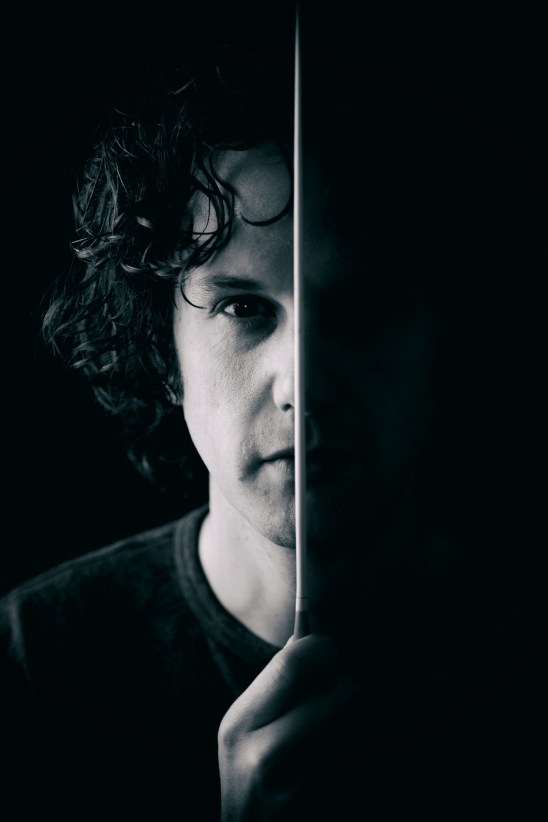
Who or what inspired you to take up composing, and pursue a career in music?

Myself. But then Bernard Rands my tutor and Bill Colleran at Universal Edition (London/Vienna).

Who or what were the most significant influences on your musical life and career as a composer?

Bruno Maderna, Luciano Berio, Messiaen. Historically: J.S. Bach, Webern, and late Mahler.

What have been the greatest challenges/frustrations of your career so far?

They were the 4 major works written for the BBC Symphony Orchestra. I have at least 4 new works still waiting on first performances. But I remain patient.

What are the special challenges/pleasures of working on a commissioned piece?

Time. I work slowly and with painstaking care. My music is sometimes complex and it is crucial that performers receive as near perfect copy of performance materials as is possible. I do my best and I have a fine copyist. UE taught me this, way back in 1972.

What are the special challenges/pleasures of working with particular musicians, singers, ensembles and orchestras?

The pleasures are being there for rehearsals. Some conductors are exceptional (Sir Andrew Davis), some work seriously hard (Martyn Brabbins), others you may never wish to see again. New Music Ensembles, string quartets and solo performers have been the most satisfying to work with. Lifelong friendships are made.

Of which works are you most proud?

“WULF” for 24 voices (amplified) and 24 instrumentalists – yet to receive a first performance; “The Attraction of Opposites” for 2 pianos; the orchestral trilogy, “Vixen”, “Qibti” and Phoenix”; “Hey Presto!” written for BCMG conducted by Diego Masson, happiest of all.

How would you characterise your compositional language?

Proudly European but, like Bartok, drawing on cultures further afield and from the distant past.

How do you work?

In my music barn, composing, still, on manuscript paper. However, most work has been carried out in Sicily. The climate, the food and wines kept me going, and going well, so producing the goods. I also found plenty of time to read, to feed my imagination.

Who are your favourite musicians/composers?

Musicians such as Melinda Maxwell – oboe, Simon Limbrick – percussion, Rolf Hind – piano, BCMG, The Arditti Quartet. Composers I already listed as influential on my work. Still living? The works of Birtwistle, Ferneyhough, Tom Ades, David Sawer, Julian Anderson and Sam Hayden interest me.

What is your most memorable concert experience?

Experiences: Simon Rattle conducting all Mahler and some Messiaen with the CBSO, Symphony Hall, Birmingham.

What do you consider to be the most important ideas and concepts to impart to aspiring musicians?

Feed your imagination and let it run. I always ask myself the question “What if?” Be your own best critic and bin a lot.

Where would you like to be in 10 years’ time?

Where I am now.

What is your idea of perfect happiness?

Being with the right person and being amongst friends.

What is your most treasured possession?

It is my 40-year-old Pavoni, brass and copper, coffee machine.

What do you enjoy doing most?

Walking the hills.

What is your present state of mind?

Pensive.


Born in Yorkshire in 1945, Vic Hoyland’s earliest interests were in painting, calligraphy and architecture, but after completing an Arts degree at Hull University and a prize winning work was submitted to the BBC, he decided to concentrate on music. Wilfrid Mellers invited Vic to undertake a doctorate at the then new music department at York University where his tutors were Robert Sherlaw Johnson and Bernard Rands. From 1980-1984 he was Haywood Fellow at the Barber Institute, then after two years at York University he returned to Birmingham as a full-time lecturer responsible for MDD, an interdisciplinary programme between music, drama and dance. He was subsequently Professor in Composition at Birmingham until his retirement in 2011. In 2015 he was made Emeritus Professor, in recognition of his longstanding and valued contribution to the University of Birmingham.

Commissions have come from many festivals – Aldeburgh, Almeida, Bath, Cheltenham, Warwick and Stratford, Huddersfield, South Bank and York – from organisations such as the BBC Symphony Orchestra and ensembles such as Lontano, the Arditti Quartet, Lindsay Quartet, BCMG, Endymion and Vocem. Works prior to 1994 are held by Universal Edition (Vienna). Works after 1994 are held by Composers Edition. Works include In transit for large orchestra which, together with Vixen, was recorded by the BBC Symphony Orchestra for NMC records. Most of Vic’s music has been broadcast on BBC Radio 3. The Other Side of the Air and Token are also available on NMC records. The second work in his orchestral triptych, Qibti was premiered at the Barbican on 18 December 2003 and conducted superbly by Sir Andrew Davis.

Read more at Vic Hoyland’s website

The concert is complete, the applause is given generously. The performer bows, acknowledging the audience and their applause, and leaves the stage. The applause grows more enthusiastic and the performer returns once again to take a bow and thank the audience for their appreciation. As the performer leaves the stage again, the applause may begin to fade or increase in volume, at which point the performer will return to the stage, and a little faux-modest pantomime may ensure: “Me?”, the performer seems to indicate, “you want me to play again?”. The audience quickly settles into attentive silence and the performer returns to the piano. The first notes are heard, and you may whisper to your neighbour, asking them if they know what the piece is.

The word “encore” is French and has a variety of meanings – still, longer, yet, again, but not actually “play some more”. It entered the English language as a corruption of the Italian word “ancora” (“again”), and it was used from the early 18th century by audiences of Italian opera in London. Curiously, when French and German audiences request an encore they say “Bis” (‘twice’), which is what the Italians do as well. Encores are generally short pieces played at the end of the main concert. Many encore pieces are technically challenging and ostentatiously virtuosic, a beguiling or witty little treat tossed out to amuse and delight the audience, a final firework that sends everyone off on a high, or a calming salve after the pyrotechnics of the main programme. Encores should always feel totally spontaneous, though of course they must be practised and finessed.

“Applause is a receipt, not a bill” said the pianist Artur Schnabel, implying that no soloist should feel obliged to play an encore at the end of a concert, no matter how noisily the audience applauds, or rises to its feet. Indeed for some programmes an encore would be inappropriate. So you rarely hear an encore after a performance of the Goldberg Variations, or Beethoven’s or Schubert’s last three piano sonatas: such is the philosophy and otherworldliness of these works that to say anything else would be unbefitting. (Also, the performer is probably too tired to play anything else……)

The timing of the encore is important in creating anticipation and drama between soloist and audience. To play an encore after just one curtain call may seem a little over-eager. The pianists whom I quizzed in advance of writing this article were generally agreed that “third [curtain] call; one encore; short and scintillating” was appropriate. A further encore can be considered an additional treat, but there is nothing worse than the soloist who doggedly soldiers on and offers an encore, or encores, because they’ve prepared for it, even though the audience response does not necessarily warrant it. Most performers are generally alert to the finishing time of concerts as well, aware that some people have trains to catch, or simply want to get to the pub before closing time!

Russian pianists tend to be generous in their encores: in 2007 Evgeny Kissin famously gave not one, not two but twelve encores at his Carnegie Hall performance, tossing off piece after piece to his adoring audience. The concert finally ended at a quarter to midnight…… Grigory Sokolov is also magnanimous in rewarding his audiences with a slew of encores, including the complete Schubert ‘Moments Musicaux’ and sparkling miniatures by Jean-Philippe Rameau, as well as works by Bach, Chopin, Brahms and Scriabin.

13735_show_landscape_large_01
Evgeny Kissin
For the audience, an encore can offer a little more personal contact with the pianist. Performers are often more relaxed when they come to play an encore – the stress and strain of the main concert has passed, and they can unwind with a little bon bon of music, lightening the atmosphere for themselves and audience. Encores are often a chance to hear unfamiliar or unexpected repertoire, and a well-chosen encore can round off an evening very nicely. Some performers even specialize in encores, and build entire programmes and recordings based on them.

Amongst the most beloved piano encores are Liszt’s Transcendental and Paganini Etudes, specifically Feux-Follets and La Campanella, and not forgetting his Mephisto Waltz and Hungarian Rhapsodies, Schulz-Evier’s grandiose paraphrase of Strauss’s ‘The Beautiful Blue Danube’, Moszkowski’s exuberant Étincelles, ever-popular waltzes, impromptus, Nocturnes, Preludes and Mazurkas by Chopin, Schubert’s Impromptu in G-flat, Preludes by Rachmaninov, Debussy’s l’Isle Joyeuse, the two Arabesques and various Preludes, and etudes and paraphrases by Godowsky.

As a regular concert-goer, I’ve encountered some unusual encores, including a quotation by Horace, read by harpsichordist Mahan Esfahani after his performance of the Goldberg Variations at the 2011 BBC Proms, Dudley Moore’s ‘Colonel Bogey’ in the style of a Beethoven Sonata, played by Piers Lane at the Wigmore Hall, and described by the pianist as “a rather naughty piece!”, and at the Queen Elizabeth Hall in 2013, Polish pianist Piotr Anderszewski played Bach’s complete French Suite No. 5 as an encore. He had already played the work as part of the main programme, but he just “wanted to play it again”, and it was a truly delightful end to a very memorable concert.

Piers Lane/Dudley Moore Beethoven Sonata parody


Schulz-Evier – The Beautiful Blue Danube


woman-cannot-stop-coughing

We are drawing towards the close of the most bronchial season in our concert halls – those winter months when, despite heavy colds, blocked sinuses and raging sore throats, devotees of live music valiantly venture forth from their sickbeds to interrupt other people’s enjoyment of the performance….

A concert-going blogger friend of mine coined the phrase “coughing music” after a concert in honour of Steve Reich was replete with much throat-clearing, rasping and hacking between pieces (this was in November, at the height of the coughing music season). And the previous month a concert at the inaugural London Piano Festival was interrupted by much barking in the balcony (the offender refusing to leave the auditorium), so much so that a member of the house staff made an announcement requesting people stifle their coughing before the start of the next part of the concert.

But such behaviour is not entirely confined to the winter months and a number of studies have sought to examine why people cough at concerts. Professor Andreas Wagener from the University of Hannover examined the phenomenon in a study published in 2013, and concluded that it is deliberate, sometimes passive aggressive behaviour (to indicate boredom during a slow section of the performance), or may be intended to “test unwritten boundaries of courtesy, to comment on the performance or simply document one’s presence”. In other words, it may be attention-seeking….. Add to this the fact the many concerts goers are “of a certain age” and may suffer from common complaints and conditions of old age such as hypertension or congestive cardiac failure, one form of medication for which, ACE inhibitors, can have the side effect of a dry cough. Concert halls can also be hot, dry or air-conditioned places – the ideal atmosphere for the dread tickly cough to develop.

Coughing can also be infectious – listen during the break between movements of a symphony or quartet and you’ll hear one person start, then another, then another…..and before long there is a whole cacophony of coughing. Interestingly, people pipe down pretty quickly when the music starts again, which suggests that Professor Wagener may have a point, that such behaviour is not accidental. I also think people can feel tense at a concert: this anxiety stems from a concern to do the right thing at a classical concert, to observe the correct concert etiquette. A friend of mine used to fret so much about the possibility that she might cough during a concert and disturb those around her, that a nervous cough would start almost as soon as the music began.

For the performer, a noisy, coughing audience can be distracting. In her book ‘Sleeping in Temples’, the pianist Susan Tomes notes that performers generally feel sympathetic towards the “necessary cough”, the one that can’t be helped: “It is not nearly as annoying as the uninhibited bark of a cough ringing out from the stalls like a gunshot“. Other performers have felt moved to react to coughing: the pianist Alfred Brendel once warned the audience: “Either you stop coughing or I stop playing,” and I suspect that a command from a musician of such statue would have caused almost immediate silence in the auditorium.

The Wigmore Hall has a sensible approach to coughing which seems to work without making people feel uncomfortable. Boiled sweets are for sale with programmes (sucking a sweet not only moistens the throat but also provides marvellous, if short-lived, distraction from the tickliness) and an announcement is made before the concert, politely requesting audience members “stifle coughing as far as possible”. As soon as this request is made, the hall usually erupts in a storm of throat-clearing and nose-blowing before the audience settles quietly, ready for the performance.

The American avant-garde composer John Cage recognised the audience’s special “interactivity’ – coughing, rustling programmes etc – and used it as a compositional tool in his ground-breaking work 4’33”. Here, the ambient sound of the concert hall – the hum of air-conditioning, people moving or coughing, street sounds from the outside the hall – becomes the “performance”, thereby challenging received notions of what constitutes “a concert” and music itself.
Advice to concert goers
  • If you know in advance that your cough is likely to be disturbing to other concert goers (because you have a cold or virus), stay at home! In addition to the noisy interruption, coughing also spreads germs.
  • Take mints or boiled sweets to eat during a concert (but make sure you unwrap them very quietly, as this can also be irritating to other concert goers!)
  • Take a bottle of water to sip from during the performance. Most venues won’t allow you to take drinks from the bar into the auditorium but a discreet bottle of water is acceptable
  • If your cough becomes really noisy during a performance, leave the hall quietly

nc_bw_1_credit-jim-hinson

Who or what inspired you to pursue a career in music?

I suppose my family – I was surrounded by music form a young age and never considered anything else really!

Who or what were the most important influences on your musical life and career?

My teachers (including my grandmother on piano and mother on violin!), youth orchestra and choir conductors such as Adrian Brown and Ralph Allwood, and of course a host of colleagues and conductors who I have had the privilege to assist or work with, from Mark Elder to Vladimir Jurowski.

What have been the greatest challenges of your career so far?

Keeping up with learning all the repertoire! Juggling family….

Which performance are you most proud of? 

I feel that our recent memorised performances with Aurora Orchestra have genuinely broken new ground. Some of the Proms with these have been quite special.

Which particular works do you think you perform best?

Ask me in 40 years

How do you make your repertoire choices from season to season?

With difficulty! A mixture of repertoire I know, to alleviate the burden on learning, plus taking the right repertoire to new orchestra.

Do you have a favourite concert venue to perform in and why?

Nothing beats a Prom at the Royal Albert Hall

What is your most memorable concert experience?

Playing the violin in the National Youth Orchestra with Berlioz’ Symphonie Fantastique under the baton of Sir Roger Norrington – I had an out-of-body experience!

What do you consider to be the most important ideas and concepts to impart to aspiring musicians?

Relax – it’s an obsession, a career, an ambition, yet it’s also a way of life!

Nicholas Collon and Aurora Orchestra continue an extraordinary once-in-a-lifetime journey through the complete cycle of Mozart’s piano concertos. Staged over five years (2016–20) and featuring a host of stellar guest pianists and other collaborators, Mozart’s Piano presents all 27 concertos as part of a single series for the first time in the UK.   

The concerts uses the piano concertos as a starting point for a kaleidoscopic journey across centuries and contrasting repertoire.  The result is a virtuosic, vibrant and playful series which illuminates Mozart’s life, music and legacy in new and unexpected ways. 

Further information

Nicholas Collon is founder and Principal Conductor of Aurora Orchestra and Principal Conductor of the Residentie Orkest in The Hague, a position he takes up in 16/17. His skill as a communicator and innovator has been recognised by both critics and audiences alike – he was the recipient of the 2012 Critics’ Circle Award for Exceptional Young Talent – and he is known as an imaginative programmer encompassing an exceptionally wide range of music.

Under Nicholas Collon’s artistic direction, Aurora Orchestra have an enviable reputation in the UK and increasingly abroad and are recognised for their creative programming and concert presentation. 2016 will see the launch of two major series in London; as Resident Orchestra at Kings Place they will begin a 5-year cycle of the complete Mozart Piano Concertos, and as Associate Orchestra at the South Bank Centre they will present a new series ‘The Orchestral Theatre.’ They have appeared at the BBC Proms every year since 2010, including performances of Mozart’s 40th symphony and Beethoven’s 6th, in which the entire orchestra performed from memory.

For Warner Classics Nicholas and Aurora have released two critically acclaimed recordings: ‘Road Trip’featuring music by Ives, Copland, Adams and Nico Muhly (winning the prestigious 2015 Echo Klassik Award for ‘Klassik Ohne Grenzen’) and ‘Insomnia’ with music by Britten, Brett Dean, Ligeti, Gurney and Lennon & McCartney.

In addition to his work with Aurora, Nicholas is in demand as a guest conductor with other ensembles in the UK and abroad. A regular guest with the Philharmonia, City of Birmingham Symphony Orchestra and BBC Philharmonic, in recent seasons he has also worked with the London Philharmonic; BBC Symphony; Zurich Tonhalle; Brussels Philharmonic; BBC National Orchestra of Wales; Spanish National Orchestra; Hallé Orchestra; Orchestre national du Capitole de Toulouse; Trondheim Symphony; Danish National Symphony Orchestra; Orchestre National de Lyon; Bamberg Symphony Orchestra; Les Violons du Roy; Scottish Chamber Orchestra; Warsaw Philharmonic; Academy of Ancient Music; London Sinfonietta; Royal Northern Sinfonia and Ensemble Intercontemporain and collaborated with artists such as Ian Bostridge, Angelika Kirchschlager, Vilde Frang, Pekka Kuusisto, Francesco Piemontesi, Steven Isserlis and Jean-Efflam Bavouzet.

Future engagements include returns to the Philharmonia Orchestra, Orchestre national du Capitole de Toulouse, BBC Philharmonic, City of Birmingham Symphony Orchestra, Trondheim Symphony, Danish National Symphony Orchestra, the Hallé and Academy of Ancient Music and debuts with Deutsches Symphonie-Orchester Berlin; Gurzenich Orchestra; Finnish Radio Symphony Orchestra; Mozarteum Orchester Salzburg; Les Siècles; National Youth Orchestra of Great Britain and Orquesta Sinfónica de Galicia.

In opera Nicholas has worked with English National Opera The Magic Flute, Welsh National Opera Jonathan Harvey’s Wagner Dream and Glyndebourne on Tour Rape of Lucretia. Future projects includeTurn of the Screw at Aldeburgh and LSO St Luke’s with Aurora Orchestra.  A champion of new music Nicholas has conducted over 200 new works including the UK or world premieres of works by Unsuk Chin, Phillip Glass, Colin Matthews, Nico Muhly, Olivier Messiaen, Krzysztof Penderecki and Judith Weir.


(Photo: Jim Hinson)