 Who or what inspired you to take up composing, and pursue a career in music?
My answer to this seems to change every time I answer it. My granddad was a massive influence on me musically. I come from a working class family. My granddad played jazz, and was mostly self-taught, but phenomenally gifted. He had an unbelievable ear. He regretted not being able to make more of his own talent, due to poverty and being drafted for WWII. So he was very encouraging of me in the early years, and remained so through my life. We sort of did our best to work things out together, by reading and listening together. But at the age of eight, I was dragged to Texas by a deranged father who had a fantasy of being a cowboy in the Wild West. He was an unemployed alcoholic almost the whole five years we were there, living his fantasy at the expense of his wife and kids. Apart from what we got at school, I was mostly self-taught until the age of 16. I taught myself the piano until that age.
Whilst in Texas I discovered classical music and Beethoven in particular. We had this percussion teacher at School who did these arrangements of classical music for the percussion group. It was very inspiring what he was doing, getting kids into listening to classical music that way. We played the arrangements, which would inspire us to go and listen to the originals – which many of us did. He sort of fostered this group of dedicated students around him, such that we would spend all our free periods hanging out in the music block. I heard Tchaikovsky’s Romeo and Juliet, Rimsky-Korsakov’s Scheherazade, and then I heard Beethoven and it was like – BAM!!! I’d previously been listening to the Beastie Boys and Iron Maiden. But when I heard Beethoven, all of that seemed so boring in comparison. So from then on, I just hoovered up classical music by looking for LPs in junk shops (there was nothing like BBC Radio 3 in Texas!). This music seemed all the more powerful at the time as my life was otherwise was so absolutely awful: I was being abused at home, bullied at School, we were living on food stamps and I thought nothing would save me. Then I heard Beethoven, and that was it! It seemed to contain the whole universe in it, and to speak to humanity at both its finest and most desperate. I get annoyed when I hear idiots these days saying classical music is elitist, and is only for the rich. That’s rubbish. I was a poor kid, in the most desperate of situations. And not only was that music speaking to me, it as the only thing speaking to me. Not only did it speak to me, it saved me. It saved my life…no two ways about it. From that moment on I discovered and that music had enormous potential to transform people in a way nothing else could, and decided that I would become a composer. Looking back that seems ludicrous: I had no access to proper musical education, and I was in the middle of a cultural void. But that didn’t matter. I decided that’s what I was going to do, so I did it. Moreover, I realized that if I was going to do it, I’d have to do it basically all on my own. And I think that was a good lesson because, to be a real composer, that’s basically what you do have to do anyway. Education can help you, but in the end you have to have something to say and be determined to see it through. I remember consciously thinking, ‘Right, I don’t have the access to the tuition those other kids have. So to be anywhere near as good as them, I’ll have to work twice as hard. But I want this to be my life…so I’ll work four times as hard as they do.’ And I did: I practised the piano at least seven hours a day, even on school days, by getting up very early. On weekends I practised the whole day. That in itself was hard, because the piano was from a charity shop that we got for free. Most of the strings were broken, so I would learn the fingering at home, and then take the music to school to play it on pianos with strings at lunchtime and break time. It sounds weird, but I think that did me good as it helped me to develop both an ear and an imagination. It helped me to hold pieces in my head, and to imagine what they might sound like rather than to hear what they did sound like. I may not have developed the composer’s imagination without that. I don’t know.
Who or what were the most significant influences on your musical life and career as a composer?
As I say above, my granddad, and my high school percussion teacher in Texas. The next piece of good fortune was ending up at the University of Exeter, and meeting the composer Philip Grange, who became my main teacher. I got in to university on a fluke, largely thanks to him seeing something in me in interview. I totally screwed up my A-levels. We were back in the UK then, and I did my A-levels whilst living in B&B emergency accommodation as registered homeless. I took my compositions to Phil in an interview, and he just saw what I was trying to do, so I got a silly low offer…so I just scraped in! Phil went on to become a life-long mentor and friend. He saw something in me, and was very inspiring, giving hours of his time. He also introduced me to Peter Maxwell Davies, who in turn became an advocate. At the same time at Exeter, there was the pianist James Clapperton and the musicologist Ken Gloag (both postgrads there). They similarly took me under their wings, and provided this combination of raw talent (James) and fierce intellect (Ken) such that they were the sort of musical Yin and Yang that shaped my approach. I think it also helped that they were both working class communists, and felt a need to protect me from all the Exeter posh kids. But that’s not fair on my fellow students: there was an inspiring crowd of undergrads around me there too: People like John Fosbrook, and James Mustard and Ellie Lane. Ken sadly passed away earlier this year. I miss Ken.
What have been the greatest challenges/frustrations of your career so far?
I have mostly found music inspiring and wonderful, rather than challenging or frustrating. The challenges and frustrations come with the stuff, and people, around music. I find the politics around classical music especially frustrating and, well ignorant, at present. But music is bigger and better than all that nonsense. I don’t really think of composition as a career: it’s a life choice: a decision to be part of something transcendent. If you want a career, become a banker or sell insurance. If you set out as a composer and expect it to be a career, you will be frustrated at every turn. If you think of it instead as being a process of having music in your head, a vision of what music can be, and writing it down and sharing that with people, it will work out better. There is nothing I abide more than ‘the professional composer’ – the sort of composer that swans around posing, more in love with the idea of *being* a composer than with actually composing. There is also the composer that is more interested in being talked about than listened to…but don’t get me on to that! Just watch Tony Hancock’s The Rebel if you want to get an idea of what I am talking about.
What are the special challenges/pleasures of working on a commissioned piece?
I don’t really care whether a piece is commissioned or not. I write what is in my head, irrespective of that. When I was younger, I used to think the worst thing you could do was miss a deadline. So I found that challenging. For me pieces need to grow for a long time inside me to be what I want them to be. I can see the reasoning in that way of thinking (not missing a deadline): no one wants to let people down. But as I have gotten older I realize there is something far worse than letting people down: letting music down (which ultimately amounts to a far worse form of letting people down). Music deserves the very best we can give it, no matter what. And if you compromise a piece by rushing to meet a deadline, no one remembers that you met the deadline or not, or at least they don’t remember that for very long. They do remember if you wrote a good piece or a crap one. And they remember that for a very long time. I only agree deadlines very far in the future. I write slowly; and I don’t take on many commissions.
What are the special challenges/pleasures of working with particular musicians, singers, ensembles and orchestras?
I like to work with people that I like – as people and as musicians. Finding a performer that you really really click with is a real joy, and once I find those people, I tend to want to work with them again and again, because in working with them I feel that I learn more about music itself and about life and humanity. I don’t understand this obsession with ‘the professional composers’ of being commissioned by every ensemble under the sun. What’s that about? Being a composer is not so different than being in a band. It can take years to find the right drummer, the right guitarist or whatever. Once you’ve found the right drummer, why would you keep changing for the sake of it? Robert Plant was interviewed in 1975 and was asked if he would ever consider leaving Led Zeppelin and go solo. His response was total incomprehension, ‘But if I did that, who else would I have for a drummer, or a guitarist or a bassist than these guys? No, that just wouldn’t feel right.’ Unfortunately Bonham died in 1980, and then Plant went solo because as far as he was concerned that was the end of Led Zeppelin. Okay, I am not in a rock band, so I don’t need to stick to just three collaborators! But if I work with someone, it is always with a view to forming a long-term relationship that allows us both to learn and grow. I’ve had some wonderful collaborators: the Quatuor Danel (for whom I’ve written three quartets), The Lawson Trio, Richard Casey, Ignacio Lara Romero, the BBC Philharmonic… Mostly, I see working with someone as just forming an intimate human relationship. And I have never been into one-night stands!
Of which works are you most proud?
‘Starlight Squid’ was written in 1998. It’s had dozens of performances. I could lament that I only have one hit. But I’m completely glass half full on that one. I just think, ‘at least I have one hit!’ I like that piece very much as it is so fun. I suppose my Third Quartet is the greatest artistic achievement: a single movement 50-minute work that is one single shape. That took a lot of technique to accomplish. I also like my little ‘Scordatura Squid’ violin pieces, and my piano work ‘Notturno dalle fiamme del’inferno’.
How would you characterise your compositional language?
Meticulous in detail whilst dramatic in structure. Music can have it all. I aim to write music that is optimistic, positive, direct and life affirming. When I was a student in the 1990s, I went to Huddersfield year after year and just seemed to be hearing this endless stream of dark, lugubrious, grey and pessimistic pieces; whilst on the other hand there was this facile post-minimalist thing going on that seemed like a timely shot of Prozac amidst all the depressiveness. I set out to reject all that: I wanted to create music that was direct, sincere, full of energy, made clear statements, and was not afraid to say what it wants to say – what I want to say.
How do you work?
In my head…almost entirely in my head. I used to make loads of sketches. With experience, and as my ear has improved, I have learnt to do most of that sketching in my head now. It had to happen as I was getting confused by all the paper, and losing stuff and getting all mixed up. It takes more time this way (in my head), but I think only because I am more thorough as a result. The advantage is the music is with me all the time, and I can work on it all the time – which is handy in boring meetings. I write everything down at the end in pencil sketch, and then go from there to Finale. I never ever do creative work at a computer, and discourage any student from doing that.
Who are your favourite musicians/composers?
Beethoven, Bach, Led Zeppelin, Ligeti and Bill Evans. There are hundreds of others, of course. But those are the ones I keep coming back to. My favourite songs are Somewhere Over the Rainbow and Dancing Queen – again, the optimism!
What is your most memorable concert experience?
That’s easy! James Clapperton playing the complete piano works of Xenakis in Exeter in 1992. It was such a powerful experience because it was so completely out-of-place and, well, just plain weird that it was happening there of all places. There we were, in the middle of nowhere, in a music department that was basically a cupboard, and James just played this concert of the most hard-edged music you’d ever heard in your life. I have *never* heard anything like it. Remember, at that time Xenakis was not the cannoized figure he is now. In those days, it was still completely shocking music. I didn’t know or understand what the hell I was hearing. I couldn’t decide whether it was rubbish or genius or what, but I loved the way it challenged me and made me think. And of course, James’s playing was at its absolute peak and the most exciting thing you could hear anywhere in the world.
What do you consider to be the most important ideas and concepts to impart to aspiring musicians?
Integrity is crucial. You must have core values and hold on to those no matter what. You also must be prepared to work extremely hard – good enough is not good enough – and realize that it is mostly down to you. You can have composition lessons. You can have excellent composition lessons. But in the end, all the work must be done by you. The world owes you nothing. No matter how talented you are, the world owes your talent nothing. That was the lesson I learnt from having nothing to start with. Having nothing to start with isn’t much of a hindrance really; as, if you want to be an artist, everything is down to you anyway. If you are a composer, you are not competing against the other composers in your class, your age or whatever. The competition is Bach. It’s Beethoven. It’s Stravinsky. That’s the standard, and music demands that you offer the best you can. I say ‘competition’, but ‘competition’ is the wrong word. It’s not competition. It’s more like these guys are your colleagues, and you owe it to them, and all the hard work they have put in to getting music to where it was when you came to it, to try to give it the best you can in return.However good a teacher you have, chances are you won’t find the equivalent of a Bach to teach you. And even if you did, he’s not going to download his genius into your brain. Someone can give you a kick start, but then you have to do everything else…which is most of it.
What is your most treasured possession?
I guess my piano. I dreamt of having a grand piano as a kid, but couldn’t afford one. Being able to buy my Bluthner was a life-long dream come true.
Camden Reeves is a composer of contemporary classical music based in Manchester, England. Meticulous in detail whilst dramatic in structure, Reeves’ output encompasses many genres, ranging from large orchestral scores to chamber, vocal and solo instrumental works. In recent years he has been particularly associated with the piano through a series of solo works (pub. Edition Peters) and the colossal Piano Concerto of 2009.
Reeves is Lecturer in Composition at the University of Manchester, where he has taught since 2002.
www.camdenreeves.com


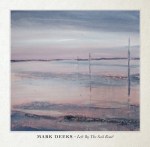 This is a solo piano album of austere wonder. Composer and performer Mark Deeks hails from Northumberland, and in tribute to his home patch, the eight original pieces here are named in the county’s old dialect (the album also includes a cover version of John Ireland’s ‘Sea Fever’). A water theme runs through the record like a river, with tracks named for waves, floods, showers, ice… so we have, in some ways, a tone poem: a suite of works that, over its running time, builds a picture of the North Sea coastline in audio.



