
Who or what inspired you to take up singing and pursue a career in music?
When I was a student at university I was expecting to begin a career as a classroom music teacher. It was only through watching fellow choral scholars begin their professional lives in London choirs that awoke me to the idea that you could sing for a living. My colleagues and I often have people ask us, post concert, “so what’s your day job?” but that could so easily have been me asking that question. It was when I observed the early career paths of ex-students like John Mark Ainsley and Paul Agnew that it dawned on me that this was an actual profession and that I might have a go at it. I have my wife to thank for giving me the impetus and courage in my early twenties to give up my teaching job and try becoming a freelance singer.
Who or what have been the most important influences on your musical life and career?
My musical education has been fairly sponge-like and I have been happy to learn from anyone. My earliest singing teachers gave me a grounding which I never forget: Valerie Heath Davis was a chorus member at ENO who gave me my first singing lessons outside school and taught me how to breath for singing. She prepared me for my choral trials. Janet Edmunds looked after me during university and introduced me to this thing called Lieder. One of her mantra’s was ‘Sing for the joy of singing’. I never understood it at the time but I most certainly do now. Then came David Mason and David Pollard, the latter introducing me to the idea that I could be a soloist and that I might consider retraining at the Guildhall School of Music & Drama. All these people have had a huge influence on the direction of my life and career.
What have been the greatest challenges of your career so far?
I don’t feel my career has been that full of challenges in all honesty. It’s not that I’ve taken the easy road, but that I have enjoyed myself in practically everything I do. I try not to commit to work that I think I am unable to fulfil – something that is too high, too low, to heavy a voice type or whatever – and so far I think I have sung within my comfort zone. I have been surrounded by people who support what I do, especially my family, and this has made my life pretty easy, in the scheme of things. I have no complaints.
Which performance/recordings are you most proud of?
I have very warm memories of Vaughan Williams’ The Pilgrim’s Progress at Sadlers Wells with the Philharmonia Orchestra, conducted by Richard Hickox. The cast was magnificent and made up pretty much of my friendliest colleagues. I hugely enjoyed that experience. I also treasured being Billy in Britten’s Billy Budd at Opera North last year, directed by my sister-in-law Orpha Phelan and conducted by Garry Walker. That was also a perfect storm of artistic elements. I try not to listen to my own recordings in general; I’m very glad other people enjoy them but it’s too much like listening to your own voice on your answer-phone message.
Which particular works do you think you perform best?
I like the ambiguity of this question because it implies that, although you might think you play or sing something especially well, others listening might shake their head in disbelief. One’s own perception of a performance is often at odds with how others witness it. Sometimes I have been in vocal difficulties, have managed to make it through a show on a wing and a prayer, and people have come up afterwards and said how wonderfully they thought I had performed. On the other hand, times when I’ve thought I was in glorious voice have sometimes been met with a friendly nod. I have no real answer to this question otherwise.
How do you make your repertoire choices from season to season?
Repertoire choice is not always something over which one has final control. In terms of recital programmes, I can offer promoters my current choice (and my Schubert cycle project at the moment is very palatable, it would seem) but even then music societies and festivals often have a particular theme or composer’s anniversary that they would like you to match and I do my best to accommodate that. As for opera roles, I have very little choice in what is offered to me. I can accept or decline the work; that’s where my power ends.
Do you have a favourite concert venue to perform in and why?
There are two recital venues I have sung in recently that have stood out in my mind as being exceptional and for different reasons. One is the Park Avenue Armory in Manhattan, one of the wood-panelled, upstairs officers’ quarters that are used for recitals. The acoustic was so generous to me as a singer, without being too washy, that I hardly felt I needed to sing at all. The other is the small studio at the Crucible, Sheffield, home of Music-in-the-Round where I am singer in residence. I love the intimacy of this venue and its re-invention of the concert space. It re-defines one’s relationship with the audience.
What is your most memorable concert experience?
The 2014 Last Night of the Proms was very memorable although, when I think back on it, my time on stage was a bit of a blur. What I remember most is finishing my last item, rushing back to my dressing room as the post-adrenalin hysteria began to kick in, changing out of my tails and into normal clothes and slipping back into the hall, high up in the audience, so that I could witness the last few pieces on the programme. The atmosphere was electric. I also vividly recall Peter Sellar’s semi-staging of Bach’s St John Passion at the Philharmonie in Berlin, with Sir Simon Rattle conducting the Berlin Philharmonic. I didn’t have all that much to sing in fact but the experience of performing Christus right in the centre of that drama was overwhelmingly intense.
As a musician, what is your definition of success?
This is a question I sometimes ask of conservatoire students – otherwise we may not always be sure what it is we are aiming for. I’ve decided my goal is to be happy, to be able to work with wonderful musicians at a high level, enough to live comfortably but not so much that the stress becomes a burden.
What do you consider to be the most important ideas and concepts to impart to aspiring musicians?
All the predictable things, really: professionalism, which means decent preparation, time keeping (as in one’s diary rather than being on the beat!), being an open, supportive colleague, self-discipline, that sort of thing. Those things form the basic grounding that I would hope any musician, any person, would value as being important. The idea that being an extraordinary artist allows one to overlook these ‘because you’re special’ doesn’t really wash with me. Other than that, for singers especially I would promote honesty of communication with one’s audience as being something worthwhile fostering.
Where would you like to be in 10 years’ time?
Still working at the highest level I can manage but also ready for approaching retirement, whatever that may mean. If that means teaching/coaching a little more, perhaps writing more music, then so be it.
What is your idea of perfect happiness?
The knowledge that the people I love are safe, comfortable and happy. A beautiful view on a glorious day with me striding through the middle of it. I don’t even need to be with my loved ones, I am happy to be on my own in peace and quiet, but to know that they are content while I’m out and about puts me in my best head-space.
What is your most treasured possession?
I thought a lot about this question; in the end, I guess I’m not so keen on the idea of a possession being that important to me. People are important but of course I do not own any of them. So my answer has to be my voice.
What do you enjoy doing most?
This is a really hard question too; doing something for fun, like hiking a beautiful trail in wonderful scenery or doing professionally? The most enjoyable thing? I don’t know. But It’s very likely to be singing, especially in rehearsals.
What is your present state of mind?
I’m content. That’s what Billy says in Billy Budd and it struck quite a chord with me then. “That’s all right, Sir, I’m content”. Yup, that’s me right now.
RW: Here’s an extra question for fun.
If I weren’t a singer, what would I like to have been?
In my next life, I want to come back as a dancer. I wish I could move like those amazing dancers, classical ballet, jazz, tap, latin, I don’t mind what. And I wish I could lead my partner with confidence rather than have them tut, give up on me and just take over. Happens every time!
RW: And another – is there anything you wish you could do better?
I can’t hula-hoop. Every time I try, it has my wife in stitches of laughter. It just drops off my waist and round my ankles. Very embarrassing. Also, when I try to swim front crawl but legs alone, with a float or whatever, I go backwards. My wife finds this hysterically funny also.
Roderick Williams’ new CD, with Susie Allan, piano, ‘Celebrating English Song’ is available now on the SOMM label. Further information here
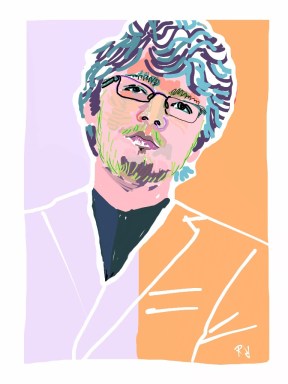
Roderick Williams encompasses a wide repertoire, from baroque to contemporary music, in the opera house, on the concert platform and in recital. He won the Singer of the Year Award in the 2016 Royal Philharmonic Society Awards and was awarded the OBE for services to music in June 2017.
He enjoys relationships with all the major UK opera houses and is particularly associated with the baritone roles of Mozart. He has also sung world premieres of operas by, among others, David Sawer, Sally Beamish, Michael van der Aa and Robert Saxton.
Roderick Williams has sung concert repertoire with all the BBC orchestras, and many other ensembles including the Royal Scottish National Orchestra, the Philharmonia, London Sinfonietta, Manchester Camerata, Royal Liverpool Philharmonic Orchestra, the Hallé, Britten Sinfonia, Bournemouth Symphony, Scottish Chamber Orchestra, Deutsches Symphonie-Orchester Berlin, Russian National Orchestra, Orchestre Philharmonique de Radio France, Ensemble Orchestral de Paris, Academy of Ancient Music, The Sixteen, Le Concert Spirituel, Rias Kammerchor and Bach Collegium Japan. His many festival appearances include the BBC Proms, Edinburgh, Cheltenham, Aldeburgh, Bath and Melbourne.
In 2015 he sang Christus in Peter Sellars’ staging of the St John Passion with the Berlin Philharmonic conducted by Sir Simon Rattle – a performance now available on DVD. He will sing this role again with both the Berlin Philharmonic and the Orchestra of the Age of Enlightenment in 2019.
Recent and future engagements include Oronte in Charpentier’s Medée, Toby Kramer in Van der Aa’s Sunken Garden and Don Alfonso/Così for English National Opera, the title role in Eugene Onegin for Garsington Opera, Van der Aa’s After Life at Melbourne State Theatre, Van der Aa’s Sunken Garden at Opera de Lyon, the Amsterdam Sinfonietta and with Dallas Opera, the title role in Billy Budd for Opera North and at the Aldeburgh Festival, Papageno Die Zauberflöte and Ulisse Il Ritorno di Ulisse in Patria for the Royal Opera House, Covent Garden, a concert performance of Ned Keene/Peter Grimes with Accademia Nazionale di Santa Cecilia in Rome, the Last Night of the 2014 BBC Proms, as well as concert performances with many of the world’s leading orchestras and ensembles. He is also an accomplished recital artist who can be heard at venues and festivals including Wigmore Hall, Kings Place, LSO St Luke’s, the Perth Concert Hall, Oxford Lieder Festival, London Song Festival, the Musikverein, Vienna, the Concertgebouw, Amsterdam and on Radio 3, where he has participated in Iain Burnside’s Voices programme.
His numerous recordings include Vaughan Williams, Berkeley and Britten operas for Chandos and an extensive repertoire of English song with pianist Iain Burnside for Naxos.
Roderick Williams is also a composer and has had works premiered at the Wigmore and Barbican Halls, the Purcell Room and live on national radio. He was Artistic Director of Leeds Lieder + in April 2016.
(Artist photo: Groves Artists)




 The Cross-Eyed Pianist