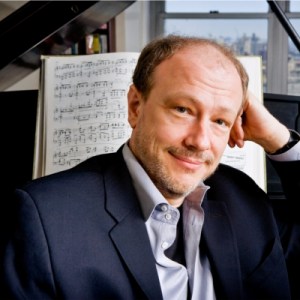
The 3 British Tenors are…..
Barry Clark, David Heathcote and Matthew Scott Clark
Who or what inspired you to take up a career in music?
Barry: From an early age I sang and acted at school, later joining various local amateur theatre groups. My parents were vociferous in their disapproval of this and actively discouraged any thoughts of my turning professional. I languished as a cartographic draughtsman at the Ordnance Survey for four years before rebelling & applying, successfully, for the chorus of the D’Oyly Carte Opera Company. Through local productions I had acquired a love of the Gilbert & Sullivan operas, their tunefulness and oddly skewed humour being entirely to my taste.
David: from as early as I can remember I was fascinated by opera singers and conductors. In fact, my mum would catch me pretending to conduct orchestras whenever they came on the TV! My biggest influence as a singer has been José Carreras, particularly his beautiful sound, his vocal honesty and connection to the words and music. I also remember the story of his battle with leukaemia, even though I didn’t know who he was at the time; I just somehow knew it was an important story.
Then in 1990 the world changed when The 3 Tenors emerged. I just loved the format and the sheer joy of three tenors on one stage, singing the arias they loved. Listening to Luciano Pavarotti in these concerts is a concentrated masterclass of vocal technique. What a huge talent he was!
Matthew: Music has always been a big part of my life; listening and making it. It’s always been in the family with my parents being opera singers too, but early on I was keen on pursuing a career in acting and even film making. The tipping point came when I played Salieri in a student production of Amadeus; that affectively ignited my love for the music of Mozart, and eventually led me to play Papageno in an amateur production of The Magic Flute. It was thereafter that I knew I wanted to be an actor-singer.
Who or what have been the most important influences on your career?
Barry: Being self-educated in music & drama, I would say that a particular singing teacher, the singer/actor Andrew Downie, unlocked the voice and got me started on the road to a proper, and stable, vocal technique. Watching the Carte’s “patter man”, John Reed was a great influence; his stagecraft and attention to detail, plus the maintaining of stamina over eight performances a week, have all aided me over the years.
David: my teachers have been amazing and have all brought our something different in me. In recent years Colin Baldy and Justin Lavender have helped me realise what I always knew was there, particularly in the higher registers. But it’s all the wonderful family and friends who have kept me going on my journey. Also my late friend and West Yorkshire singing teacher Steven Mellor, who gave the most important advice ever: “Just open your gob and sing”. Classic!
Matthew: Other than my parents and friends in the industry, I think it’s the music itself and the composers who wrote it. When I hear a piece of music that really affects me it’s a great feeling; and I love being able to express that when I perform, so others can feel it too.
What have been the greatest challenges of your career so far?
Barry: Remaining in work!
David: being business-like is so important. Equal to the dedication of establishing a vocal technique (an ever-present occupation!) and learning the right repertoire is the business and marketing skills to succeed. I have been lucky enough to have worked as a singer and as a producer and also in other business areas. I try my best to apply these skills and knowledge to my own career but I know it is so much harder when you are the product you’re selling.
Matthew: They are too numerous to list here! (Laughs) But the ongoing challenge is just doing it: keeping yourself at that level of performance all the time. That’s really hard.
Why did you decide to form The 3 British Tenors?
Barry: Re-form really. The original act ran roughly from 1995 to 2005 and performed all over the UK & abroad. As the tenors began to seek other work, the act disbanded. I decided that the time was ripe for a revival and with the new team of myself, David Heathcote and Matthew Scott Clark we tried out at the Chapel of the Royal Foundation of St Katharine, London, towards the end of 2017.The response was heartening enough for us to decide to continue and we are looking forward immensely to building the act during 2018.
David: Barry Clark was one of the original The 3 British Tenors and enjoyed great success in the UK and internationally. With my background in the music business, Barry approached me to sound me out about bringing the it back, which I was delighted to do. We tried out the format at an intimate concert in the Chapel of The Royal Foundation of St Katharine in London and were convinced by the audience reaction in our sell-out performances. Now we know it works we look forward to having lots more fun performing together in 2018!
Matthew: I just remember seeing Dad in the original Three British Tenors back in the ’90s, and it was this great operatic cabaret act with sparkly curtains and synthesisers and wonderful old stories from the world of opera; and as a kid I just loved it. So when Dad said he and David were thinking of reprising the act with the three of us in mind I said “Hell yeah!”
Which performance/recordings are you most proud of?
David: our launch concerts in autumn 2017 were special occasions for us. Can we report back in a year’s time?
Matthew: Other than our recent performances at St Katherine’s Foundation, I have to say performing the role of Bardolpho in Verdi’s Falstaff for Royal Welsh College a couple of years ago. It was this wonderfully creative production set in the 1980s, with some great up and coming people in the principle roles. It was conducted by Carlo Rizzi, so it was like being conducted by Verdi himself! And the characterisations were just so nutty, which are the best kind of roles for me.
Which particular works do you think you perform best?
Barry: My particular love has always been operetta, not just Gilbert & Sullivan, but the Viennese répertoire: Lehar, Strauss, Kalman etc.
David: the beauty for us is that we can choose repertoire that suits us individually and then come together in the famous songs and arias that the audience expects from having three tenors together on one stage. I am most at home in the coloratura madness of Rossini and Donizetti and I love singing the famous tenor songs with Barry and Matt. The audience love it when we come together to sing the classics such as O Sole Mio, La Donna è Mobile and Nessun Dorma, for example.
Matthew: Anything that tells a story, and has some really stand out emotive hooks or amusing jokes thrown in there. I love the character roles, because they are just so much fun to play; but with the lyrical roles you can really make a mark, change people’s hearts. I can never decide what I enjoy more! (Laughs)
How do you make your repertoire choices from season to season?
David: for our general performances we choose arias that suit us well and make sure there are always some pieces with the ‘wow factor’ when we come together as a trio. Our Christmas programme was pretty special as we choose classical and operatic repertoire that was connected to the season: Rossini’s Si, Ritrovarla io Giuro from Cinderella, Britten’s The Holly and the Ivy and Warlock’s The First Mercy were crowned with O Holy Night in our Christmas concert.
Matthew: For me, it’s really a choice of what speaks to me the most. There are some roles or pieces which are essential for any singer’s repertoire; but if there’s a particular tune or scenario in a piece that affects me in particular, then that’s the deciding feature in my mind.
Do you have a favourite concert venue to perform in and why?
Matthew: I love the Buxton Opera House. I was there a few years ago in a production of Handel’s Acis and Galatea for Mid Wales Opera, when I was a member of the chorus. It’s just such a gorgeous venue, all the royal greens and golds; and when you see the names of William Shakespeare and Sir Arthur Sullivan painted opposite to each other in front of the stage, you know you’re in exactly the right place!
What is your most memorable concert experience?
Barry: Participating in the 25th anniversary celebrations of “The Phantom of The Opera” at the Royal Albert Hall in 2011.
David: I was lucky enough to perform the role of Gandhi in what was possibly the professional British premiere of Philip Glass’ opera Satyagraha at The Midlands Arts Centre (sorry ENO but it wasn’t you!). That was an emotional experience and the start of my professional career in 1999.
Matthew: Singing in college chorus for a Royal Welsh performance of Benjamin Britten’s War Requiem, conducted once more by Carlo Rizzi, with baritone soloist Simon Keenlyside and tenor soloist, my teacher, Adrian Thompson. It was such an incredible piece to be a part of, not just for the personnel, but for that truly heartrending score!
I remember one movement towards the end where it feels as though the whole world has ended beneath you, and you’ve left the ground without anything to grab onto except the words on the page! It was nuts.
As a musician, what is your definition of success?
David: getting paid to make people happy.
Matthew: Audience reaction. If you can convince them for one song, that’s the biggest success in my book.
What do you consider to be the most important ideas and concepts to impart to aspiring musicians?
David: don’t be afraid to treat you and your art as a business. You need a great product and absolutely to love performing but you can’t sustain it if you’re not bold enough to be business-like.
Matthew: Honesty. Always look for the truth in what you do. Otherwise what’s the point?
Where would you like to be in ten years time?
Barry: In comfortable retirement!
David: Going around the world singing my favourite repertoire would be heaven!
What is your idea of perfect happiness?
Matthew: Knowing your vocation, and sticking to it. That and Netflix.
What is your present state of mind?
Barry: Buoyant!
David: Excited!
The 3 British Tenors have entertained audiences in concerts and private and corporate events for over 20 years in the UK, in Europe and the United States of America.
As you’d expect, the tenors include the great arias such as the world famous Nessun Dorma (which was sung by Pavarotti on the eve of the 1990s World Cup), the brilliant, La Donna e Mobile and wonderful arias by Puccini, Verdi as well as the great Neapolitan songs such as O Sole Mio.
Throughout their performances, The 3 British Tenors sing as a trio to create magical moments from opera, music theatre and songs.
Being British, the tenors like to lighten things up with humour and audiences love the stories they tell throughout the programme.
www.the3britishtenors.co.uk