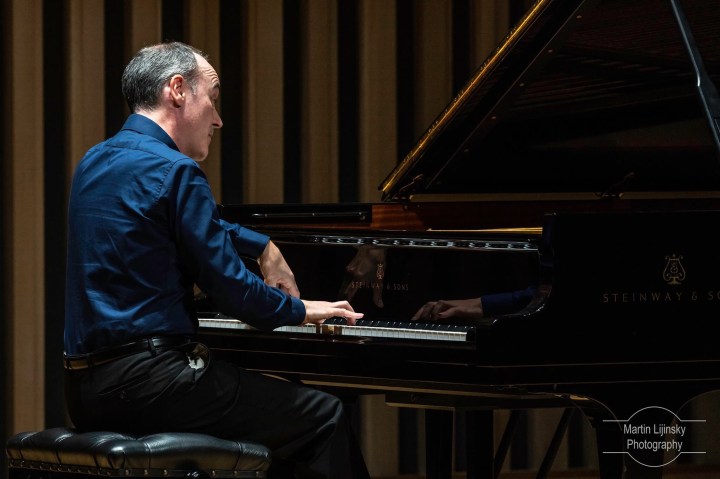
Nearly a month into this year’s Proms and the debate about clapping between movements has reached nigh on fever pitch, and is showing no sign of subsiding.

Rather like Brexit, there’s no middle ground in this debate: opinions are thoroughly polarised into two camps – those who don’t object to applause between movements and those who do.

This habit of applause between movements seems largely confined to Prom concerts: you’d never get it at the sacred shoebox of the Wigmore Hall, for example. Some would point to the fact that the Wigmore audience is “better educated”, or “more intelligent”, or “well behaved”. This implies that the Proms audience is ignorant, badly behaved, or just plain rude.

In a way, Prom concerts are not like other classical music concerts in the UK. Originally conceived by Robert Newman and Henry Wood to introduce classical music to a wider audience, the atmosphere at the Proms tends to be rather more relaxed, though often no less reverential, and the audience demographic far broader. The Proms attracts the classical music newbie and the committed classical music geek, who goes to every single concert in the season, and in between there’s a whole host of other people who enjoy the Proms experience. The etiquette is less rigid at the Proms – it’s much more “come as you are and enjoy yourself”, but in spite of this, the issue of applause remains a tricky one.

The custom of not applauding between movements of a symphony or concerto or other multi-movement work developed during the latter part of the nineteenth century. Both Mendelssohn and Schumann made attempts to prevent audiences from applauding between movements. Mendelssohn asked that his ‘Scottish’ Symphony, premiered in 1842, should be played without a break to avoid “the usual lengthy interruptions” and Schumann took charge of the matter in a similar way in his piano and cello concerti as well as his Fourth Symphony, but it was Richard Wagner who really instigated the custom as we know it today during the premiere of his opera ‘Parsifal’. By the turn of the twentieth century the concert hall had become the hallowed place it is today, and the conductor Leopold Stokowski even went so far as to suggest clapping be banned altogether lest it interrupt the “divinity” of a performance (there’s the reverence thing again….). This view persists today, particularly amongst the most trenchant anti-clapping faction of concert-goers.

The curious thing is that this attitude would have been totally alien to Mozart or Beethoven, Brahms or Grieg. In an earlier age, concerts were noisy affairs, the music played to the accompaniment of people talking and laughing, eating and drinking, and wandering in and out of the venue (indeed, at early Prom concerts, patrons were requested “not to strike matches” during quiet passages in the music). Applause was given freely and spontaneously, indicating appreciation and enthusiasm for the performers and the music. There was numerous applause during the premiere of Grieg’s piano concerto, while Brahms concluded his first piano concerto was a flop because there was so little audience response (except for the hissing, that is….). Today the pauses between movements are often filled with the sound of guttural throat-clearing or noisy unwrapping of cough sweets (far more intrusive in my opinion than the sound of clapping), and applause is reserved for the end of the work being performed. In the last 100 years, we have settled into this relatively recent habit of remaining silent during a performance, but maybe it is time for these habits to be reviewed and “modernised” a little?

Personally, I don’t have an issue with applause between movements. At the Proms I regard it as a sign of spontaneous appreciation and a sense that people feel relaxed in the atmosphere of the Royal Albert Hall. I don’t join in myself, nor do I squirm inwardly while thinking “blooming ignorant oafs!”. I’d never mention applause between movements in a review I’d written of a concert and I certainly wouldn’t describe the offenders as “selfish”, “ignorant” or a “Saturday-night tourist crowd”.

“this selfish group never left any of the silences alone”

“Encouraging this plays into the Classic FM-isation of music”

Sadly, such snobby attitudes towards those who applaud between movements only serves to reinforce the long-held and now very firmly entrenched notion that classical music is elitist and accessible to the few, not the many. And to link such people with a classical music radio station other than hallowed BBC Radio 3 is, in my opinion, offensive and patronising.

As an aside, it is interesting to note that Classic FM enjoys an audience amongst the under-35 age group of c1.2m (figures as at August 2017), and I like to think that these listeners also attend the Proms. After all, we’re supposed to be encouraging a younger audience to engage with classical music. Reminding them of the stuffy snobbish “etiquette” exercised by some at such concerts is not helping attract new audiences: many classical music ingenues (my husband included) have strong pre-conceived ideas about the habits and rituals surrounding classical music, the most frequently-mentioned being “I wouldn’t know when to clap”.

So please stop sneering at the clappers and consider instead of how to allow people to enjoy classical music in ways which make them feel comfortable, excited, engaged and eager to return for more.

I will end with a quote from David Pickard, Director of the BBC Proms, on the subject of applause between movements:

“I think that it is a wonderful sign of excitement and respect from the audience.”


barley-matthew-299

Who or what inspired you to take up the ‘cello and pursue a career in music? 

Having had a brief and disastrous career on the piano aged five (6 lessons and the teacher sacked me for being ‘totally unmusical’), when I was seven I heard a cellist, loved the sound, and announced I would be a professional one day with my own helicopter. I’m still saving up.

Who or what were the most important influences on your musical life and career?

I have been influenced by many things around me in my life – famous cellists of course (Yo-Yo Ma, Rostropovich, Casals etc), but also by Russians and their approach, by my wife, Viktoria Mullova and her uncompromisingly pure and selfless approach to music-making. But there are two influences that are not so obvious. I grew up on the Beatles and the aspect of their output I find most fascinating is that they did everything with love – at least until the last year or two – and this really shows in their music. George Harrison remarked that whenever any of them had an idea the response would always be ‘yes’ from the rest of the band, and that philosophy I aspire to – the positivity, inclusivity and humanity at the centre of the music. Also, I was profoundly influenced by watching the film The Thin Red Line. I was in a hotel room in Sydney and watched this brilliantly made war film and it completely destroyed me – I was a weeping wreck by the end, and the thing that exercised me most was, ‘what can I do to respond to this’? It just felt so impossible to do nothing, but what can a cellist do in the face of the inhumanity of our world? The only thing I could come up with was that I must practice and play with more heart, more dedication, and challenge myself every day to do better – in short to do my utmost every day to become the best I possibly can and help to add a happy and fulfilled grain of sand to the beach of the world. It is a lifelong task and one I take seriously, although I’m aware of how small one man’s contribution is, but that film was a deep inspiration.

What have been the greatest challenges of your career so far? 

Working with my physiotherapist to overcome a skiing injury, and a hypnotherapist to overcome stage nerves were big mountains to climb.

Which performance/recordings are you most proud of? 

I’m probably most proud of the last concerto performances before a short sabbatical I took this year. The cello concerto by HK Gruber is one of the hardest every written and I played it with the BBC Phil and Gruber conducting at Bridgewater Hall. I had such a good time playing. The orchestra were just awesome, Bridgewater Hall is very kind to cellos and I was very happy. Then a few weeks later I had 3 performances of Tavener’s The Protecting Veil in Mexico in beautiful halls where I felt totally free and comfortable onstage – Stephen Layton conducted like a dream so that I was absolutely liberated to make music without having to worry about anything. Heaven.

Which particular works do you think you perform best? 

The Protecting Veil is a special one for me (see above), because I don’t approach it as a piece of classical music, but more from my experience of Indian classical music and improvisation – it was the music of India that inspired John Tavener as he was writing it. I enjoy playing it SO much!

How do you make your repertoire choices from season to season? 

Pretty random really – sometimes just because people ask me, and sometimes I decide what I want to play on a whim.

Do you have a favourite concert venue to perform in and why?

Dartington Great Hall, Wigmore Hall, St George’s Brandon Hill Bristol, Beethovenhaus in Bonn, the new hall in Cremona…well, quite a few – places where the cello can really sing.

Favourite pieces to perform? Listen to? 

Right now it’s all about gorgeous Brazilian music – Egberto Gismonti, Jobim, Danilo Caymmi, Milton Nascimento, Elis Regina, Chico Buarque. And of course Bach is always there in the centre, recently inspired by reading John Eliot Gardiner’s brilliant book, Music in the Castle of Heaven.

Who are your favourite musicians? 

Carlos Kleiber, The Beatles, Beethoven, Bach, Ella Fitzgerald, Annie Lennox, Glenn Gould, Bernstein, Casals, Stevie Wonder – well, hundreds of them really…

What is your most memorable concert experience?

Mahler 9 with the Berlin Philharmonic and Abbado at the Proms in 1991. I would have laughed if you had told me that one day I would raise his wonderful son, Misha. Life is beautifully unpredictable.

What do you consider to be the most important ideas and concepts to impart to aspiring musicians? 

So long as it is done with with true sincerity from the heart, you are on the right track.

As a musician, what is your definition of success?

Success is making the sound that comes out of the cello the same as the one in my head.

Where would you like to be in 10 years’ time? 

Anywhere with family and friends.

What is your idea of perfect happiness? 

Being anywhere with family and friends.

What is your most treasured possession? 

My cello, of course.

What do you enjoy doing most? Breathing.

What is your present state of mind? 

Sitting on a train, passing a beautiful river, ducks flying overhead in formation. All is good.


Matthew Barley is internationally known as cellist, improviser, arranger, music animateur, and Artistic Director of Between The Notes. His musical world is focused on projects that connect people in different ways, blurring the boundaries that never really existed between genres and people.

As a soloist and chamber musician he has performed in over 50 countries, including appearances with the BBC Scottish (Volkov) and Philharmonic (Hazlewood), the Melbourne Symphony (Tortelier), New Zealand Symphony (Tan Dun), Hong Kong Sinfonietta, Netherland Radio Symphony (Stenz), Czech Philharmonic, Vienna Radio Symphony, Kremerata Baltica, Royal Liverpool Philharmonic, Royal Scottish National (Alsop), and London Chamber Orchestra. He has performed at festivals in Lucerne, Schleswig-Holstein, Bonn-Beethovenfest, Hong Kong, Lanaudiere, Abu Dhabi, Krakow, City of London and in recent seasons has performed at some of the world’s great concert halls: London’s Wigmore Hall, Royal Albert Hall, Amsterdam’s Concertgebouw, Kumho Hall in Korea, Pablo Casals Hall in Tokyo, The Rudolfinium In Prague, and the Teatro Colon in Buenos Aires. A key aspect of his recitals is mixing repertoire in unusual ways, pairing Bach suites with jazz and improvisation. He is particularly interested in music with electronics, having commissioned works from many composers including Dai Fujikura, Peter Wiegold, DJ Bee, John Metcalfe and Jan Bang. He has given other premieres of pieces written for him by James MacMillan, Thomas Larcher, Detlev Glanert, John Woolrich, and Fraser Trainer.

Read more here

(artist photo © Nick White)

Guest post by Phil Best

The great piano composers were all fluent improvisers. Bach, Mozart, Chopin and so many others are reported to have improvised to audiences regularly. Beethoven’s improvisation duel against Daniel Steibelt, which he won to become the most lauded improviser in Vienna, proves this point whilst it also demonstrates how many virtuoso pianists of the time were skilled improvisers. So when did improvisation cease to be part of the job description for classical pianists, and why?

First of all, I’d like to consider different forms of improvisation. The piano composers of the past were masters of real-time composition and this is a very particular kind of improvisation. Some people today might hear those words and conjure up notions of free, atonal, arrhythmic music. Perhaps the idea of creating complex rhythmic and tonal music that makes perfect sense over many minutes, without some kind of pre-existing framework seems impossible and atonality appears to be the only outcome of attempting such a thing. Another possible form of improvising is the simple, rather post-minimal and free-form explorations that many amateur pianists do these days – you can hear many examples on YouTube and often to great effect. The fact that this kind of activity is making piano improvisation something accessible and truly self-expressive is wonderful. But Beethoven’s or Chopin’s improvisations would have been far more complex and involved. Of course, jazz musicians do improvise but often around a framework of a song structure, with an outline of harmonic and rhythmic unfolding to guide them. When jazz pianists, such as Keith Jarrett do compose in real time, the results can be pretty spectacular. But what about classical pianists?

Well, there is a handful of famous classical pianists who improvise in public. The wonderful Gabriela Montero is an example of a well-known pianist who regularly improvises, usually creating a pastiche of a great composer’s style and Robert Levin is renowned for making improvisation an integral part of Mozart’s piano music, improvising cadenzas on the spot and fleshing out the barebones writing that is often encountered in slow movements. But this is still not quite the same thing as a pianist-composer creating new music in real time.

I believe this points to one underlying reason for the waning of classical piano improvisation in classical concert halls. Composers began to inhabit a distinct realm, quite separate from that of performing. Perhaps the increasing prevalence of atonality in composition or simply the fashion for hyper-intellectualism that was sweeping through the arts generally made the combined role of composer-pianist less valid. Rachmaninov really had two hats as many artists of the early part of the century did and he famously spoke of feeling uncomfortable at times when performing his own works. Later on, composers who were also great pianists, such as Andre Previn, have crossed into jazz in order to showcase their improvisation skills, once jazz had gained its status as an intellectual equal to classical music. I believe that improvising classical music on the spot may have appeared to cheapen its new brand as a very high status, intellectual activity that was not jazz. This branding also affected the way pianists sounded when they played classical pieces, in my opinion. Natural rhythm and phrasing were replaced by something altogether drier or more mannered-sounding. To play Chopin or Mozart without the perceived rigour of interpretative analysis, simply playing the melodies, harmonies and rhythms with full-blooded, natural expression was left to amateurs or perhaps the highly commercialised artist, Liberace. In this climate, attention turned towards a very different skill set from fluent musicianship: scholarship was regarded as the core of classical music studies, with interpretation, theory and historical or authentic performance knowledge being the key skills.

This competitive world of the classical piano virtuoso was of course dominated by recordings, which could well be another very important reason why improvisation was no longer part of the job of a classical pianist. In their new role as master interpreters of historic music, pianists in the last century had to battle it out for supremacy not only in the great concert halls of the world but also in the pages of music journals such as the Gramophone magazine. Highly regarded music critics would rate interpretations as being more or less worthy of esteem and of course purchase. I remember how my father and uncle would strive to acquire the most definitive interpretations of certain piano works. All of this is a million miles away from the idea of spontaneous music creation. It is much more difficult to offer any authoritative critique of the worthiness of music that just appeared instantly without the hours of careful scholarly study that has become expected!

Perhaps Beethoven’s dual was more like “Vienna’s Got Talent” than the modern idea of a classical concert, but somehow, I seriously doubt that! The dumbing down of classical music to the level of light entertainment seems like a modern phenomenon to me, and a knee-jerk reaction to the ivory tower quality that classical music sadly can appear to have. I imagine that classical music, before the 20th century, was intelligent entertainment for the educated classes and my hope is that it is moving steadily back into that realm once again. If so, I can see no valid reason why classical musicians who have fluent musical skills should not take to the stage and create music spontaneously. The immediacy and excitement of a live improvisation appealed enormously to Beethoven’s, Bach’s, Mozart’s and Chopin’s audiences and I think it can hold the same appeal today.


Phil Best is a pianist, composer, teacher and singer based in London. His artist website is https://philbestmusic.com and his teaching website https://playpianofluently.com.


For this concert, I exchanged the deep red plush seats of London’s Wigmore Hall for my first visit to Plush Festival, held in the tiny village of Plush, deep in Thomas Hardy country in Dorset. Here in 1995, far from the madding crowd, Adrian Brendel established the festival in a spirit of collaboration and shared music-making. A deconsecrated church, which sits in the arcadian grounds of Plush Manor (bought by the Brendel family in the early 1990s as a bucolic retreat) is the venue for the concerts. Its generous acoustic and small size make it perfect for intimate chamber music and solo recitals; in addition, visitors may sit in on open rehearsals.

I’d known about the village of Plush (the pub, the Brace of Pheasants does a good Sunday lunch) and the Brendel connection for years, but this was my first visit to the Festival – part of my determination to seek out quality classical music in Dorset, my new home since I moved from London in May.

The drive to Plush suggests one is entering a special place. Leaving Dorchester (Hardy’s “Casterbridge”), I left the A-road and passed through the villages of Piddletrenthide and Piddlehinton (“Longpuddle”). Then a sharp right turn and up a steep hill and there was a sign to Plush Festival, guiding the way. The village is chocolate-box-pretty, with the pub at its heart. The signs to the festival pointed beyond the centre of the village and a winding, tree-lined lane takes you into the grounds of Plush Manor. A helpful gentleman guided me to park my car in an adjacent field and asked if I’d been to Plush before.

Outside the church, small groups of people lolled in foldout camping chairs or lounged on picnics rugs. Some were even enjoying a picnic ahead of the concert. A small bar offered wine, prosecco and soft drinks, and there was a bunting-draped stall next door selling CDs. The murmur of conversation was accompanied by birdsong. A friend texted (before my mobile reception disappeared) to say he was at Glyndebourne for the afternoon, and I thought there was a touch of the Glyndebourne experience, in microcosm, at Plush – though minus the dinner jackets: people were dressed casually. After all, this was a lunchtime on a sunny Saturday in August…..

10567-b5caaf2a50ce50da7f81d22244175770The soloist for this concert was Filippo Gorini, a prize-winning young Italian pianist. His programme was unexpected for a weekend lunchtime recital – Schumann’s Geistervariationen (“Ghost” Variations) and Beethoven’s mighty Hammerklavier Sonata – but Kat Brendel, Festival Director, told me afterwards that this was “the programme he wanted to play”. It proved a bold and successful choice.

Schumann composed his Ghost Variations in 1854, shortly before he was committed to a mental asylum. It was his final piece, dedicated to his beloved Clara, and the work is freighted with melancholy and tenderness. Filippo Gorini caught the tragic intensity and intimate poignancy of the work. Understated, elegant and restrained, one felt Gorini fully appreciated that Schumann is a composer who wears his heart on his sleeve; the final variation ended on a whisper, with Gorini allowing the sound to fade into the stillness of the church.

Beethoven, by contrast, is at his most declamatory in the Hammerklavier Sonata, which opens with a daring leap across the keyboard and a rollicking fanfare motif. This was masterfully shaped by Gorini who brought energy and vivid colour to the music. At its heart is the Adagio, a huge slow movement of infinite serenity and profundity which in Gorini’s hands felt like a stand-alone piece of music. Time was suspended, and while a butterfly fluttered, agitato, around the church, nothing could break Gorini’s concentration – nor the audience’s (who were as committed as any Wigmore audience). This movement, played with an intense concentration which echoed Gorini’s sensitive approach to the Schumann, has an almost Schubertian harmonic trajectory and introspection, with the improvisatory qualities of a Chopin Nocturne. Out of this other-worldly space came a finale of restless physicality.

Chatting afterwards, I mentioned to one audience member that I felt Gorini had the ability to make one forget a pianist was actually present during the performance. It’s a rare talent, and his lack of ego or unnecessary gesture undoubtedly contributed to this impressive performance.

If you think great music is only to be found in the metropolis, think again: Sir Andras Schiff returns to Plush Festival tomorrow for a sold out concert, and past seasons have enjoyed performances by Paul Lewis and Till Fellner.


This years Plush Festival continues from 14-16 September. Full details here


Header image: courtesy of Plush Manor