
Guest post by Phil Best
The great piano composers were all fluent improvisers. Bach, Mozart, Chopin and so many others are reported to have improvised to audiences regularly. Beethoven’s improvisation duel against Daniel Steibelt, which he won to become the most lauded improviser in Vienna, proves this point whilst it also demonstrates how many virtuoso pianists of the time were skilled improvisers. So when did improvisation cease to be part of the job description for classical pianists, and why?
First of all, I’d like to consider different forms of improvisation. The piano composers of the past were masters of real-time composition and this is a very particular kind of improvisation. Some people today might hear those words and conjure up notions of free, atonal, arrhythmic music. Perhaps the idea of creating complex rhythmic and tonal music that makes perfect sense over many minutes, without some kind of pre-existing framework seems impossible and atonality appears to be the only outcome of attempting such a thing. Another possible form of improvising is the simple, rather post-minimal and free-form explorations that many amateur pianists do these days – you can hear many examples on YouTube and often to great effect. The fact that this kind of activity is making piano improvisation something accessible and truly self-expressive is wonderful. But Beethoven’s or Chopin’s improvisations would have been far more complex and involved. Of course, jazz musicians do improvise but often around a framework of a song structure, with an outline of harmonic and rhythmic unfolding to guide them. When jazz pianists, such as Keith Jarrett do compose in real time, the results can be pretty spectacular. But what about classical pianists?
Well, there is a handful of famous classical pianists who improvise in public. The wonderful Gabriela Montero is an example of a well-known pianist who regularly improvises, usually creating a pastiche of a great composer’s style and Robert Levin is renowned for making improvisation an integral part of Mozart’s piano music, improvising cadenzas on the spot and fleshing out the barebones writing that is often encountered in slow movements. But this is still not quite the same thing as a pianist-composer creating new music in real time.
I believe this points to one underlying reason for the waning of classical piano improvisation in classical concert halls. Composers began to inhabit a distinct realm, quite separate from that of performing. Perhaps the increasing prevalence of atonality in composition or simply the fashion for hyper-intellectualism that was sweeping through the arts generally made the combined role of composer-pianist less valid. Rachmaninov really had two hats as many artists of the early part of the century did and he famously spoke of feeling uncomfortable at times when performing his own works. Later on, composers who were also great pianists, such as Andre Previn, have crossed into jazz in order to showcase their improvisation skills, once jazz had gained its status as an intellectual equal to classical music. I believe that improvising classical music on the spot may have appeared to cheapen its new brand as a very high status, intellectual activity that was not jazz. This branding also affected the way pianists sounded when they played classical pieces, in my opinion. Natural rhythm and phrasing were replaced by something altogether drier or more mannered-sounding. To play Chopin or Mozart without the perceived rigour of interpretative analysis, simply playing the melodies, harmonies and rhythms with full-blooded, natural expression was left to amateurs or perhaps the highly commercialised artist, Liberace. In this climate, attention turned towards a very different skill set from fluent musicianship: scholarship was regarded as the core of classical music studies, with interpretation, theory and historical or authentic performance knowledge being the key skills.
This competitive world of the classical piano virtuoso was of course dominated by recordings, which could well be another very important reason why improvisation was no longer part of the job of a classical pianist. In their new role as master interpreters of historic music, pianists in the last century had to battle it out for supremacy not only in the great concert halls of the world but also in the pages of music journals such as the Gramophone magazine. Highly regarded music critics would rate interpretations as being more or less worthy of esteem and of course purchase. I remember how my father and uncle would strive to acquire the most definitive interpretations of certain piano works. All of this is a million miles away from the idea of spontaneous music creation. It is much more difficult to offer any authoritative critique of the worthiness of music that just appeared instantly without the hours of careful scholarly study that has become expected!
Perhaps Beethoven’s dual was more like “Vienna’s Got Talent” than the modern idea of a classical concert, but somehow, I seriously doubt that! The dumbing down of classical music to the level of light entertainment seems like a modern phenomenon to me, and a knee-jerk reaction to the ivory tower quality that classical music sadly can appear to have. I imagine that classical music, before the 20th century, was intelligent entertainment for the educated classes and my hope is that it is moving steadily back into that realm once again. If so, I can see no valid reason why classical musicians who have fluent musical skills should not take to the stage and create music spontaneously. The immediacy and excitement of a live improvisation appealed enormously to Beethoven’s, Bach’s, Mozart’s and Chopin’s audiences and I think it can hold the same appeal today.
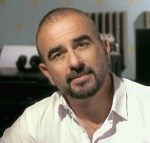 Phil Best is a pianist, composer, teacher and singer based in London. His artist website is https://philbestmusic.com and his teaching website https://playpianofluently.com.
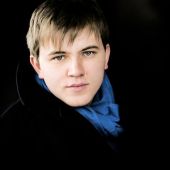 The soloist for this concert was Filippo Gorini, a prize-winning young Italian pianist. His programme was unexpected for a weekend lunchtime recital – Schumann’s Geistervariationen (“Ghost” Variations) and Beethoven’s mighty Hammerklavier Sonata – but Kat Brendel, Festival Director, told me afterwards that this was “the programme he wanted to play”. It proved a bold and successful choice.
 For this, its 47th year,




 The Cross-Eyed Pianist