Talismans and Tokens: Rituals of Performance

Performance itself is a ritual – it happens in a special place, at a special time, for which the performer wears special clothing to distinguish him or herself from the audience, and the audience observes particular customs during the entirety of the performance. These rituals of performance are familiar to all who perform, no matter what the genre of music, whether at Sydney Opera House, Hollywood Bowl or a local music society, and are crucial in helping performers and audience enter the right frame of mind to engage with the performance and the music.

Individual performers also have personal rituals associated with performance which are used to help allay performance anxiety and act as “good luck charms” to enable the performance to go well. From lucky jewellery or shoes to a red handkerchief casually tucked inside the piano, these talismans can be highly significant. Most of us know deep down that these items hold no real power, that superstitions such as wearing a particular necklace or shirt cannot really influence the performance and that a concert is more likely to go well if we are properly prepared for it. Yet we invest meaning in these tokens, believing them to have special powers, and take comfort from having them with us. Such rituals are common to sports people as well: tennis player Serena Williams always wears the same pair of socks for the duration of a tournament.

It’s easy to scoff at such superstitious behaviour, but research has shown that these behaviours do actually have a beneficial effect on performance by increasing confidence, self-belief, setting higher goals for oneself, and self-efficacy (belief in one’s ability to do well at the task in hand). However, it can be risky to invest too much in lucky charms or special rituals to the extent that one develops an obsessive dependence on them and may feel anxious and lacking in confidence without them.

On a more practical level, most musicians employ pre-performance rituals ahead of a concert which help them focus mentally and keep them grounded, especially if travelling a lot, which can disrupt one’s regular routine. Here is pianist Alexandra Dariescu:

My ritual starts in the morning with a positive attitude. You never know what can go wrong on the day of a concert (flights canceled, trains running late, piano missing…) so an optimistic outlook is incredibly helpful. I like to practice slowly in the morning, on the score, looking at every detail and refreshing the memory. If there’s a rehearsal with an orchestra, I usually save energy for the evening performance. Lunch consists of fish, rice and lots of veggies. A nap is always welcome but if I can’t fall asleep, I lie down and breathe 3 in 7 out, a ritual I’ve had for years. I also visualize the hall, coming in and feeling free.

And Stephen Hough:

On the day of a concert, I have morning practice from about 10:30 to 1 PM. Then a substantial lunch, sushi is a favorite, and if a pudding is irresistible only a bite (or two). Then a walk, ideally somewhere where the spirit can soar, so a park, a museum, a surging cityscape. Then a nap, bedclothes thrown back, as if nighttime with the curtains firmly closed, phones unplugged, pillows fluffed, and unconsciousness for at least an hour. I set the alarm clock and at about two hours before the concert, I am out of bed. Then, with the kettle on, I travel with my own and the best tea bags I can find. I also usually just eat half a cookie to lift the mood a little. I Shower at full throttle–it takes the same time to brew a cup of tea as it does to wash your hair. I sip my mug of strong tea as I check emails. Then, dressed, I head over to the hall. I like to arrive about an hour before I’m due onstage. I like gentle, calm backstage practicing, most often on pieces other than the ones I’m playing that night. Then into concert clothes about ten minutes before going out from the wings.

(from The Musician’s Lounge, official blog of Utah Symphony)

While most musicians admit there is no “magic formula” to guarantee a successful performance every time, a consistent pre-performance ritual, combined with thorough preparation in practice, will ensure a concert goes smoothly. Certain pre-performance rituals are common to all musicians, whatever their genre, including resting ahead of the concert to keep mind and body relaxed. Any disruption to these rituals can leave one feeling disoriented and it is important for concert organizers, venue managers, colleagues, and friends and family to appreciate the rituals and not interfere with them. Of course some aspects cannot be controlled, such as delayed travel, the weather (too hot/too cold), or illness, but once again good preparation enables one to cope with these exigencies and not allow them to derail a performance

In the final minutes before going on stage, many musicians use visualization techniques – imagining themselves walking across the stage to take their place at the piano or in front of the orchestra and hearing the first notes of the first piece in their “mind’s ear” before they begin to play. Recalling a past successful performance, and the positive feelings associated with it, is also a useful ritual and one which pianist Polish Piotr Anderszewski employs.

…there are the occasions when none of the above is possible. And, strangely, those are often the best concerts. Ah, the frustration and joy of the glorious unpredictability of being human!

Stephen Hough


dm9xki0xoaehe2wClara Schumann: Prodigy, Muse, Virtuoso

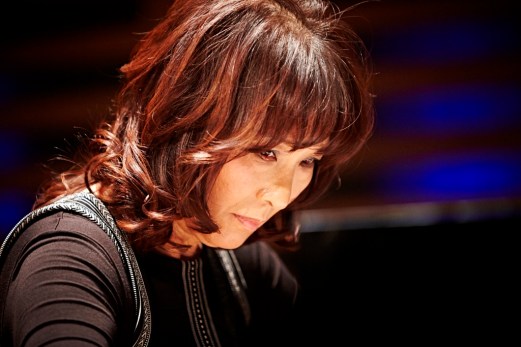
Reiko Fujisawa, piano

Brahms – Intermezzo Op 119, no. 2

Clara Schumann – Scherzo Op 10, Romance Op 21, no. 3

Chopin – Impromptu no. 1

Schumann – Faschingsschwank aus Wien Op 26

Schumann/Liszt – Fruhlingsnacht & Widmung

The Sherling Studio, a small theatre space at the Lighthouse Poole, proved the ideal venue for Reiko Fujisawa’s lunchtime recital celebrating the life and career of Clara Schumann and the key personalities in her artistic and musical circle.

This concert marked the premiere of this programme, part of Reiko’s new Clara Schumann project – a series of narrated recitals, chamber music and concerto performances which will take place throughout the 2018/19 season and autumn 2019, to coincide with the 200th anniversary of Clara’s birth.

The size of the performance space, with the audience arranged on three sides of the pianist, combined with Reiko’s poised and self-contained presence, created an intimate ambiance which was entirely appropriate for this programme of music which would have been enjoyed in the home or salon rather than the concert hall. It allowed for very close communication between pianist, music and audience, from Brahms at his most passionately introspective in a late Intermezzo to the sparkling virtuosity of Clara Schumann’s music (written for herself to perform) and Robert Schumann’s exuberant ‘Carnival Jest from Vienna”, written to show off their twin talents as composer and agile performer. This engaging programme was presented with elegance, colour and commitment.

More about Reiko Fujisawa’s Clara 2019 project

Meet the Artist interview with Reiko Fujisawa

reiko-rehearsal-nov-2013-530aa

Still only a tender three year old, the London Piano Festival, organised by pianists Charles Owen and Katya Apekisheva is already a significant part of the London piano concert calendar, an event much looked forward to by myself and piano friends. In just three years it has grown from a weekend festival to a 5-day extravaganza and it looks set to extend further, such is the quality and variety of its programmes and performers. The secret of its success and evident popularity (judging by the commitment and enthusiasm of the audiences) lies in a simple formula: an impressive line up of pianists, imaginative programmes and a friendly atmosphere. Owen and Apekisheva curate the festival and also perform in it, thus creating a wonderful sense of common purpose, very much music with friends, for friends, and amongst friends. This year the young Russian pianist Pavel Kolesnikov stole the show, at least as far as I was concerned, in both his solo concert on Saturday afternoon (review here) and his performance with his duo partner Samson Tsoy which opened the 2-piano marathon on Saturday night.

While last year’s 2-piano marathon had a rather epic sweep to its programme, this year’s was more thoughtful, the main focus being the centenary of Claude Debussy’s death, and the tone was set by the opening works, Schumann’s Six Pieces in Canonic Form, performed with exceptional control, poetry and musical maturity by Pavel Kolesnikov and Samson Tsoy. It would be hard to match the exquisite intimacy of this performance, but the great thing about the 2-piano Marathon is that each pianist brings their distinctive voice to the repertoire performed, the pairs of performers sparking off one another, collaborating and interacting with evident enjoyment. Two works by Arnold Bax provided an impressionistic follow up to the Schumann, expressively played by Margaret Fingerhut and Charles Owen. Three works by Poulenc offered further contrasts, the triptych closing with his joyous l’Embarquement pour Cythere. The first half closed with Stravinsky’s Concerto for Two Pianos, a work which requires lightning-fast reflexes, masterfully played by Kolesnikov and Tsoy. It was good to see this extraordinarily mature duo together in more extrovert music.

The deliciously sensuous post-interval works by Debussy – En Blanc et noir and Danse Sacree et Danse Profane – were welcome bookends to Thomas Ades Lisztian Concert Paraphrase on Power Her Face, which while expertly played felt over-long and self-indulgent. It was good to see Stephen Kovacevich grace the stage once again at this year’s festival, side by side with Charles Owen in Debussy.

The closing work, Rachmaninov’s Russian Rhapsody for two pianos, was memorably played by Konstantin Lifschitz (who gave a solo performance earlier in the festival) and Katya Apekisheva, and left us with a hummable foot-tapping folk tune for the homeward journey.

Plans are already well underway for the 2019 London Piano Festival and full details will be announced in the new year.


Photo credit: Viktor Erik Emanuel / Kings Place 


Who or what inspired you to take up composing, and pursue a career in music?

At the time, I really didn’t think about it much. My family are scientists and doctors who love music and played LPs in the house most of the time. So I grew up surrounded by music, but never imagining that it could be such a big part of my life. My curiosity led me to find a piano teacher, and eventually my parents saw I was serious and supported me to take lessons in piano and solfege. The curiosity grew and I was improvising soon after I could play. So, the desire to create has been there all along, and I was surrounded by a supportive family.

Who or what were the most significant influences on your musical life and career as a composer?

I consider my surroundings very important to what I do. I write music which I’d like to share with my family and people I feel close to. it’s more than a profession, it’s part of my personality, part of my life. The fact that I grew up around non-musicians makes me appreciate the natural, life-long relationship which can develop between people and music, when one might not necessarily be part of a musical family. Having said that, if it were not for the music I listened to as a child, I might not have been inspired to make this my life, so Bach, Schubert, Brahms, are very important, eternal inspirations, as well as all the performers who I’ve worked, particularly those I’ve known since my student days – Maxim Rysanov, Kristina Blaumane, Roman Mints.

What have been the greatest challenges/frustrations of your career so far?

One of the aspects of this profession, which I’m constantly having to learn about, is the way you pace yourself. I need to find a peaceful state of concentration in order to create, it takes some time to slowly shut the world off and begin to work. Once the music is written, there is the complete opposite – talking to musicians, explaining your work, communicating what you’ve been working on for months in a few minutes during the tight rehearsal time. It’s a complete gear shift, and each time it takes some effort to be in either gear.

What are the special challenges/pleasures of working on a commissioned piece?

There’s nothing like a deadline to help the creative process! The possibilities are so endless that having some guidelines, like instrumentation and duration, help some of the decision making. But I also really enjoy the research part of the project, so for example I chose to compile the text for my Immortal Shakespeare cantata. The research into the plays and choosing the right text which would fit the structure of the work took a considerable amount of time, which I enjoyed.

What are the special challenges/pleasures of working with particular musicians, singers, ensembles and orchestras?

For me, the best thing about working with musicians who you know and even more importantly, who have played your music, is that you don’t have to explain as much. There is only so much you can achieve with notation, one composer’s articulations (or lack of) might be interpreted differently to another. For example, much of my string music is played ‘on the string’ and to a musician who hasn’t played it before they might first read it and play off the string and not give it a second thought. Long phrases, nuances of dynamics, trusting the music to do what is there and not asserting too much on it- are all qualities which I value in musicians who I have worked with repeatedly.

Of which works are you most proud?

There is a story to each piece, and like many composers I feel there is a reason for each work and these works can take on almost human characteristics (like Mozart’s ‘Haydn’ quartets, for example, which he famously called his ‘children’). So, I wouldn’t wish to have favourites, but I know which were difficult to create and took longer than I had planned. My double piano concerto ‘Together Remember to Dance’ is one such work. Just when I thought I had finished the first draft, I had a total change of direction for this work and had to start all over again, with just months before the musicians were due to get the parts. Instead of sticking with my first idea, I jumped straight into a new direction and I was extremely happy I did that. I feel it’s a powerful and uplifting work, and that’s what I needed to write and the soloists – Arthur and Lucas Jussen completely inhabited this idea and communicated and performed the work perfectly.

How would you characterise your compositional language?

I would like for my compositions to communicate, to be accessible, but also make you think. Music with a mind and heart, I hope!

How do you work?

Slowly.

Who are your favourite musicians/composers?

This is, unsurprisingly, a long list which keeps growing and is often affected by who I’m working with or listening to at that moment. Certainly the composers I grew up listening to-  Bach, Schubert, later Ligeti, Britten and Messiaen… I get real pleasure from playing Rameau’s harpsichord works for myself (on the piano, though I’d love to one day have the space and chance to buy a harpsichord). Phrasing and timbre, nuance are performance aspects that my ear is always drawn to and there are just so many exceptional musicians. Some I have been lucky to work with, as I already mentioned, I’d add Janine Jansen and some very fine choirs too! Currently I’m enjoying (re-)listening to my recordings of Bill Evans, Andras Schiff, Nina Simone, Ibrahim Maalouf, Laura Marling…

As a musician, what is your definition of success?

Success for me is to have the freedom to create what you wish, and be able to make a living.

What do you consider to be the most important ideas and concepts to impart to aspiring musicians?

Even if it means having a small circle of devoted friends who you talk to about your music, try to communicate and share your passion. It’s a difficult profession, so we need support from people around us, and finding those ambassadors will absolutely make life easier. Also, be kind- in choosing this life we often develop high levels of self criticism. Try to be kind to yourself and to those around you, as perfection is not art.

What do you enjoy doing most?

There are two moments which I adore: the moment when I know how the piece I’m working on will be shaped and it’s just a matter of writing it down; and sitting on the train/plane before travelling to a premiere/concert. And there’s everything in between…

What is your idea of perfect happiness?

Every situation can be perceived as complete happiness, I think in order to really savour that happiness you have to feel inner contentment and feel you are where you need to be. Then, even eating an apple on the sofa can be perfect happiness.


Born in the historic town of Plovdiv, Bulgaria to a music-loving family of doctors and scientists, Dobrinka Tabakova moved to London in 1991, where she has lived since. Here she studied at Alleyn’s School and the Royal Academy of Music Junior Department, specialising in composition, piano and conducting. Early on, the composer John Adams praised her music as being “extremely original and rare”. She attended summer courses at the renowned Centre Acanthes in France, as well as the Prague and Milan Conservatoire summer compositions courses, alongside her composition degree studies at the Guildhall School of Music & Drama (GSMD) in London. On graduating with distinction BMus and MMus at the GSMD, Dobrinka was appointed Composition Fellow there, where she continued her activities as President of the Contemporary Music Society. In 2007 she was awarded a doctorate in composition from King’s College London (KCL). Her composition teachers have included Simon Bainbridge, Diana Burrell, Robert Keeley and Andrew Schultz as well as masterclasses with John Adams, Louis Andriessen, Alexander Goehr, Marek Kopelent, Philippe Manoury, Alessandro Solbiati, Olav Anton Thommessen and Iannis Xenakis.

Read more