Communication

Music is a powerful means of communication, by which people share emotions, intentions, and meanings, and our personal engagement with music, whether in a live concert, listening to a CD or via a streaming service, is driven by the medium’s ability to convey and communicate emotion. Music can arouse strong feelings, recall memories; it can promote extreme happiness or engender feelings of deep love or loss….

Like speech, music has an acoustic code for expressing emotion, and even if a piece of music is unfamiliar, we can “decode” its message. Because of this, while musicians perform music according to their own interpretations, we can still understand the basic acoustic code: a crescendo indicates increased intensity or drama; a minor key suggests seriousness or melancholy; pauses create suspense and anticipation.

For the performer, the ability to communicate emotion or tell a story in music requires more than the technical facility to process what’s on the score. A good understanding of the structure of the music is important for a convincing, and communicative, musical performance, allowing the musician to respond to aspects such as variations in tempo and dynamics, harmonic and melodic tension and release, phrasing, repetitions, etc. By responding to these elements, the listener is given a set of musical “signposts” which guide them through the music, and bring cohesion, interest and variety to the performance.

A performer must resolve the entire depth of the ideas contained there. How often carefully notated shadings, accents, tempo changes reveal not simply a positive characteristic of sound but rather the untold sides of the author’s concept. How many directions we find in Schumann, Chopin, Scriabin, even Beethoven that a pianist should follow not in a real sound but by addressing the subtlest hints to the imagination of a listener!

– Samuil Feinberg

Communicating emotion is the most elusive aspect of the performer’s skillset, and is the fundamental reason why people – performers and listeners – engage with music. At a basic level, music communicates specific emotions through simple musical devices, for example:

  • Happy – fast tempo, running notes, staccato, bright sound, major key
  • Sad – very slow tempo, minor key, legato, descending sequences or falling intervals, diminuendo, ritardando

But there is something else which makes a performance particularly rich in expression or communication. Performance is generally regarded as a synthesis of both technical and expressive skills. Technical skills can be taught, while expression is more instinctive: it is of course possible to act upon expression markings in the score, but in order for these to sound convincing and, more importantly, natural the performer must draw upon other factors, including extra-musical ones.

Many performers create a vivid internal musical and artistic vision of the music they are playing. This may include an aural model; the use of metaphors or adjectives to create a narrative or picture for the music; and personal experience, including extra-musical experiences. A performer’s own emotional experiences may influence the way they convey emotion in the music. This suggests that only a performer who has actually experienced the highs and lows of romantic love can perform, for example, Schumann’s Fantasie in C with the requisite emotional insight. Of course, not every performer will  have the life experience, but they can still convey emotion in their performance by awakening their imagination to bring expression and emotional depth to their playing. In addition, in a concert situation, the imagination of the listener is very much at the disposal of the performer, to be shaped and influenced through sound.

We talk about performers “communicating the composer’s intentions” (i.e. paying attention to and acting upon directions in the score such as dynamics, tempo and expression markings, articulation, rests and pauses etc) or “conveying the story of the music“, but fundamentally I think as listeners we crave a performance which touches us personally. Listening to music is a highly subjective and personal experience – we’ve all had those ‘Proustian rush’ moments when a piece of music, or a single movement or even a phrase, provokes an involuntary memory, sometimes with physical side-effects such as goosebumps or shivers (physiologically, this is the result of the release of Dopamine, the brain’s “reward” neurotransmitter). Sometimes we want to feel uplifted or transported by music, taken us out of ourselves and the mundanity of everyday life to another place, to experience something touching the spiritual or transcendent. Such moments, and the memory of them, are very special and individual.

Occasionally one is at a concert where a very palpable sense of collective concentration can be felt in the auditorium. This occurs when the performer creates an intense communication between music and listener. I experienced it, along with the rest of the Wigmore Hall audience, at a performance of Beethoven’s last three sonatas by the Russian pianist Igor Levit in June 2017. The sense of concentrated listening and suspense was extraordinary. How did Levit achieve it? I’m not sure…. a combination of exquisite tone control, musical understanding and the sheer power of the music itself.

Most people like music because it gives them certain emotions such as joy, grief, sadness, and image of nature, a subject for daydreams or – still better – oblivion from “everyday life”. They want a drug – dope -…. Music would not be worth much if it were reduced to such an end. When people have learned to love music for itself, when they listen with other ears, their enjoyment will be of a far higher and more potent order, and they will be able to judge it on a higher plane and realise its intrinsic value.

– Igor Stravinsky
Guest review by Adrian Ainsworth

Rick Wakeman has been a consistently fascinating artist throughout his decades-long career. As a fan of both classical and progressive rock music, I feel he’s been a constant presence, his cape sweeping nonchalantly across any so-called dividing lines between genres and styles.

In contrast to the grandeur of some of his earliest and most familiar work, Wakeman’s most recent releases have felt more intimate and introspective. The 2017 album ‘Piano Portraits’ was just that: solo piano treatments – somewhere between arrangements and variations – of an eclectic range of pieces that covered Debussy and Fauré, Elgar and Holst, Bowie and the Beatles… and not to leave out his own band, Yes.

This new album, ‘Piano Odyssey’, is in many ways a sequel with seemingly deliberate echoes of its predecessor. As before, there are two Beatles tracks, and just the one from Bowie this time, amid other carefully chosen cover versions. Yes is represented by two new arrangements. On the classical team are Liszt, Dvorak and Handel.

As the album title suggests, though, a journey of some kind has taken place. Rather than simply repeat himself, Wakeman has added strings and a choir more or less throughout, diluting the forensic focus on the lone piano. However, the lush arrangements can’t disguise the fact that this feels like an even more personal project, surveying Wakeman’s career more incisively and giving it a perhaps unexpected unit

I think this unity is behind the quality I loved most about the disc, which is that it sounds exactly like something its creator would pull together – and yet at the same time, it feels like a surprise, not quite like anything else. In theory, given the forces involved, the classical feel should dominate, but that isn’t what happens. Instead, it’s rather more like listening to a kind of ‘chamber’ prog: Wakeman often deploys his string players and singers as if they were band members, the choir in particular performing ‘solos’, moving in and out of tracks as needed rather than saturating them. His own distinctive playing has him operating like a combined rhythm and lead guitar might, capturing the melodies at the top end with great delicacy (and some very agile embellishments!), without sacrificing a sense of real propulsion.

As a result, the pieces that really hit home for me are the two Yes songs, in particular ‘And You & I’, and the reworks of two of his solo tracks, ‘After the Ball’ (now merged with Liszt’s ‘Liebestraume’), and ‘Jane Seymour’ (originally composed on organ, and with Bach coursing through its bloodstream). In the CD liner notes, Wakeman explains how the new versions make what he was trying to do clearer, more audible. And there’s no doubt that ‘Piano Odyssey’ is giving him the opportunity to shine a light on his practice: without trying to ‘match’ or ‘outdo’ Liszt, he has deliberately designed his medley to show how the composer influenced him. (Elsewhere, he uses this technique to illuminating effect in ‘Largos’ – merging Dvorak and Handel with the utmost respect, but a refreshing lack of deference.) Equally, in ‘And You & I’, the sparkling high-pitched melody is so evocative of Jon Anderson’s vocal it’s somehow uncanny.

I don’t think the record is totally flawless. How you react to the more familiar covers will inevitably depend on your relationship to the originals, and what you want a new version to achieve. I felt ‘The Boxer’ was a misfire: to me, the song, while tender, has an underlying resolve and pugnacity that befits its title. Here, the slow pace fatally weakens it, along with oppressive strings and the choir contributing isolated ‘lie la lie’s with no context. On the other hand, a similarly sentimental treatment of ‘While My Guitar Gently Weeps’ fits the song like a glove. The version of ‘Bohemian Rhapsody’ is shot through with wit, subverting any bombastic expectations the listener might have – even Brian May’s guitar cameo appears out of nowhere.

Two completely new compositions again emphasise the personal – named for two adopted moon bears, Rocky and Cyril (Wakeman is a passionate animal rights advocate). Writing from scratch in this idiom allows Wakeman to produce probably the most nakedly emotional tracks on the record, the signature traits (again, the steady motor, the climb to the high register) reflecting how much of himself he has put into these pieces. And I think it’s fair to say that the whole album – a heart-on-sleeve musical autobiography-of-sorts – wins through as an accomplished yet totally sincere attempt by the artist to communicate a true audio sense of himself.

Rick Wakeman’s ‘Piano Odyssey’ is available now on the Sony Classical label.

Meet the Artist interview with Rick Wakeman


Adrian Ainsworth writes for a living, but mostly about things like finance, tax and benefits. For light relief, then, he covers his obsessions – overwhelmingly music, but with sprinklings of photography and art – on the ‘Specs’ blog, which you can find at

Twitter: @adrian_specs

Adrian is a regular guest writer for The Cross-Eyed Pianist


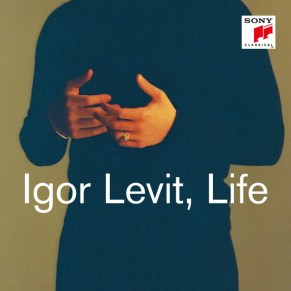
life_cover_750x750_88985424452_enThis could be the best thing I’ve heard this year. A bold claim, I know, but listening to Igor Levit’s new recording Life (Sony Classical) literally stopped me in my tracks….



With four recordings already and glowing reviews wherever he plays, this latest offering – his first in three years – from German-Russian pianist Igor Levit was eagerly awaited. It’s very different from his previous recordings which have focussed on “big” serious works (the Diabelli and Goldberg Variations, Rzewski’s The People United Will Never Be Defeated, late Beethoven Sonatas). ‘Life’ is a classical concept album, a very personal existential reflection on life and death, prompted by the death of a close friend. Music has proven therapeutic benefits and Levit finds a way through his grief , though perhaps not a sense of closure, in a series of solemn, valedictory and deeply thoughtful works by Busoni, Bach/Busoni, Schumann, Rzewski, Wagner/Liszt and Bill Evans. There’s no flashiness here, no glittering runs or vertiginous virtuosity – that would be inappropriate. Instead we have a continuous meditative flow of music from Busoni’s Fantasie after J S Bach through the fleeting poignancy of Schumann’s Geister (‘Ghost’) Variations to Bill Evans’ Peace Piece, an unusual but entirely fitting work with which to close this wondrous recording.

Every note is considered, measured, poised but never mannered: there’s none of the pedantry other “intellectual” pianists tend towards in performance. This playing epitomises the maxim “through discipline comes freedom” – something I felt very strongly in Levit’s mesmerisingly intense concert of Beethoven’s last three sonatas at Wigmore hall last year. You could have cut the atmosphere – one of concentrated collective listening – with a knife, and Levit achieves the same palpable sense of presence, intimacy and profound communication on this recording. It’s as if you’re in the room with him, quietly observing, listening, almost without breathing, while he plays. He finds incredible delicacy in the quietest reaches of the dynamic range – technically hard to achieve and emotionally wrought – and the entire album has a compelling processional quality, felt most strongly (for me) in Liszt’s transcription of Wagner’s Solemn March to the Holy Grail from Parsifal, to which Levit brings immense control and a hushed, prayer-like quality to the magisterial architecture of this work.  The Fantasia and Fugue on the Chorale  ‘Ad nos, ad salutarum undum’,  the longest work on this 2-disc recording, is another glowing transcription, also by Liszt, demonstrating that music, like life, is subject to change. Isolde’s passionate Liebstod and Busoni’s poignant Berceuse pave the way for the final work on the recording.

Bill Evans’ ‘Peace Piece’ matches the solemnity and intensity of the rest of album but in its ostinato bass and delicate treble filigrees, so redolent of Chopin’s tender Berceuse, there is, finally, a sense of consolation. It’s beautifully played by Levit, as are all the pieces on this recording.

Highly recommended


Who or what inspired you to pursue a career in music? 

My father was a huge inspiration for me. He was a fine pianist and played piano the Charles Kinz stride piano style. Along with my mother, they had a concert party after the way and with the other members of the “Wakeans”, as they were called, used to re-live the shows in our tiny front room in Northolt on a Sunday evening. Around 1953, when I was four, I can recall climbing out of bed and sneaking down the stairs to listen before getting caught and being sent back to bed.

I just wanted to play the piano so badly, and aged five I was sent off to piano lessons with Dorothy Symes, and indeed stayed with her throughout my grades before going to the Royal College of Music.

My father encouraged me to listen to as many different kind of music as possible and to play as many different styles as possible. I owe him so much.

Who or what have been the most important influences on your musical life and career? 

There are so many – Dorothy Symes was such an inspirational teacher; being taken to see Swan Lake aged about nine and the same year seeing Lonnie Donegan (who in later years became a great friend and fellow Water Rat).

I loved Trad Jazz and especially Kenny Ball, who I also got to meet in later life. My father introduced me to Prokofiev’s ‘Peter and the Wolf’, which mesmerised me. Here was a story being told in music – that was really the moment when I knew that’s what I wanted to do: tell stories in music.

What have been the greatest challenges and pleasures of your career? 

The biggest challenge has always been people saying “You can’t do that“, which makes me all the more determined to do it, regardless of the consequences. I was told doing King Arthur on Ice was doomed to failure, and it is still the most talked about show I’ve ever put on!

Likewise, I was told it was ridiculous to take a symphony orchestra and choir on tour in America – red rag to a bull! I did it and it was fantastic! Every day brings new challenges and if you manage to overcome and solve them, that’s where the pleasure comes in.

Which performances/recordings are you most proud of? 

I would probably give different answers on different days, but these are the ones that come to mind today:

‘The Six Wives of Henry VIII’ as that was the first solo album and was hated by the record company who kept asking when I was going to put the vocals on!

Also ‘Journey to the Centre of the Earth’ and ‘King Arthur’ from the early seventies as well.

With my band, ‘Out There’ (originally released 2003) springs to mind as a very complex album where those around me really understood what I was trying to achieve.

The remakes of both ‘Journey…. ‘ and ‘King Arthur’ are very important to me as it now means there are records of the music to be remembered. Both of there were limited to the amount you could get onto a vinyl recording, so to do the full length versions was very important to me. I did the same with ‘The Six Wives of Henry VIII’ and added the three missing pieces to a live recording made at Hampton Court.

In recent years Piano Portraits has meant a lot tome for many reasons, not lease that it was my way of celebrating the genius and friendship of David Bowie. This has led to my brand new album for Sony Classical, Piano Odyssey, which ventures a stage further with piano variations of the music I love, with a string section and choir. A lot of time was spent getting this album absolutely as I wanted it and so has a special place in my “recording heart”.

Tell us more about your ‘Piano Odyssey’ album….. 

When I recorded ‘Piano Portraits’, it was purely solo piano versions of pieces I loved or had a connection to that had great melodies, and I rewrote variations on themes for all. I was really pleased with the outcome and the album did extremely well, making the top 10 for more than eleven weeks. I had decided against a second volume; however, because whilst there were a lot of other wonderful pieces of music that I wanted to do, none of them would work with just piano in the way I envisaged them.

However, it was ‘Bohemian Rhapsody’ that started it all off again. Now working with the team at Sony Classical, I had wanted to do this originally but just couldn’t get it to work on piano alone in the way I could hear it. I kept hearing a string section and choir, and had a Eureka! moment one day when I realised this was indeed the answer – an album of piano variations of great music but with the addition of a small string section and choir.

I prepared a short-list of 40 pieces and eventually whittled it down to the 12 I really knew would work – and that included Bohemian Rhapsody, which I sent to my dear friend Brian May. He not only gave it his seal of approval but added a cameo performance of beautiful acoustic guitar.

‘Piano Odyssey’ is everything I set out to achieve and indeed has even gone a stage further than I thought possible.

What motivated your selection of the music featured on this album? 

Simple answer – melody. There has to be a great melody that allows variations without taking away from the original. There are pieces from The Beatles, David Bowie, Paul Simon, Liszt, Handel, Dvorak, yes and even me! There are also two original tracks that I wrote in memory of two wonderful moon bears which were saved from horrific bear bile farms, and as an Ambassador for Animals Asia, I am proud that we have save so many of these wonderful bears and celebrate them here. Both the bears – Rocky and Cyril Wolverine – sadly passe away. Cyril was my own bear and the loss was devastating for all of us who knew him. I wrote both these pieces surrounded by their photos.

Were there any special challenges in arranging the songs? 

To be honest, no. I have been doing this for many years, although never recording them like this. I also have a good team around me with the Orion Strings and English Chamber Choir, who know where I’m coming from musically.

Do you feel that progressive rock is a way to bring some classical sophistication to the pop world and, if so, are your achievements in some way striving towards leading an innovative, “parallel-classical” career? 

When I started in the late 1960s after leaving the Royal College of Music, there were real divisions within all music types, whether jazz, classical, pop, rock, folk, country, you name it. They all had their own identities and seldom met! I deliberately set out to fuse as much as possible and at first hit a lot of brick walls, but slowly started getting the message across, and today there are no taboos which is great.

With there being a Prog-revival of sorts, does you think there is potential crossover for youth audiences between the two genres? 

There already is and vinyl has a lot to do with it. Younger people are discovering vinyl and album covers and the information contained on them. Music is tactile and vinyl is bringing that back. Music now no longer has a date stamped on it. You either like it or you don’t. There is no specific age thing any more either – that side of things is very healthy.

Would you ever consider making a fully classical album? 

I have been asked to and the answer would have to be no. Although I occasionally turn to Mozart and Beethoven sonatas or plough through the Bach “48” for fun, it’s not what I would want to do, if I’m honest.

As a musician, what is your definition of success? 

Success is sadly always thought of in commercial terms, but for me it probably only comes after you have departed this mortal coil. In other words, if in 100 years’ time somebody on radio plays a piece of my music, then I guess I can say I was successful to a degree…

What do you consider to be the most important ideas and concepts to impart to aspiring musicians? 

Believe in yourself. Don’t be frightened of opinions and criticism from others, as long as they are qualified to give it (which 99% of them aren’t!). Most people who try and tell you what you should be doing do so because they can’t do it themselves (many don’t know a crotchet from a hatchet!), but occasionally the odd word of wisdom does get through: you just have to be able to spot it.

Where would you like to be in 10 years’ time? 

Alive please – and still able to play, composing and having music adventures.

What is your idea of perfect happiness? 

To be worry-free – so there’s no perfect happiness for any human being, I’m afraid!

What is your most treasured possession? 

My father’s upright Bechstein piano on which I learned to play and inherited when he died in 1980.

What is your present state of mind?

Jumbled! It always is – too much going on!