Guest post by Adrian Ainsworth

We’re coming up to the first anniversary of a slightly unusual and unexpected musical event – or to be more accurate, ‘music business event’. On 17 November 2017, the record label ECM made virtually all of its catalogue available on streaming services for the first time.

For anyone unfamiliar, ECM is a Munich record label, founded almost 50 years ago – and still run – by producer extraordinaire Manfred Eicher. Initially the focus was on modern jazz music, but in the mid-eighties Eicher established the parallel ‘ECM New Series’ imprint to cover classical music.

It may be because the boss is a producer that ECM Is famed for exceptional recording quality and detail. It’s tempting to think that the New Series seemed at once boldly contemporary (featuring composers linked to minimalism, like Arvo Pärt and Steve Reich) and wilfully archaeological (the exquisite early choral recordings of Trio Mediaeval or the Hilliard Ensemble), because these ‘extremes’ of classical music particularly benefited from such finely-wrought clarity.

This wide variety means that while there isn’t an ‘ECM sound’ as such, there’s definitely an ECM aesthetic. As well as making the records sound gorgeous, the label’s sleeve design – even into the CD era – has a largely abstract austerity that totally fits its musical output: enigmatic yet welcoming, arty, classy, attractive, open to wide interpretation.

This strong identity is arguably what kept ECM away from streaming platforms for as long as possible: the physical object, played on the best equipment you can muster, is part of their ideal. However, the fact that Eicher and co have now given in means you can at least explore a remarkable range of beautifully documented music at great leisure (and little or no cost) – hopefully on a ‘try before you buy’ basis, as a shelfful or so of ECM releases is a truly joyful sight.

Perhaps treating all of its artists with the same sonic respect, whatever the genre, is the engine behind another distinctive feature of ECM’s output: inspired collaborations. Eicher seems to delight in bringing musicians on the label from both jazz and classical camps together, resulting in highly rewarding joint releases, without compromising the spirit of their individual recordings.

This is a key theme in my very personal ECM playlist. There’s a run of three tracks where Norwegian saxophonist Jan Garbarek first plays with a group of Pakistani musicians, followed by a selection from his celebrated partnership with the Hilliard Ensemble – then we hear the Hilliards on their own performing a striking contemporary piece in contrast to their original ‘early music’ idiom.

Latterly, the Trio Mediaeval have recorded an album with trumpeter Arve Henriksen – a record that, while very different, seems to rejoice in a similar spirit, and a choice from this starts the whole playlist off. Bringing proceedings to a close is John Surman – another versatile saxophonist who can career from furious hard bop to drones/electronica and all points in between. However, his two albums with a string quartet are real jewels in ECM’s crown, as I hope ‘At Dusk’ proves.

Along the way, I’ve tried to bring in some of ECM’s most arresting characters. There’s Stephan Micus, who seems to learn and compose on a different array of instruments from all over the globe on each release, yet here foregrounds his own voice. Or Nik Bartsch, a Swiss pianist who describes his work as ‘ritual groove music’ (about four minutes into the playlist track, you’ll hear why). He records mainly with two bands, Ronin – who feature here – and Mobile, depending on the configuration of musicians the material needs. The distinctive, unhurried and wonderfully delicate piano of Marilyn Crispell, followed by the atmospheric vocalising from Susanne Abbuehl.

And much more… I could have carried on and on but thought I had better stop at 20 tracks (and 2 hours)! As you will find if you explore ECM further for yourself, I could have gone off at so many tangents: used Ralph Towner as a springboard to fellow guitarists John Abercrombie, Pat Metheny or Terje Ryphal; or followed Alexei Lubimov into the label’s roster of esteemed classical pianists (including Sir Andras Schiff). Keith Jarrett’s recordings alone must provide more than 100 hours of listening (some 90 recordings, including a few multi-disc sets).

I hope you enjoy this rather focused selection, then, and feel inspired to find ‘your ECM’ among the label’s near-limitless riches.

Adrian’s ECM playlist


Adrian Ainsworth writes for a living, but mostly about things like finance, tax and benefits. For light relief, then, he covers his obsessions – overwhelmingly music, but with sprinklings of photography and art – on the ‘Specs’ blog, which you can find at

Twitter: @adrian_specs

Adrian is a regular guest writer for The Cross-Eyed Pianist


Who or what inspired you to take up conducting and pursue a career in music?

Music was a very gradual and natural progression for me. As a child I began to play more and more music until I was eventually spending every spare minute at school rushing off to a practice room, to a rehearsal, to a music tech studio, to a lesson, to a chamber group. I was filling my holidays and weekends with orchestra courses, jazz rehearsals in London, and on and on and on. Finally it dawned on me that music was clearly the focus in my life, and it would be a rather natural next step to try to make a living out of it.

Likewise the conducting was a transition. There came a point in my early twenties when I realised that I’d caught the conducting bug. I was playing in orchestras of such varying standards, from the flimsiest of amateur setups to the highest professional level, that I was constantly watching the whole spectrum of conductors in front of me. The lesser mortals gave me the confidence that I could do better than them, but more importantly the better conductors inspired me hugely, fascinated me, and got me hooked on the idea that a conducting profession could be a compelling journey.

Who or what are the most significant influences on your musical life?

In my earlier days the strongest influences were my teachers – and I was certainly lucky to have superb teachers, more than I can mention. I owe a lot to Neil Thomson, who first set me off on a path towards understanding the process of conducting, and understanding how to learn. From that point I had so many different conducting influences. Two names that stand out are Sir Mark Elder and Claudio Abbado. Mark gave me two years of astonishing support, guidance and inspiration whilst I was his assistant at the Hallé orchestra; Claudio gave me his mindblowingly high-class conducting to feed off whilst I was playing in the Gustav Mahler Jugendorchester.

Nowadays my primary influences are the scores in front of me, but my instincts are surely still heavily influenced by all the people who led me where I am today.

What, for you, is the most challenging part of being a conductor? And the most fulfilling aspect?

Perhaps the greatest challenge is wrestling with the question of what a composer intended at a certain point in a score when his or her vision is absolutely unclear on the page. If it’s a work that’s close to your heart, this struggle is intense and consuming, but always interesting. On a more mundane note, there is a huge organisational and logistical focus to my work as a conductor that wasn’t present when I was a player. This is especially true in my role as a Music Director. Fortunately I’m rather neurotic in terms of organisation, so I get by.

Putting aside all the challenges, though, at the very heart is the fact that I feel totally at home on a podium in front of an orchestra. I can’t imagine anything more fulfilling than the concert experience of performing music that you have rehearsed intensely and spent months preparing for. When things are going well, it’s the most satisfying possible way to conclude a project.

As a conductor, how do you communicate your ideas about a work to the orchestra?

Any player will tell you that the holy grail is for conductors to communicate everything in gestures. That’s certainly the dream. Of course it’s not possible 100% of the time. Some things need to be said, but perhaps the secret is knowing when to stop… Players don’t need to know all your ideas. There’s often a great deal of extra contingency preparation or historical context that doesn’t need to be shared. In the case of, say, Also Sprach Zarathustra, there’s even a gigantic layer of philosophy. The players don’t need to know everything you’re thinking, but having all these extra layers as a base can add so much to the conviction with which you’re conducting.

How exactly do you see your role? Inspiring the players/singers? Conveying the vision of the composer?

Absolutely the latter. Surely that has to be the primary role of a conductor, to take on full responsibility to enable the audience to experience what the composer intended. If you happen to inspire the musicians along the way, that’s a bonus – an orchestra is more likely to play well and work hard if they’re inspired.

Is there one work which you would love to conduct?

Although I’m lucky to be able to programme and perform orchestral music of my choosing a lot of the time, there are a few sacred cows… The piece that most comes to mind is Schoenberg’s Pelleas and Melisande. I have unusually powerful memories of rehearsing and performing it under Claudio Abbado, so the music means a lot to me and I feel as though I know it inside out. But I’m wary of experiencing it from the podium, in case those memories are affected.

Do you have a favourite concert venue to perform in?

There are so many tremendous buildings devoted to classical music! I’m so fortunate to be Music Director of the Orquesta Sinfónica de Castilla y León – we both rehearse and perform in the spectacular concert hall of the Auditorio Miguel Delibes. It’s hard to beat the Royal Albert Hall – what a space – plus I used to walk past it every day so it feels like coming home. As a player I adored the glamour of the Musikverein, and was totally blown away by the concert hall in São Paolo with its mix of wood§ and stone. I’m particularly fond of Snape Maltings – apart from the beautiful concert hall there’s that wonderful view across the marshes. And now I’m in danger of opening up the entire genre of concert halls with views-to-die-for from the conductor’s dressing room….. Gran Canaria with its sweeping view of the beach, Granada looking out over the Sierra Nevada from its hilltop position next to the Alhambra… Perhaps there’s a coffee table book in this.

Who are your favourite musicians/composers?

In general terms, my favourite musicians are those who respect the music on the page and the intentions of the composer. Obviously it helps if they can transmit it to the audience with jaw-dropping skill and style… but I’m never a fan of style over substance.

As for composers, in order to connect with me they need to have something to say in their music, rather than just searching for the next note for composing’s sake. This probably isn’t tangible and might translate into different things depending on the era in which the composer was writing, but there’s always a depth supporting it, which keeps me interested when looking deeper and deeper into a score. You might have guessed I’m trying to remain generic instead of naming names(!)

It’s worth adding, though, that I listen to very little classical music for pleasure. I feel the need to escape it to make sure that it stays fresh. Many of my favourite musicians are in other genres; pop (in every sense), jazz, and so on.

As a musician, what is your definition of success?

To earn the respect of both musicians and non-musicians over the longterm course of a career.

What do you consider to be the most important ideas and concepts to impart to aspiring musicians?

If only I had something of value to offer! It’s tricky to pin these things down when you’re continuously searching for the answers yourself. I’ll try to suggest a few…

Garner and absorb as many influences as possible. Otherwise you’ll never acquire the broad view with which to find out if you’ve been heading down the wrong track.


It’s important to have occasional bouts of fanaticism and all-consuming obsession in your music- making. It can take you to the next level.

Those in music who achieve the most are, more often than not, those who put in the most work. Yes there are exceptions, but you’re taking a gamble if you test the norm.

Remember there’s more to life than your chosen profession. Despite all the hard work, keep it in context and maintain a balance in your life – you’ll be a healthier person.

There will be ups and downs. Enjoy the ride.


Andrew Gourlay is Music Director of the The Orquesta Sinfónica de Castilla y León, which has just announced the launch of its own record label. The first recording will be released on 9 January 2019, and feature Rachmaninov’s Second Symphony.

Watch the album trailer:

Born in Jamaica, with Russian ancestry, Andrew Gourlay grew up in the Bahamas, Philippines, Japan and England. A trombonist and pianist by training, he studied conducting at the Royal College of Music, where he prepared Bruckner symphonies for Bernard Haitink and Mozart symphonies for Sir Roger Norrington. He was selected by Gramophone magazine as their ‘One to Watch’, and by BBC Music Magazine as their ‘Rising Star: great artists of tomorrow’.

Andrew Gourlay won First Prize at the 2010 Cadaques International Conducting Competition, securing concerts with 29 orchestras around the world. For the next two years he was Assistant Conductor to Sir Mark Elder and the Hallé Orchestra. In January 2016 Gourlay took up the position of Music Director of the Orquesta Sinfónica de Castilla y León (OSCYL), having been their Principal Guest Conductor since the 2014/15 season, and celebrated the orchestra’s 25th anniversary in 2016/17.

Read more


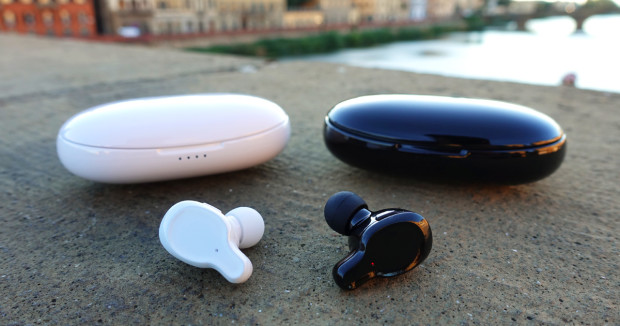
This is the second set of wireless bluetooth earbuds I’ve been asked to review in as many months. With manufacturers keen to offer consumers a stylish, effective and user-friendly alternative to Apple’s AirPod earbuds (which are not the most attractive, it must be said), wireless earbuds are now as ubiquitous as old-fashioned wired headphones.

Wireless headphones have in fact existed for some time now, but with somewhat dubious sound quality due to their inability to transmit high resolution audio. The latest bluetooth technology ensures a better and faster connection, a broader signal range and stable connectivity. This “true wireless” allows users a full range of movement, making these earbuds ideal for sport such as running or cycling or gym workouts.

c3bae29597c3a6.png

The Surge Mini earbuds are designed to fit snugly in the ear and come in a neat case which acts as a charger (a feature common to most wireless earbuds now). The magnetic design secures the earbuds in the case to ensure they charge properly and don’t fall out when you open the case. The earbuds connect almost instantly to your device and once paired they will connect automatically straight out of the case. The left and right earbuds connect separately, and in fact I had trouble connecting the devices and it took several attempts to hook up to my iPhone.

Once in the ear, the earbuds are a comfortable fit without any need for further adjustment. The earbuds have tiny touch controls allowing the user to pause play or mute during a call, and are Siri/Google compatible.

And so to the most important consideration, quality of sound. The majority of my listening is confined to classical music, specifically piano music, but for the purposes of this review I listened to various genres of music. In each case, I enjoyed the warm, direct, translucent sound offerered by the Surge Mini earbuds. Noise cancellation is excellent too, and with a good balance between treble, bass and the mid-range, you really feel enveloped in music.

Other features

  • Latest Bluetooth 5.0 technology provides 2.5 x faster connection
  • 3 hours play time from one charge
  • 73 hours battery life
  • Case also acts as a phone charger via a USB port
  • Charging case can be fully charged in 45 minutes
  • Available in black or white


Further information

sk98hy2k3jqtaloryzgo

This playlist contains a selection of recordings from up-and-coming colleagues of mine, really well known artists in the Classical world as well as some original compositions by some of the artists.  This playlist includes Fabiana and Paula Chavez, the Piano duo twin sisters from Argentina (currently studying at Trinity-Laban Conservatoire in London), who have overcome a major physical disability of blindness to record their album and I feature a couple of tracks from that. One of the highlights is British pianist Stephen Hough’s ‘Broken Branches’ Piano Sonata: I attended the world premiere performance of this work in 2011 at London’s Wigmore Hall.  Hope you enjoy it!


Daniel Roberts is a graduate of Leeds College of Music, where he studied with Helen Reid and Natalia Strelchenko. A former student of the later Peter Feuchtwanger, Daniel has performed around the UK, Europe, South America, and USA. He lives in Brazil.

danielrobertsmusic.com