I’ve always loved the ceremony of nine lessons and carols from the Chapel of King’s College, Cambridge. For me, someone who doesn’t really “do Christmas”, the opening notes of Once in Royal David’s City signal the start of Christmas.

The Christmas “music” which fills shops, cafes and other spaces in the run up to the festive season is mostly trite and trashy with irritatingly catchy tunes which quickly become an unshakeable earworm.

Christmas carols are, however, another kind of music, in a special, much-loved league of their own. Aside from the poetry of their texts, there are the lovely memorable melodies (some carols such as In the Bleak Midwinter have several versions) and rich harmonies, often underpinned by wonderful organ playing. I’m not a churchgoer, but I do love the music of the Christmas festival.

51pfArkvBxLWhen I was at secondary school in the early 1980s (a large state comprehensive school in Hertfordshire), we always performed Handel’s Messiah at Christmas and a few days later had our own ceremony of nine lessons and carols, performed in the church next door to the school by the senior choir and orchestra, pupils and staff (the Headmaster always read the final lesson, booming “IN THE BEGINNING WAS THE WORD…!” at us in stentorian tones). In addition to traditional carols (marked “All” in the service sheet), we sang other Christmas songs, many of which were taken from ‘Carols for Choirs’ (my particular favourites were Adam Lay YBounden (Boris Ord’s version) and Torches by John Joubert). I loved singing in the choir and playing in the orchestra, with that special sense of common purpose and a shared enjoyment and excitement in the music we were performing.

At the time, the huge amount of music which went on in my school was taken for granted. The school prided itself on its music provision and I remember this was one of the main factors which influenced my parents’ decision in applying to the school – and I’m very glad they did. The music department was run by an energetic and hugely committed teacher, (whose enthusiastic teaching inspired me, in part, when I became a piano teacher, and who retired only a few years ago). As well as two choirs and orchestras, a madrigal choir, recorder group and various other smaller ensembles, there was plenty of provision for instrumental lessons (I learnt the clarinet so that I could join the senior orchestra), plus opportunities to go on European tours with the orchestra or sing at the Royal Albert Hall (as I did when I was about 15).

Looking back, I now realise that I was very privileged to have access to and be surrounded by so much music at school, and also at home, and to be encouraged in my love and practice of music by inspiring music teachers and supportive parents. Music was very much a part of my day-to-day life and I never considered it particularly special or privileged (though I was teased a lot at school for being “good at music”). With the serious erosion of music provision in our state schools, what I enjoyed in my teens is now very much the preserve of a comfortable middle-class upbringing, and music and music lessons are in danger of becoming the exclusive preserve of the better off.

The benefits of learning a musical instrument are well-documented and I have observed and experienced many of them at close quarters through my teaching and my own studies when I returned to piano lessons as an adult. Learning a musical instrument equips us with important life-skills. If you can perform in a student or school concert or a public music festival, you can also stand up before a room of people and give a paper at a conference. Music stimulates brain function and can improve memory, cognitive and motor skills, concentration, time management and organizational skills, and creative thinking. Playing an instrument is both stimulating and therapeutic, as the physical activity of playing releases the same “happy hormones” (endorphins) which sportspeople enjoy. Learning and playing a musical instrument fosters self-expression, and can bring a deep sense of fulfillment and personal achievement. Meanwhile, playing in an ensemble, orchestra or band, or singing in a choir, offers a wonderful sense of a shared experience while also encouraging team building, sociability and cooperation. For children with special needs or learning difficulties such as dyslexia and ADHD, music can offer an important outlet and allow them to shine when they may be struggling in other areas of their school life.

We need music, and we need committed, skilled and enthusiastic people to encourage and train the next generation of musicians and to foster an appreciation of and excitement in music, whatever the genre. The devaluing of music, along with the other arts, by former education secretary Michael Gove and continued by the current encumbent and this philisitine government in general, is an outrageous attack on a crucial aspect of our cultural landscape and heritage. Music and arts education is simply not safe in this government’s hands.

We need music. Support music in schools, music hubs, local ensembles, national orchestras. Encourage your children to learn music, sing in a choir, join a band, form their own band, go to concerts, talk to musicians. Write to your MP and urge him or her to take music education seriously. Listen, engage, and above all enjoy. Please.

Carols from Kings – BBC Radio 4

For those of us who engage in music, as performers and teachers, the classical canon offers an endless source of excitement, thrilling stories and fantasies, portrayed in myriad colours, moods and styles. The desire to play this music and revel in its wonders is very potent and is what motivates us to practise, play, perform, and teach, and sharing the music with others is a special joy all of its own.

But alongside this, the musician’s daily life can be tough, restrictive and lonely: the routine of practising, trying to make a living in an uncertain, highly competitive profession, seeking out performance opportunities, travelling, teaching, and the quotidian admin of managing a career. When the creative pursuit of music feels more like a task than a passion, it can lead to a loss of joy.

There are added pressures too: the rigours of the musician’s training can affect one’s attitude to the music. It stops being a source of excitement and exploration and instead becomes a sequence of technical exercises to be practised with clinical precision to the point of perfection.  The need always to be at the top of one’s game, the knowledge that, as a performer, one is only as good as one’s last performance, the precarious nature of the profession – all these can impact on one’s attitude to the music.

How do we preserve the joy when so many pressures can conspire to remove it from our music making?

As a teacher, I think it should start in the earliest lessons. Too often children are encouraged not to make a mistake, to aim for perfection – an unrealistic artificial construct – and in doing so become fixated on avoiding errors rather than revelling in the pleasure of the music, relishing and cherishing the sounds they are making.

…too much emphasis is placed on how they [music students] perform, and too little on what they experience.

Mihaly Csikszentmihalyi, author of FLOW


Embrace the experience

As we mature and develop as musicians, whether or not we choose the path of formal training in conservatoire, our focus should remain on “the experience”. Of course we must practise deeply and intelligently, with due care and attention, but not to the exclusion of everything else. Life experience, from the mundane to the extraordinary, all feeds the artistic temperament and brings vitality and imagination to our music making.

Make the music for you and remain curious

Intrinsic motivation – whereby one undertakes a task or activity for its own sake rather than in the hope of gaining some sort of external reward or praise – leads to better focus and concentration, and far more fulfilling outcomes. So make the music for you – and don’t continually seek praise or endorsement from others; nor compare yourself to others.

Thirst for knowledge is a form of intrinsic motivation and this thirst can be fulfilled by learning new music and enjoying the process of learning. Personal fulfilment can be derived from knowing one is getting better, while the physical and mental satisfaction of actually playing music is a pleasure in itself and can lead to a state of flow, where one enjoys the activity for its own sake.

Regular reminders of why we have chosen to devote ourselves to music, which focus on the intrinsic motivations, rather than career advancement or external endorsement, and recalling our love for and pleasure in the art form, are very important too.

Give yourself permission for downtime

Taking regular breaks from practising and the other minutiae of managing one’s career allows time to refocus and reset. Regular exercise, plenty of sleep, having someone help with the mundane tasks, and getting away from it all by doing something else – reading a book, visiting an exhibition or simply chilling with a TV programme.

Acceptance

Know and accept that feelings of frustration and disgruntlement with one’s working life as normal and common to everyone.


And some helpful advice from musicians themselves:

Finding a few minutes amongst the (often huge) stresses of deadlines to engage in ‘play’/procrastination…and lots of listening to all kinds of music.

Thomas Hewitt Jones, composer


Reflect regularly on the transience of stress and anxiety and the permanence of art. Treat it as your friend, not your enemy. Even if things get much worse and they always can, know that art will always be with you and will continue long after you’re gone. A thirst for life and creation when willed into being tends to overwhelm the desire for death (of one form or another).

Luke Jones, pianist


For me, playing is the release. I mostly compose via improvisations, so as my mind wanders and deals with daily stress, my music is moving around under my fingers looking for a way to ground myself.

Simon Reich, pianist and composer


at times when my work is not bringing new repertoire to me, I find there is no cure for fatigue that is better than making a new thing

Sally Whitwell, pianist and composer


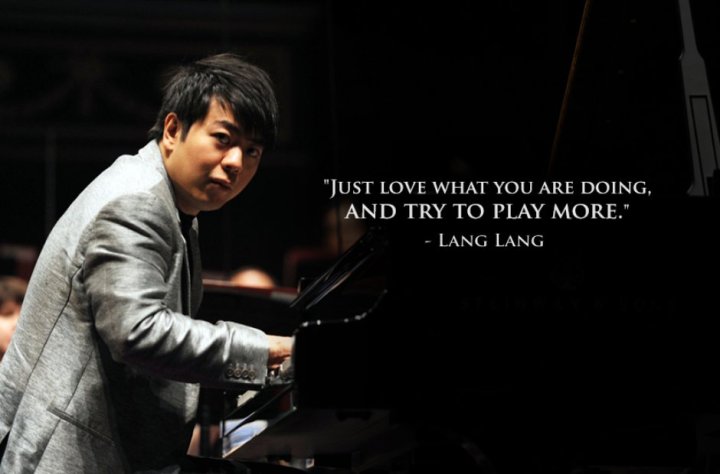
For me the joy is in the music. I love music.

Joseph Fleetwood, pianist

performers-quotes-15-1377772242-view-1

It’s been an interesting and busy year, marked in May by my move from London, my home for 30+ years, to a quiet corner of Dorset – the isle of Portland on the striking Jurassic Coast. Leaving London and its vibrant culture, not least a wealth of classical music which I have much enjoyed, might have felt like a huge wrench, but in fact I don’t miss the big city, and I am already discovering plenty of music here in Dorset.

In addition to allowing me to muse on things musical, the blog keeps me in touch with a large community of people, some of whom have become good friends in real life, and this has undoubtedly prevented me from feeling at all lonely or isolated here in Portland. In a way, I enjoy the best of several worlds: we live in a light-filled modern house, far bigger than anything we could have afforded in London, with views over Chesil Beach and the sea, and fantastic Turner-esque sunsets in the evening. My son lives in a flat in SW London, which means I can still visit to see friends and enjoy concerts and other cultural highlights, before retreatng once again to a place whose quiet and slower pace of life are very conducive to writing and piano practise.

People regularly ask me how I continue to produce so much “content” (an on-trend word for articles/writing). The truth is that I love music and I love writing about music and sharing my passion. Articles are inspired by encounters and conversations with other musicians and writers, concerts I’ve enjoyed, things I’ve heard on the radio, and much, much more….and while that inspiration remains, so the blog will continue (it will celebrate its 10th birthday in July 2020).

A big thank you to all my readers, followers, guest contributors and wonderful Meet the Artist interviewees, all of whom make the blog so interesting and varied.

Wishing you a very happy and music-filled 2019

Guest post by Michael Johnson

Out of nowhere this morning, the ghost of John Cage and his creative genius visited me at a supermarket in Bordeaux, France. I was so glad to be back in touch with the old goat. It had been a while.

But along with a thousand other shoppers jostling for Yuletide goodies, I was being hammered by “Christmas Music”, a Muzak track of Jingle Bells and Silent Night (in English) as I emptied my wallet to bring champagne and foie gras to my home.

Suddenly I heard John whisper in my ear, “Tell them to play 4’33”.” Aha, I thought, that’s the perfect adaptation of a contemporary classic with the trashy earworms we must abide year after year after year. Is there any tune as trite as “Silent Night”? “Adeste Fidelis” and — oh no — “Little Drummer Boy” ! Are there any songs as perfect for the fine hand of John Cage? Silence was his byword, his bible, his autobiography.

I have trotted around the globe for most of my life, finally landing in Bordeaux, which seemed a safe haven from tacky popular culture and seasonal music-making. But it was another disappointment a few years ago to come face-to-face with musical globalization – American tastelessness transported into the heart of Southwest France, the home of Ravel, the birthplace of the Labèque sisters piano duo, the cradle of great writing and great thinking, Mauriac, Montaigne, Montesquieu. The home of soprano Natalie Dessaye, conductor Paul Daniel, and for many years, the adopted city of Roberto Benzi.

Hélas (as the French say), the greatness of the past is being swamped by the dumber tide of the present. Those of us who yearn for a Bach cantata (why not?) cannot even switch off the trash like a smart phone, the other plague of our time. Trivality is in the air, everywhere.

It’s hard to escape the earworm at this time of year, with shopping malls and public streets bombarding us. The less you like these tired tunes, the longer they hang around in the memory cells, circling the mind like fruit flies over an orange.

The late neurologist Oliver Sacks wrote in “Musicophilia” that these awful tunes have subverted the brain, forcing it to fire repetitively. . . “as may happen with a tic or a seizure.”

Sacks quotes a patient recalling a bout of earworms. The song “Love and Marriage” took possession of the man for ten days, leading him to desperate efforts to shut it off: “I jumped up and down. I counted to a hundred. I splashed water on my face. I tried talking loudly to myself, plugging my ears.” It finally subsided, only to return when he told Sacks about it.

Funny. That just happened to me this morning while shopping.


Michael Johnson is a music critic with particular interest in piano. He worked as a reporter and editor in New York, Moscow, Paris and London over his writing career. He is the author of five books and divides his time between Boston and Bordeaux.

Illustration by Michael Johnson

