Woolf String Quartet & Duncan Honeybourne, Chamber Music Weymouth lunchtime concert, Wednesday 25 February 2026
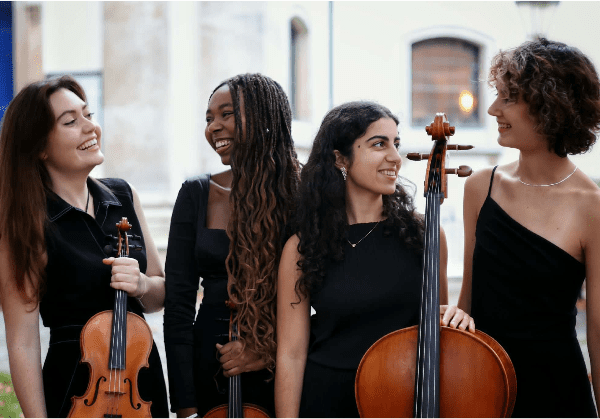
Woolf Quartet are: Zosia Herlihy-O’Brien (violin), Emily Harrison (violin), Beatrice Slocumbe (viola) and Hoda Jahanpour (cello)
When the audience comes out of a concert with words like “incredible!”, “brilliant” and “that was absolutely superb”, you know the musicians, and the music, has touched them. And that is what happened on Wednesday, 25 February, when the Woolf Quartet returned to Weymouth to impress the lunchtime concert audience once again. This London-based string quartet was formed at the Royal Academy of Music, and they take their name from author Virginia Woolf, as they often rehearse in Bloomsbury, close to where she lived.
They made their Chamber Music Weymouth debut in 2025 and wowed the audience with an engaging programme that featured Debussy and a piece by the quartet’s cellist, Hoda Jahanpour. This time they were joined by pianist and CMW Artistic Director Duncan Honeybourne to perform just one piece – Brahms’ Piano Quintet in f minor. A big-boned work of symphonic textures and narrative breadth, it has the expansiveness of Schubert in its four movements, and is one of the most challenging and important works in the chamber music repertoire. It asks of all the musicians virtuosity, stamina and cohesion, and an ability to navigate many modulations, complex rhythmic shifts, and fugal passages. It’s a monumental work, emotionally intense and physically demanding, and a challenge for any ensemble – and one which the Woolf Quartet rose to with commitment, maturity and musical insight.
It’s rare to feel a thread of concentrated energy through an entire concert – not an easy feat for musicians to achieve – but the Woolf Quartet, with Duncan Honeybourne, succeeded in doing just this. It’s a credit to them – and a mark of the infectiousness of their concentration – that the audience was almost completely silent for the entirety of the concert, listening intently to Brahms’ shifting soundworld and the emotions it suggests.
The Woolf Quartet, both individually and together, brought much colour and nuance to the music. Brahms’ writing gives each player a chance to shine. The ensemble playing was precise and committed, amply matched by Duncan Honeybourne, who made light of Brahms’ rather unforgiving piano textures. Most engaging, though, was that the musicians clearly enjoyed themselves. It’s always a pleasure to see performers truly immerse themselves in music that they love.
Catch the Woolf Quartet if you can – you won’t regret it! They will be at London’s Wigmore Hall on Saturday, 2 May, where, I’m told, they will be performing a piece they have written together, as well as music by Shostakovich.
Chamber Music Weymouth’s lunchtime series continues on Wednesday 11 March with a recital by distinguished pianist Margarat Fingerhut. Find out more
A few weeks ago I slipped on an icy pavement and fractured my right hand. There was a scary moment when I was told the break might be a serious one, and difficult to heal, but that proved to be a false alarm and the hand is almost back in normal use.
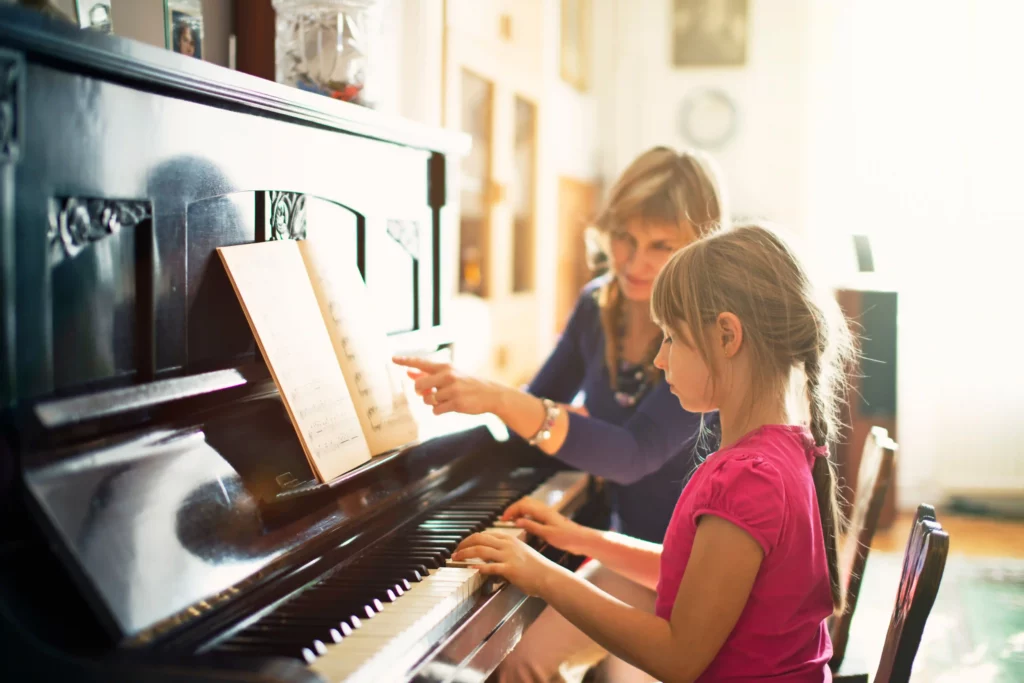
The injury, though, proved to have interesting consequences for my piano teaching, and got me thinking about motivation, a topic often in my thoughts concerning my students, who are currently between the ages of 4 and 11.
Because my right hand was immobile, I dictated homework notes to the older children to write in their practice diaries. (The younger ones made do with the squiggly efforts of my non-dominant hand.) Two particular children took this responsibility very seriously, to the extent that they are continuing to write their own notes and adhering to them, too. One of these children hadn’t been very motivated of late; she mostly did what was asked in terms of practice, but seemed to be going through the motions, rather than actually enjoying playing. Now, she makes annotations to the music, adding fingering or reminders of articulation and seems to be enjoying the piano once again. The difference in her playing is marked; there’s an expressive quality there that I hadn’t heard for months. There could be many different reasons, of course, for the change of attitude, but I think the shift in ownership has played a part. The child knows now that she is responsible for her own progress but I haven’t had to tell her that. The process has taught me a lesson, too; that for some children doing as much as possible for themselves is a real motivator. For others, it’s not important; they still have the intrinsic motivation they started out with.
Over the years, I’ve found that most children are motivated to play at first because they like the sound of the piano and take pleasure from being able to create that sound. (Very occasionally, a child has no interest in the instrument but his parents wish him to learn. Honesty, or extrinsic motivation are the options here.) Keeping hold of that initial motivation is key, and all teachers of young children have their own thoughts on how to do this. Here are mine:
Performing. This depends on the child, but I have found in schools that most children love to play in assembly or to their class and will devote considerable time to practice if they have this goal.
Being the teacher. A pupil of six was thrilled to tell me recently that he had taught his younger sister how to play a tune. Some children enjoy teaching their friends. I say to children they can teach their mum/dad how to play and younger children often love it when their parents can play a duet part.
Composing/improvising. I do this from time to time in lessons and with some children it really absorbs their interest and allows them to enjoy and explore the range of the piano. Writing down their melody is a good way to revise or bring in notation.
Learning a well-known tune. Many children, especially older ones, really want to be able to play specific pieces. Mastering a manageable version of a song you like can be very rewarding and I think helps some children continue to play when they might otherwise have given up.
Stickers. My use of these is extremely judicious and only for those up to the age of 8. I find that if a child manages to do something he’s been trying to achieve, the satisfaction of accomplishment is reward enough. For the youngest, the excitement of playing the piano is similarly, quite a match for a humble sticker and that excitement must be retained. Having said that, some children love making collections and if a sticker helps a child practice, I would certainly advocate being generous.
Praise and positivity. There are different schools of thought on this. My view is that children really value praise when it is earned and therefore, used truthfully, it is immensely helpful to progress. I find this is particularly true with children who are in a cohort with many high-achievers and feel they are never going to catch up. Sometimes a child needs convincing they are playing well, even if it’s a simple tune.
As a teacher, I’m conscious of the need to retain that initial interest and enjoyment so the child doesn’t lose sight of why he is playing and practising. Even the most well-intentioned child (and adult) can suffer a dip in motivation whilst navigating the distractions of modern life. Frustrating, yes, but truly rewarding when a little creative thinking puts things back on track.
Frances Jones teaches piano in SW London. She has also taught and led music provision in London prep schools.
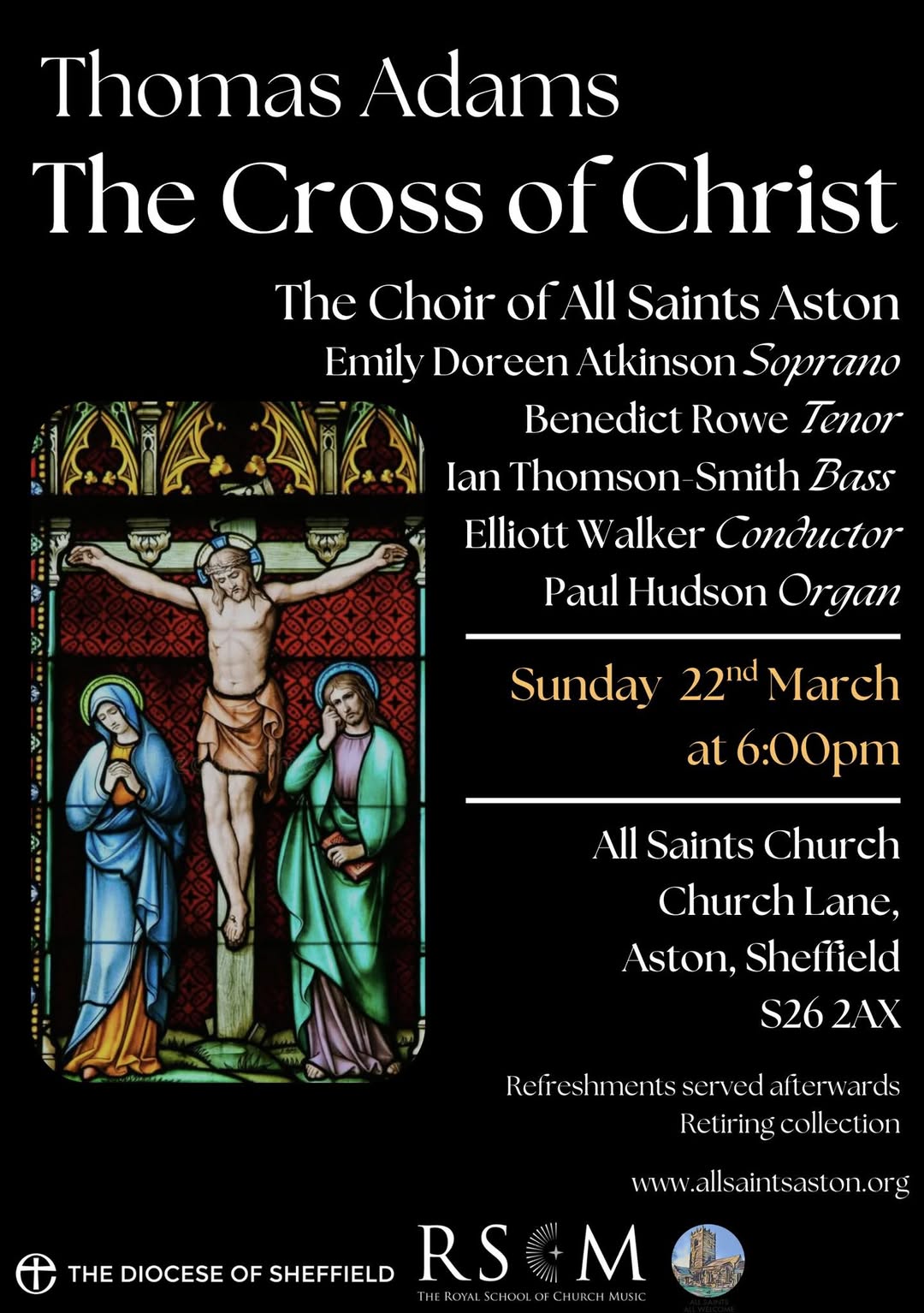
The choir of All Saints Aston in the Diocese of Sheffield are embarking on a rather exciting project for their Lenten Cantata. They’ve dusted off a very old and obscure choral work by the English composer, Thomas Adams. In this article, Director of Music, Elliott Walker introduces the work and talks about the pleasures and challenges of working on it with the choir.
Can you give us a brief background to this piece?
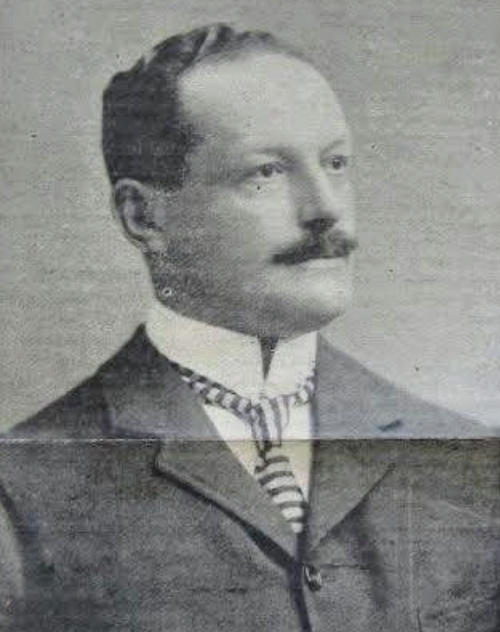
Thomas Adams (note that there are two composers of this name!) was a Victorian/early Edwardian composer and organist based in London. He was Organist and Director of Music at St Alban’s, Holborn, from June 1888 until November 1918 where he died in post. The church itself was heavily shaped by the Oxford Movement, a tradition which it still up holds to present day. The cantata is a devotional work focused on the meaning of the Cross. Rather than retelling the story of Christ’s crucifixion – as in The Crucifixion by John Stainer – it instead offers a reflection on sacrifice, love, and discipleship. The text draws on scripture, including Psalm 91, Corinthians, Matthew, Genesis, and others.
Scored for chorus with soprano, tenor, and bass soli, the work is, in its simplest form, a piece of devotional music intended to transport a congregation into a state of wonder, reflection, and piety.
Thomas Adams
How did you discover this music and what drew you to it?
I think it is an exceptional privilege that, as musicians, we are not only artistic creatives but also custodians and historians of the rich tradition of church music. On a weekly basis, we carry the responsibility of reinventing the archaic, returning to familiar repertoire, and exploring the modern expressions of the genre.
We have this precious window of opportunity to delve into the archives, to rediscover music that once served its purpose in the Victorian period, and to reimagine it in a 21st-century context—something I am sure the original composer could never have envisaged.
I spent time researching what cantata we can do this year. I wanted to do something obscure as a challenge to the choir. I was personally drawn to this work by the opportunity to dust off music from the archives and bring it back to life. Like most Directors of Music, I also approached it with a practical eye, considering the timescales required to learn the work and how it would fit within an already full term schedule.
You say there are no recordings of it. How has this influenced your preparation of the music with the choir/soloists? What kind of interpretative decisions have you made with no “benchmark” recording to refer to?
Whenever musicians perform a piece, it is essential that they understand what they are actually performing. For example, there is little value in singing music in Latin if one does not understand the text or its meaning. A clear grasp of the words is crucial if we are to convey them with integrity and convincingly.
Although the score provides some tempo and dynamic indications, these are often quite general, and so our approach must be more analytical. We begin by asking fundamental questions: what is the text saying? How does the harmony support the word-painting? How is tonality being used? How do the voices interact with one another?
One of my favourite moments (spoiler alert!) occurs in a choral movement where there is a sudden shift from E major to C major – initially quite surprising. However, when the text is examined closely, the modulation makes perfect sense, serving to uplift and intensify the meaning of the words at that point.
Listening to and studying other Victorian repertoire has also helped to establish a broader stylistic context and offered valuable insight into the musical language of the period—though I appreciate that Victorian church music is not every church musician’s cup of tea!
What are the most challenging aspects of singing this work, and the most enjoyable?
Most enjoyable: – It feels like piecing together a jigsaw, with each individual movement gradually forming part of a larger, unified picture. – Sharing the cantata’s purpose and historical context with the choir, and inspiring them through a deeper understanding of the work. – Finding every possible opportunity to be excited about church music and to pass that enthusiasm on. – Offering the piece as an act of worship rather than as a concert performance, which gives it an entirely different interpretative lens and depth of meaning.
Most challenging: – Working from what is essentially a blank canvas, while finding creative and imaginative ways to shape the music. – Reading and navigating an older style of musical typography.
– Many of the choir, some of which have sung with us for a long time, are enjoying learning new hymns! The combination of learning hymns where both words and music are new is a welcome (and refreshing!) challenge.
What do you hope your audience will take away from hearing this work at your Lenten performance?
Our performance will be part of a service – whether you are attending for worship purposes, or curiosity, we hope that the listener will take away one or more:
Through music and text, be transported to a space of reflection on the meaning of the cross.
A chance to listen to music of a forgotten time.
Tell us more about your choir at All Saints Aston.
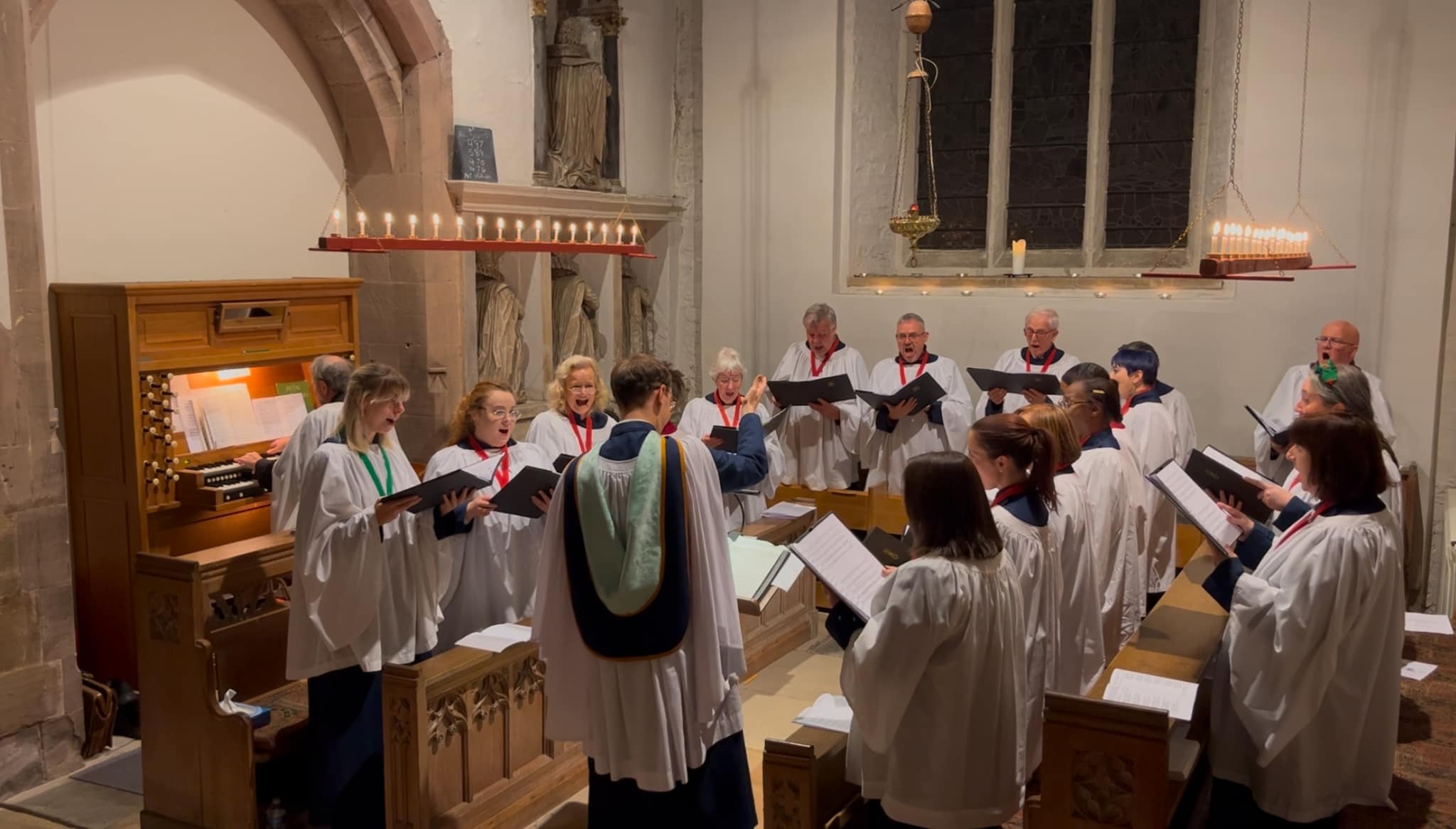
The Choir of All Saints, Aston, stands at the heart of the church’s worshipping life, upholding a rich tradition of Anglican choral music within our vibrant parish community. With a commitment to musical excellence and reverent service, the choir seeks to enhance the liturgy through music that inspires devotion and reflects the beauty of the Christian faith.
We sing a wide variety of sacred music drawn from across the centuries – from early choral works and Anglican repertoire to modern settings by contemporary composers. The choir leads the musical worship at services throughout the liturgical year, offering both congregational and choral music that enriches our worship and deepens our sense of praise. Regular choral services such as Choral Evensong and Sung Compline form an important part of our musical life, alongside occasional services of Choral Matins, special festivals, and other significant occasions in the church calendar.
Our mixed adult SATB choir, under the direction of our Director of Music, Elliott Walker, comes from a range of backgrounds and musical experiences, united by a shared love of singing and service through music. We all have a shared vision of upholding the highest standards of liturgical music-making. We take what we do with pride, but also with great joy.
The choir has also been involved in new music, including the premiere of a commissioned composition, Ave Verum, by composer Joseph Shaw, furthering our commitment to supporting living composers and expanding the Anglican choral tradition. In addition, we have hosted “Come and Sing Evensong” events for churches across the Diocese, encouraging participation in choral worship and nurturing a wider appreciation of Anglican liturgy and music. Last year, we performed Stainer’s The Crucifixion as our Lenten offering.
How do you feel the Royal School of Church Music (RSCM) supports church music in the UK and choirs such as yours?
The RSCM plays a vital role in supporting church music in the UK and choirs such as ours by enabling worship to flourish through music in all its forms. As a church with 45 years of affiliation to the RSCM, we wholeheartedly uphold its mission, values, and virtues.
This support is not limited to any single style of church music. Whether through contemporary worship, traditional choral repertoire, or lesser-known cantatas, the RSCM’s inclusive and fluid approach affirms the richness and breadth of sacred music. Through this openness and encouragement, the RSCM continues to nurture choirs, musicians, and congregations alike, ensuring that church music remains vibrant, relevant, and spiritually enriching.
Performance is on Sunday 22nd March at 6pm
All Saints Aston, Church Lane, Aston, Sheffield, S26 2AX
We are exceptionally excited to be working with our talented soloists: Emily Doreen Atkinson (soprano), Benedict Rowe (tenor), Ian-Thomson Smith (bass), and Paul Hudson (organist).
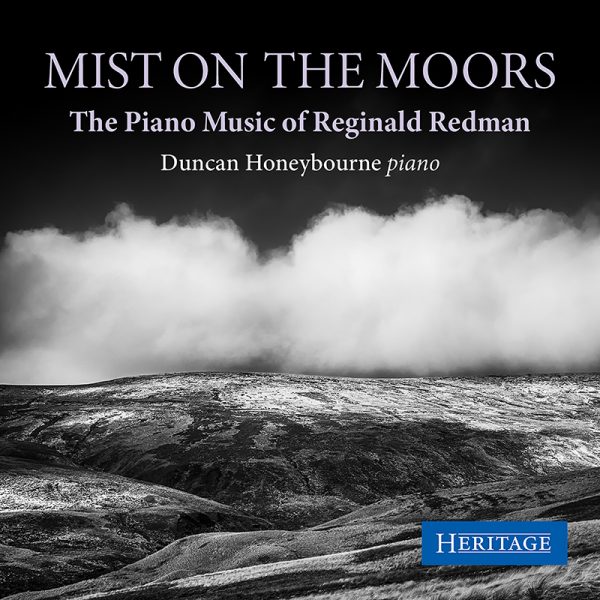
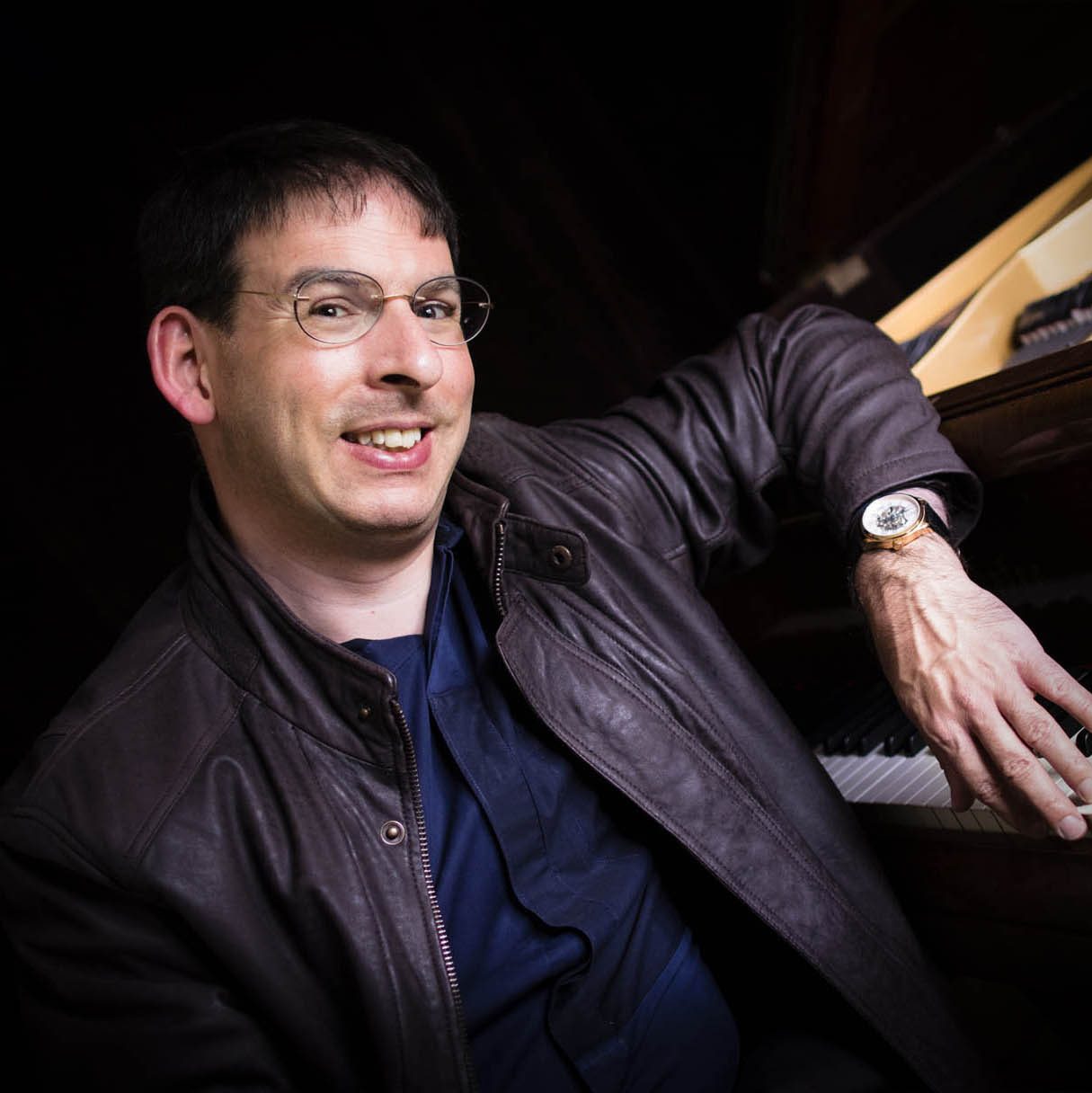
British pianist Duncan Honeybourne continues in his splendid quest to bring lesser-known and rarely-performed British piano music to the fore with his latest release – a collection of pieces by Reginald Redman (1892-1972).
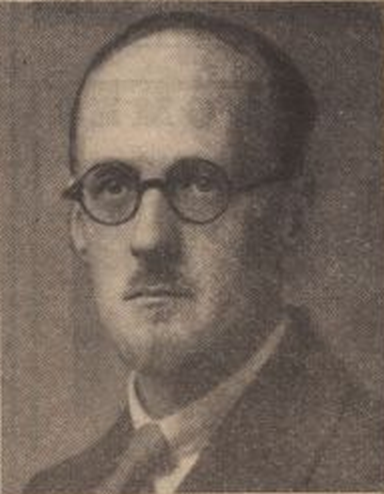
Reginald Ernest Redman (known as “Rex” to his family and friends) was born in London on 17th September 1892, but his roots were in the South and West of England (his father came from Wiltshire and his mother from Devon). He became a church organist at the age of 16 while working as a bank clerk before going on to study music at the Guildhall School of Music. In 1926, Redman took a major career step which was to colour the rest of his life: he joined the new British Broadcasting Corporation (BBC), initially as an orchestral pianist and then as conductor of what became the National Orchestra of Wales. He then became the BBC Director of Music, Western Region, remaining in that role until 1952, where he had a significant influence on shaping the musical tastes of listeners. Alongside this, he composed for radio and television.
His music is strongly connected to the West Country, with many pieces having local inspiration (for example, A Cornish Legend and The Mist on the Moors), but he was also an expert on Chinese music (he set some 50 Chinese poems to music), and this is evident in his use of pentatonic harmony and a fondness for fourths and fifths, for example, in The Mystic Garden and the three Preludes, which have a distinctly Eastern exoticism in both harmonies and textures.
Most of Redman’s piano music seems to have been composed in the 1920s, before his role at the BBC became too demanding. Elegantly crafted music, it shows many influences, from Impressionism (The Mist on the Moors, La Nuit, Deep in the Woods) to British folk and pastoral idioms (Graceful Dance, All Through the Night), and is rich in colours, warm melodies, and sparkling pianistic textures (Humoreske). Some pieces have whimsical titles (Lullaby for a Kitten, Children at Play, In Changing Moods) and moods to match: touching and lyrical.
A Cornish Legend and On the Cornish Coast share the impressionism of Mist on the Moors but are more mysterious and expansive in their moods and expression. On the Cornish Coast vividly brings to life the rugged coastline and unpredictability of the Atlantic Ocean with swirling semiquavers and dramatic octaves.
This is a really satisfying, enjoyable, and engaging recording, beautifully presented by Duncan Honeybourne, who displays a deep affinity with the music (Duncan hails from the West of England). The piano sound is warm and lyrical, bright but always sensitive in the upper registers. As a world premiere recording, The Mist on the Moors is a significant contribution to the repertoire and brings Redman’s refined compositional language and his appreciation of the expressive qualities of the piano to greater attention, showcasing the range of his musical imagination in a delightful range of pieces.
The Mist on the Moors is released on the Heritage Records label on CD and streaming.
This site is free to access and advert-free, and takes many hours each month to compile and edit. If you find value and joy in this site, please consider making a donation to support its continuance:
The Cross-Eyed Pianist is free to access and ad-free, and takes many hours every month to research, write, and maintain.
If you find joy and value in what I do, please consider making a donation to support the continuance of the site





 The Cross-Eyed Pianist