Who or what inspired you to take up composing, and pursue a career in music?

I have a musical family and so my brother and I would hear music every day. I guess the music got into my soul and I started writing when I was at school from the age of about 12.

That said, I only started composing professionally in my mid-thirties. At that time I found that I really started to get satisfaction from creating music and particularly music that other people enjoy playing.

Who or what were the most significant influences on your musical life and career as a composer?

My parents warned me that the musician’s life is not easy! However, I’ve always enjoyed performing whether on piano, singing or on trumpet. It was a natural step for me to form, run and conduct a swing band at my school, and then two more bands when I went to Cambridge University.

What have been the greatest challenges/frustrations of your career so far?

I think, probably like many people, I find the marketing aspect of writing (i.e. blowing one’s own trumpet!) to be a challenge. I guess it is constantly having to judge the best use of time and money in how to reach the right people with my music.

What are the special challenges/pleasures of working on a commissioned piece?

It’s always a pleasure to write a new piece of music – and especially so as a special request. Coming up with an original, catchy and visual title can take time though.

What are the special challenges/pleasures of working with particular musicians, singers, ensembles and orchestras?

I perform regularly with very talented UK jazz musicians in a variety of ensembles. It’s highly satisfying to try and play up to their standard and I always get ideas for new pieces after my gigs.

Of which works are you most proud?

Gosh – that’s a tricky question! I’m particularly proud of my JukeBox book series which has taken a great deal of work and seems to be popular so far. If it comes down to a particular piece, then at the moment the duet ‘Little Green Men’ makes me smile.

How would you characterise your compositional language?

I would say that it is a blend of jazz and other popular styles. As long as there is a melody and nice chord progressions, then I’m happy.

How do you work?

Ideally, I start with a title, perhaps from my growing list of potential candidates. Then I consult my spreadsheet of current compositions so that I try and avoid repeating the same combination of style, grade, key etc. I guess that’s my engineering background coming into play!

In reality, what tends to happen is that I get a melodic idea or rhythmic groove (often in the shower) and then try to find a title that works with it.

Either way, I’ll then sit down at the piano and experiment. Sometimes it works… sometimes it doesn’t!

Who are your favourite musicians/composers?

Al Jarreau, Oscar Peterson, Prince, Jamie Cullum, Stevie Wonder, Ella Fitzgerald, Dizzy Gillespie, Paul Simon, James Taylor…

As a musician, what is your definition of success?

If I can write and record a piece of music, then listen to it weeks or months later and think, “that sounds good!”, then that to me is a success. It doesn’t always happen, but it’s nice when it does.

Also, if I write a piece and someone, somewhere in the world plays that piece and enjoys it – then that is a success.

What do you consider to be the most important ideas and concepts to impart to aspiring musicians?

I think it is essential to love the music you’re writing or performing right now at this moment. We all have hopes and dreams of what might be in the future, but it’s probably best not to cling to those too tightly.

Where would you like to be in 10 years’ time?

Still gigging and writing most likely in the UK.

What is your idea of perfect happiness?

Being aware of the present moment – for example, during a gig and being in ‘the flow’.

What is your most treasured possession?

Materially, my piano.

What do you enjoy doing most?

Reading, watching and learning.

What is your present state of mind?

It varies, but mostly happy!


Olly Wedgwood has been playing the piano, singing, composing and performing in public since he was knee-high to a grasshopper. It all kicked off at school, many years ago in 1986 when he won a music scholarship to Hampton School and started to write for his favourite instrument – the piano

After four years of formal music training, Olly discovered Jazz and formed, conducted and managed the Hampton School 15-piece ‘Big Jazz and Blues Band’, also recruiting from the girls’ school next door ;). Hooked on jazz, he began to study jazz piano under top UK jazz pianist Roger Munns.

At Cambridge University, Olly performed in and directed ensembles ranging from pop and rock ‘n’ roll outfits, to jazz trios and big bands. He formed ‘Selwyn Jazz’ big band with his partner-in-crime, Jon Hooper, in 1993 and the band is still gigging to this day.

(Editors note: actually Olly studied an Engineering Degree, but he and his partner in crime, Jon Hooper, probably spent more time on the gig circuit than they did in the engineering lab…).

After University, Olly worked as an engineer and physics teacher by day, also conducting the Magdalen College School big band. By night, he gigged with various jazz and soul ensembles, both as a wedding pianist-vocalist and as a ‘front man’ wedding entertainer.

In 2004, he handed in his notice for his day job and went pro, playing frequently with the Oxford Jazz Quintet (one of Jamie Cullum’s previous ensembles). Olly now runs his Jazz Soul Boogie Band – an awesome wedding entertainment band on the professional gig circuit in the UK, performing a variety of music styles from jazz swing, Latin to funky 70s soul. Wherever Olly is playing, you’re guaranteed a great night’s music and dancing!

Also in 2004, Olly co-wrote ‘Wedgwood Blue’, a landmark piano collection which brings together the extraordinary talents of the Wedgwood family. Olly’s younger brother Sam Wedgwood is a talented singer/songwriter and their mother Pam Wedgwood is recognised around the world as one the UK’s most prolific and successful composers of popular repertoire for young instrumentalists.
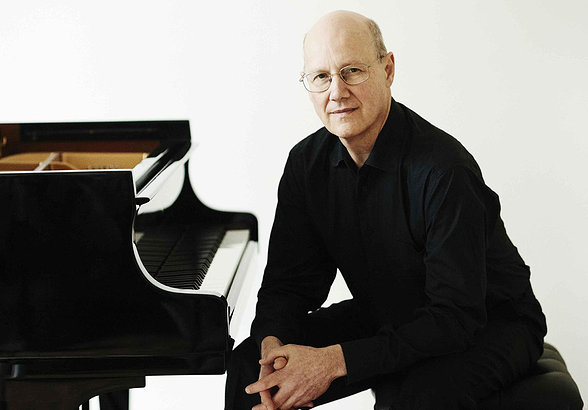

95e3b5_65c5b215787c4d3d9eb4d405329d650e.jpg_srz_588_410_85_22_0.50_1.20_0

Who or what inspired you to take up piano and pursue a career in music?

I remember being drawn to the piano as a very young child. I had a French aunt who was a superb pianist. When she came to visit and sat to play at the old Bechstein grand that we had at home, a kind of magic descended on the household. I naturally enjoyed starting lessons at the age of seven. It was only quite late in my life that my mother confessed to me that she had listened to gramophone records incessantly while she was pregnant with me, with the express intention of producing a musical child (my older brothers had not shown great interest in music…). I was a bit taken aback to think that I had been brainwashed in the womb, but, on reflection, I am quite grateful!

Who or what have been the most important influences on your musical life and career?

I could make a long list of people who have been important in shaping my musical life, amongst whom would be many composers and colleagues, not least my fellow players in the Schubert Ensemble (which has remained unchanged for 22 years). But three teachers stand out above all others. My greatest debt of gratitude goes to Rosemary Hammond, a local schoolteacher and choir director, who took me under her wing when I was eleven years old and floundering at an unmusical boarding school. She was no great performer, but had an infectious love of music and was an inspirational teacher. She introduced me to playing on clavichord and fortepiano as well as modern piano, taught me to compose and encouraged me with astonishing warmth and generosity. In my twenties I was lucky enough to study with Vlado Perlemuter, whose honest and unmannered musicality is still an inspiration to me, and also with Peter Feuchtwanger, a maverick and unorthodox teacher who taught me to open my eyes and ears in unexpected ways and gave me the courage to shape my career by following my enthusiasms.

What have been the greatest challenges of your career so far?

It may sound simplistic to say this, but the biggest challenges of my career have been developing that career in the first place and then sustaining it. I can honestly say that I have loved my professional life, but for years it involved a huge amount of hard work and uncertainty about the future, together with the constant battle of trying to juggle travelling and working at unsociable hours with bringing up a family. These pressures are common to many freelance professions, but we pianists inhabit a world overcrowded with dazzling talent and I can’t think of a single moment over the years when I have felt I could take my career for granted. The musical challenges (of which there have been many!) have felt easy by comparison.

Which performance/recordings are you most proud of?

Without any hesitation, I would hold up my recording of Pavel Zemek Novák’s 24 Preludes and Fugues, which came out on Champs Hill Records in 2011. It is a monumental work lasting around 75 minutes, which was written for me over a 17-year period from 1989 to 2006. I found the pieces incredibly difficult to play (and to read – they were written in manuscript and almost every page was covered in dozens of corrections!) and the recording took a huge amount of preparation. It was a labour of love, but massively rewarding. The Preludes and Fugues comprise some of the most important and original piano music that I have ever played. Pavel is not hugely well known outside the Czech Republic, but I am convinced that his music will become better and better known. Of the 45 or so CD recordings that I have made over the years, I think this is the one most likely to outlive me.

Which particular works do you think you play best?

I am probably the last person who should try to judge what I play best, but I feel especially at home playing Schubert, Chopin, Fauré and Janáček, and if I had to single out one work of each composer, they would be the Wanderer: Fantasie, the First Ballade, the Sixth Nocturne and In the Mists.

How do you make your repertoire choices from season to season?

I like to introduce new works into my repertoire each season and to return to works I have not played for a while. Recording plans and new commissions also affect the make-up of programmes, and large-scale projects too at times. At the moment my programmes are built around love songs for solo piano, both romantic pieces and a large collection of newly commissioned works.

Do you have a favourite concert venue to perform in and why?

I tend to judge venues as much by the pianos they offer as well as their acoustic. The Wigmore Hall ticks all boxes for me. While I love performing in its acoustic, it also has one of the best-maintained Steinways in the country. Next year will be the fortieth anniversary of my first concert there, so I can add familiarity and decades of happy memories to its attractions! Competing with the Wigmore is the medieval Great Hall at Dartington, which is a beautiful space to perform in, and is also full of memories for me. I heard many of the most memorable concerts of my life there as a student at the Summer School in the late 60s and 70s and it always gives me a huge thrill to be playing there myself.

Favourite pieces to perform? Listen to?

It would be too difficult to choose my favourite pieces to perform – they tend anyway to be what I am working on at any given time. Naming my favourite pieces to listen to is easier. They would be Mozart’s G minor String Quintet and Janáček’s Second String Quartet.

Who are your favourite musicians?

I have too many favourite musicians in the present who I could list – composers, instrumentalists and fellow pianists who are friends and many others who I admire from afar – so I will stick to those from the past who I heard play live and whose recordings I still love to listen to Artur Rubinstein, Vlado Perlemuter, Shura Cherkassy, and Rudolf Serkin.

What is your most memorable concert experience?

Nearly 20 years ago the Schubert Ensemble launched a project called Chamber Music 2000, in which we commissioned several dozen new chamber works for young pianists and string players. We put on over twenty public concerts in venues all over the UK, including the Wigmore Hall and South Bank Centre, in which young musicians, mainly teenagers, performed whole concerts of works by living composers. These concerts had a wonderful spirit of engagement and adventure and were some of the most memorable I have attended as a listener.

What do you consider to be the most important ideas and concepts to impart to aspiring musicians?

It is the privilege of older musicians to specialise (if they want to!), but I think for younger and aspiring musicians a broad experience of music is essential. It is important to hear lots of live performances and to study as wide a repertoire as possible, and, very particularly, repertoire beyond that written for your own instrument. And I firmly believe that working with living composers can teach us an enormous amount about how to approach interpreting music from the past.

What is your present state of mind?

I feel very positive about life at the moment! I am enjoying playing the piano more than ever right now and I have a number of projects on the go that I am finding fascinating and challenging.


William Howard is established as one of Britain’s leading pianists, enjoying a career that has taken him to over 40 different countries. His performing life consists of solo recitals, concerto performances, guest appearances with chamber ensembles and instrumentalists, and regular touring with the Schubert Ensemble of London, Britain’s leading group for piano and strings and winners of the Royal Philharmonic Society Award for Best Chamber Ensemble. He can be heard on around 40 CDs, released by Chandos, Hyperion, ASV, NMC, Collins Classics, Black Box, Champs Hill, Nimbus and Orchid Classics.

His solo career has taken him to many of Britain’s most important festivals, including Bath, Brighton and Cheltenham, and he has been artist in residence at several others. He has performed many times in the Wigmore Hall and the South Bank in London and has broadcast regularly for BBC Radio 3. For many years he has been invited to perform and teach at the Dartington International Summer School. His recording of Dvořák Piano Works was selected in the Gramophone Critics’ Choice, and his recording of Fibich’s ‘Moods, Impressions and Souvenirs’ won a Diapason D’Or award in France.

Recent solo engagements have included a performance at the 2015 Bermuda Festival, the premiere of David Matthews’s Four Portraits at the Spitalfields Festival in London and performances at the Cheltenham, Deal, Leamington, Petworth and Paxton Festivals, at Kings Place in London, in Brno (Czech Republic), Italy and Oregon, USA. In 2011 he made a recording of Pavel Zemek Novák’s extraordinary 75-minute cycle of 24 Preludes and Fugues. A double five-star review in the BBC Music Magazine described the performance as “superb” and the music “a real discovery”. His most recent album, Sixteen Love Songs, released in June 2016 on Orchid Classics was selected as ‘Drive Discovery of the Week’ on Classic FM.

He is passionate about 19th century piano repertoire, especially Schubert, Chopin, Schumann and Fauré. He also has a strong interest in Czech piano music, and has been particularly acclaimed for his performance of Janáček, for which he received a medal from the Czech Minister of Culture in 1986. Many leading composers of the present day have written for him, including, Sally Beamish, Petr Eben, Piers Hellawell, David Matthews, Pavel Novák, Anthony Powers, Howard Skempton and Judith Weir. In 2016 he launched a project to commission sixteen love songs for solo piano from leading composers in the UK and abroad, including Elena Kats-Chernin, Nico Muhly, Richard Reed Parry and Judith Weir. He also set up an international composing competition for writing piano love songs that attracted over 500 entries from 61 countries.

Guest post by Nick Hely-Hutchinson

Did any composer, I wonder, understand – really understand – the true scope, range and possibilities of the soprano voice as well as Strauss?

That is quite a bold assertion when you consider the huge competition; but my guess is that it would find a high level of support among sopranos anyway, of which his wife, Pauline, was one. She was about as fine a personification of the ‘prima donna’ as you could expect to meet, and their marriage was volatile; but their mutual love of music probably accounts for Strauss’s exquisite compositions for the human voice.

I will not deter you now on his operatic output, of which there were fifteen, except to allude to a comment I once heard made by Kate Royal, a fine English soprano, to underline Strauss’s mastery. The last twenty minutes of his opera ‘Der Rosenkavalier‘ would never lose its slot in my Desert Island Discs, being filled with the most sublime mingling of female voices: Royal said something along the lines of, “It’s one of those moments when you just stand and sing” – nothing else required.

Today’s piece will detain you for less than two minutes, but its three brief verses are all very slightly different, and a couple of hearings will reveal its subtle musical development. Strauss wrote over 200 songs, and many of those originally written for voice and piano were later orchestrated. ‘Zueignung‘ (‘Devotion‘) is one such, but the version I have chosen is with the piano, here played so sensitively by the renowned Strauss interpreter, Wolfgang Sawallisch.

It is a little gem, composed in 1885, set to the words by the poet Hermann von Gilm. I remember seeing the American singer, Renee Fleming, perform Strauss’s ‘Four Last Songs‘ at the proms a few years ago and mentally begging her to sing ‘Zueignung‘ as an encore. Never underestimate the power of wishful thinking! I have scrolled through a number of recordings, but it is the purity of Lucia Popp I cannot resist. The touching, pining, lyrics end with the lines ‘Heilig, heilig an’s Herz dir sank, Habe Dank.’ (Joy and bliss shall thy love impart.Thanks, sweet heart!)

There are some who argue that German is an unmusical language. It was Lady Bracknell, of all people, who, when commenting on a programme of songs in Oscar Wilde’s ‘Importance of Being Ernest said ‘French songs I cannot possibly allow…but German sounds a thoroughly respectable language‘. A slightly tenuous link on the face of it, but the two men had more in common than you might expect: Strauss’s controversial opera ‘Salome‘ was based on a play by Wilde.

I hope you enjoy this, it is gorgeous.


Nick worked in the City of London for nearly 40 years, but his great love has always been classical music. The purpose of his blog, Manuscript Notes, is to introduce classical music in an unintimidating way to people who might not obviously be disposed towards it, following a surprise reaction to an opera by his son, “Hey, dad, this is really good!“. He is married with three adult children.

Schubert works for piano duet and piano solo – Maria Joao Pires & Ricardo Castro

Deutsch Grammophon 2004


I was given this album by a friend for my 40th birthday in autumn 2006. I thought turning 40 would be easy: I told myself it was “just a number” and that it had no real significance, that it was just another day in my life. In fact, my birthday coincided with a difficult period in my adult life, when I realised, with a shock, that the boundaries of one’s emotional life are not completely impermeable, and that being married does not make one immune to another person’s attention and admiration.

During the year of my birthday, I started playing the piano seriously again after an absence of nearly 20 years (in the preceding years I was busy getting married, setting up home, working in publishing and antiquarian bookselling, having a child, and I lost interest in the thing about which I cared very passionately when I was at school).

Some of the first pieces I returned to were Schubert’s D899 Impromptus and the Moments Musicaux, pieces I had always liked, and attempted and played rather badly as a precocious teenager (my mother bought me the Edition Peters score after hearing Alfred Brendel play them). Returning to the piano after such a long time away was very hard, yet it was gratifying to find pieces that had been carefully learnt in my teens had not been entirely forgotten and were still “in the fingers” (as a professional pianist colleague of mine said once “the body does not forget that easily” – and it’s true). At that time, I didn’t even have a piano: I was playing, and teaching, on a digital piano, which did the job, but had none of the subtlety nor refinement of an acoustic piano.

At the time of my birthday, I was doing a lot of reading about Schubert’s Impromptus, pretending this was “research” for my (still unpublished!) novel. The D899 Impromptus have a special significance for the hero of my book – a young concert pianist poised on the cusp of a brilliant career until the First World War cruelly intervenes – and each one connects him to particular people or events in his life. It is significant that in his first concert after the war is over he plays the Impromptus as a way of reaffirming these connections and celebrating life and love.

Of course, in reality these late piano pieces of Schubert, together with the D935 Impromptus and the final three sonatas, are the works of a man at the end of his short life, yet Schubert was less than 10 years older than the hero of my novel when he wrote these wonderful works. These pieces, composed during a remarkable outpouring of late masterpieces, display many emotions, from anger and defiance (the D958 Sonata in C minor) to resignation and valediction (the last Sonata in B-flat, D960). The Impromptus are in many ways miniature versions of these big works: full of variety, containing a broad sweep of emotions from the chillingly bare G which opens the first of the D899 set to serenity of the third in G-flat and the final, life-affirming cadence in A-flat major of the fourth Impromptu.

The Fantasie in F minor, D940, which opens «Resonance de l’Originaire», was composed in 1828, the last year of Schubert’s life, and is written for four hands (two pianists at one piano). It has a four-part structure, not unlike a sonata, but the “movements” run into one another with stylistic bridges between each. Schubert had already explored the Fantasy form in his Wanderer Fantasie D760, a bravura work full of heroism and energy. By contrast, the opening motif of the D940 is elegaic and wistful, a distant horn call accompanied by murmurings in the lower register. In the hands of the pianists on this recording, the mood is melancholy, almost desperately tragic, yet tinged with great tenderness. Typically of Schubert, the mood soon takes a volte face with a new, more hopeful motif in the lower register, and throughout the work there are contrasting shifts of mood from poignant and heart-rending to dramatic, longing, intimate, charming and dance-like, and characteristic shifts between minor and major. The textures, shared between the two pianists, give the work an inner richness, and the reprise of the first theme is a touching reminder of the work’s underlying sadness.

This piece has, on occasion, reduced me to tears. When I was fortunate enough to hear it performed live by the artists on this disc, during Maria Joao Pires’ memorable Wigmore Hall residency in 2007, I think I cried through almost the entire performance, moved not only by the music, but also the fact that I was in the presence of an artist whom I greatly admired and respected (and continue to).

The other work for four hands on this double CD recording is the Rondo in D951, which provides a delightful salve after the emotional impact of the D940. Maria Joao Pires also plays one of the earlier sonatas, the genial D664 in A, while Ricardo Castro opens the second disc with the D784 in A minor, which shares some of the same emotional territory as the D940 in its sombre opening statement and dramatic Beethovenian gestures throughout the first movement. The final work on the disc is the dramatic Allegro in A minor, D947 “Lebensstürme”, also for four hands.

Musically and emotionally Pires and Castro seemed conjoined in the works for four hands on this album, while Pires’ solo performance in the Sonata in A is tender and delicately shaded. Between them, the two pianists on this disc give a sensitive and passionate reading of some of Schubert’s finest music for piano.


Fantasie D940


Piano Sonata in A D664 – 3rd movt


Sonata in A minor, D784


Allegro in A minor D947

