As I step into the Royal Opera House’s stylish new café, there is the familiar Covent Garden buzz. It’s the opening night of Werther, and also the start of the new opera season. The talking points are Joyce di Donato’s upcoming title role in Agrippina. She was also in the last 2016 performance of Werther, alongside the flamboyant Italian tenor, Vittoria Grigolo. Would the 2019 Werther, sung by Juan Diego Flórez, match Grigolo’s high octane performance in 2016?
I had been gripped by Grigolo’s ROH debut in Werther, a broadcast ofwhich I saw at the cinema. The camera angles were daring: I remember a close up of Grigolo’s pulsating vocal folds as he hit the high notes.
Werther is all psychological drama. The narrative is bare but doesn’t feel so because of the richness of the music. In parts Jules Massenet, the French composer, shows his love for Wagner, in others, sorrowful and heart-rending music of great delicacy.
In my Meet the Artist interview posted here on June 13th 2018, in response to the question “Who or what inspired you to take up composing, and take up a career in music?”, I mentioned three teachers who had helped me during the years I was a pupil at William Ellis School in Highgate, North London. The third of these was Julian Silverman, who, I discovered recently, and to my immense shock and sadness, died on Boxing Day 2016, shortly after his 80th birthday.[1]
Julian Silverman
Julian taught me A-level Music, having been appointed as a part-time teacher at William Ellis School in 1967. It soon became clear to me that he was an exceptionally gifted and knowledgeable musician. A superb pianist and a fine horn player as well as an accomplished composer, his musical tastes were exceptionally broad, and he possessed an encyclopaedic knowledge of the repertoire.
He was an inspiring teacher, and we immediately established a firm rapport. I was very pleased when he offered to give me private piano and composition lessons. After a while, the teacher-pupil relationship broadened into friendship, and I began to spend time at weekends and school holidays at Julian and his wife Erika’s large Victorian house in Kentish Town, a short journey on the Northern Line from my parents’ home in North Finchley. Surrounded by scores, books and instruments we would discuss not just music, but a wide range of topics, including art, literature and politics. I was a shy and somewhat awkward teenager, and very much appreciated the warmth and kindness shown to me by Julian and Erika. Sometimes, I would make music together with Julian and his friends, even giving the occasional concert. I remember playing trio sonatas at the Arts Lab in Drury Lane – not maybe the sort of venue normally associated with this repertoire.
I remained in touch with Julian after I left school. Julian himself handed in his notice a year or so later, and began working as a theatre MD. In August 1972, while a BA student at the University of Sussex, I was in the band performing Julian’s haunting and effective music for Yevgeny Schwarz’s The Dragon at the old Half Moon Theatre in Alie Street, Aldgate.
By the time I finished my degree at Sussex, Julian and Erika had moved to Switzerland and were living on the outskirts of Zürich. In the Summer of 1973, my then girlfriend and I hitch-hiked from Rome to London via Zürich. Julian had assured me that we would both be welcome there, and, initially, we had a very pleasant time. I wrote some short duos for flute and horn, which we played together. Erika, it soon turned out, was less pleased to see us, as we were the latest in a constant stream of visitors from London who had descended on them at Julian’s invitation, and we left after a few days.
Julian and Erika returned to London and, by the late 1970s, Julian was working as Classical Music editor for Time Out magazine. I was a struggling freelance musician, trying to make a living from proof-reading, music editing and suchlike. On several occasions, Julian offered me work writing photo captions for the magazine. The captions were only about a hundred words long, and the pay was good, so I was naturally very grateful to him for this.
I was also very pleased when, in 1982, music by Julian and me appeared in the same programme, when the newly-formed duo of trumpeter Jonathan Impett and pianist Michael Blake commissioned works from both of us for their debut concert at the Purcell Room.
It was at this time that it became obvious from our increasingly infrequent conversations and correspondence that Julian was not entirely happy with the direction my work was taking. I had got to know Brian Ferneyhough when I was working at Peters Edition in the late 1970s, eventually studying with him in Freiburg from 1981 to 1982, so my music was associated in some quarters with the “New Complexity”. Julian was himself at one point intrigued by this tendency. Dizzy Spells, the piece he wrote for Jonathan Impett and Michael Blake, was apparently influenced by Michael Finnissy. He clearly became disillusioned with it, as is obvious from his somewhat dismissive review of the “New Complexity” issue of Contemporary Music Review (1995) (to which I had contributed an article) in the July 1996 edition of Tempo.
This review, which appeared some years after we eventually lost contact, was the last time my and Julian’s lives converged. I was saddened by its tone, and am still sorry that I never had the chance to discuss it with him. Ironically, his last years were spent living within walking distance of my parents’ home. My overwhelming memories of Julian are positive, though. I will never forget his wisdom, his guidance and the kindness he showed me, and, to this day, I will be listening to a piece of music and suddenly think, “Ah, I remember talking about this piece with Julian”.
An update from James Erber (August 2020)
Towards the end of 2019, shortly after I wrote my original post about Julian Silverman, Julian’s widow, Erika, contacted me and asked if I could help find a new home for Julian’s compositions and writings on music. I am very pleased that, after a lengthy delay due to the lockdown, Roger, Julian’s brother, and I have finally been able to deliver them to the Bodleian Library, where they await cataloguing. The library is the obvious place for them to be lodged. During the mid-1950s Julian had studied Music at Oxford and, together with composers such as Peter Sculthorpe and Gordon Crosse, had made a strong impact on the New Music scene there.
Erika, Roger and I are most grateful to the two people who made this possible: Martin Holmes, the Bodleian’s Music Librarian, and Margaret Jones, Music Collections Supervisor at Cambridge University Library, who suggested the Bodleian Library as the recipient of Julian’s papers, and offered to intercede with Martin about them.
James Erber was born in 1951 in London. Having gained Music degrees at the Universities of Sussex and Nottingham, he spent a year studying composition with Brian Ferneyhough at the Musikhochschule, Freiburg-im-Breisgau. He has worked in music publishing and education.
His music has been widely performed and broadcast throughout Europe and in the USA, Australia and New Zealand by many eminent soloists and ensembles. It includes Epitomaria-Glosaria-Commentaria for 25 solo strings (1981-84), The ‘Traces’ Cycle for solo flute (1991-2006), two string quartets (1992-94 and 2010-11), Das Buch Bahir for 9 instruments (2004-2005), The Death of the Kings for 11 instruments (2007) and Elided Dilapidations for piano (2013-14).
Matteo Cesari’s recording of The ‘Traces’ Cycle and three other shorter works for solo flute is available on Convivium Records. Other works can be found on NMC, Metier and Centaur Records (USA).
Who or what inspired you to pursue a career in music?
To be honest, I was forced into the family trade as a musician! Both of my parents are classical musicians and music teachers, and I started on the piano at age 3, violin at 6, and cello at 7. Playing music and performing was a mandatory activity but it wasn’t until I was 18 and moved to Los Angeles to go to university (studying Classical Cello Performance) at USC when I started really pursuing ways to make my own music and just work as a cellist in order to pay the bills. I did a lot of work as a session musician and hired gun, and it helped me learn and familiarize myself with all genres of music, but my main love and obsession has always been Industrial Metal. I’m lucky that my ‘day job’ of being a session musician has a lot of crossover with my own music.
Who or what have been the most important influences on your musical life and career?
Rammstein, Marilyn Manson, System of a Down and Jaqueline du Pré – she was amazing!
What have been the greatest challenges of your career so far?
At the beginning of my career when I had just moved to Los Angeles, I had exactly $0 to my name and didn’t own an instrument (the cello and bow I used were on loan to me while I was in university by a foundation). It was extremely difficult to get by as I had no outside financial help. I remember putting up ads daily on musician classifieds online and playing with any band or artist that was wiling to pay $50 for a rehearsal and show, and I played in every club on Sunset Strip. I taught music students for $20 a hour, and played cello at endless weddings, funerals, Bar/Bat-Mitzvahs etc. Even though I had a full scholarship for tuition to USC, it didn’t cover living expenses, additional school expenses like books, etc., so I amassed a good amount of student loans and credit card debt for the 2½ years I was attending. After 2½ years of school, I left since I wasn’t able to balance performing/working and going to school full time, and I decided to go 100% into music. It wasn’t until after 7 years of grinding away as a session musician, living in a garage with no kitchen, heat or air conditioning to be able to make payments on the 1880 Gand & Bernardel Cello I purchased using an instrument loan and 3 credit card advances, multiple failed metal band projects, and using what little money I made to buy music equipment so I could record and self-release my own music, that I was finally offered a position as a soloist with Cirque du Soleil on Electric Cello.
I toured with the Michael Jackson ‘THE IMMORTAL’ World Tour for two years from 2011-2013, and during those years I only had 2 suitcases of belongings and saved religiously, spending only $20 a week. I started taking online courses in investing and began purchasing stocks and investing in Peer-to-Peer lending. I was able to build a financial foundation for myself because of that opportunity! I also brought along my studio equipment on the road to continue doing recording sessions for composer and producer clients, and also composed/released 3 of my own albums during that period. I think being able to figure out how to survive financially has been a major struggle, as well as identifying a clear image of what my own music is, since I love and have delved into so many different genres of music. During my years in university, I did perform as a classical soloist with smaller orchestras, and also enjoyed my work in the studios recording for soundtracks, as well as my own metal projects on which I worked. Looking back now, all 10 of my albums have been wildly different in style and approach, but I do feel like they are all genuinely me as I explored different parts of my musical self through the years through these recordings and compositions.
Of which performances/recordings are you most proud?
My very first music video, ‘Queen Bee’ which was from my album THE JOURNEY is something I’m very proud of! That music video led to me being offered the position with Cirque du Soleil, and also working with Hans Zimmer after he saw it on YouTube. I was in the early stages of exploring my own version of Industrial Metal Cello – inspired heavily by the band Rammstein and Marilyn Manson – and used something a bit obvious as the base (the Flight of the Bumble Bee) but felt like that artistically and stylistically the video is truly *me* at my essence. I was very lucky to work with an amazing team for that video! To finance it, I spent every penny I had as I told myself it would be my last “hurrah” at trying to pursue Industrial Metal. It took a bit of a different turn as I suddenly was approached by composers here in Los Angeles to record my “metal style” cello on their soundtracks after the video was released. I feel like 9 years later, it’s worked out perfectly and having the opportunity to perform at WACKEN recently, the biggest metal festival in the world, with two amazing bands SABATON and Beyond the Black, was truly a dream come true. There are many paths leading to the final destination and I love the path that I have been on, which I never would have guessed! Having my first adventure into New Age Music nominated for a GRAMMY was a huge surprise
The entire album was recorded in one day, completely improvised with myself and Peter Kater the pianist, never having played together in order to capture the purest form of improvisation and musical meeting. I’ve played with rappers, country artists, DJs, and musically it has helped me expand so much!
Which particular works do you think you perform best?
Passionate Romantic-era classical pieces, soundtrack music that is very open to interpretation and Industrial Metal!
How do you make your repertoire choices from season to season?
I am open to anything and everything, and a lot of my musical activity is recording for various soundtrack projects, so the film, tv show, or video game determines the repertoire! I’ve backed away somewhat from performing classical music with orchestras as I’m trying to focus now more heavily on my own original music projects and compositions.
Do you have a favourite concert venue to perform in and why?
So far, my favorite has been at Wacken Open Air! 125,000 people, amazing wonderful energy, lots of fire and screaming!
What is your most memorable concert experience?
The very first time I performed in an arena in Montreal at the premiere of Michael Jackson ‘The Immortal” World Tour – I was so incredibly nervous!
As a musician, what is your definition of success?
Being able to make the music you love.
Having financial security so that you are in the mind space and energy to not worry about concerns related to poverty- having been in it, I can tell you that it’s incredibly difficult to be musically inspired and focused when you don’t know how you will pay for your next meal!
What do you consider to be the most important ideas and concepts to impart to aspiring musicians?
I am very passionate about entrepreneurship and learning about every aspect of the business side of music as much as possible to educate yourself. So much knowledge is available to us, for free online, with technology growing and changing at such a fast pace, and so many alternative routes for musicians and creatives to monetize their work. I have a lot of videos discussing finances, investments, etc., on my YouTube channel if anyone would like to check it out in addition to music videos, concert videos, tutorials, product reviews, and other random things.
What is your idea of perfect happiness?
My fiancé Rambo and I with our two Fur Babies (our two dogs, Bagel and Pizza) up in the mountains in a cabin with a snow storm outside, fireplace roaring, a Large pepperoni and pineapple pan pizza from Domino’s, coffee, furry Blankets, a big bed and Netlflix on a huge TV!
Tina Guo’s single ‘The Circle of Life’ from The Lion King is available now. More information
Internationally acclaimed, GRAMMY Award-nominated and BRIT Female Artist of the Year-nominated musician Tina Guo has established an international career as a virtuoso acoustic/electric cellist, multi-instrumentalist, composer, and entrepreneur. Known for her unique genre-crossing style, she is one of the most recorded Solo Cellists of all time and can be heard on hundreds of Blockbuster Film, Television, and Game Soundtracks. In 2018, Tina signed as an official brand partner with Bentley Motors, composing, performing, and producing the launch music for the luxury hybrid vehicle, Bentayga Hybrid. In 2019, Tina partnered with the Ritz-Carlton to create a soundtrack to the endless possibilities and unforgettable moments experienced at The Ritz-Carlton. Tina will visit four destinations — New Orleans, Dove Mountain, Toronto and Maui — and compose original scores inspired by these dynamic locations.
The world’s oldest surviving firm of piano makers, UK’s John Broadwood & Sons, has found the instrument used by Gustav Holst to compose The Planets.
The Broadwood piano was bought by St Paul’s Girls’ School for Holst in 1913 and used by the composer during the time he composed The Planets.
The instrument will be honoured with a special performance at St Paul’s Girls’ School on 21st September 2019; the same day as Holst’s birthday. The Planets will be performed on the instrument by piano duo John and Fiona York.
Additional concerts will take place at Finchcocks, Kent and the Holst Birthplace Museum, Cheltenham.
On 8th November 1913 the Broadwood porters trundled a brand new, grand piano into the newly-built music wing at St Paul’s Girls’ School in Hammersmith, London. The piano was a fine example of the Broadwood Number 5 Drawing Room model, of length 7’ 6’’ (229cm). It had been ordered by the School for placement in a specially soundproofed teaching studio, recently created for their increasingly famous head of music, composer Gustav Holst (1874-1934).
The serial number of the piano in question is 51868; with casework in rosewood and a special steel ‘barless’ frame – a construction feature unique to Broadwood. Its cost to the School was 225 guineas (less a generous discount for another piano taken in part exchange!). Number 51868 is photographed, in its studio setting, opposite page 42 of Imogen Holst’s famous biography of her father, published 1938.
Most of Holst’s composing inspiration took place whilst he was engrossed at his long table in the School’s soundproof studio. Although he was not a brilliant pianist (his technique was severely hindered by neuritis in his right hand), the Broadwood grand was instrumental in helping him create one of the greatest masterpieces of twentieth-century orchestral music: The Planets. Holst would regularly invite two of the School’s music staff – Nora Day and Vally Lasker – to play to him excerpts from the fledgling Planets on the Broadwood grand to hand, just to hear how the composition was progressing.
It is clear that the Broadwood in question was long regarded as the ‘flagship’ of the School’s fleet of pianos, being moved for important concerts within the School. Broadwood’s: records show that their porters were hired to trundle the grand on at least 17 occasions between 1913 and 1938 from Holst’s room to the Singing Hall or Great Hall, and back.
The fascinating provenance of the instrument was only re-discovered by chance in September 2016, when a routine search through Broadwood’s company’s records proved beyond doubt that grand piano No. 51868 was indeed the one used by Holst at the School. Thanks to the kind cooperation of the piano’s present owner, Katie Smith, the grand piano will once again be publicly seen and heard this year.
The celebrations
Broadwoods are delighted to sponsor a number of recitals to commemorate the 100th anniversary of the first public performance of The Planets. The highlight will be a concert at St Paul’s Girls’ School on 21st September (Holst’s birthday), featuring the intriguing piano duet version of the suite, performed on the very same Broadwood instrument used in the piece’s creation one hundred years ago. It should be a remarkable experience to see and hear this treasured instrument as well as The Planets as Holst would have experienced it. Additional performances will take place at Finchcocks piano school, Kent, and the Holst Birthplace Museum in Cheltenham. (Full listings are below)
About Broadwoods
John Broadwood & Sons Ltd is the world’s oldest surviving piano firm, founded in 1728. The company has held a Warrant for supply and maintenance of pianos to the various Royal Households since the reign of George II and can name among its illustrious customers the composers Haydn, Chopin, Brahms, Liszt, Elgar, Holst and Vaughan Williams. The company continues to make, tune and repair pianos at its workshop in Lythe, near Whitby, north Yorkshire. The present-day directors of the company, which is an independent enterprise, include three members of the Laurence family, whose ancestors had worked for many generations in a technical capacity in John Broadwood & Sons’ Soho factory from 1787 until 1922.
Event Listings
Saturday, 21st September 2019, 3pm
Holst Birthday Concert
St Paul’s Girls’ School, Brook Green, London, W6 7BS
John and Fiona York will perform the piano duet version of The Planets on Holst’s piano with Heidi Pegler (soprano) And the Paulina Voices choir from the School.
With an introduction from Dr Alastair Laurence.
Exhibition of ephemera in Holst’s soundproof studio throughout the day.
Admission: £12. Students 18 and under: free entry.
The Vaulted Concert Room, Finchcocks, Goudhurst, Kent TN17 1HH
An evening with Gershwin and The Planets.
The Planets’ Suite will be performed in its duet version by Jong-Gyung Park and nthony Zerpa-Falcon on a 1920 vintage ‘model 5’ Broadwood grand (identical to Holst’s)
The Cross-Eyed Pianist is free to access and ad-free, and takes many hours every month to research, write, and maintain.
If you find joy and value in what I do, please consider making a donation to support the continuance of the site


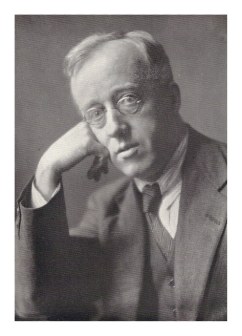 Most of Holst’s composing inspiration took place whilst he was engrossed at his long table in the School’s soundproof studio. Although he was not a brilliant pianist (his technique was severely hindered by neuritis in his right hand), the Broadwood grand was instrumental in helping him create one of the greatest masterpieces of twentieth-century orchestral music: The Planets. Holst would regularly invite two of the School’s music staff – Nora Day and Vally Lasker – to play to him excerpts from the fledgling Planets on the Broadwood grand to hand, just to hear how the composition was progressing.



