SING HER TUNE 6-7pm, Sunday 18th May 2025, St Mary’s Church, Guildford GU1 3UA

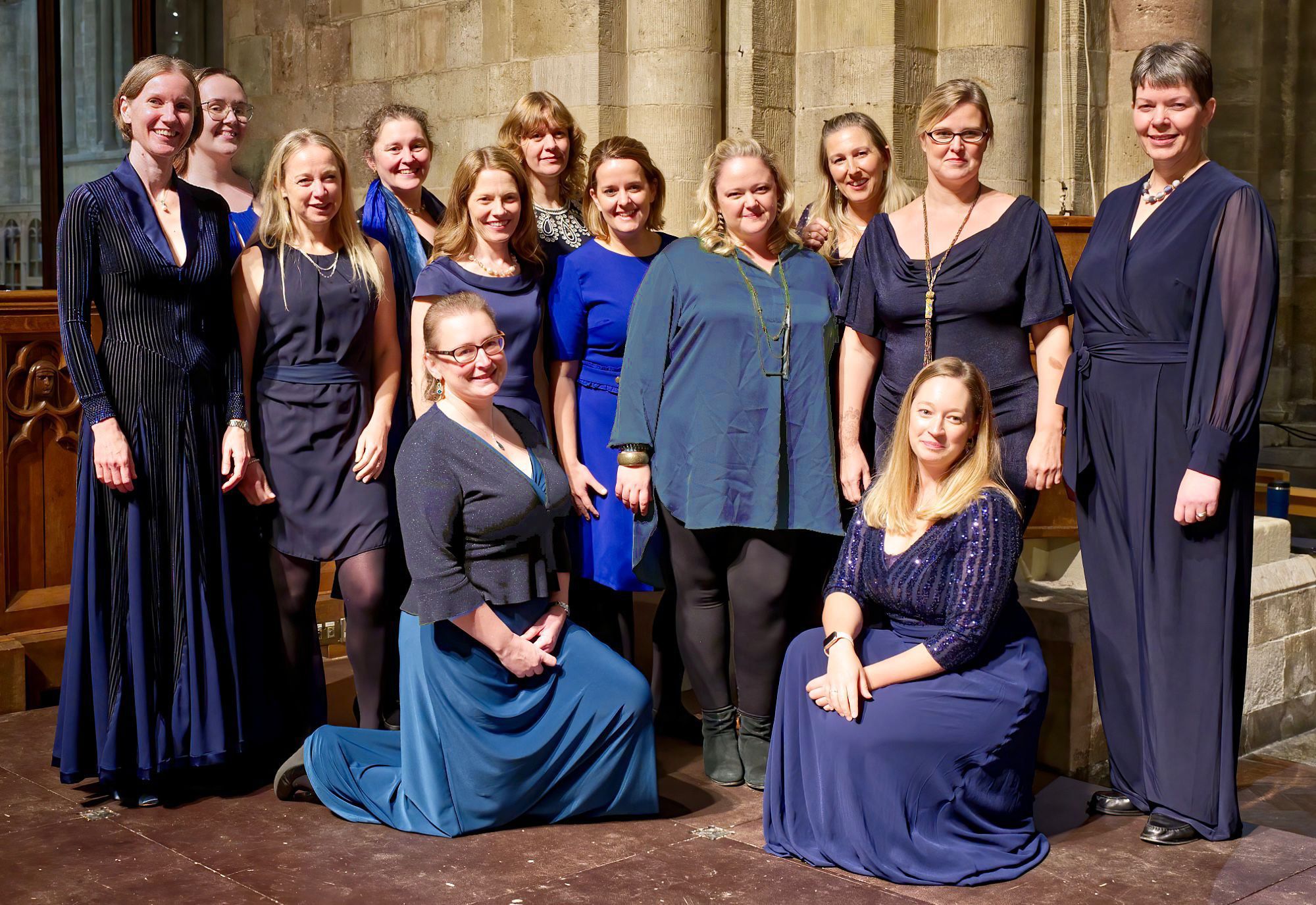
Corra Sound, conducted by Amy Bebbington

Corra Sound, an all-female choir and dedicated advocate for upper voice music, announces its May concert, Sing Her Tune – a unique opportunity to experience a stunning medley of dynamic compositions from some of today’s most talented choral composers.

Taking place on Sunday 18th May 2025 at St Mary’s Church, Guildford, this performance will proudly unveil the top three winning works from Corra Sound’s 2023 ‘Call for Scores’ competition. From a total of 90 submissions, these outstanding compositions were selected not only for their musical artistry but also for the powerful themes they portray. Composers were invited to write music based on themes of female power, strength, flowing energy, survival, and/or parental advocacy, and the winning pieces offer deeply creative responses to this remit.

The concert will feature the premiere of A Mother’s Farewell by British composer and jazz pianist Kate Hill. With text by Scarlett Palys, this work reflects upon the enduring power and vulnerability of maternal love, exploring a mother’s final question about the sufficiency and recognition of her love. The piece showcases jazz-inspired voicings and an emotive, rich yet accessible sound-world, led by an elegiac soprano line.

The audience will also hear The Land of no more Night, an evocative piece by Seattle-based composer and pianist Kari Kruver Medina. Setting text by Christina Rossetti, the work briefly opens with a ponderous tone filled with darkness and despair, before quickly shifting to joyous proclamations of creation singing its hymn anew with the promise of a new day.

Completing the trio of winning compositions are two humorous musical settings by American composer and organist Erik Meyer: Unfortunate Coincidence and Social Note. These works bring the dark, sarcastic wit of Dorothy Parker to life, demonstrating her penchant for social protest against patriarchal convention through acerbic derision.

In addition to these exciting premieres, the programme will include equally illuminating and uplifting repertoire by both new and established composers. Audiences can look forward to hearing Eriks Esenvalds’ beautifully evocative Only in Sleep, Elaine Hagenberg’s rousing Measure me sky! and magnificent Shadow River, Don MacDonald’s ethereal Moonset and optimistically powerful She is the river, and Alexandra Olsavsky’s What happens when a woman?.

The concert will also feature two pieces that were winners in Corra Sound’s workshops last year: Hope is the thing by local composer Barbara Cobham, a heartfelt tribute to her niece who sadly passed away, and Air, Heart by Amanda Dean, scored for voices and boomwhackers, celebrating the tenacity and adventurous spirit of Amelia Earhart.

Corra Sound invites you to join them for this dynamically diverse programme celebrating new and established composers, thought-provoking and remarkable repertoire, and challenging yet accessible music for upper voices.


Corra Sound is an outstanding ensemble, brilliantly led, and their programming is inspiring and imaginative. They sing with commitment and artistry, with clarity and colour, and are a joy to listen to.

Neil Ferris (Director, BBC Symphony Chorus, Sonoro)

Corra Sound is a remarkable group of singers with a love for performing, discovering new repertoire and celebrating the works of talented and often little known female composers.

Comprising a blend of professionally trained and high level amateur voices, the members of Corra Sound each have their own story to tell, but share a passion for music written by and for women, exploring the reach and versatility of the female voice.

Corra Sound has a unique identity which encompasses a broad range of vocal styles, bringing a deeply-rooted sense of heart, connectivity and passion to their performances. Corra’s mission is to bring works by (predominantly) female composers out of the shadows and into the spotlight, and the choir is gaining a reputation for high quality performance across a wide range of repertoire.

It is incredibly refreshing to be part of a group where musical excellence and well-being are held in equally high regard. This is a group of women who bring everything to the table and Corra Sound’s resulting performances are imbued with life-affirming and infectious emotion, passion and joy.

Katherine Bond-Smith (Corra Sound member)

Corra Sound was founded and is directed by Dr. Amy Bebbington, a passionate advocate for choral singing and conductor training, known for championing marginalised musicians through choral programming, Discovery Days and mentoring, and sought after for her engaging teaching style and wealth of pedagogical experience.

The choir is based in the south-east of England.
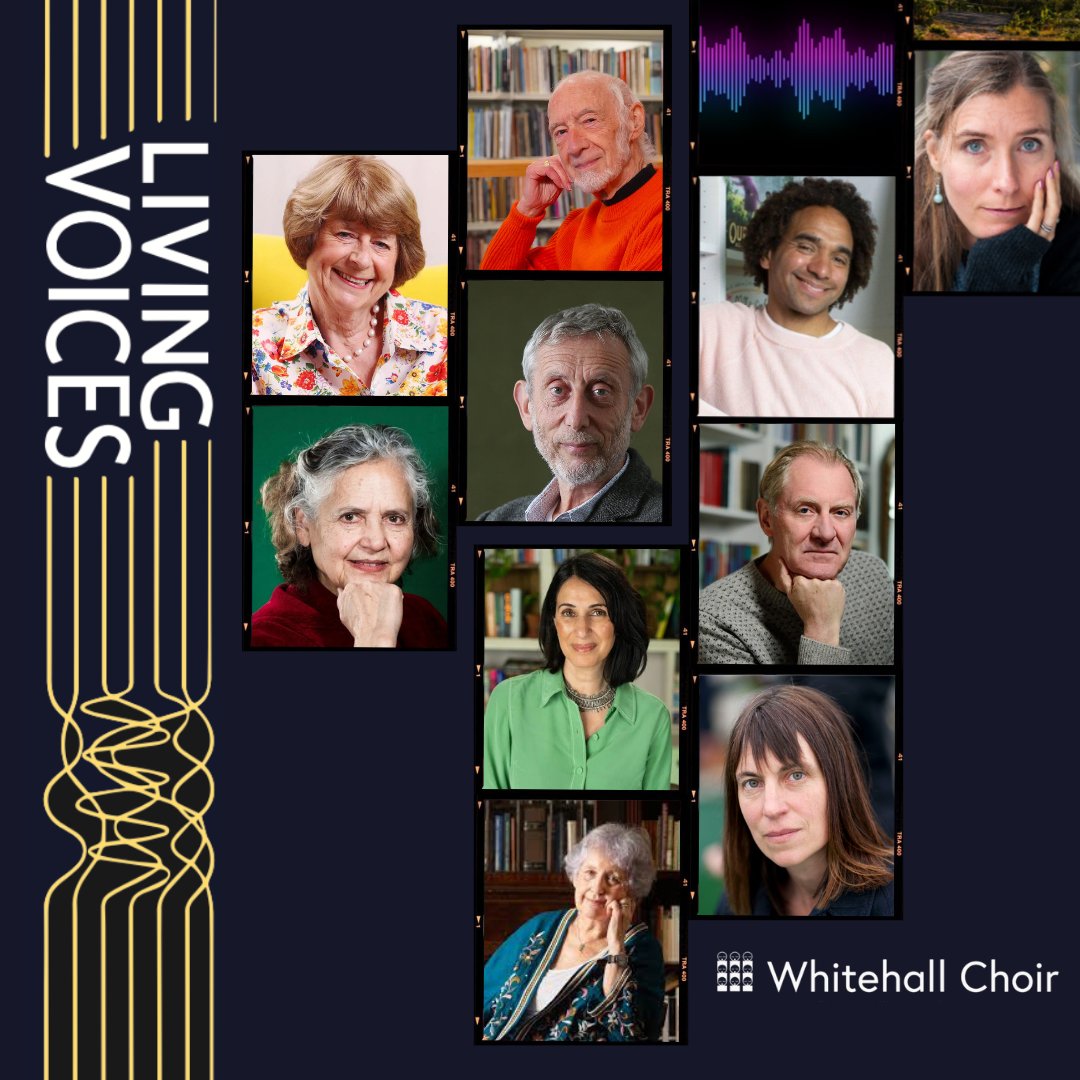
Living Voices is a new collection of ten inspiring choral pieces composed by Russell Hepplewhite. This innovative project brings together the talents of Hepplewhite and ten of Britain’s most outstanding contemporary poets, each commissioned to create poetic responses to our world today.

The idea for Living Voices originated with Russell Hepplewhite, who invited the poets to offer their diverse reflections on the nuances of modern life. The resulting poems explore a wide spectrum of human experience – birth and death, youth and age, sickness and health, landscape and memory. The emotional scope of the collection is equally varied, encompassing pieces that are light-hearted and comic alongside those that are profound and moving.

Accessible and rich in expression, Hepplewhite’s music proves a perfect partner for these contemporary texts. Drawing on his extensive experience writing for the theatre, his compositions aim to translate the poets’ messages into a vibrant collective choral sound. Living Voices promises to engage anyone drawn to the telling interaction of contemporary life and art.

The ten distinguished poets who have contributed to this unique collection and the titles of their commissioned works are:

  1. Mona Arshi – Tender
  2. Pam Ayres – Leaving
  3. Fiona Benson – Three Trees/Angel
  4. Joseph Coelho – The Diarist’s Pages
  5. Wendy Cope – I Wake
  6. Jamila Gavin – Song of Flight
  7. Roger McGough – The Good Ship Attenborough
  8. Andrew Motion – ‘from: Gravity Archives’
  9. Alice Oswald – Riddle
  10. Michael Rosen – True Story

In 2025, ten selected choirs around the UK gave the world premiere one of these new choral works over the coming months. The project has been funded by private donations and support from the Finzi Trust.

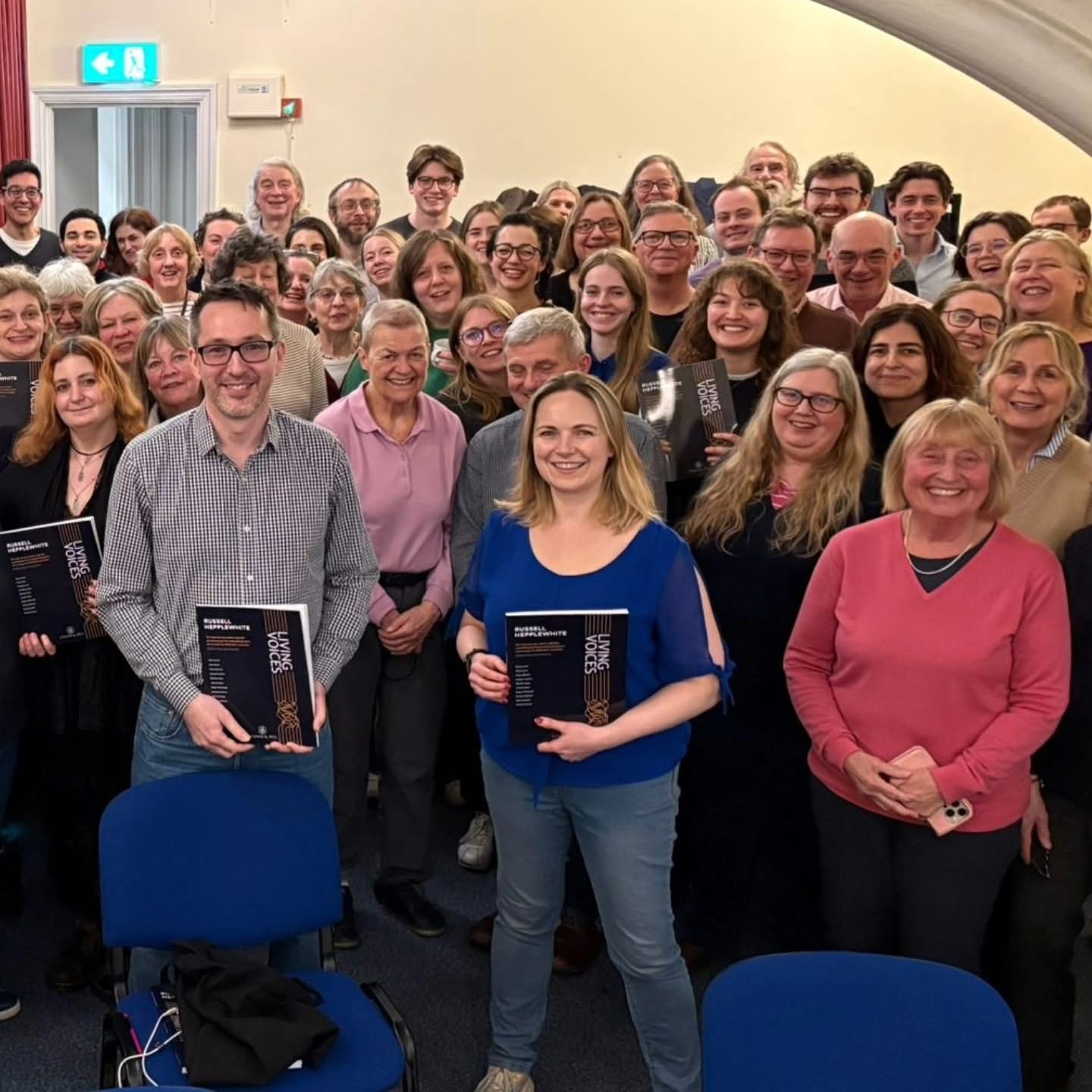
On 24 June, Whitehall Choir will give the world premiere performance of the complete Living Voices, together with two new settings by Russell Hepplewhite of poems by Poet Laureate Simon Armitage, sung by baritone Marcus Farnsworth with pianist Ian Tindale. The concert takes place at St Paul’s Church, Knightsbridge, and some of the poets, including Pam Ayres MBE, will be present at the event to read out their poems. Audience members will have the opportunity to meet the choir, composer and some of the poets at a reception after the concert. Whitehall Choir will record Living Voices this autumn for an album to be released early in 2027.

This collection promises to be a significant addition to the contemporary choral music repertoire, offering pieces that are both musically engaging and thematically relevant to modern audiences. The music is published by Stainer & Bell.

Read an interview with Russell Hepplewhite about Living Voices

An interview with composer Russell Hepplewhite, whose Living Voices project will be performed in its entirety by Whitehall Choir on 24th June 2026.

What was the initial inspiration behind the Living Voices project?

Firstly, I love working with words – almost all the music I compose is to be sung. I’d been talking with the publishers Stainer & Bell about a new collection of choral works for a while, and so I began thinking about texts. I came to the realisation that I’m not really interested in setting words by deceased poets anymore – it’s too one-sided with no possibility of collaboration! Instead I wanted to create a connection with living writers, to communicate and work together; to better understand their words with honest conversations about their intentions; and to hear their responses to my music. So the idea was born – and the next step was to find the ten poets I most wanted to work with, and to see if they might be interested in being part of the project. The final step was to choose a theme, and so I decided to go for as broad a subject as possible, to enable as wide a variety of responses as I could obtain. I therefore asked each poet to write about something connected with ‘life,’ and said they could choose to write in any style and with any tone.

Russell Hepplwhite, composer

Tell us more about the process of selecting the ten poets and how their diverse writing styles/voices and perspectives informed the overall collection?

I simply selected truly brilliant writers that I really wanted to work with. All the writers share something – an ability to write directly, with laser-like clarity, and also a sense of accessibility. I’m interested in poetry that can be understood on first hearing/reading, but that also has more layers to be appreciated upon further exploration. Setting the various poems was fascinating, because I could see whether my own compositional style changed according to the poet that I was setting. I like to think the collection has lots of variety within it as a result of this approach, but that it all still sounds like my music.

How did you approach setting the texts to music for SATB choir and piano, particularly considering the range of themes/emotions explored in the poems?

When I was setting the texts, it was all about the words. So I read the poems, re-read several times, worked out the underlying tone or emotion, and then without any further ado, began setting them. With everything I compose the very first step is the absolutely crucial one – if I can’t find a way in then nothing else can follow; whereas once the piece is underway it becomes like a game of chess – a series of next moves to be made. So, with each poem I was looking for that first step – and mostly this happened very quickly – in the case of some poems it was a couple of chords I liked, with others it was a rhythmic pattern to fit a specific pair of words for example. Something that did surprise me on this journey though was how my appreciation of the poems changed and grew as I went along. At some stage, I can honestly say that each of the ten poems has been my personal favourite.

How has your other choral and opera writing informed your compositional approach/choices for Living Voices and the aim to create a “vibrant collective choral sound”?

With this collection I worked hard to create pieces that are colourful and imaginative, but fundamentally I wanted to do justice to the original poems. The aim was to compose music that would be accessible to the vast majority of choirs, but that still has enough challenges to keep everyone interested. I guess my other work has just made composing a lot easier since I have strategies and familiar processes which I adopt when composing. I also no longer feel any pressure about what I compose – I just write what I want to listen to, and hope others will feel the same.

Given the themes of Living Voices encompass aspects of modern life such as birth, death, youth and memory, what do you hope audiences will take away or reflect upon after experiencing these pieces?

I hope people can relate to both the words and the music, and to appreciate how the two fit together. Some of the texts pack a profound punch on first reading, such as Joseph Coelho’s ‘The Diarist’s Pages’ which tackles the idea of things in life coming round in circles, while others take a more light-hearted approach to make an equally significant point – I’m thinking of Roger McGough’s ‘The Good Ship Attenborough,’ for example, where the climate emergency is explored courtesy of a particularly playful approach.

And what do you hope choirs will take away from singing these pieces?

Goes without saying really, but I want people to enjoy singing them, and to get involved with the ambition of the collection – if they like singing one of the works I really hope they will be inspired to learn another one!


Whitehall Choir will give the world premeire of the complete Living Voices on Wednesday 24 June at St Paul’s Church, Knightsbridge. The concert also includes two new settings by Russell Hepplewhite of poems by Poet Laureate Simon Armitage, performed by baritone Marcus Farnsworth with pianist Ian Tindale. Some of the poets will be at this concert to read their poems.

Living Voices is a new collection of ten inspiring choral pieces composed by Russell Hepplewhite. This innovative project brings together the talents of Hepplewhite and ten of Britain’s most outstanding contemporary poets, each commissioned to create poetic responses to our world today. The music is published by Stainer & Bell. Whitehall Choir will record Living Voices this autum for an album to be released in early 2027.

The tenth London Piano Festival takes place between 9 and 12 October 2025 at Kings Place, London

  • Three world premieres written to celebrate the 10th anniversary of the Festival by composers Cheryl Frances-Hoad, Stephen Hough and Elena Langer
  • The central Gala, featuring co-founders Charles Owen and Katya Apekisheva with Stephen Hough, Ingrid Fliter, Ronan O’Hora, Seta Tanyel, Mishka Rushdie Momen, and Joseph Havlat performing four-, six- and eight-handed works
  • Solo recitals by Ingrid Fliter, Mishka Rushdie Momen, and festival co-founders Charles Owen and Katya Apekisheva
  • A family concert narrated by Michael Morpurgo and featuring Keelan Carew, James Kreiling and Janneke Brits
  • A masterclass led by Stephen Hough
  • A showcase of star pianists from the Julian Joseph Jazz Academy
  • Pre- and post-concert discussions led by Ella Lee, presenter of the Classical Circuit podcast

Pianists and co-Artistic Directors Katya Apekisheva and Charles Owen reveal another dynamic lineup for the tenth-anniversary edition of the London Piano Festival (LPF) which returns to Kings Place from 9-12 October 2025. Four days of classical and jazz piano performances will include three world premieres by internationally renowned composers, each commissioned especially for this year’s Festival. The programme sees Ronan O’Hora, and Julian Joseph returning to perform at the Festival, and Stephen Hough, Ingrid Fliter, Keelan Carew, Zoe Rahman, Joseph Havlat, Mishka Rushdie Momen and more making their Festival debuts.

Under 30s tickets are available for all concerts at a reduced price of £10. The Festival is delighted to be working with International Piano magazine as its media partner for the tenth year running.

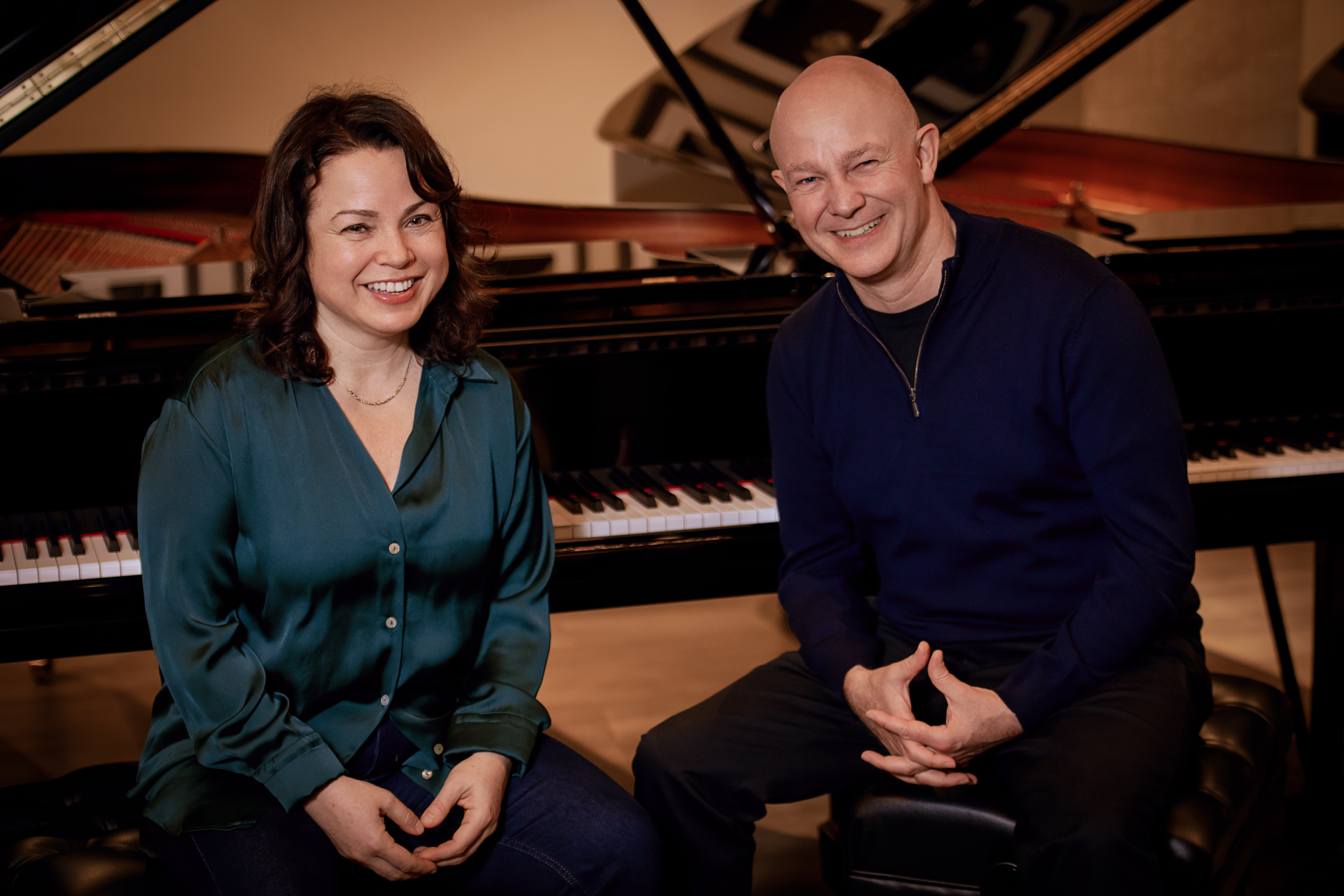
Co-Artistic Directors Katya Apekisheva and Charles Owen commented, “It is our great pleasure to be announcing the programme for the 10th London Piano Festival alongside the world premiere of three new commissions by Cheryl Frances-Hoad, Stephen Hough and Elena Langer. When we first dreamt up the idea of starting a piano festival over a decade ago, we hoped to fill a gap in London’s musical offering by creating a festival devoted exclusively to the piano. Ten years on, having presented nine Festivals featuring over 45 exceptional jazz and classical pianists, we are immensely grateful to continue offering world-class piano performances at our Festival home – Kings Place.”


Sam McShane, Artistic Director of Kings Place, commented: “London Piano Festival is back with an epic programme to mark its 10th anniversary year. This year’s theme, ‘Maturity & Youth’, beautifully reflects the festival’s journey—celebrating a decade of artistic excellence while championing the future of piano music. From world premieres to classics, this programme embodies the spirit of sharing, friendship and collaboration that defines Kings Place.”

The Festival opens with a joint recital from Katya Apekisheva and Charles Owen, featuring two world premieres. Katya Apekisheva will perform Seasons by Elena Langer, inspired by Philip Larkin’s poetry and commissioned as a companion piece to Tchaikovsky’s The Seasons. Charles Owen performs Stones of the Sky, a new composition by Cheryl Frances-Hoad inspired by gemstones found in the Austrian Alps and the Gem Poems by Pablo Neruda, and conceived as a complimentary piece to Schumann’s Carnaval. The event will be preceded by a pre-concert talk with the composers, led by Ella Lee, presenter of the Classical Circuit podcast [9 October].

Argentinian pianist Ingrid Fliter makes her LPF debut with a solo recital including Beethoven’s Sonata in E Flat and Sonata in D Major, and Chopin’s Nocturne in B Major and Sonata No. 3 in B minor. Ella Lee will lead a discussion with Charles Owen and Katya Apekisheva beforehand, exploring the artists featured across the rest of the program and reflecting on the Festival’s decade-long legacy [10 October].

On Saturday, the Festival hosts a family concert, featuring a world premiere arrangement of Stravinsky’s The Firebird for two pianos, arranged and performed by James Kreiling and Janneke Brits, alongside Keelan Carew performing Poulenc’s Barbar the Elephant, with celebrated children’s author Michael Morpurgo as narrator. World-renowned pianist Stephen Hough will later present a piano clinic masterclass with pianists from the London conservatoires and beyond, closing with a Q&A led by pianist and broadcaster Keelan Carew [11 October].

The Saturday concludes with the Festival’s central event, the Two-Piano Gala, this year featuring no less than eight performers – Stephen Hough, Ingrid Fliter, Ronan O’Hora, Seta Tanyel, Mishka Rushdie Momen, and Joseph Havlat, in addition to Charles and Katya themselves. This year’s programme will include a world premiere composition by Stephen Hough, King’s Cross March, commissioned by the Festival and performed by Charles Owen and Katya Apekisheva. Joseph Havlat, Charles Owen and Katya Apekisheva will perform the UK premiere of Havlat’s own composition 64 Geese. Stephen Hough also joins Charles Owen and Katya Apekisheva for a rendition of Rachmaninov’s Romance for Six Hands, and Ingrid Fliter, Joseph Havlat, Mishka Rushdie Momen and Ronan O’Hora perform Smetana’s Sonata for Two Pianos, (Eight Hands). Other featured composers include Mozart, Brahms, Shostakovich, Britten, Babajanian, Ravel and more [11 October].

The Sunday begins with a morning recital from Mishka Rushdie Momen, centred around her acclaimed album Reformation, exploring the rich sound world of Renaissance repertoire. This recital will include pieces by Byrd, Gibbons, Bull, Sweenlinck and more, and will conclude with a post-performance Q&A with Ella Lee [12 October].

BBC Russia Editor Steve Rosenberg intersperses stories of his life in Russia with piano improvisations at an event hosted by BBC Radio 3 presenter Petroc Trelawny. Running in parallel with this conversation will be a special focus on the historical and political significance of Dmitri Shostakovich, including a selection of his Preludes and Fugues performed by Berniya Hamie and Jeremy Chan, making their Festival debuts [12 October].

Julian Joseph returns to LPF with Zoe Rahman (in her Festival debut),bringing the 2025 Festival to a close with a recital of outstanding young pianists from the Julian Joseph Jazz Academy, including Danny Piers, Emile Hinton, Emily Tran and Nnamdi Nnachi Cole, all performing at LPF for the first time [12 October].

The London Piano Festival was founded by pianists Katya Apekisheva and Charles Owen in 2016 and takes place every October at Kings Place, London. Previous visiting artists have included Alfred Brendel, Alexandra Dariescu, Julian Joseph, Gabriela Montero, Stephen Kovacevich, Jason Rebello, Vadym Kholodenko, Leszek Możdżer, Lara Melda, Reinis Zariņš and Kathryn Stott, amongst many others. The Festival has also commissioned several new works for two pianos, working with composers including Sally Beamish, Jonathan Dove, Elena Langer and Nico Muhly.

Full details at londonpianofestival.com

[Source: press release]

Image: Viktor Erik Emanuel