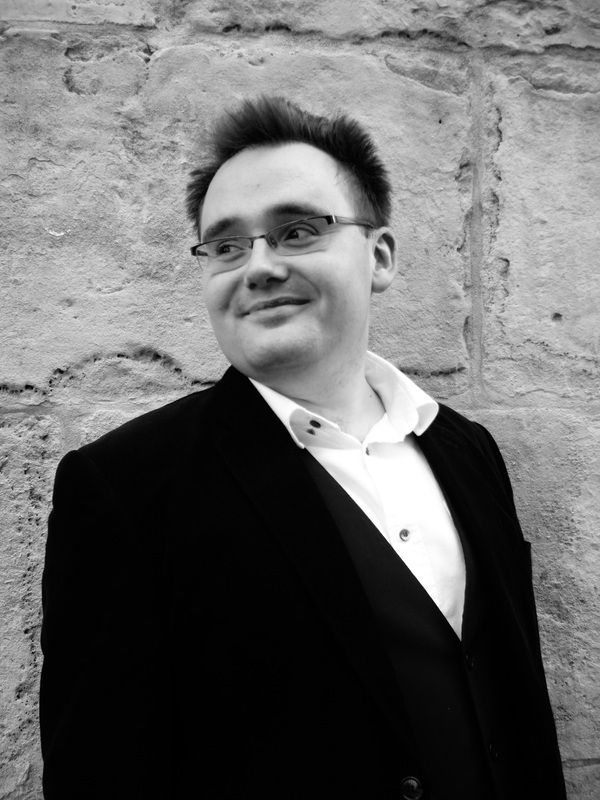
11073191_10153739875302846_5509429708149038994_n
(photo: Emma Phillipson)
Who or what inspired you to take up the piano and make it your career?

It’s not a glamorous answer at all, I’m afraid. When I was about 5, I had this very basic toy glockenspiel that had different coloured keys. The toy came with a card which had different colours printed for different tunes. Together, these colours matched up with the coloured keys on the toy and you could play basic tunes; melodies such as ‘Ode to Joy’ and ‘London Bridge is Falling Down’ etc. My parents could see how much I was enjoying it, and it was me who eventually said that I wanted to play the piano. I don’t come from a musical family at all, as such I don’t remember specifically watching or hearing somebody play the piano and wanting to emulate them. Who knows where I’d be if my parents hadn’t bought me that toy!

Who or what were the most important influences on your playing?

I think it would have to be a combination of my parents, as well as a legendary woman by the name of Penny Stirling. My parents both work full time and sacrificed an awful lot in order to provide my sister and I with what we needed. Whether it was taking me to evening concerts after they’d been working all day, taking a day off work to drive me to a music competition, or listening to me play a new piece in the living room of our house, they have been there every step of the way. Athletes and musicians have some integral things in common; one of the most important being totally supportive and dedicated parents. Penny Stirling is the founding manager of a government-funded scheme called Yorkshire Young Musicians. I started here at the age of 16, which saw me travel to Leeds every Sunday to receive advanced musical training, much like a junior conservatoire or specialist music school. Had I not studied at Yorkshire Young Musicians alongside my normal life as a comprehensive school/state school student, I very much doubt I ever would have gained a place at audition to study at the Royal Northern College of Music. Even now, at the beginning of my professional career in which I am quickly gaining some very prestigious opportunities and rapidly climbing up the ladder, I am still in contact with Penny for the odd bit of help, guidance and banter.

What have been the greatest challenges of your career so far?

Getting over myself! I like to think that I work very hard and dedicate myself to improving my musical communication everyday. I absolutely love playing the piano, nothing compares to live performance and being on stage makes me feel the most alive. That said, from a young age I have “suffered” from sometimes crippling performance anxiety and an inability to replicate what I do so effortlessly in a practice room in front of an audience. Hours before a performance, I used to feel sick to the point of sometimes throwing up; I would shake, sweat, become tense and randomly develop a very runny nose. At the age of 23, I can now safely and proudly say I have managed to overcome these problems. I still feel the adrenaline rush, and I hope I always do. The big difference now is that I feel relaxed, poised, and in control. Physically I might sweat but it is no way near as debilitating as it once was. Being on stage is no longer an ordeal; it’s a great pleasure!

Which performances/recordings are you most proud of?

Difficult one, as I don’t wish to sound like I’m simply reeling off some of my best experiences. I am really proud of the recital I gave for Lord Levy and the Russian ambassador within his residency at Kensington Palace Gardens. It was such a beautiful environment, and I was so excited to be playing within Kensington Palace Gardens at the age of 19. Equally, I am still dead chuffed that I performed alongside The Manfreds, Blake and Lulu for the Prince and Princess of Monaco, and I got to meet them both after I performed. Who ever thought a Yorkshire lad from rural and quiet East Yorkshire would be performing in front of high European royalty! That concert gave me a tantalising taste of what might lie ahead for me, and really gave me a confidence boost straight out of graduating out of music college at 22. I always seem to remember the recitals I give for a reduced fee for charitable causes – I know artists are divided as to whether you should ever reduce your fee or “play for free”, but sometimes I think it’s important just to remember how lucky you are and help those who are in a less fortunate position.

Do you have a favourite concert venue to perform in?

No, not really. Anywhere with a half-decent piano and people willing to listen and appreciate will do just fine thank you!

Favourite pieces to perform? Listen to?

I adore performing anything by Bach. I think his music is so pure and expressive, and says so much in such a seemingly simple and elegant way. As a pianist, there are challenges with performing his music live, memory being one of them, but it is nevertheless very rewarding and fulfilling. Favourite pieces to listen to will take far too much time to detail. Let’s jut say during a long journey, I can get through everything and everybody starting from Monteverdi right through to the Spice Girls! (Am I allowed to openly admit that…?)

Who are your favourite musicians?

The majority of them are non-classical musicians, does that make me a bad person?! I really admire The Beatles and wish I could have been alive when they first exploded onto the scene during the 60s. A lot of people seem to forget that they were basically copying what a lot of African-American musicians were doing over in the States, but I still admire the way in which they brought it to a mass audience and developed their own unique sound. Listening to ‘Tomorrow Never Knows’ from their album Revolver blows my mind pretty much every time I hear it. The same goes for David Bowie, T-Rex and Queen during the 70s; for me, everything they touched was pure gold. In terms of classical music, I am a massive fan of the British pianist Stephen Hough. I remember first listening to him play during one of the BBC Proms as a teenager. I just had no idea what had hit me, it was amazing! I also like how in interviews/writing, during masterclasses and even on Twitter, he comes across as a nice human being, as opposed to some sort of histrionic, pianistic machine that I have witnessed at times in other famous pianists.

What is your most memorable concert experience?

The first time I ever performed in public at the age of 7 at my village Methodist Church. I remember thinking, “Ey up, this is great!” I performed “Minuet in G major” by Bach from his Anna Magdelena notebook, “Walking in the air” from the Snowman, and “Yesterday” by The Beatles. Strangely enough, this mixture of playing different repertoire and styles has stayed with me right through to my career as a young adult, I never realised that until now. How strange!

What do you consider to be the most important ideas and concepts to impart to aspiring musicians?

Work hard, always stay human and keep an open mind about your future. I think keeping an open mind about your future is the most important.

What do you enjoy doing most?

For me, my ideal day involves going for a long run in the morning, usually up and down some big inclines to really get the heart racing. I’d then do some piano practice after lunch, followed by cooking a roast dinner for my close friends in the early evening. It would most likely be rosemary roast lamb or lemon and garlic chicken with all the trimmings, followed by ice cream or vanilla cheesecake for dessert. Probably both to be honest. Oh, wine would obviously be compulsory.

Emmanuel Vass was born in Manila, Philippines and grew up in East Yorkshire. Having passed Grade 8 piano with distinction at the age of 15, he subsequently studied with Robert Markham at Yorkshire Young Musicians, the centre for the advanced training for gifted young musicians based at Leeds College of Music. This was followed by four years at the Royal Northern College of Music, where Manny studied with John Gough and was supported by scholarships from the Leverhulme Scholarship Trust and the Sir John Manduell Scholarship Trust. He graduated in 2011.

JACK Quartet (image credit: Henrik Olund)

Who or what inspired you to take up the cello, and make it your career?

My mom was a big part of it; she began ear training and piano skills with me from a very young age, bought me my first (eighth-size) cello, and started me on Suzuki training when I was just shy of age four.  While I was obviously not thinking about a career at this point, because music has been part of my life as long as I can remember it made the decision fairly easy later in life.  The incredible breadth and diversity of the recordings of Yo-Yo Ma were frequently played in the house and a master class I had with him in high school was truly inspiring.  I think the experiences that really cemented it for me were my three summers at the Kinhaven music camp in Vermont, where I first realized just how gratifying chamber music could be, especially with friends.  The new music bug also bit me fairly early through the vehicle of Kronos Quartet recordings.  My dad bought many of these which I borrowed (stole) as a teenager, I think I never gave many of them back!

Who or what were the most important influences on your playing?

My cello teachers have been hugely important in helping me hone my craft, both in musical and technical terms.  Troy Stuart at the Peabody Preparatory gave me a great foundation when I was in high school and transitioning into advanced repertoire, and then Steven Doane at Eastman really helped me refine these skills and be able to isolate all the technical difficulties in a piece of music and be able to put them back together in a way that was expressive and with clear interpretation.  Also at Eastman I developed my new music chops through collaborations with countless composers and performers, too many to name here.  I will note that my experience playing with the Eastman Musica Nova Ensemble under the direction of Brad Lubman was crucial, and helped me learn to parse difficult scores with precision and clarity.  Our professional as well as personal interactions with the Arditti Quartet have also been invaluable; without them much of our repertoire (as well as corresponding performance practices and attitudes) would simply not exist.

What have been the greatest challenges of your career so far?

The JACK Quartet specializes in contemporary music performance, and now we are constantly learning new (and often very difficult) repertoire.  This has forced me to learn music very quickly, which means careful study of scores and annotation of parts as well as practice sessions and rehearsals that are efficient as possible.  Striking a balance between this immense amount of work and maintaining a personal life can be very challenging, as the former tends to take priority over the latter.  However the work is well worth it, and I realize I might not be able to keep this pace up forever, so I figure it is time to strike while the iron is hot!

What are the special pleasures/challenges of ensemble playing?

I think the sublimation of the ego into something greater than oneself is simultaneously a special pleasure as well as a challenge of ensemble playing.  I find the joy of chamber music performance to have little to do with self-congratulation and more to do with gratitude to be part of amazing shared musical experiences.  That being said, it is often difficult to relinquish control, and much of chamber music interpretation has to do with compromise.  Sometimes everyone’s opinions align, but many times they conflict.  It’s important to try out everyone’s ideas and come to decisions about which direction to take that make everyone happy.  Many times I find that I have been stubborn about my viewpoint, only to realize that a different approach was equally valid (or in fact better.)  You have to choose your battles carefully.

Which performances/recordings are you most proud of?

Our Xenakis disc has had much to do with our career trajectory and these quartets remain some of my favorite music to play.  Tetras in particular can generate so much energy in the crowd when performed live that you can practically feel electricity in the air.  The music of Helmut Lachenmann also holds a special place in our repertoire and we hold our interactions with him near and dear to our hearts.  (Shameless plug: our recording of the Lachenmann quartets will be released on Mode Records in the coming year.)

Do you have a favourite concert venue to perform in?

Le Poisson Rouge in New York City very much feels like a home base for us at this point.  We know the audiences will be excited and primed for the music we present there and the crowd reactions are always supportive and overwhelming.  As far as more traditional venues go, our performances at Wigmore Hall in London have been incredible experiences.  The hall has an amazing sound and warmth to it but is also small enough to feel very intimate.  I can not think of a more ideal place for chamber music.  (Shameless plug #2: I should probably add our disc that was just released on the Wigmore Live series to the previous list of performances/recordings we are most proud of.)

Favourite pieces to perform?

I mentioned Tetras earlier, and should specify that Lachenmann’s String Quartet No. 3 “Grido” is also exhilarating to perform.  Wolfgang Rihm’s String Quartet No. 3 “Im Innersten” is always an overwhelming emotional and cathartic experience to perform.  There must be something about third string quartets, because I must also mention Georg Friedrich Haas’s String Quartet No. 3 “in iij Noct.” here, which is performed in complete darkness.  We insist that the condition of darkness be so profound when we perform it that you can’t see your hand in front of your own face.  The piece has a quasi-improvisational structure to it that allows for a bit more spontaneous music making than many other pieces in our domain.  All these conditions add up to an experience that elicits a range of responses: from terrifying to ecstatic, hallucinatory to synaesthetic.  It’s a blast!  Rounding out the list is Horatiu Radulescu’s String Quartet No. 5 “Before the Universe was born” which pulls a range of harmonics and complex spectral sounds out of our instruments unlike any other music we’ve played.  It is an experience both spiritual and transcendent.

Who are your favourite musicians?

Many of my favorite musicians are already listed in my responses to the above questions and so imagine me re-listing all of the above here.  There are many cellists whose recordings have been highly influential to me, including Rostropovich, du Pre, Isserlis, and many others.  I’ll also take this opportunity to note that my tastes vary widely to include much more than classical and contemporary classical music.  I am often fascinated by autodidactic musicians who developed their own sophisticated musical languages.  Frank Zappa comes to mind, as well as electronic musicians Aphex Twin and Autechre.  Björk has a unique vocal instrument as well as an idiosyncratic approach to the craft of songwriting.  The Swedish metal band Meshuggah has developed a complex polyrhythmic style that is hard to duplicate successfully in any other musical form.  There are many others, again too numerous to mention.

What is your most memorable concert experience?

This may be cheating a bit as it is in the near future, but we are about to travel to Bali to perform with a full gamelan and traditional dancers on a huge outdoor stage at a festival attended by an estimated 8,000 people.  I believe it will be quite memorable!

What do you consider to be the most important ideas and concepts to impart to aspiring musicians?

You must figure out what is the most unique contribution you can make to the music world and follow that path.  It is not enough just to play well anymore, but you have to figure out what makes your interpretation or performance different and memorable in order to stand out from the crowd.  You also have to love and care about your work.  I think it is nearly impossible to make a personal stamp without putting your heart into it.

What are you working on at the moment?

Trying to stay sane until our break in July!

What is your idea of perfect happiness?

To be surrounded by people you love, to be doing work that is gratifying and rewarding, to always be learning and growing as a person, to smile and laugh and enjoy the simple pleasures of life, and to be at peace with yourself so that you can know true compassion for others.

Comprising violinists Christopher Otto and Ari Streisfeld, violist John Pickford Richards, and cellist Kevin McFarland, JACK is focused on the commissioning and performance of new works, leading them to work closely with composers Helmut Lachenmann, György Kurtág, Matthias Pintscher, Georg Friedrich Haas, James Dillon, Toshio Hosokawa, Wolfgang Rihm, Elliott Sharp, Beat Furrer, Caleb Burhans, and Aaron Cassidy. Upcoming and recent premieres include works by Jason Eckardt, Zeena Parkins, Payton MacDonald, Huck Hodge, James Clarke, Mauro Lanza, Simon Steen-Andersen, Walter Zimmermann, , and Toby Twining.

JACK has led workshops with young composers at Princeton University, Yale University, the American String Teachers Association of New Jersey, University of Iowa, University of Wisconsin-Madison, Darmstadt Internationale Ferienkurse für Neue Musik (Germany), New York University, Columbia University, Carnegie Mellon University, Eastman School of Music, University at Buffalo, University of Illinois at Urbana-Champaign, Northwestern University, University of Huddersfield (United Kingdom), University of Washington, University of Victoria (Canada), and Manhattan School of Music. In addition to working with composers and performers, JACK seeks to broaden and diversify the potential audience for new music through educational presentations designed for a variety of ages, backgrounds, and levels of musical experience.

The members of the quartet met while attending the Eastman School of Music, and they have since studied with the Arditti Quartet, Kronos Quartet, Muir String Quartet, and members of the Ensemble Intercontemporain.

www.jackquartet.com

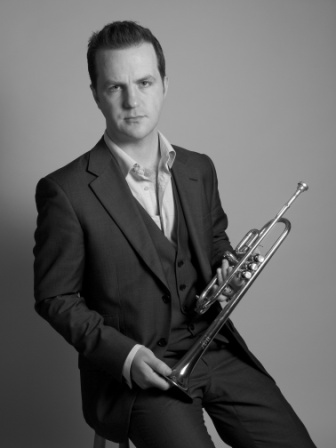
Simon Desbruslais

Who or what inspired you to take up the trumpet and make it your career? 

I began learning the trumpet in year five in primary school – so I would have been around the age of nine – with a local peripatetic teacher. Funnily enough, I actually wanted to take up the trombone, but there was no option! I took my music very seriously, although I did not decide to pursue it professionally until I was around the age of sixteen. This was after filling out, but never sending, an application to university to study physics. I found that music was the only path where I could express myself, which was brought on by a typically challenging adolescence. I also had a very strong focus on composition, which is an avenue I will return to one day.

Important pedagogical influences upon me included early lessons with Brendan Ball as a teenager, and then Iaan Wilson, who taught me to expect standards that I did not realise were possible. Paul Archibald, Andrew Crowley and Neil Brough also did wonders for my playing at the Royal College of Music.

Who or what are the most important influences on your playing?

Wynton Marsalis’ ‘Carnival’ album had a tremendous influence on me as a young teenager. I love the way that the music excites the audiences, through a combination of physical and musical virtuosity. Apart from the trumpet, the canonical Romantic piano repertoire – from late Beethoven through to Scriabin – will always affect me in a way few other genres can. I am also a massive fan of Gesualdo and JS Bach’s fugue writing.

What have been the greatest challenges of your career so far? 

Adapting to ‘Classical’ pitch (A=430). While Baroque pitch can be understood as a semitone below modern pitch, the Classical version is somewhere in between. This can really affect intonation, and something I had to acclimatise to on stage in Covent Garden!

The other big challenge for me is balancing performing with academia. I take both very seriously, and I am just about to complete my doctorate in musicology at Oxford. The two areas are mutually beneficial, and despite the extra work commitment, I am always surprised by how few people try to tackle both. For me, it comes down to a matter of motivation and time management.

What are the particular challenges/excitements of working with an orchestra/ensemble? 

As a solo performer, there is a great deal of freedom; the ensemble follows you. This comes with some obvious artistic satisfaction. In an ensemble, however, the freedom is much less – you can shape the musical lines in a personal way, but the degree of precision must be very high, otherwise you can let down your fellow ensemble musicians. You rely on them, and they rely on you – this is quite a special bond, and a very different reward from solo performance.

Which recordings are you most proud of?

Johann Wilhelm Hertel’s Third Trumpet Concerto – I recorded this piece on the natural trumpet aged 26, and it has received some very positive international reviews. It was my first commercial recording, so it will always hold special memories for me. I also recorded David Bednall’s Christmas Cantata a few months ago, which is a very special piece for solo trumpet, choir and organ, of around one hour in length.

Do you have a favourite concert venue? 

The Barbican – it is just such a pity that there is no built-in organ!

Who are your favourite musicians? 

Wynton Marsalis, Hakan Hardenberger, Pierre Boulez and Daniel Barenboim.

What is your most memorable concert experience? 

On the 15th June, I performed three trumpet concertos in one concert: Robert Saxton’s ‘Psalm: A Song of Ascents’, John McCabe’s ‘La Primavera’ and Deborah Pritchard’s ‘Skyspace’. The last two were also world premieres. I had been recording these concertos for around four and a half hours on the same day for Signum Classics, so getting through them in concert was the biggest challenge to stamina and concentration that I have ever faced. The Orchestra of The Swan, conducted by Kenneth Woods, were so wonderful and supportive throughout – I do not know what I would have done without them.

What is your favourite music to play? To listen to? 

I love playing the natural trumpet, but Arban’s theme and variations on the cornet/modern trumpet are always a joy. I also use them frequently in educational workshops. I have recently been enjoying Messiaen, particularly his Vingt Regards for piano solo, which combines an extraordinary, advanced sound world with a clear theoretical compositional technique. After obtaining a flugelhorn to play the second movement of John McCabe’s new trumpet concerto, I am also considering a foray into jazz – watch this space!

What do you consider to be the most important ideas and concepts to impart to aspiring musicians/students? 

Music stems from desire. If you want something enough you will always achieve it. Likewise, if you do not reach your goals, chances are you did not want them enough. So, to achieve in life, simply isolate that thing you want the most, and follow it with all the energy that you can muster.

What are you working on at the moment? 

Following on from my recent work on British trumpet concertos, I am focusing on a brand new repertoire for the combination of trumpet and string quartet – more about this another time! I am also preparing Robin Holloway’s solo trumpet sonata for what may be the first ever complete live performance – the work is generally performed only a single movement at a time, due to the intense stamina demands on the performer. Other works on my practice pile at the moment include concertos by Peter Maxwell Davies and James MacMillan.

Where would you like to be in 10 years’ time? 

A critically recognised international trumpet soloist and a university lecturer. I also hope to have at least a couple of books published by then, the first of which will be on the music theory of Paul Hindemith.

What is your idea of perfect happiness? 

Looking back on my life and feeling no regrets about the difficult choices, and sacrifices, I have had to make. You only get one chance in life, and I intend to make it count.

What do you enjoy doing most? 

Spending the day with my wife and daughter, perhaps including a visit to the river Thames. I proposed to my wife on Waterloo Bridge after dinner at the Savoy – that whole area of London will always be the most perfect place in the world to me. It is also just round the corner from King’s College London, my Alma Mater.

I am also a massive football fan – Arsenal, of course (!!) – and an avid brewer of beer. I grow hops in my back garden, although I am yet to have a suitable harvest! Close friends like to offer names for my home-brew, the daftest solution as a play on my surname, ‘De-Brew’…

Richard Bates, composer & conductor (photo credit: Scott Inglis-Kidger)

Who or what inspired you to take up composing and make it your career? 

I would say that composing chose me, rather than the other way round. Almost as soon as I started learning to play piano, I started coming up with music of my own when I was bored of the pieces set me by my teacher. I always listened to classical music a lot as a youngster. And as a teenager, I suppose my writing mirrored what I was listening to – Beethoven in my early teens then later, Rachmaninov, Prokofiev, Poulenc, Morton Feldman…

Who or what were the most important influences on your composing? 

As I say, I always listened to music growing up, and I was lucky enough that my piano teacher in those years was interested in furthering the scope of my musical knowledge, and gave me music and recordings to explore that I otherwise would not have chosen. These expanded my horizons considerably. A great favourite of mine is Francis Poulenc, whose unique and instantly recognizable style really caught my interest. I also owe a great debt of gratitude to Michael Finnissy and Giles Swayne, who taught me my compositional craft, the guts to write what I want to write, the intricate skill of orchestration, and how to express what you hear with the instruments you have.

What have been the greatest challenges of your career so far? 

When I graduated from Cambridge, I thought: “nobody makes a living from writing music, and the world doesn’t really need another composer anyhow”, so I followed another passion of mine and went into music direction for theatre – leading pit bands and singers. Over the years since, I have taken every professional composing opportunity that arose for me, but it was only really embarking on Platinum Consort’s recording of my Tenebrae and commission In The Dark, and their subsequent commercial success, which exceeded my hopes, never mind my expectations, and that really convinced me writing music could be a viable life for me.

Which compositions are you most proud of?  

Of the works of mine that have been premiered so far, probably the Tenebrae are my favourite. I took a good deal of trouble to get each response just right, and the weaving of Renaissance-style counterpoint to create 21st-century harmonies was the biggest skill I had to master. I’m very proud of the result, and feel this is one of my most significant works to date.

Favourite pieces to listen to? 

I’m sure it’s a very infuriating answer, but I’m not the sort of person who has a clear favourite. It will depend on my mood and what I’m doing at the time. I also admire music for different reasons: some pieces are guilty pleasures – pieces which are not fantastically put together, but mean a great deal to me either because of their ambience, or a personal significance; other pieces are good for my musical health – pieces I admire because they are so perfectly ingenious in their construction or employ compositional tricks I can’t help but wish I’d thought of.

Who are your favourite musicians? 

Again, I’m going to be annoying and fudge that question and say it depends. I suppose my single, favourite group, is the Platinum Consort, for whom I was recently named Composer in Residence. I have worked with them over a long period, which is unusual in the music business, and have developed a very honest and open relationship with them and their director Scott Inglis-Kidger. I have great admiration for the dedication and skill they employ, and they in turn give me whatever feedback they honestly feel, without fear of my taking offence or umbrage. But I also have a great deal of admiration for the singers and musicians I work with in my conducting career, who turn up night after night and deliver consistently great performances.

What do you consider to be the most important ideas and concepts to impart to aspiring musicians? 

Stephen Sondheim once said that composition without craft is just masturbation. I agree. Without craft, and I would add discipline, you’re just improvising. That’s fun in the sense that you sit at your piano and think: “aren’t I jolly clever to be able to sit here and come up with this”, but the interest of what you come up with soon fades unless there’s a supporting framework. Musical ideas in themselves have little power; it’s their juxtaposition that gives them strength to move listeners. This is the message I would like to convey to my 14 year old self.

What are you working on at the moment? 

Two things: a motet setting of the plainchant Veni Veni Emmanuel for double choir and semi-chorus for the Platinum Consort; and The Vigil, a work for choir, soloists and orchestra – it’s a meditation on the stations of the cross – for Thomas’s Choral Society in London.

What is your present state of mind?

Relaxed. I am on holiday, just doing some writing, and unconstrained by the iPhone ringing or having to go out later and conduct a musical.

What is your most treasured possession? 

My steel tipped conductor’s baton. It’s the perfect weight and length for me, and the polished steel tip catches the light beautifully in darkened theatres and ball-rooms, so the musicians can see my beat. It’s also been around with me quite a few years.

Richard Bates was born and raised in London. He was educated as a music scholar at Winchester College and Cambridge University. He studied composition with Michael Finnissy and Giles Swayne, as well as participating in seminars with John Woolrich, Howard Skempton and John Rutter.

Upon graduation, Richard was appointed organist at the church of St Magnus The Martyr in the City of London, a position he held until 2008 when he moved to be Director of Music at Holy Trinity, Northwood. Richard also pursues a wide range of activities in the British and USA musical theatre and cabaret scenes. He is in demand as a conductor and accompanist and recently made his band‐leading debut in New York City.

Richard was officially appointed Composer in Residence to the Platinum Consort in 2012, after having written for the ensemble on an informal basis for a number of years. His music featured on their album In The Dark was described by BBC Music Magazine as “particularly impressive”, and the Observer said “Bates…knows how to raise hairs on the back of the neck with his smoky eight‐part writing”. 

Keep an eye on www.richardbatesmusic.com and @richbatesmusic on Twitter for details, premieres and performances coming up this Autumn and into 2013.

Platinum Consort will be performing at King’s Place, London, on Saturday 1st September, in a concert which features Richard Bates’ In the Dark. Further information here.