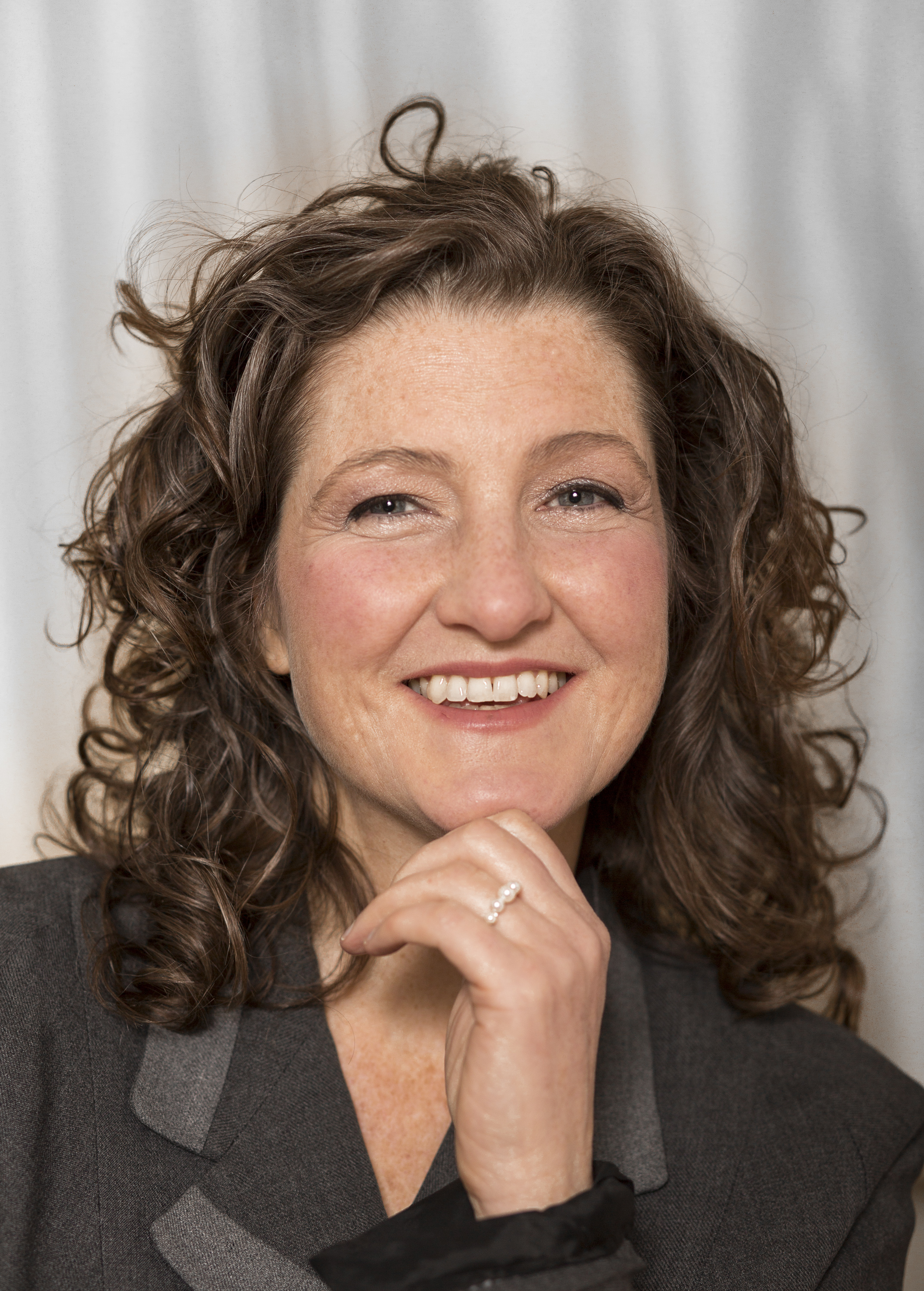
Christopher Guild, pianist

Who or what inspired you to take up the piano, and make it your career? 

Not my family, initially, although to their great credit my parents were always entirely supportive of me in any of my aspirations – and still are.  A dear friend of the family, who lived round the corner from us at the time, was a great classical music lover and had a piano in her home.  It was she who incited in me a real interest in classical music.

I had already begun to play the violin at my local primary school (this was by the time I was 8 years old), and she was getting in to the habit of practicing with me every day after school for 20 minutes.   I remember being allowed to play on the piano for 10 minutes after my violin practice every day, and chatting to this lady about classical music: she was from Berlin, and I remember her enthusing me about the great German composers, mainly Schumann and Beethoven.  Eventually I asked my Mum if I could start having piano lessons, and so they began in Elgin, the town of my birth, in 1995.

Years passed until I found myself in my third year at St Mary’s Music School in Edinburgh, working hard at the violin and keeping the piano ticking over although not taking it that seriously despite a recent victory at the Moray Piano Competition.  Something happened around this time and I suddenly realised I couldn’t stand the prospect of making the violin my career – although I still maintain I had a real flair for the instrument and indeed could have succeeded as a session musician, I never found it that comfortable to play and I always felt a deeper connection with the piano.  Somehow the piano suited me better: it seemed a more ‘independent’ instrument, you had total command of the music you were playing (I remember my teacher at the time, Margaret Wakeford, counselling me to ‘be your own conductor!’ when I played), and on the whole I much preferred the repertoire.  It promised me a greater deal artistically, even if the career path was to be more precarious.

Who or what were the most important influences on your playing? 

There are many people and many things, but one of the most important people has been Andrew Ball, whom I studied with at the Royal College of Music (London) for six consecutive years.  It was his open-mindedness, his way of thinking about music and indeed his great knowledge of just about everything which has steered me in to becoming who I am artistically.

What have been the greatest challenges of your career so far? 

I suppose this might be commonplace among all music college graduates in their mid-twenties, but it is the combination of attempting to make ends meet, whilst pursuing my artistic ambitions, and maintaining my artistic integrity in all that I do.  Keeping up my standards of playing amidst a hectic life of teaching, rehearsing, performing and of course those interminable periods spent on trains is certainly a challenge!

Which performances are you most proud of?  

Tricky!  I have to say that some of my recitals as a student tend to stand out: I’m proud that I performed works by Elliott Carter and Stockhausen in the same recital, for instance, and that I felt completely involved in the music.  Also, performances I gave of Reubke’s magnificent Piano Sonata in B-flat two years ago, a piece which has come to mean a lot to me.  More recently, playing the Bach Keyboard Concerto in D minor with Sian Edwards in Milton Keynes in 2012 was extremely memorable.  And of course, playing as part of my duo at our Wigmore Hall debut in November 2012 was very special.  Being in the green room before stepping on stage was something in itself, just looking at all the signed photos of so many of ‘the greats’ gazing down on you makes you realise just what a privilege it is to be performing in that hall.

Do you have a favourite concert venue to perform in? 

Favourites so far in my career have been: Wigmore Hall, for the acoustic (it’s perfect, that’s it).  There have been a few stately homes and churches that were very comfortable to play in too.  I really enjoyed the Pump Room in Bath

Favourite pieces to perform? Listen to? 

Ask me in ten minutes and I’ll have changed my mind!  These days I’m gravitating largely towards British Music.  I have a real ‘thing’ for the Bridge Piano Sonata, the three Elgar chamber works too.  The music of Kevin Volans interests me currently.  As a performer, I strongly hope to get back in to contemporary music next season.  It sounds trite, I suppose, but any music with a truly strong and vital message will surely grab me.

Who are your favourite musicians? 

Glenn Gould, for his individuality, his refusal to compromise his artistic vision and integrity – I think that’s a very important thing.  Whenever I hear piano rolls, or old records, of the now lost age of pianists I come away feeling totally inspired.  I recently bought an LP of a piano roll of Moritz Rosenthal and some of the playing is mindblowing!

What is your most memorable concert experience? 

There are many, but sometimes how people react to a performance I’ve given is what makes a concert particularly memorable.  For example, after performing at the Dorking Halls in Surrey last season, a Russian lady came up to me in the foyer and gave me a little matrioska doll, as a way of saying ‘thank you’ for my performance of Scriabin’s Sonata No. 3.  She was visibly moved (slightly choked), and it was the way she did it  anonymously too which made the experience so potent.  I keep the matroyshka on the bookshelves next to my piano: it reminds me of music’s power to enhance peoples lives, its possibilities, its importance.

What do you consider to be the most important ideas and concepts to impart to aspiring musicians? 

Keep an open mind!  You’re about to enter a field which is enormously competitive, a lot of people will be striving for the same goals.  It pays to think outside the box a little.  Try never to turn down opportunities, even if they seem irrelevant to your interests: I’ve pursued paths I never dreamt of pursuing (or particularly wanted to pursue), and I ended up with quite a few great concerts, or jobs, that I would never have got otherwise.  And never lose sight of your artistic goals.  Above all, have fun!

What are you working on at the moment?

The biggest project this year has been preparing the vast majority of Ronald Center’s piano music for recording.  Ronald Center (1913-73) was an Aberdonian composer whose music has been incredibly neglected both during his lifetime and since his death. Aside from this, I’m preparing quite a lot of duo repertoire, namely works with violin – Sonatas by Grieg, Haydn, Hindemith and Janacek – and works with oboe – Sonatas by Poulenc and Dutilleux.

What is your present state of mind? 

Positive!

Christopher Guild’s new recording of piano music by Ronald Center is available now on the Toccata Classics label. Further details including sample sound clips here

Born in Elgin in 1986 and brought up on Speyside, Christopher Guild studied piano and violin locally before entering St Mary’s Music School, Edinburgh aged 13.  He returned to Morayshire one year later to take top honours in the Moray Piano Competition – a victory which sees him as the youngest ever winner to this day. 

Christopher entered the Royal College of Music in 2005 as a Foundation Scholar, and remained there under the tutelage of Andrew Ball until 2011, successfully gaining a First Class BMus (Hons), and the MMus and Artist Diploma’s with Distinction.  He now combines a busy schedule as a performer with extensive work as a teacher, and coaches students at Trinity Laban Conservatoire of Music and Dance where he is the Richard Carne Junior Fellow in Performance.

Christopher Guild acknowledges the following organisations for their invaluable support to his studies at the RCM: Dewar Arts Awards, the Robertson Scholarship Trust, the Alistair Maclachlan Memorial Trust, the Cross Trust, The Royal Caledonian Schools Trust, the Hope Scott Trust, the Arts and Humanities Research Council, the Sir James Caird Travelling Scholarships Trust, the RCM Foundation, a Michael Whittaker Scholarship, and an Ian Fleming Award Award administered by the Musician’s Benevolent Fund. 


Christopher Guild’s full biography here

Christopher Guild’s Facebook fan page
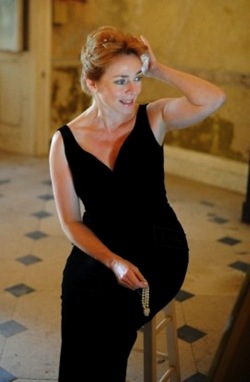
(photo: Josh Gooding)

Who or what inspired you to take up a career in singing and directing?

My grandmother was a painter and she always saw and showed me the world through an artist’s eyes. My mother was a singer, and although my father was a physicist, he would always play classical music at full volume at home or in the car, conducting the radio and screaming at the tempi.

Later, my passion for singing derived from the physical sensation when producing the classical sound, as well as from the different facets of the art form itself, including the drama, languages and poetry in the various genres of opera, oratorio and song.  After I had been active as a singer for many years, I wanted to be involved in opera productions at a much earlier stage in the process. I became interested in the ideas and concept of staging and directing opera, and found it riveting to work with a team on finding solutions to express a particular way of telling a story.

Who or what are the most important influences on your work? 

Love for what I do, and respect towards the piece in front of me and the people I am working with.

What have been the greatest challenges of your career so far? 

Figuring out what I needed to do in order to get to where I wanted to get to. This goes for my own life and career journey, but also for the individual projects and engagements I have been involved in.

What are you working on at the moment? 

I am currently working on my third, new production of Bizet’s Carmen at Winslow Hall Opera (WHO) in Buckinghamshire. I am directing and also singing the role of Carmen, bringing my number of performances of this role to around 165, but still feel there is so much to tell about the story and the character.  Joining me are a superb cast and team, and I can’t wait to get back into the experience that is WHO after last year’s success with Le Nozze di Figaro: high quality theatre making in very unique surroundings.

Italian tenor Gianluca Paganelli as Don José, South African baritone Njabulo Madlala (winner of the 2010 Kathleen Ferrier Competition) as Escamillo and Scottish-Polish soprano Natasha Day as Micaëla are leading a select cast which is supported by the company’s Founder and Music Director Robert Secret, set designer Francisco Rodriguez-Weill and lighting designer Tony Simpson.

What are the particular challenges/excitements of working in an opera company? 

An opera company has to fulfil many different roles. Either subsidised privately or by the state, it has to find a healthy balance of serving its audience, finding and re-confirming a strong position in the artistic life of the community and its social calendar and co-operating with other art forms and arts institutions.  But at the same time, it has to remain free to accommodate the integrity and space which the artistic process and the artists’ work demand.

Do you have a favourite venue? 

There is no easy answer to this question. My favourite venue tends to be where I am at the present time. Certainly, Winslow Hall Opera has a very special place for me as I have worked closely with this company for many years, beginning in 2003 when it was still based at Stowe. It is an ambitious and inventive opera festival surrounded by the exceptional backdrop that only a magnificent 17th Century mansion by Sir Christopher Wren – the only Wren building outside of London – can present. It is now owned by former restaurateur Christopher Gilmour and his wife Mardi Gilmour, who have brought this festival to life with great vision and courage and out of their love for opera.

Who are your favourite musicians/singers/directors? 

My favourite singer is the German tenor Fritz Wunderlich who unfortunately died too young at the age of 35. To me, his singing represents complete honesty in sound and emotion. Especially his Schubert songs are the “truest” kind of music-making that I know.  One of my favourite musicians is the pianist Martha Argerich with her technical brilliance, power and risk taking. Both artists’ music always travels with me.  But aside from those two, I get most of my inspiration from other artists such as jazz, soul and blues musicians and all kinds of cross over artists, painters and sculptors.

One of my favourite productions is Jean-Louis Martinoty’s Le Nozze di Figaro for the Théatre des Champs-Elysées in 2004, conducted by René Jacobs. Here, simplicity and beauty, detail and clear characterisations are given time and space in an admirable synthesis between the artistic and musical direction.

What is your most memorable performing experience? 

The performances that are most memorable to me are the ones where all my performance skills and techniques were freely at my disposal and working perfectly together. But I’m afraid I can count on two hands the amount of times that has happened.

What is your favourite music to sing? To listen to?

My favourite music to sing is Italian verismo. I’m afraid that I cannot possibly say what my favourite music to listen to is. The music in my car at this moment is Afro Celt, Bach’s St Matthew Passion, Tom Jones, Steve Ray Vaughn, Paolo Nutini and Richard Strauss’ four last songs.

What do you consider to be the most important ideas and concepts to impart to aspiring musicians/students? 

Be true and honest to yourself and others and then show yourself, your ideas and work with confidence. I am always amazed when holding auditions or interviewing potential team members, how quickly and clearly that comes across and how strong it features in the decision-making.

What is your idea of perfect happiness? 

The point at which a balance has been achieved between family, work, relaxation and finances.

What is your most treasured possession? 

I feel slightly foolish, but it does seem to be my dishwasher and my SatNav!

What do you enjoy doing most? 

Aside from work, I enjoy waking up in the morning to fresh snow and clear blue skies, deciding on half a day’s skiing, then sailing down a ski slope which is drenched in sunshine and cold, soft snow with my carvers at the bottom of my boots.

What is your present state of mind? 

Now that I’ve just been thinking about skiing down a mountain, I’d say delirious.

Yvonne Fontane will be performing the title role and directing Bizet’s Carmen at Winslow Hall Opera on July 25th, 27th, 28th, 30th, August 1st and 3rd.  Saturday and Sunday performances start at 5.00pm, weekday performances at 5.30pm.  All performances will have a 90-minute supper interval. To book tickets to Winslow Hall Opera, please call 07504 298575 or email winslowhallopera@outlook.com

For more information on Yvonne please visit www.yvonnefontane.co.uk

***NEWS***

Greg Kallor will be performing at Subculture in New York’s NoHo on 26 September, with cellist Laura Metcalf, as part of the venue’s first annual ‘Piano Fest’ and to promote his new music video Broken Sentences, and premiere a new work ‘Undercurrent’. Further details here


Who or what inspired you to take up the piano, and make it your career? 

I’ve always felt a sort of inexorable pull toward music – almost as soon as I could walk I made my way to the piano in my parent’s home. A piece of string was thoughtfully tied around the length of the instrument to prevent the fallboard from crushing my fingers. My older brother studied with a piano teacher whom I begged for lessons every week for a year; she finally relented when I turned six – and I abandoned my assignments almost immediately. (Improvising was more fun than playing, say, “The Typewriter”.) I’ve become somewhat more disciplined. Supportive parents, wonderful teachers, encouraging friends and colleagues – a career in music just seemed… right.

Who or what were the most important influences on your playing/composing? 

When I was nine or ten I heard Brad Mehldau play in the jazz band at the high school I would attend a few years later; I was absolutely blown away. (I added jazz piano lessons to my music curriculum so I could play the way he did – but it doesn’t quite work that way, I quickly discovered.)

In college I began studying with Fred Hersch – who, in addition to being a master improviser, produces one of the most beautiful sounds from the piano I have ever heard. He encouraged me to explore the full range of the piano’s sonic possibilities, to pay attention to the sound.

After I moved to New York City, Fred introduced me to his piano teacher, Sophia Rosoff, and to composer Herschel Garfein. I’m so grateful to Sophia and Herschel for encouraging me to draw upon my background in jazz and improvisation in my classical playing and composing – working with them has helped me to embrace all of those elements, and my playing and writing has become much more personal as a result. I’m a musical mutt, I suppose.

What have been the greatest challenges of your career so far? 

It’s taken me a little while to reconcile all of my musical passions – playing and composing, classical music and jazz – into a professional trajectory that makes sense. Audiences and friends who’ve watched my development have been super-encouraging, and more and more presenters are getting excited by the mix of things that I do.

Which performances/compositions/recordings are you most proud of? 

I’m really proud of my recording of my piano suite, A Single Noon. It’s a tableau of life in New York City – moments of caffeinated bliss, embarrassing subway mishaps, etc. The interplay of freedom and structure is something I think about a lot, and I wanted to write a piece in which both composition and improvisation would be significant in shaping the musical narrative. (Note to pianists: A Single Noon can be performed with or without improvisation. The sections for improvisation are sort of like scenic detours on a highway; the musical narrative won’t be compromised if you stick to the paved road – you’ll just arrive a little sooner.)

Do you have a favourite concert venue to perform in? 

Wherever I’m playing next.

Favourite pieces to perform? Listen to? 

Ginastera’s Argentinian Dances are a blast to perform – brief, but potent miniatures. The second dance has that sort of sad/happy vibe. Seductive. And the last – “Dance of the Arrogant Cowboy” – feels like the musical id of a crazy dancing gaucho on amphetamines. (Probably not what Ginastera intended, but there you go.)

I love performing Rachmaninoff’s Preludes and Etudes-Tableaux, and his Corelli Variations. Gorgeous, and super-pianistic. Rachmaninoff was a master of both the short form and of the long, singing line.

Speaking of which, I love playing songs – particularly those delicious German Romantic lieder. Schumann. Schubert. Brahms. Wolf. It really doesn’t get much better than that.

And Elliott Smith songs. They’re like the Schumann of the (19)’90s.

I had a lot of fun playing Janacek’s Violin Sonata last fall – strange and wonderful piece. Still not entirely sure that I totally get it.

At the risk of sounding egocentric, I’m rather fond of performing my own music – I feel greater freedom to take chances with it than when I play other composers’ music that I love. Of course I try to play their music with the same freedom, but I always feel a little bit like a guest in a friend’s home – no matter how close we are, it’s still probably not a good idea for me to walk around naked just because it’s more comfortable. In my apartment, it’s come as you are. (Maybe I need some new friends.)

Favorite listening? This could take all year…..

Who are your favourite musicians? 

Martha Argerich. That woman must be from another planet.

Brad Mehldau has been an enormous influence since the first time I heard him play, and he continues to inspire me.

Yannick Nézet-Séguin – I’ve heard him conduct the Philadelphia Orchestra twice this season (Verdi Requiem, Stravinsky Rite of Spring). Phenomenal! And such a generous leader/conductor.

Dawn Upshaw. I wrote my Dickinson and Yeats songs with her voice and artistry in mind.

I heard Anthony McGill perform the Copland concerto last year – big fan. Gorgeous tone, soulful playing.

Thomas Quasthoff and Justus Zeyen – left every one of their recitals without tears in my eyes.

Gil Shaham – incredibly beautiful player. Never an impersonal note.

James Levine conducting the MET orchestra = perfection.

Radiohead – one of the most energetic and exciting group of performers I’ve seen/heard.

Alisa Weilerstein, Chris Potter, Byron Janis, Maxim Vengerov, Larry Grenadier… so many. I’m very lucky to live in New York where I get to hear all of these extraordinary musicians.

What is your most memorable concert experience? 

My first Weill Hall solo concert in 2007 was incredibly special. Entering the stage door at Carnegie Hall was surreal (Rachmaninoff walked in this way!), and I giddily assumed that my concert was as momentous for the security guard and the stage manager as it was for me. (They graciously indulged my newbie delusion.) I premiered my Dickinson and Yeats songs with mezzo-soprano Adriana Zabala, and played solo pieces by Ginastera, Scriabin, Bach, and Rachmaninoff. Kind of a big night.

What do you consider to be the most important ideas and concepts to impart to aspiring musicians? 

Beware of people offering unsolicited advice!

Here’s something that’s not too offensive: take care of your body. Hike, stretch, run, play basketball, swim, lift weights, whatever brings you joy – but be active. It’s good for the long-term health of people with sedentary vocations (um, hello musicians), and it really helps me out of my head. (Not a whole lot of thought going on when veins are popping out of your neck as you struggle to finish that last pull-up.) I used to LOVE rock climbing, but I gave that up when I realized that a cavalier attitude towards injury probably wasn’t recommended for a pianist.

What are you working on at the moment? 

Playing: I’m digging into some of Wolf’s Italienisches Liederbuch – absolute gems. I’m performing them with mezzo-soprano Adriana Zabala at the end of the month, along with my settings of Dickinson and Yeats poems. Also, Faure’s insanely beautiful D-flat Nocturne is on my stand, calling to me…

Composing: I just finished my piano concerto! Super excited about that – and about some new chamber music sketches I’m working on for cello and piano, and piano trio. I’m almost ready to play through some of them with friends and see what works and what needs to be burned.

Where would you like to be in 10 years’ time? 

Doing exactly what I’m doing right now – except more of it. And, hopefully, better.

What is your idea of perfect happiness? 

A beautifully-pulled espresso.

Gregg Kallor’s new album A Single Noon is available now, a musical tableau of life in New York City, told through a combination of composed music and improvisation in nine movements that coalesce into a more complete story like an album of postcards, or memories. Each movement develops an aspect of the Single Noon theme, and improvisation is incorporated throughout the suite as a commentary on and development of the themes in the music.

My review of A Single Noon

Gregg Kallor’s biography

Jocelyn Pook (image credit: Matthew Andrews)

Who or what inspired you to take up composing and make it your career? 

I came from a family in which music and art was important. To this day I don’t know how my mother, a single woman raising 3 children with no money, managed to pay for piano lessons for all of us, but I’m glad she did. There were free violin lessons offered at my primary school so I took up the violin when I was 8, then changed later to viola. I had inspiring and encouraging teachers along the way, in particular my first piano teacher Jean Marshall who also encouraged my early interest in composing.

Who or what are the most important influences on your playing/composing? 

I used to compose simple songs on the piano as a child, but it didn’t occur to me to take this further, and when I went to music college it was as a performer, studying viola and piano. After I left, I began working as a professional viola player – sometimes performing in theatre companies and pop bands. Seeing how untrained musicians, some of whom couldn’t even read music, were able to compose, inspired me and gave me confidence, so that when small composing opportunities subsequently came my way – such as writing music for my quartet, or a friend’s video, a colleague’s dance piece, etc. – I seized the opportunity.

What have been the greatest challenges of your career so far? 

I am usually filled with trepidation at the start of every new project. Each feels like the biggest challenge at the time. My last piece, Hearing Voices, a song cycle for voice, orchestra and recorded voices, was the first commission for symphony orchestra (for the BBC Concert Orchestra) so that was a big challenge.

What are the particular challenges/excitements of working with an orchestra/ensemble? 

Working with a symphony orchestra was exciting because there are so many possibilities of texture and timbre and combinations of instruments. It’s fun to play with large forces, especially percussion and brass sections which I have less experience of using, and it’s always so thrilling when you hear it all come alive.

Which recordings are you most proud of?  

My albums Flood, Untold Things and Desh.

Do you have a favourite concert venue? 

No, there are many I love!

Who are your favourite musicians? 

Yehudi Menuhin, Daniel Barenboim, Nigel Kennedy and Gustavo Dudamel are amazingly talented artists whose passion for music has inspired and communicated so widely. And they don’t shy away from ethical and moral issues.

Plus, singers such as Kathleen Ferrier and ones I’m lucky enough to work with: Melanie Pappenheim, Natacha Atlas, Tanja Tzarovska, Manickam Yogeswaran, Parvin Cox and Lore Lixenberg.

What is your most memorable concert experience? 

A gypsy ensemble that played in our living room in Serbia.

Tell us about your upcoming performances at Tête à Tête Opera Festival?

Tonight my multimedia song-cycle Hearing Voices will be performed at the festival at King’s Place. I first performed the piece in 2012 and have reworked it for a second performance this year. I’ll be joined again by director Emma Bernard and mezzo-soprano Melanie Pappenheim for this performance in addition to Laura Moody, Susi Evans and Preetha Narayanan. The piece focuses on the topic of mental health and I used recordings of my mother, Bobby Baker and Julie McNamara as well as videos by Dragan Aleksic. It’s a very personal piece for me as my family have been touched by mental illness for three generations.

Tomorrow night is my vocal work Anxiety Fanfare and Variations which is also about mental health. I’ll be joining the Nottingham People’s Choir and my Jocelyn Pook Ensemble to perform the work with soloists Donna Lennard, Melanie Pappenheim, Jonathan Peter Kenny and Richard Morris. Anxiety Fanfare looks at the day-to-day feeling of anxiety which affects so many people now.

What else do you have coming up?

The west-end play King Charles III is transferring to Broadway in October at the Music Box Theatre which is hugely exciting – I’m off to New York for rehearsals in September. It was a great project to work on and it’s amazing to see how far it’s come, I can’t wait to see what the American audiences think too!

What is your most treasured possession? 

My daughter.

What do you enjoy doing most? 

Writing music and spending time with family and friends

What is your present state of mind? 

Pretty chilled out considering I’m writing this on a flight back from China!

Further information/links:

The DESH soundtrack is available on CD now on Pook Music (PM001) and the single ‘Hallelujah’ is available to download on iTunes.  DESH returns to Sadler’s Wells in June for a third run after a sell-out world tour.

Jocelyn Pook’s next collaboration with Akram Khan, iTMOi, will be performed at Sadler’s Wells Theatre in London, Tuesday 28 May – Saturday 1 June.

The Brodsky Quartet and singer Lore Lixenberg premiere a new song cycle, which includes music by Jocelyn Pook, at Drapers’ Hall on Monday 24 June as part of the City Of London Festival.

To find out more information about Jocelyn Pook, visit her website www.jocelynpook.com

Best known for her score for Stanley Kubrick’s Eyes Wide Shut, Jocelyn Pook is an award-winning composer who writes music for film, television, theatre, dance and the concert platform.

Jocelyn graduated from the Guildhall School of Music and Drama in 1983, where she studied the viola. She then embarked on a period of touring and recording with artists such as Peter Gabriel, Laurie Anderson and PJ Harvey and as a member of the Communards. She has also toured extensively with The Jocelyn Pook Ensemble, performing repertoire from her albums and music from her film scores. For her music-theatre piece Speaking in Tunes she won a British Composer Award and, for the National Theatre’s production of St Joan, she won an Olivier Award. Jocelyn has worked with a variety of acclaimed choreographers including, most recently, Akram Khan Company on the contemporary solo work DESH. Jocelyn has established an international reputation as a highly original composer of screen music following her score for Eyes Wide Shut, which won a Chicago Film Award and a Golden Globe nomination. Other film scores include: The Merchant of Venice starring Al Pacino (Dir: Michael Radford), Time Out (L’Emploi du Temps, Dir: Laurent Cantet) and Brick Lane (Dir: Sarah Gavron). She also contributed a piece to the soundtrack of Gangs of New York (Dir: Martin Scorsese).

Jocelyn has composed scores for television shows and commercials, and was nominated for a BAFTA for Channel 4’s The Government Inspector (Dir: Peter Kosminsky). With a blossoming reputation as a composer of electro-acoustic works and music for the concert platform, Jocelyn continues to celebrate the diversity of the human voice. Her work Mobile was a commission from the BBC Proms and The King’s Singers and is a collaboration with the Poet Laureate Andrew Motion. Portraits in Absentia was commissioned by BBC Radio 3 and is a collage of sound, voice, music and words woven from the messages left on her answerphone. Ingerland, Jocelyn’s first contemporary opera, was commissioned and produced by ROH2 and performed in the Royal Opera House’s Linbury Studio Theatre in June 2010 to wide acclaim. Jocelyn has chaired and been a judge on various panels including the British Composer Awards, Ivor Novello Awards and BBC Proms Young Composers Competition.