Paul C.K. Wee, an Australian with Singaporean-Malaysian heritage, is a London-based barrister, and also a concert pianist. He took up the piano as a young child, made his Royal Albert Hall debut at the age of 12, and studied in New York City at the Pre-College division of the Manhattan School of Music under the tutelage of Nina Svetlanova. At 18 he made the decision to study law at Oxford University rather than continue his musical studies in New York. But the piano has remained a very significant part of his life. He has released two recordings, to wide acclaim, and he continues to perform, when his schedule permits, as a recital soloist, concerto soloist, and chamber musician, both in his current home city of London and internationally.

In this interview, he reveals his influences and inspirations, how he balances his professional career with practicing the piano, and what drew him to record Sigismond Thalberg’s l’Art du chant….


Who or what inspired you to take up the piano?

My brother, who had just started playing the piano at about the age of 6. I was around 4 years old myself, and at that age I wanted to do everything my brother did. So I started on the Suzuki method. Neither of my parents had a musical background, but my father has always been a music lover, and I have many childhood memories of hearing Rubinstein and Ashkenazy playing Chopin, Gould playing Bach, and Pollini playing Beethoven through his stereo system. The tipping point for me came one day when I was listening to a CD of Rubinstein playing Chopin – I must have been 9 or 10 at the time – and something clicked. I knew then and there that rather than just playing what my teacher had assigned to me, I had to learn to play those works for myself, whatever it took and however difficult they may be. That was the real start of my musical journey, which ever since then has been principally self-motivated. Probably much to the frustration of some of my teachers over the years!

Who or what have been the most significant influences on your musical life?

I think I have been most influenced by those artists who first opened my eyes to the sheer breadth of colours and sounds that a piano can produce: to name just three, the likes of Ignaz Friedman, Vladimir Horowitz, and Sergio Fiorentino, who could each shade a chord, bend a phrase, or sculpt a line in such a way as to set a sunset in a cadence or a lifetime in a pause – all in ways that go far beyond the mere notes that are printed on the page.

As to repertoire, I have definitely been influenced by those who have looked beyond the four corners of the standard repertoire, and brought numerous neglected gems and treasure to broader attention. Marc-André Hamelin is a real hero of mine in this respect.

As to interpretation, I am strongly convinced by the legal philosopher Ronald Dworkin’s theory of creative interpretation, which provides the descriptive and normative framework that I use to approach questions of interpretation as a musician.

Finally, as to my musical life today, I have to credit three people in particular: Nina Svetlanova, for giving me the pianistic and technical foundations for my relationship with the piano today; Mike Spring, for being the driving force behind my first Alkan recording and ever willing to talk pianists and pianism over a beer; and Robert von Bahr of BIS, for being willing to take a punt on the improbable proposition of a barrister playing Alkan and Thalberg, and for being both the most supportive partner and the dearest friend that any musician could hope to find.

Which particular works/composers do you think you play best?

When I play for myself, I often turn to Bach and Schubert for the deepest fulfilment, whether in the original or in transcription. But that is very different from saying I think I play those composers best, or that others would agree. I know audiences have responded particularly well to my performances and interpretations of Alkan, both live and in the studio. But I firmly believe that my interpretations of other works and composers, both within and outside the standard repertoire, are just as compelling and persuasive. Over time, it will be interesting to see whether audiences agree!

What do you do off stage that provides inspiration on stage or in the recording studio?

I think my honest answer to this probably has to be – either being a barrister by day, or simply not being a full-time professional musician. That’s because music is my escape, not my day-to-day existence. I revel in every opportunity that I have to sit down at the keyboard, and this means that my relationship with music is constantly refreshing and reinvigorating – it is one hundred percent pure delight. I know my love for music wouldn’t have been any lesser if I had become a full-time professional pianist, but if I were reliant on performing or playing week in and week out to put a roof over my head, I wonder whether I might have sometimes felt fenced in or suffocated by the very music that I had set out to enjoy. That is why I have the utmost respect for full-time professional musicians whose conviction and passion for music remains undimmed. I know there is more than enough fulfilment to be found within music to make up for all the sacrifices that a musician’s life entails. But I am also very glad to approach music and the piano from another angle, in which merely making music and playing the piano in the first place gives me all the joy and inspiration I could ever need, for stage or studio or beyond.

Your latest CD is Thalberg’s l’Art du chant. What initially attracted you to this repertoire?

I first learned of the existence of L’art du chant as a teenager, at around the same time as I was first exposed to the much flashier operatic paraphrases for which Thalberg was and is much better known. While I was greatly taken by the ingenuity and hyper-virtuosity of the pianism in the Moses and Don Pasquale paraphrases, I was also fascinated by the prospect of this set of transcriptions with a very different purpose – the cultivation of a singing tone. Some years later, I managed to obtain the scores for some of these transactions, and discovered to my delight that they were every bit as stunning and well-crafted as I had hoped. Thalberg had clearly taken his mission statement very seriously, and the level of craftsmanship and care that he had put into these transactions to capture the illusion of a singing line can be seen in the extraordinary level of detail captured in the notation. But for some reason, L’art du chant still remained largely neglected, and no recording of the entire set was widely available. It therefore sat on my “wish list” of projects for many years, and so when the opportunity arose to consider possible follow-ups to my debut Alkan recording on BIS, I leapt at the chance to suggest L’art du chant – not only for all of the reasons I’ve just mentioned, but also because of the very different challenge that it posed to the Alkan.

And what have been the particular pleasures and challenges of working on it and recording it?

The principal challenge lay in achieving the musical and aural results that I was striving for in these transcriptions, knowing that I was asking listeners to consider works they may already know in their original vocal forms, and experience them afresh through the lens of the piano. These transcriptions are all about creating the illusion of a singing line on the piano, which is a percussion instrument after all. And while Thalberg’s ingenuity and craftsmanship provide you with many of the ingredients to create that illusion, it is quite another thing to bring it to life, especially given the differences between the modern Steinway concert grand and the pianos that Thalberg would have had in mind when writing L’art du chant. The emphasis on power and projection that has driven much of the evolution of the modern piano – whether manifesting in the deeper and heavier actions, the far lengthier sustains, or the much weightier bass registers of modern instruments – poses many riddles for a pianist grappling with the subtleties of soundwork that these transcriptions require. And all that is on top of the difficulties of the pianism itself in L’art du chant, which – unusually for Thalberg – is far more difficult to play than it sounds!

But if those were some of the challenges, they were more than outweighed by the pleasures. First and foremost was the joy of revelling in these wonderful transcriptions, which really are gorgeous pianistic settings of the most beautiful melodies – even my wife confessed that she didn’t mind listening to me practicing them! At the recording sessions themselves, it was a delight to work with the dream team of Andrew Keener, my producer, and Dave Hinitt, my sound engineer, as well as Kait Farbon, my piano technician extraordinaire – all in the loveliest setting at Wyastone. Another enormous pleasure was making the recording on the most wonderful Steinway from Ulrich Gerhartz’s C&A fleet in London, which was the perfect partner for this repertoire, with all of the best attributes of the modern piano for this type of music and then some. And finally, there was the quieter satisfaction of doing my part to try to bring L’art du chant to a wider audience.

In your working life you are a barrister. How do you balance your professional life with the need to practice, learn new repertoire and maintain your existing repertoire and technique?

With difficulty, but through discipline. I am a barrister first and foremost, and a career at the London Commercial Bar is demanding. My clients know that I give my cases all of the time and attention that they require, and this frequently means that I have to go for weeks without sitting down at a piano. I am very fortunate in that my technique doesn’t require much by way of maintenance and upkeep, and when I sit down at the piano after an extended break away, I can generally pick up from where I left off with no real loss of facility. That stems from the foundations that I built with my last teacher, Nina Svetlanova, who helped me to understand what it meant for technique to reside in the mind and in the ears, not in the fingers – though that is probably a subject for another time! I also find I can still learn new repertoire fairly quickly, even if not as swiftly as in my youth. Overall, when I have a performance or a recording session in the calendar, I have to treat it like any other court hearing or trial in my diary, and manage my time accordingly. As a barrister, you rapidly become familiar with the demands of juggling multiple cases and deadlines at once, each demanding more hours in the day than you can give. The discipline this forces you to develop is the same discipline that I draw upon to keep my musical activities in the mix too.

Are there any similarities or crossover between your working life as a barrister and being a pianist?

Yes – there are many! But I’ll touch on just one for now, which is the performance element. Every appearance in court is just as much of a performance as an appearance on the concert stage. As a barrister, you have one chance to persuade, to cross-examine, to get the right answers out of a witness or to give the right answers to questions from the

Judge. Whether in the courtroom or on the concert stage, a good performance requires both careful preparation in advance and successful execution on the day. And just as I might kick myself over a few dropped notes following a concert, I sometimes find myself wishing I had put a slightly different question to a witness, or handled a judicial intervention somewhat differently. But that is all part of the thrill of live performance.

What do you feel needs to be done to grow and maintain classical music’s audiences?

I firmly believe that the key lies in education and exposure. The riches of what is called “classical music” are so broad, so deep, and so accessible that if children and young people are given the chance to engage with classical music early on and free of any preconceptions, I am convinced that this may give them a foundation for the appreciation of classical music that can be drawn on in later life. I’m thrilled to see the hard work and efforts that are being poured into this sphere, by amazing organisations like the Benedetti Foundation (www.benedettifoundation.org), and I’m wishing them every success along the way.

As a musician, what is your definition of success?

Exploring and performing the literature for one’s instrument at the highest technical and interpretative level. For me, it is enough to do that for myself and without any broader audience, to my own standards and in accordance with my own interpretative convictions, in the privacy of my own music room. Of course, if others are interested in seeing and hearing what I have to say at the piano in the literature that I love so dearly, then that is nice enough, so far as it goes. But I don’t condition success on winning approval from others. Ultimately, I don’t play the piano for other people, but for myself, and my interpretative convictions have more robust foundations than external validation.

What do you consider to be the most important ideas and concepts to impart to aspiring musicians?

The single most important point I would stress is to remember that your love for music and your instrument isn’t linked to your identity as an aspiring or professional musician. A genuine love for music isn’t the same thing as being in love with the idea of being a successful professional musician. Sadly, I’ve known many musicians who have confused the two. Ask yourself at every stage why you are doing what you are doing, and never lose sight of why you fell in love with music in the first place: treasure that flame. The joy and riches to be found in music are far bigger than any career, and if you don’t end up being a professional musician, that won’t detract from your ability to enjoy all the treasures that music has to offer – in fact I sometimes wonder whether it leaves you better placed to appreciate them.

What’s next for you? Where would you like to be in 10 years?

In ten years’ time I know I will still be playing the piano – whether for others, in live performances or via studio recordings, or even only just for myself. More imminently, I’m looking forward to resuming occasional recitals once concert life is able to resume, and also to the recording plans I have lined up with BIS. As to those, I’m tremendously excited by the two further recordings that we currently have planned, one featuring Beethoven-Liszt and Mozart-Alkan and the other featuring piano concertos by Henselt and Bronsart. Just as with my Alkan and Thalberg albums, both of these recordings will be childhood dreams come true.
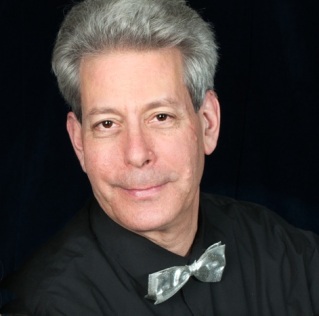
157_elan_katharina_2011_crop_highresElan Sicroff is one of the leading interpreters of Thomas de Hartmann’s music and his extensive recording project with the Nimbus label brings de Hartmann’s chamber and solo piano music to a wider audience. Here he talks about the project as well as his own influences and inspirations and the experience of recording and performing de Hartmann’s music.


Who or what inspired you to pursue a career in music and who or what have been the most important influences on your musical life and career?

There were two people who influenced my decision to become a professional musician:

I met J.G. Bennett in December 1972. He directed an academy in Gloucestershire modelled after the Institute for the Harmonious Development of Man, founded by George Gurdjieff, a spiritual teacher and polymath. At the time I was ambivalent about my path as a musician, and he said to me “If you have talent, it is a gift. It doesn’t belong to you, and you have an obligation to share it.”

Bennett was particularly interested in Beethoven’s music, and we worked together on the late sonatas Op. 110 and 111. During this time I also came across the music of Thomas de Hartmann, beginning my lifelong involvement with his music.

A second important influence is the guitarist Robert Fripp. In 1985 he produced my CD Journey to Inaccessible Places – the music of Gurdjieff and de Hartmann. Since 2006 he has helped me with a 21-year effort to bring de Hartmann’s classical music back to public awareness. In 2010 he introduced me to Gert-Jan Blom, Artistic Producer for the Metropole Orchestra in the Netherlands. We embarked on a five year recording project in 2011, resulting in six hours of music for solo piano, voice and chamber ensemble, now being released by Nimbus Alliance Records.

I would like to mention one other, overwhelmingly important influence on my pianistic and musical development. This was Jeaneane Dowis. When I first met her in 1964 when she was 32 years old: elegant, beautiful, and brilliant. In her early 20s she had become assistant to Rosina Lhevinne, on the strength of her ground-breaking discoveries in piano technique. Rosina had taught Van Cliburn, winner of the Tchaikovsky Competition in Russia in 1958, and students flocked from around the world to study with her. She sent those with technical problems to Jeaneane, and soon she was teaching 70 hours a week. I was 14 years old at the time, and she agreed to teach me if I was accepted by the Juilliard Preparatory School. The four years I spent with her were consistently exhilarating. She had astonishing insights, not only in technique but also in musicianship and interpretation. I went back to her again in the 1980s for further study, and her teaching had moved to another level: her remarkable discoveries about ease of movement, related to skeletal anatomy and visualization, deserve to be more widely known.

What have been the greatest challenges of your career so far?

After nearly 40 years teaching piano, I was thrust into the world of professional musicians in 2011, due to the needs of the Thomas de Hartmann Project. The recordings in the Netherlands that began in 2011 presented many firsts for me.

The repertoire was very demanding. Many of the pieces contained technical difficulties, and once those were surmounted the task of turning them into music could be challenging. This was especially true for the later works, like the Commentaries on Ulysses Op. 71 and Musique pour la fête de la patronne Op. 77.

Accompanying vocal music was something I had never done before. Working with musicians of the calibre of Claron McFadden – a celebrated soprano in the Netherlands; and Nina Lejderman, a talented young opera singer, was quite a stretch.

Recording is an uncomfortable process and presents its own challenges. I have had to overcome my self-consciousness, which was magnified whenever the engineer said “You’re On!” After five years in the studio I have learned to trust the process. I now find myself looking forward to it: the birth pains are unavoidable, but the result is worth it.

Which performances/recordings are you most proud of?

In 2016 the Thomas de Hartmann Project gave two memorable performances at Splendor in Amsterdam. The venue is quite special, founded in 2010 by a group of musicians, composers, and artists who needed a place to experiment and perform as they saw fit. When the de Hartmann recording project in Hilversum came to an end, many participants offered their services, pro bono, for the recitals. Music for saxophones, a trio for flute, violin and piano; sonatas for violin and cello, works for solo piano as well as de Hartmann’s songs were among the works featured. The response was very positive, confirming our belief that the listening audience was becoming ready to embrace de Hartmann’s music, after many years of neglect.

As for recordings: I have made 3 CDs of the Gurdjieff/de Hartmann music. I like all of them, but my favourite is Laudamus…, released in 2010.

That said, the Thomas de Hartmann Project CDs, now being released by Nimbus, occupy a special place for me. They represent the first commercial recordings of Thomas de Hartmann’s work, ever. I am so happy that this music is now available for the public to enjoy, and also to play. The contributions of Gert-Jan Blom, producer extraordinaire, and Guido Tichelman, one of the leading recording engineers in Europe, cannot be overstated. Gert-Jan brought his wide-ranging knowledge and enthusiasm to the project, and the sound quality that Guido captured is of the highest order.

Which particular works do you think you perform best?

I find myself attracted to composers who are able express deeper meaning in their music. In May 1970 I sang in a performance of Mozart’s Requiem at the National Cathedral in Washington, presented by the Oberlin Conservatory, as an act of protest against the Vietnam War. I was strongly affected by how Mozart expressed the meaning of the words through his music. It was a seminal moment, which lead me to look for more works by Mozart and other composers that had this power.

Beethoven’s struggles with deafness are well known – he even contemplated suicide in his thirties as a result, but decided to continue and compose for the benefit of mankind. His compositions became a chronicle of his inner life. The same can be said for Schubert – contracting syphilis was a death sentence, and his music often reflects his inner struggles, sometimes leading to defiance, at others to acceptance.

Thomas de Hartmann attempted to express psychological ideas that he encountered through his work with Kandinsky and Gurdjieff, in addition to wide-ranging literary influences. Along with the colour, vibrancy and beauty of his music, his attempts to insert meaning in his music continue to fascinate me.

What do you do off stage that provides inspiration on stage?

I find that physical work of various kinds is essential to my feeling of well-being. These days I walk and have a vegetable garden. I also practice yoga and the Alexander Technique, which help to tune the whole body, before sitting down to the instrument.

How do you make your repertoire choices from season to season?

Since 2011, there has been a flow that has made choices for repertoire fairly easy. The aim to present a body of representative works by de Hartmann for the public, resulted in our recording a substantial portion of his output for piano solo, voice, and chamber ensemble…though to be accurate, we’ve only scratched the surface of his vocal output.

A group of musicians has now come together to form the Thomas de Hartmann Consort. The aim for our programming has been to integrate de Hartmann’s work into the rest of the classical canon. The programming possibilities are almost endless:

— Music by de Hartmann’s composition teachers, Anton Arensky and Sergei Tanaieff.

— The music by Debussy and Ravel, to compare and contrast de Hartmann’s own work with Impressionism.

— Music that relates to de Hartmann’s quest for meaning: Beethoven and Schubert.

— De Hartmann’ Bach transcriptions for Pablo Casals provide the opportunity to perform them next to the originals.

— Music by contemporaneous Russian composers, from Rachmaninoff to Scriabin, Prokofiev, etc.

— Music by Bartok and Kodaly, delving into early attempts to bring World Music to the West.

As for recording, the Piano Concerto Op. 61 is next on the agenda, scheduled for this autumn. There are also a few solo piano pieces that need to be recorded, including a 25 page sonata written when de Hartmann was 17, and some very late works from the 1950s.

Do you have a favourite concert venue to perform in and why?

Most of my performances have taken place in small halls that seat several hundred people. I particularly like Carnegie (Weill) Recital Hall for its intimacy and acoustic. I’ve played at many universities and conservatories, including the University of Anchorage, Alaska, UCLA and UC Berkeley in California, and the Longy Conservatory in Boston. I always enjoy the energy and enthusiasm of these audiences. Young musicians represent the future, and if de Hartmann’s music is going to be established, it will be those people who will give it voice.

What do you feel needs to be done to grow classical music audiences/listeners?

Quality education is the highest priority. Very young children should hear top-notch recordings and performances to develop an ear for music. This means that parents need to get involved. It also helps when elementary and high schools have good music programs: Zoltán Kodály brought solfège to the Hungarian school system, and Japanese schools also have a quality music program. Dr. Shinichi Suzuki revolutionized violin teaching when he developed the “mother-tongue approach,” in which young children learn to play an instrument in the same way they learn to speak. He has been a major force in bringing youngsters to classical music.

What is your most memorable concert experience?

Following are two answers to this question, from opposite perspectives: first as performer, secondly as audience participant:

In 1975 Mme. de Hartmann had organized a recital of her husband’s music at McGill University in Montreal. I had been asked to play the Two Nocturnes Op. 84, written in de Hartmann’s late classical style.

This was my first meeting with her. Madame may have been diminutive in size, but she was truly a force of nature. She had been a member of the Russian aristocracy, close to the Tsarina before the Russian Revolution, and had strong ideas that sometimes ran contrary to the relaxed attitudes of young people in the later years of the hippy era. She didn’t approve of women wearing jeans, of young men with beards, or grand pianos on movable platforms being used in performances of her husband’s music. She told me to ignore the audience and play only for her, to look up at the ceiling before playing ‘the Music of the Stars,’ and that a musician must rest on the afternoon of a performance to conserve energy for the event. I was still impressionable at the age of 25, and took it all in.

When my performance was a success, it began a relationship that lasted for 4 years until her death in 1979. It opened the door for further recitals under her tutelage, as well as instruction in de Hartmann’s music.

One of the most memorable performances I ever saw took place in London in the mid 1970s, when I heard the cellist Paul Tortelier give a solo recital. I had not heard his name before, and had no idea what to expect. He came onto the stage, an elderly man, thin, with a shock of white hair. He seemed to float over the cello when he played. The first piece, a Boccherini sonata had 3 movements, but he was so pleased with himself after the first two that he stood up, took a bow and moved onto a Bach cello suite! Then he stopped, began speaking in French, and changed to English: “If you want to cough while I play, please leave the room!” The audience was noticeably taken aback.

In the second half he played the Franck Sonata and (if I remember correctly) also the Debussy cello sonata. By the end he had won the audience over, and began playing encores – without leaving the stage, he continued for another 45 minutes, even including the entire Kodály Unaccompanied Cello Sonata. By this time the audience was in a frenzy, with some people standing to watch him in amazement. Finally he stood up, closed the lid of the piano, and walked off the stage, not turning back….

In the programme notes I noticed that he had studied with Gerard Hekking. De Hartmann had dedicated his cello sonata to him, so I went backstage to ask Tortelier if he knew of the piece. “Yes,” he said, “it has a beautiful second movement, but the rest is not for the masses.”

I walked out of the hall feeling that I had witnessed an event that was a throwback to the Romantic Age, reminiscent of stories I’d read about Liszt and Paganini in performance.

As a musician, what is your definition of success?

I view my work in music as a process, with different stages, and it is necessary for some form of success to enter into each of them. First there is the functional work of learning the notes, understanding the structure, and overcoming technical challenges. Then another level comes: the music must begin to speak. In some ways it is the opposite of the functional work – activity ends and receptivity begins: one must listen, be still, be open, questioning. This stage is sometimes quite agonizing: the piece still is not music, and one cannot “make it happen.” When one completes this stage and is prepared, the final stage comes with performance. Here the audience becomes a participant, adding its listening to the music. There are then three aspects: the performer, the audience and the music. Occasionally there is an “event,” where something new and memorable occurs. Success!

What do you consider to be the most important ideas and concepts to impart to aspiring musicians?

In 1972 I went to see Nadia Boulanger in Paris, to inquire about becoming her student. One of the most memorable things she said to me was “If you can live without Music, do!”

This statement has resonated with me over the years. It covers a lot. Anyone considering a career in music should have an all-consuming love for it. If one is fortunate enough to realize that there is nothing one would rather do than make music, then there really isn’t a choice…!

Where would you like to be in 10 years’ time?

Seven years remain until the end of the 21-year Thomas de Hartmann Project. For a long time I’ve an image of what completion would look like: I will be standing in front of Carnegie Hall, looking at the billboard announcing the performance of Beethoven’s Seventh Symphony and Thomas de Hartmann’s Symphonie-Poème. This would indicate that de Hartmann has finally “arrived.”

I’d be happy to substitute specific works in this visualization – it might be another symphony or concerto by Thomas de Hartmann. Another orchestral work by Beethoven might also be acceptable….!

What is your idea of perfect happiness?

I would say that true happiness results from a life well lived, in which one manages to achieve one’s goals. As a working musician, I find that self-satisfaction comes from overcoming obstacles in learning the repertoire that I value, and performing it well. Each time this occurs, it gives a taste of happiness.

On 2 April, Nimbus release three volumes of the Music of Thomas de Hartmann. More information here.


Elan Sicroff is known as an interpreter of the music written by Thomas de Hartmann, both the classical works as well as the music from the East composed in collaboration with Gurdjieff . In the 1960s he studied with Jeaneane Dowis, protégée and assistant to Rosina Lhevinne at the Juilliard School. From 1973-75 he attended the International Academy for Continuous Education at Sherborne, in Gloucestershire, England, as a student and later Director of Music. The Academy was directed by J. G. Bennett, a leading exponent of Gurdjieff’s teachings.  It was here that Elan was introduced to the music of Thomas de Hartmann. Between 1975 and 1979 he studied with Mme. Olga de Hartmann, widow of the composer, focusing on the music which de Hartmann composed in the classical idiom.  He performed many recitals under her auspices, and in 1982 toured the United States.

Read more

(video credit: Victor McSurely )

Who or what inspired you to pursue a career in music and who or what have been the most important influences on your musical life and career?

My biggest influences have been my piano teachers:

• My first piano teacher in Toulouse’s conservatoire, Claudine Willoth, who understood I was different than the other kids and cultivated my curiosity for music in general, not only for the piano. At that time I wasn’t thinking of being a professional and was reluctant to practise scales or exercices. She didn’t insist and helped me to realise what I really wanted at that time : to compose music, to sightread some masterpieces ( too difficult for me at that time ), to improvise, to listen to all kinds of music.

• My second teacher in Paris’s conservatoire, Jean-François Heisser, who I met in Toulouse when I was only 13 and who convinced me I was could become a professional musician. From that point I started to practice seriously.

• My third teacher, in London, Maria Curcio, who convinced me I could go much further and become an international soloist. I was sometimes having 5 or 6 full days of lessons in a row. It was like that every month and she really prepared me to perform on stage, to open up and find my identity as a musician.

What have been the greatest challenges of your career so far?

They have all been ultimately very positive challenges. For example, when I first played a solo recital at the Théâtre des Champs Elysées in Paris, after which I realised I could probably consider myself as a soloist; when I played Bartok 2nd Concerto with Pierre Boulez, one of my biggest idols; all my big debuts in major venues and with major orchestras; and, more recently, creating my own festival (Festival et Académie Ravel) and Academy for young musicians, and, hopefully one day, a new concert hall, in one of my most beloved places, the French Basque Country.

Which performances/recordings are you most proud of?

Difficult to say, though I’m very proud of the last one, ‘Good Night!’,  I should say! Also the Saint-Saëns album which won the Gramophone 2019 Album of the Year Award. I could also mention an older recording, Liszt’s Années de pèlerinage. But I’m quite happy with everything, even if I know I could do everything better.

Which particular works do you think you perform best?

It’s difficult for me to answer that. Probably music by Liszt, and generally-speaking music from the 20th and 21st centuries. I’m also quite at ease with the classical style and Beethoven’s music, though that’s one side my audience knows a little less, I think.

What do you do off stage that provides inspiration on stage?

Meditation. Just before going on stage.

Elsewhere in my life, I enjoy being with friends, good food (I love to cook myself), travelling, and my relationship with all forms of art and all kinds of music, including pop. I also read a lot of books, articles, magazines, all kind of things, depending on my state of mind. This all probably goes someway in inspiring my interpretations but it is totally subconscious.

How do you make your repertoire choices from season to season?

I built a very big repertoire and musical knowledge when I was a teenager. I continue to discover new things all the time but I mainly extract ideas from this big body of work. The question is more what’s next? To try to find a logical order. But I have ideas for the next 60 years at least! Regarding new repertoire, I’m mainly interested in contemporary compositions and discovering new composers. So I try to confirm some new commissions each year so that I can regularly give premieres. This stimulates me a lot.

Do you have a favourite concert venue to perform in and why?

There are so many. I could mention Teatro Colon in Buenos Aires for example, which gives me such an intense emotion each time I enter on stage and face the audience. Such an impressive and magnificent place.

What do you feel needs to be done to grow classical music audiences/listeners?

I think that artists and promoters should work much more to promote contemporary music and to help the audience discover it gradually so they get used to it – like visual art, for example. The younger generation needs to feel that there are living artists and composers behind it. The most contemporary music should be absolutely central in my opinion. It’s fundamental to get out of this museum experience feeling. Or if not, it should at least be in the style of a modern art museum…!

We also need to destroy the existing frameworks. The look and format of a concert should not just depend on old habits.

Why should a recital consist of two halves of 45 minutes each? Why should a concerto be played at the same part of the concert each time? Why always this same ritual of encores? Why does the orchestra have more or less the same layout? Why are the (bright) lights always more or less the same in every concert hall across the world? We should innovate much more to make the whole experience more alive. It’s also essential we maintain – now more than ever – a standard of very high quality. The worst thing for me is levelling down.

What is your most memorable concert experience?

There are too many.

As a musician, what is your definition of success?

Being happy. And proud to achieve what we can achieve. To continue to have dreams and to try to make them become reality.

What do you consider to be the most important ideas and concepts to impart to aspiring musicians?

To remember that success is not about having your name written in gold letters at the top of a poster.

It’s a long quest and a process of building. You need to build your repertoire, your personality… to try to learn who you are as an artist. That all takes time. Search inside yourself, as most of what you have to say is already inside you from very early on.

Where would you like to be in 10 years ’time?

I don’t know exactly but certainly not where I am right now!

I like movement. I’d like to continue to travel, to develop my repertoire, to commission and premiere a lot of new works. To develop my Festival and Academy project and to create a real musical centre to experiment with new ideas. Maybe to teach again a bit. I’d like to be more linked to the younger generation and to today’s composers, as well as to other kinds of artists.

Bertrand Chamayou’s new album Good Night! is released on 9 October on the Warner Classics label.


Bertrand Chamayou is one of today’s most strikingly brilliant pianists, recognised for his revelatory performances at once powerfully virtuosic, imaginative and breathtakingly beautiful.

Heralded for his masterful conviction and insightful musicianship across a vast repertoire, the French pianist performs at the highest level on the international music scene. He is recognised as a leading interpreter of French repertoire, shining a new light on familiar as well as lesser known works, while possessing an equally driving curiosity and deep passion for new music. He has worked with composers including Pierre Boulez, Henri Dutilleux, György Kurtág, Thomas Adès and Michael Jarrell.

Read more


Artist photo: Warner Classics

Who or what inspired you to take up conducting and pursue a career in music?

When I was 14 my violin teacher gave me the chance to conduct a string orchestra I was playing in. I remember vividly the experience standing there with the music flowing around and through me as I tried to communicate with the players. I didn’t have any technique at all and it was probably terrible! But in that moment I had a very strong sense that this was an extraordinary feeling and something I wanted to explore deeply.

Who or what are the most significant influences on your musical life?

I’m not sure I can judge this myself fully. However, without a doubt conductor Sian Edwards who is the most wonderful human being and has taught me a huge amount about the relation between music and conducting technique. Michael Dussek, my piano teacher at the Royal Academy of Music, was also a strong influence in helping me develop my own artistic ethos in service of the music. Working as an assistant to several conductors provided opportunities to see at first hand what works, what doesn’t and what kind of musical leader I would like to be.

What, for you, is the most challenging part of being a conductor? And the most fulfilling aspect?

Mastering a huge range of repertoire in the depth required is a never-ending challenge, particularly as a young conductor starting out. There is almost no amount of preparation that will enable you to feel fully confident with a symphony when standing in front of a great orchestra that has played it hundreds of times before. How to deal with this is an important milestone. The most fulfilling thing is when everything clicks within the orchestra, and the music seems to unfold naturally. When I feel as if I have to do very little on the podium this is wonderfully satisfying.

As a conductor, how do you communicate your ideas about a work to the orchestra?

I try to show everything with my baton, and occasionally where appropriate use a mental image or piece of historical context to frame a particular sound world or effect. It’s important to realise quickly what works best with a certain orchestra: some players prefer to avoid verbal communication, others are drawn in by a bit more context or personal imagery.

How exactly do you see your role? Inspiring the players/singers? Conveying the vision of the composer?

The position of the conductor is often anachronistic – it is only from the time of Beethoven onwards that musicians would have expected someone to direct the performance this way. In Mozart you need to get out of the way; in Mahler it almost seems as if the music was written for a single music interpreter to shape; in much contemporary repertoire you are akin to a sophisticated metronome. So the role varies, but the conductor must always bring his/her personal energy to the ensemble and a love for the letter and spirit of the music.

Is there one work which you would love to conduct?

Elgar Symphony no. 2. I find Elgar’s English character combined with his Austro-Germanic style of composition irresistible.

Do you have a favourite concert venue to perform in?

I’ve only performed there once but the Shanghai Oriental Arts Centre has the most exceptional acoustic: crystal clear yet warm enough to create any sound world you could possibly want.

Who are your favourite musicians/composers?

My all-time No. 1 conductor would be Claudio Abbado, whose flair, intellectual rigour and versatility across all repertoire seem unparalleled to me. If I had to choose one composer it would be Beethoven. At the moment I’m realising what a limited picture we get of him as orchestral musicians if we don’t explore the piano sonatas and chamber music. His symphonies and concerti alone give a misleading sense of his musical personality.

As a musician, what is your definition of success?

Very, very rarely we feel we have done justice to the music. It is gratifying when this feeling is shared by respected colleagues and listeners, and of course sometimes this can lead to career progression which plays a part in ‘success’ too.

What do you consider to be the most important ideas and concepts to impart to aspiring musicians?

An ethos of constant self-sacrificing exploration. And a passion to learn why and in what situation a piece was composed as this can really help recapture its spirit in the present moment.

What is your idea of perfect happiness?

To maintain a fulfilling balance between desire and satisfaction over a lifetime.


Mark Austin’s performances of orchestral and operatic repertoire have been praised for their “eloquent intensity” (Guardian).

Recent highlights include Mark’s debut at Royal Opera House Linbury Theatre, and the final of the Chicago Symphony Orchestra Solti Conducting Competition. He has been shortlisted for the ENO Mackerras Conducting Fellowship 2020-22. In 2019 he was elected an Associate of the Royal Academy of Music and worked in masterclass with Riccardo Muti. He collaborated with soloists including Guy Johnston, Kristine Balanas, Julien van Mellaerts and Siobhan Stagg. As assistant conductor he worked at Garsington Opera and with the Orchestre de Chambre de Paris. 2020 includes work at Folkoperan in Sweden, a return to Garsington and concerts at Oundle International Music Festival and Cambridge Summer Music Festival.

Other projects have included ‘Le nozze di Figaro’ (Dartington International Festival), ‘Goyescas’ (The Grange Festival), ‘Tosca’ (Musique Cordiale International Festival) and a two-concert Brahms residency with Guy Johnston and Faust Chamber Orchestra at Hatfield House. Mark was assistant conductor for the world première production of Mark-Anthony Turnage’s ‘Coraline’ (Royal Opera). He has worked with figures including Vasily Petrenko, Sian Edwards, Marin Alsop, David Parry, David Hill, Steuart Bedford, and the late Sir Colin Davis, and conducted orchestras including Aurora, Britten Sinfonia, Bournemouth Symphony Orchestra, Civic Orchestra of Chicago, Orchestra of St John’s and the Hangzhou Philharmonic, China. Mark was awarded a Bayreuth Festival Young Artist Bursary in 2018 and recorded the world première of Alex Woolf’s ‘NHS Symphony’ for BBC Radio 3, which won a Prix Europa. He studies with Sian Edwards and was awarded an International Opera Awards Bursary in 2017. 

An accomplished pianist, Mark has performed at venues including Wigmore Hall, Kings Place, St John’s Smith Square, Holywell Music Room, Opera Bastille (Paris) and the Shanghai Oriental Arts Centre. He is musical assistant to The Bach Choir and regularly conducts the choir in concert and the recording studio, including live on BBC1 for the Andrew Marr Show.

Born in London, Mark had lessons in violin and piano from an early age. He played in the National Youth Orchestra, and studied at Cambridge University and Royal Academy of Music, where he received numerous prizes and was appointed a Junior Fellow. Mark contributed a chapter on Wagner, Beethoven and Faust to the recently published ‘Music in Goethe’s Faust’. You can read more about Mark on http://www.mark-austin.net and follow him on Twitter @mark_aus_tin.

mark-austin.net

