iain-burnside-web-2017


Who or what inspired you to take up the piano, and pursue a career in music?

There was a wonderful piano teacher in Glasgow called Lilian Grindrod. I remember as a 5 year old watching my cousin Beth play and thinking, that looks like a lot of fun, I want to try that. My Grandpa was an organist and choral conductor and he put air under my wings at every stage of my childhood. My school was academically strong but ruthlessly anti-musical. I’m the only professional pianist I know who was never asked to play in a school concert. So all the music came through my family, where it seemed the most natural thing in the world.

Who or what have been the most important influences on your musical life and career?

When I was at Oxford, I nervously got on the London train for some lessons with Alexander Kelly. He opened my eyes to connecting emotionally with music in general, and the piano in particular. He was very generous and very funny, and lessons passed in a blur of excitement.

What have been the greatest challenges of your career so far?

Challenges change shape as careers develop. We all have demons perched on our shoulders, and the enduring challenge is to block out their noise. When I was starting out I jumped in at short notice to play for Margaret Price in Vienna. It was a hard programme with lots of songs i’d never played. No-one had pointed out that audience would be sitting on stage with me, close enough to touch. And that it was being broadcast live. I opened the music and thought, this would not be a good time to mess up.

Which performance/recordings are you most proud of? 

Recording is such a bittersweet experience. I mostly hate hearing my recordings, and see only things I don’t like. Occasionally there’s a track where you might think, hmm, that was ok, but mostly my (very Scottish) reaction is to question, did I get away with it? Being what the Americans call a collaborative pianist, it usually gives me more pleasure to listen to my collaborators.

Which particular works do you think you play best?

There is a particular circle of Performers’ Hell reserved for anyone who answers that seriously! I do identify more strongly with particular areas of repertoire, and I also have a few composer allergies. But those composers come up in programmes and it’s part of my job to be convincing with them too.

How do you make your repertoire choices from season to season?

That’s a jigsaw: some programmes I choose, others land in my lap. I adore programming – it’s one of the great joys of this profession. But the choices other people make are often more interesting, and lead to musical discoveries.

Do you have a favourite concert venue to perform in and why?

I love the Crucible in Sheffield. Performing in the round with an audience raked above you is a transformative experience, particularly when that audience is warm and knowledgeable and welcoming. In a totally different way, the church at St Endellion in Cornwall is a place where magic happens, for reasons I’ve never fully understood.

What is your most memorable concert experience?

I did a recital in Japan where every time I nodded for the page turner to turn, she slowly nodded back, transforming the gesture into a most elegant bow. Every time. I had to anticipate by half a line to keep the show on the road.

As a musician, what is your definition of success?

I’d love to come up with something highbrow and philosophical, but the honest truth is, getting by without major disaster. Actually enjoying the process is the Holy Grail.

What do you consider to be the most important ideas and concepts to impart to aspiring musicians?

Be true to the composer, and to yourself. In that order. Remember that a large part of talent is the capacity to change.

What is your present state of mind?

There’s not a pianist alive whose state of mind is anything other than “I Really Should Be Practising”.


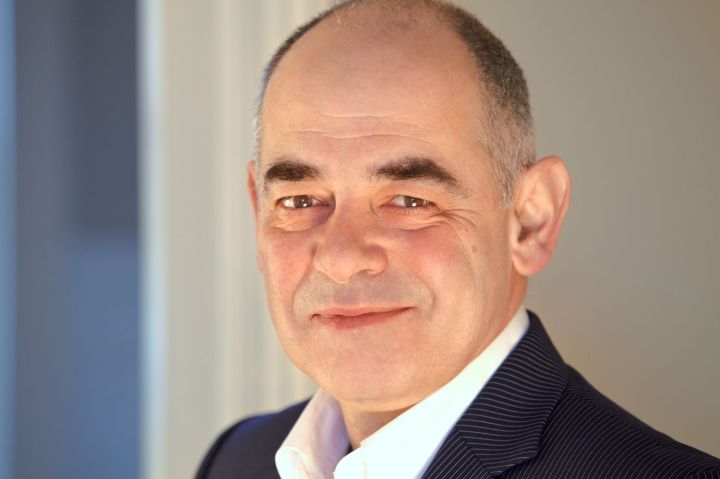
Iain Burnside is a pianist who has appeared in recital with many of the world’s leading singers (“pretty much ideal” BBC Music Magazine). He is also an insightful programmer with an instinct for the telling juxtaposition. His recordings straddle an exuberantly eclectic repertoire ranging from Beethoven and Schubert to the cutting edge, as in the Gramophone Award-winning NMC Songbook. Recent recordings include the complete Rachmaninov songs (Delphian) with seven outstanding Russian artists (“the results are electrifying” Daily Telegraph). Burnside’s passion for English Song is reflected in acclaimed CDs of Britten, Finzi, Ireland, Butterworth and Vaughan Williams, many with baritone Roderick Williams.

Away from the piano Burnside is active as a writer and broadcaster. As presenter of BBC R3’s Voices he won a Sony Radio Award. For Guildhall School of Music & Drama Burnside has devised a number of singular theatre pieces. A Soldier and a Maker, based on the life of Ivor Gurney, was performed at the Barbican Centre and the Cheltenham Festival, and later broadcast by BBC R3 on Armistice Day. His new project Swansong has been premiered at the Kilkenny Festival and will play in Milton Court in November.

Future highlights include performances of the three Schubert songcycles with Roderick Williams at Wigmore Hall. A Delphian release of songs by Nikolai Medtner launches a major series of Russian Song in the 2018 Wigmore Hall season. Other forthcoming projects feature Ailish Tynan, Rosa Feola, Andrew Watts, Robin Tritschler and Benjamin Appl.

Iain Burnside is Artistic Director of the Ludlow English Song Weekend and Artistic Consultant to Grange Park Opera.


(Artist photo and biography courtesy of Askonas Holt)

Who or what inspired you to take up the piano and pursue a career in music?

We always had a piano at home. I come from a musical family. My mum, my grandma, my great-grandma were piano teachers and my first inspiration to take up the piano was just the sheer presence of the piano at home. I was five at the time and it seemed to me very obvious that the piano was there so that I could play it. The irrefutable logic of a five-year-old. I pestered my mum until she gave me lessons; she didn’t want to because she thought we had too many pianists in the family, but I was stubborn as a five-year-old can be and eventually after about 2 weeks she gave in.

The decision to pursue a career in music wasn’t quite a decision. There wasn’t a single moment where I stopped and said “I will be a pianist”. I gave my first concert at the age of seven and then by the age of 9 I was performing regularly. Because there was no break or consideration of pursuing another career, it just very naturally progressed from being something I did as a kid to being something I do with lots of love and passion as an adult.

Who or what have been the most important influences on your musical life and career?

The most important influences are both musical and non-musical. Musically I could name the pianists, Emil Gilels, Arthur Rubenstein, Grigory Sokolov, but also many others, Daniel Barenboim, especially in Beethoven, Martha Argerich in many things and of course not only pianists, conductors such as Furtwangler and Gergiev, John Elliot Gardner. Singers such as Dietrich Fischer Dieskau and of course influences can be non-musical: in a way every experience you have, every book you read, every movie you watch, every place you visit, every encounter you have, every moment you spend with friends or family, they leave a mark on you and direct you indirectly and therefore leave their mark on your playing.

What have been the greatest challenges of your career so far?

There is an ongoing challenge which is to play in a way that does justice to the music and with some composers and with some pieces it is easier and more natural, while with others it requires a lot of very hard work and a lot of thought and time, sometimes months and even years from the point where you start learning a piece to a point where you feel that your interpretation is interesting, engaging and truthful to the spirit of the music. And this is something which is ongoing because even pieces that you thought that you played well in the past, you cannot rely on that past experience as a gauge for the next performance of the piece also being fine. So, basically it’s having the hand on the pulse everyday. I often record myself and listen back, because there’s often a gap between the way you perceive your performance while you’re playing: while you’re very much involved in the detail, hearing it from the outside with maybe a little more objectivity allows you to hear the whole structure and musical line, and judge whether it works or not. And this is something which happens almost everyday.

Which performance/recordings are you most proud of?

I’d say for the recordings the War Sonatas, no 6,7 & 8 by Sergei Prokofiev, which I released on Orchid Classics in 2012. More recently, a CD I released with Naxos and with the Royal Liverpool Philharmonic Orchestra and Vasily Petrenko of the 2 piano concerti by Shostakovich, with an arrangement which I made of his own 8th String Quartet. As for performances I can think of various occasions which I thought at the time were good performances, but I often find that listening to the same recording a few years later, because you have changed in that time, you already feel a little more distanced from your previous work and you feel that if you were to do it today you would do it, not necessarily better, but differently. So I think most of the recordings would be a faithful document of how you felt about the piece at the time. Also, the CD I recorded of Rachmaninov’s Etudes-tableaux Op. 39 and his Musical Moments Op.16, also from Naxos. So I’d say I’m very proud of these three CD’s.

Which particular works do you think you play best?

I have a very close affinity to Russian repertoire – Rachmaninov, Prokofiev, Shostakovich, but also Stravinsky, Tchaikovsky, Mussorgsky. So most of the Russian composers I am deeply in love with and I am also very strongly connected to their world, Russia being my home country and also being my native tongue. Russian literature, Russian poetry are also very close to me. I don’t know if any of these explain the fact that I have such a strong connection to Russian music, but when I play Russian music I feel very much at home and I never grow tired of it. I also have a strong connection to German composers, in particular Brahms, Beethoven, Schumann and the being quite omnivorous, I also wouldn’t want to be without Ravel, Gershwin, Bartok or Liszt. But Russian and German composers in a way form the core of my repertoire and almost every recital programme will contain works from at least one of these groups. I find in general works that have a very strong story-telling element appeal immensely, music that you can almost imagine has a story behind it, even if there is no story handed to us from the composer. But also music that you then as a performer can transform into a narrative on stage. And these kind of works occur throughout the entire musical repertoire, it’s not just confined to Russian, German or French music.

How do you make your repertoire choices from season to season?

When it comes to recital repertoire. I’m mostly free to choose my own works and then it’s a combination of works which I want to explore personally, works that I want to record and am planning to record, maybe in a year’s time, and I want to start playing them in concert a long time before the recording to gain this unique experience which live performance can give you and which you cannot simulate, no matter how much you practice at home. This probably involves some Russian or German repertoire. When it comes to concerto repertoire then the choice is usually in the hands of the orchestra. Normally the orchestra will ask the soloist to come and perform a concerto which is in the programme, and when it comes to chamber music then it is a collaborative choice between all of us who are involved in that concert.

Do you have a favourite concert venue to perform in and why?

I can think of several exceptional halls – the Mozarteum in Salzburg, the Musikverein in Vienna, the Concertgebouw in Amsterdam, probably three of the absolute top venues. The reason for all three is the glorious way the sound soars when you’re in the halls, it’s effortless and it’s an absolute marvel to experience. Another favourite concert venue, for a very different reason, is the Royal Albert Hall, because of the Proms. Playing at the Proms for a 5500 audience with the first row of the prommers being maybe 20cm from you, the electricity in the hall, the silence of a crowd of that size listening and the reaction in the end, it’s a uniquely memorable experience.

Who are your favourite musicians?

My favourite musicians I mentioned earlier, but to recap – Emil Gilels, Arthur Rubenstein, Grigory Sokolov, in all 3 cases because of the deep humanity of their playing. Their touch, their sound – unique to each one of them but all together extremely musical, with every note capable of showing shading or nuance in a really awe-inspiring way. And through the very deep understanding a personal rendition of basically everything they’ve played. To that group I would add David Oistrakh. the Russian violinist. for the very same reasons. and conductors Furtwangler. again for his very deep humanity. and Valery Gergiev for sheer excitement and colour of his interpretations. Sir John Eliot Gardiner, whose recordings of Bach in particular I grew up on and keep listening to almost every day. Dietrich Fischer-Diskau – again someone whose recordings I grew up on and who strongly influenced my approach to lieder, which I accompanied quite a bit, and to phrasing in general and to this connection between text and music in the art song.

What is your most memorable concert experience?

Playing at the Proms – last time I played the first piano concerto by Liszt and that was highly memorable, the silence of the full Royal Albert Hall listening and then the eruption of shouts and applause at the end. You’re thrilled afterwards for days – it’s a rush that stays with you for a very long time.

As a musician, what is your definition of success?

There can be several kinds of success – one kind is on any particular evening to be able to perform well. To be able to play in such a way that hopefully makes the audience forget their troubles for a few hours and be transported to wherever the music would like to take them to. On the other hand, in a way which you feel does justice to the music you’re playing, that catches a little glimpse of this truth behind the notes, that the note is just a gateway and which is in this very subjective realm of interpretation. Of course,  long-term the definition of success for a musician I’d say is again on two level. One is a career level which is measured in concerts, recordings, performances, prizes, if applicable, awards. But on another hand, it is maybe the legacy which you leave behind you, whether especially for those artists who were recording artists who have the legacy of recording – whether in 50 or 100 years later your recordings still sound truthful and still relevant and have value for those who listen to them at that time.

What do you consider to be the most important ideas and concepts to impart to aspiring musicians?

Apart from technical advice which is something every musician works on on a daily basis, I’d say the most important thing is (at least in my opinion) truthfulness to the core of the music. That is that every decision of interpretation that you make is not so much a preconception you have or an idea, but something which you feel comes from the music itself. It can come from the text (the notes), it can come from this space behind the notes, just thinking of the notes as a gateway to a pocket universe which composers fixed in place for us in order to gain access to that little – or great – world. This world, if the notes are completely objective, and every performance would have these notes in that order, but this world behind the notes which is the emotional and storytelling content of the performance, it is highly subjective and that is why interpretations differ so much from one another. Exploring those worlds and exploring them with unending respect and love to the composer and to that particular world which you are exploring, these for me are crucial things for every musician and I cannot think of any great musician to whom I would not feel this in their interpretation, this love and utter respect for the music which they are exploring, and this need and drive and desire to delve deeper and deeper into this world behind the notes.

What is your idea of perfect happiness?

I have two ideas of perfect happiness. One, as a musician, my idea of perfect happiness is that moment at a concert where you feel that everything is just flowing through you. It doesn’t happen every time, it’s rare in a way, but when it happens, the feeling when everything comes together and you feel that you’re almost possessed by the flow of music, being almost a conduit to it, while being able at the same time to shape this flow a little bit and direct it, these moments as a musician are utter happiness. My perfect happiness as a human being is to spend any amount of time with my family. It’s probably the most precious time I have in my life and there really can’t be too much or enough of it.


www.intermusica.co.uk/artist/Boris-Giltburg

(Artist photo: Sasha Gusov)

Who or what inspired you to take up the piano and pursue a career in music?

I started the piano when I was 3 (apparently!), and to be honest I’ve never for a second thought about the possibility of doing anything else. And I guess I might have to finally come to terms with the fact that – at 36 – Stoke City seemingly aren’t going to be calling me to play up front for them, so I guess I’m stuck with the music.

Who or what have been the most important influences on your musical life and career?

I had the great fortune to go to Chetham’s School of Music for nine years, during which time I had a fantastic education in the nuts and bolts of music, before going to the Royal Academy of Music in London to do the Undergraduate jazz course there. Having such a comprehensive training has certainly been invaluable in helping me adapt to, and survive in, the myriad of musical situations I tend to find myself in!

I’ve also been lucky enough to work with some amazing musicians over the last 20 years, and I’ve always tried to learn from everyone I’ve worked with, and every musical challenged I’ve undertaken. That’s one of the lovely things about being a musician – you never stop learning!

What have been the greatest challenges of your career so far?

Logistics! Replying to emails, booking flights, doing my accounts… The glamorous stuff!

In all seriousness being a freelance musician does come with a unique set of challenges, and surviving professionally, or professional surviving if you like (!) is right up there with the hardest of them.

Alongside that, I’ve always struggled with performance anxiety (a problem rarely discussed but frequently suffered by so many…) so dealing with that is always at the forefront of my mind.

Which performance/recordings are you most proud of?

My last release under my own name, called ‘Instrumation’, features a chamber orchestra and I wrote, arranged, produced and mixed it all – so I’m very proud of that! Every album I’ve ever made I’ve tried to do to as high a standard as possible, and whilst your style, influences and sound inevitably change over time, hopefully the attention to detail and quality of your work can remain a constant feature of what you do.

Which particular works do you think you play best?

Unfortunately I don’t really get too much opportunity to play the more standard repertoire, but this is something I’d like to rectify at some point in the future. So I guess the answer would be – hopefully – my own!

How do you make your repertoire choices from season to season?

I guess this question, again, is a little bit irrelevant for my particular career! That said, I do really enjoy the wide variety of musical situations I end up getting involved in, and I guess there is a certain amount of reacting to what is requested of me that dictates the musical direction I end up taking. In terms of a more general direction, I certainly find myself enjoying the world that lies in between the composed and the improvised more and more, so the pieces from the ‘classical’ side that I get involved with tend to be those that lend themselves to this kind of treatment. I seem to come back time and time again to 20th Century French music, as the harmony and lyricism seems – to me – to be so strongly connected to the world of improvisation and harmonic exploration that I enjoy so much.

Do you have a favourite concert venue to perform in and why?

I was fortunate enough to perform my own music at the Proms back in 2008, and to play in the Royal Albert Hall, and in front of a live BBC television audience, was just the greatest thrill. I guess, with having a classical education, performing in that situation, on that iconic stage, felt like truly fulfilling a dream. Aside from the RAH, I’ve been so fortunate these last few years to play in hundreds of concert halls around the world, all different shapes and sizes and all fantastic in different ways, but I guess on a personal note – playing in the Bridgwater Hall in Manchester has always been a wonderful experience, as I remember seeing it being built from the very beginning when I was at Chetham’s in the 90’s – so finally getting to play concerts there as a professional musician has always been a special experience.

Who are your favourite musicians?

In terms of composers, Ravel, Debussy and Dutilleux are my favourites. Jazz musicians: well piano-wise my heroes have definitely been headed by Keith Jarrett, Chick Corea and the wonderful, much-missed John Taylor. In a wider sense, the music of electric bassist Jaco Pastorius and guitarist Pat Metheny has always really been special for me. And aside from that, I always absolutely love listening to Steely Dan, Earth Wind and Fire, and Stevie Wonder. Hopefully that covers quite a bit for now!

As a musician, what is your definition of success?

To achieve respect and appreciation from my fellow musicians has always been the main aspiration for me. Of course every concert I play, I really want to give the audience a wonderful evening and take them on a musical journey, but in a more general sense I think that question of what my legacy will be has become more and more important to me as the years pass. I try extremely hard to give everything I can to each project I’m involved in, so when things go well after all the hard work, it always makes for a satisfying moment!

What do you consider to be the most important ideas and concepts to impart to aspiring musicians?

This would take quite some time to answer, but suffice to say I’m always encouraging my students to really try to put in the hours at the piano, as nothing can really replace good old-fashioned hard work! I do try to get them to try to stretch themselves creatively as much as possible, as, in the world of improvised and new music especially, developing and honing your own ‘voice’ and sound is of paramount importance. Again, there really isn’t any short cut to this, other than to put the hours in!

Gwilym Simcock performs at the London Piano Festival on 4 October. More information


Gwilym Simcock has carved out a career as one of the most gifted pianists and imaginative composers on the European scene.  He moves effortlessly between jazz and classical music, with a ‘harmonic sophistication and subtle dovetailing of musical traditions’. Gwilym has been hailed as a pianist of ‘exceptional’, ‘brilliant’ and ‘dazzling’ ability, and his music has been widely acclaimed as ‘engaging, exciting, often unexpected, melodically enthralling, complex yet hugely accessible’, and above all ‘wonderfully optimistic’.

Gwilym’s influences are wide ranging, from jazz legends including Keith Jarrett, Chick Corea, Jaco Pastorius and Pat Metheny, to classical composers including Maurice Ravel, Henri Dutilleux, Béla Bartók and Mark-Anthony Turnage. Although principally a jazz artist, Gwilym has composed numerous works for larger Classical ensemble that combine through-composed elements with improvisation, creating a sound that is distinctive and very much his own.

Read more

susie_allan_c-_simon_denison_bw_main

Who or what inspired you to take up the piano and pursue a career in music?

We had an upright piano in the corner of the dining room, which one of my older sisters was learning on. Aged about 6 I used to sit at it, crashing about on the keys and flailing my arms around as I imagined concert pianists did –  maybe I saw one on the TV. I think my parents realised my enthusiasm needed channelling and took me to a teacher who reminded me of Cruela de Vil – brown hair on one side and blonde on the other! I had a wonderful teacher at secondary school, Elaine Hugh-Jones, who was very inspiring and supportive. For a long while I toyed with becoming a solo pianist, but turned down the opportunity to study piano at the RNCM in preference to taking up an instrumental scholarship at Oxford. Over time I began to realise that my musical temperament did not lean towards life as a soloist, and there were many other ways to pursue a performing career. The Guildhall School of Music and Drama (GSMD) held those answers for me.

Who or what have been the most important influences on your musical life and career?

A chance conversation with Roger Vignoles prevented me from giving up altogether…I needed a teacher who knew about accompanying-he suggested some lessons with Paul Hamburger, and, as well as with him, at the GSMD I had the chance to work intensively with Graham Johnson, Martin Isepp and Iain Burnside, who were all hugely inspirational to me in their different ways. Playing for masterclasses at Snape for wonderful singers/teachers such as Elly Ameling, Anthony Rolfe Johnson and Elizabeth Soderstrom were also fantastic learning opportunities. In latter years, especially after moving to Shropshire, I have Roddy (Roderick Williams) to thank for continuing to take me with him on his musical journey, whilst it may have seemed I disappeared off the musical world’s radar; and for his natural, intelligent, sublime interpretations. Oh, and his irrepressible sense of humour.

What have been the greatest challenges of your career so far?

Trying to keep it going!! The move to Shropshire, having three children in close succession, and getting divorced made it particularly challenging to carry on playing at all.

Musically, I think some of the contemporary works I’ve performed have challenged me greatly, such as the four Songs by Torsten Rasch, commissioned for Gloucester Three Choirs Festival; and more recently getting out of my comfort zone and having to use an elbow in a new work called “The Rain is Coming” by Emily Levy.

Which performance/recordings are you most proud of?

Going way back, one which comes to mind is playing for Nathan Berg in the Gold Medal final at GSMD. He was singing Mahler’s Ruckert Lieder – trying to do these incredible songs justice for Nathan meant so much to me I was sick beforehand! Luckily it paid off – and he won. A recent performance of Die Schöne Mullerin with Roddy had a feeling of musical and emotional synchronicity – I was so glad to be part of that performance too. And I’m really proud to have been given the opportunity to record the new SOMM CD, songs that I have performed with Roddy many, many times over the years, all of which I adore.

Which particular works do you think you play best?

You may have to ask others about that!

Accompanists have to be like chameleons. It’s important to be able to feel comfortable in as many styles as possible. I like to think I can play best whatever I happen to be working on. Having said that, I have a particular penchant for the serious and intense, for example I think I can put across a pretty convincing “Ich bin der welt abhanden gekommen” (Mahler)… I also feel I now have a more confident approach to playing Schubert – Die Schöne Mullerin is a personal favourite; although tomorrow it may be Schwanengesang, and the day after, Winterreise.

How do you make your repertoire choices from season to season?

As an accompanist with many other demands made on my time, these choices are frequently not mine. Quite often my job is to fall in love with whatever repertoire I am tasked with – I enjoy that challenge.

Do you have a favourite concert venue to perform in and why?

Roddy and I did a tour of Schwanengesang in 2016. One of the venues was the Sam Wanamaker Theatre at the Globe in London. It was a very special place to play. It is an utterly beautiful bijou Jacobean-style space for starters, and as the performers, we were cocooned by the audience above us and around us, all of us bathed in the most atmospheric candlelight – a truly memorable experience.

What is your most memorable concert experience?

A festival in 2013 – memorable for the wrong reasons! I was attempting to give my all in an exceptionally beautiful postlude of Richard Sisson’s “So Heavy Hangs the Sky”, when the city council rudely began to empty the huge glass-recycling bins outside the venue – the sound continued for a good ten seconds… The second half of the concert was accompanied by reversing vehicle noises, pretty much matching the pulse, but not the atmosphere of Britten’s “The Sunflower”. The audience were not happy!

As a musician, what is your definition of success?

The ability to be able to move an audience through musical communication.

What do you consider to be the most important ideas and concepts to impart to aspiring musicians?

Respect the composer’s intentions, whatever you perceive them to be; try to communicate the spirit of the piece; enjoy the practice journey; have fun. Respect and support your colleagues.

Where would you like to be in 10 years’ time?

Back at the Wigmore Hall

What is your idea of perfect happiness?

The Beach House Goa Retreat

What is your most treasured possession?

My Steinway piano, given to me when I was 14

What do you enjoy doing most?

Walking the dog in the Shropshire hills with my kids

What is your present state of mind?

Busy!


Roderick Williams’ new CD, with Susie Allan, piano, ‘Celebrating English Song’ is available now on the SOMM label. Further information here

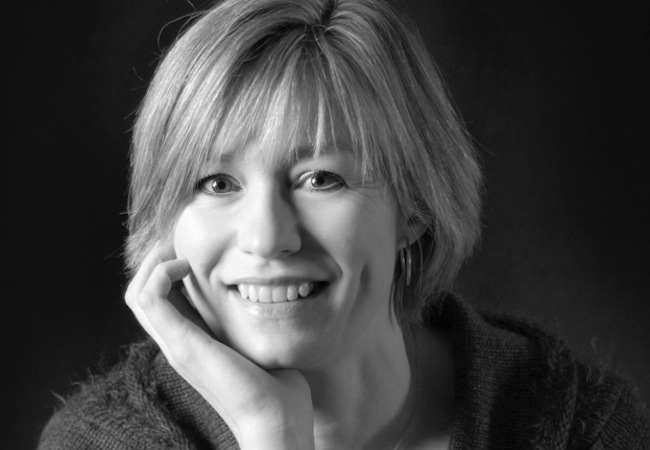
Susie Allan studied Music at Worcester College, Oxford, as a Hadow Instrumental Scholar, and Piano Accompaniment at the Guildhall School of Music and Drama. She won the GSMD Accompaniment Prize, the Gerald Moore Award, and a Geoffrey Parsons Memorial Award. Her teachers included Paul Hamburger, Graham Johnson and Iain Burnside. She has accompanied many masterclasses at the Britten-Pears School at Snape Maltings, Suffolk and elsewhere, and has been a Professor of Accompaniment at the RCM and the RWCMD.