The penultimate weekend in March saw me in London for two exceptional concerts in particularly lovely settings. The experience was enhanced by the company of friends and a delicious meal with a wonderful view across Smithfield (former meat market, now the new site for the Museum of London) to St Paul’s cathedral.

A Season to Sing is a reimagining of Vivaldi’s evergreen The Four Seasons for mixed voices by British composer, vocalist and music director Joanna Forbes L’Estrange. A co-commissioning project between the composer, The Royal School of Church Music (RSCM) and over 50 choirs around the world, A Season to Sing was written to mark the 300th anniversary this year of Vivaldi’s The Four Seasons.

The London ‘launch concert’ took place on Saturday 22nd March at historic St Bartholomew-the-Great, a beautiful ancient church in the City of London. Luminosa Music, an exceptional amateur choir (who impressed with their pitch-perfect timing and exquisite, colourful sound) performed the music, the first half comprising choral pieces by Joanna, her husband Alexander L’Estrange, and works by Monteverdi and Thomas Morley, all with a seasonal theme. This set the scene nicely for the second half and A Season to Sing.

The Four Seasons is a perenially popular work, and this is is not the first time it has been ‘reimagined, Max Richter’s Recomposed, being the most famous example. But A Season to Sing is the first time this music has been reimagined for voices. As Joanna says in the concert programme notes, ‘...re-imagining in no way diminishes our respect for the original compositions. On the contrary it offers a new perspective….’ – this latter point being the most striking and magical thing about A Season to Sing.

Think you know The Four Seasons? Think again! Here, the orchestral version is transformed into a colourful extravaganza of sound which makes full use of the human voice (and other parts of the body) to bring Vivaldi’s seasons vividly to life – from whistled birdsong in Spring to “body percussion” to evoke the storm, a bagpipe’s drone and even some Swingle-style wordless ‘scat’ (Joanna was music director of The Swingle Singers for seven years, and the middle movement is dedicated to the group’s founder, Ward Swingle). New details from the original orchestration are revealed by the choir, such as interior lines and textures, and the entire piece feels as fresh as a spring shower. It’s full of affection too, and wit and warmth. It’s a wonderful tribute to this much-loved music.

The Four Seasons is the first piece of classical music I remember listening to as a child. I have very vivid memories of dancing around the room to the 3rd movement of Autumn

Joanna Forbes L’Estrange, composer

A Season to Sing is being performed around the world by the choirs who took part in the commissioning project (find details of all performances here). The score will be published by the Royal School of Church Music on 1st June (pre-order here).


Sunday afternoon and another concert at a lovely venue, this time the 1901 Arts Club, London’s most stylish and convivial small venue. This was a special concert to celebrate the 340th birthday of J S Bach and to launch American pianist Eleonor Bindman’s new album ABSOLUTE – her own transcriptions for piano of Bach’s Lute Suites BWV 996-998.

A lifelong love of J S Bach has led Eleonor Bindman to produce a number of important transcriptions for solo piano and piano duo of his music for other instruments, including the evergreen Cello Suites and the Brandenberg Concertos. In this latest addition to her catalogue, Eleonor has turned her attention to works originally composed for the lautenwerk or lautenwerck (lute-harpsichord), one of Bach’s favourite instruments, similar to the harpsichord, but with gut (or nylon today) rather than metal strings.

The small size of the music salon at the 1901 Arts Club lends itself to “haus konzert” style performances (such as Bach might have known) and the ambiance at this concert was warm and friendly.

Like Joanna’s reimagining of The Four Seasons, Eleonor sees transcriptions as a vehicle to “revive interest in original compositions”, shine a new light on the original work and “increase their popularity”. And just as in A Season to Sing, new details of dynamics, texture, counterpoint and more are revealed in this transcription for solo piano.

But for me the most satisfying aspect of Eleonor’s concert was her ability to bring so much colour and nuance to the music. Her range of sound was impressive, but never too much nor too little. Perfectly balanced to suit the small size of the venue, she brought both intimacy and grandeur (we can thank Bach for that!) to the music. I don’t think I have ever heard the Steinway at the 1901 played better!

The following day I met Eleonor for a most enjoyable, leisurely lunch, replete with much ‘piano chat’ and conversations about food.

ABSOLUTE is out now on the Orchid Classics label and on all major streaming platforms.

‘The World of Yesterday’ – written & performed by Sir Stephen Hough with the Bournemouth Syphony Orchestra, conducted by Mark Wigglesworth. Wednesday 26th February, Lighthouse, Poole

British pianist Sir Stephen Hough hadn’t intended to write a piano concerto. But during the dark days of the COVID pandemic, he was approached to write a score for a film about a concert pianist writing a piano concerto… With little to do but take Zoom calls, “it seemed like a wonderful way to keep me busy”, and, intrigued by the film’s plot, he began jotting down ideas.

As the world emerged from the pandemic, the film project stalled and Stephen’s concert diary began to fill up again, but he still had the sketches for the film score and, with the support of four orchestras (the Utah, Singapore and Adelaide symphonies, and the Hallé) he wrote his piano concerto ‘The World of Yesterday’. It received its world premiere with the Utah Symphony Orchestra in January 2024 and a recording made with the Hallé and Sir Mark Elder is available on the Hyperion label.

I had the pleasure of hearing Hough perform his concerto with the Bournemouth Symphony Orchestra in a well-conceived programme called Notes of Nostalgia. Given its theme, the concerto sat perfectly between Brahms’ Third Symphony and Elgar’s Enigma Variations – all three works infused with a certain wistfulness interposed with personal reflection, warmth and wit.

Hough’s concerto takes its inspiration, in part, from Austrian author Stefan Zweig’s atmospheric memoir of the same name, which depicts Vienna and Viennese culture in the last golden days of the Habsburg Empire before Europe was torn apart by war. You can almost smell the aroma of Viennese coffee and taste the Sacher-Torte in the quieter passages of the piece.

The music is rich in nostalgia, but without the heart-tugging poignancy of Chopin, for instance: it’s a more reflective yet positive reminiscence of another time. Scored in a single movement but with distinct sections, ‘The World of Yesterday’ has a filmic quality (“something from the 1940s”, my husband commented as we left the concert hall) – you certainly hear nods to Korngold’s film scores, and it shares Korngold’s romantic sweep, but there are also references to Rachmaninov (particularly in the very glittery virtuosic solo sections), Copland, the Warsaw Concerto…but at no point do these references feel like pastiche. And if you’re familiar with Hough’s wonderful transcriptions of Rodgers and Hammerstein, you’ll find similar idioms here (I half-expected Hough to segue into the Carousel Waltz at one point). And yes, there is a waltz too – not so much a Viennese waltz but something more sultry, redolent of Bill Evans and a smoky, late-night jazz club.

Hearing the composer play his own work was like a bridge across time to another world of yesterday, a time when composers wrote piano concertos which they performed themselves: Mozart, Beethoven, Mendelssohn, Chopin, Liszt, Rachmaninov and Prokofiev all performed their own concertos. Showcasing their prowess and personality as both performer and composer, these works becoming their “calling cards” as they toured to give concerts.

The music has an almost “vintage” quality: surprisingly traditional in its direct communication with orchestra and audience, and its idioms, motifs and references to other composers (there’s not a hint of that “squeaky gate” atonality one often associates with contemporary classical music). The piano enjoys Brahmsian interactions with the orchestra and Rachmaninov-esque cadenzas, but Hough’s does break with tradition in a few significant ways. First, the concerto has a narrative title, rather than just an opus number or key, which undoubtedly guides the audience, even without a programme note. Additionally, the cadenza, traditionally heard at the end of a movement, comes very early, after an orchestral ‘prelude’. Here the piano is solo, notes and motifs sparkling in the upper register (later mirrored by the piccolo).

Above all, The World of Yesterday is a richly textured, virtuosic and joyful celebration of past influences, rather than a poignant glance back to a better time. It’s full of warmth and wit, affection and humour: it made me smile, it thoroughly uplifted.

After all, isn’t that what music should do?

The World of Yesterday’ is released on 28 February on the Hyperion label

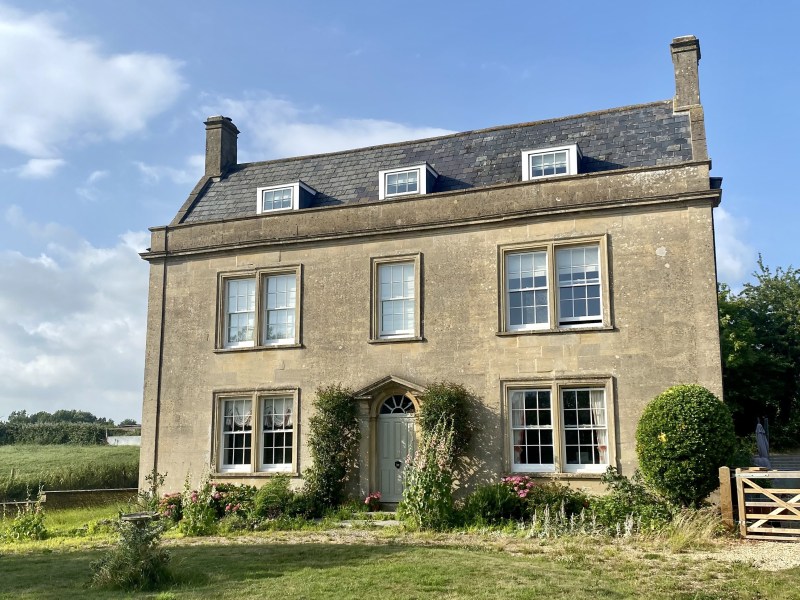
While others headed to the grander country house operas at Grange Park or Glyndebourne, we drove from the very bottom of south-west Dorset to south Somerset for an evening of music and words at Wyke House, an attractive Georgian farmhouse set in 7 acres of grounds in the village of Wyke Champflower, near Bruton.

Wyke House

A narrow winding lane dotted with helpful hand-painted signs directing us to “Opera” led to a couple of marshalls who directed us to a field to park the car. Crossing the lane, we were met by Poppy, chatelaine of Wyke House and host of the event, who suggested a sunny spot in front of the house where we might like to picnic. A quick ticket check and, glass of complementary fizz and programme in hand, we wended our way down a path mown through the grass to a dingly dell next to a lily pond where the first act would take place. A simple twisted branch arch and straw bales adorned with velvet cushions provided the set; nearby a quartet of musicians were settling in. The audience drifted in, chatting, laughing, some clutching already-opened bottles of Prosecco…. We assembled in this casual auditorium on straw bales, garden seating, picnic chairs….and the performance began.

Purcell’s ‘The Fairy Queen’ isn’t really an opera: this “Restoration spectacular” is an anonymous adaptation of Shakespeare’s A Midsummer Night’s Dream. Purcell’s didn’t actually set any of Shakespeare’s words to music but instead created a series of short masques for each act of the play. In this performance at Wyke House, poems were interspersed with the musical episodes, which in themselves created the sense of a modern masque.

The singers and musicians are all highly respected performers, who work with some of our leading ensembles (the Orchestra of the Age of Enlightenment, Scottish Opera, Glyndebourne Touring Opera, the Dunedin Consort, ENO, Garsington Opera, amongst others), and who specialise in Baroque and Classical repertoire. Performing outdoors can be challenging and a stiff breeze competed with musicians and singers in the first half, adding to the bucolic ambiance of the event. Impressive projection by all four singers ensured that almost every word was audible, and beautifully enunciated. There was also some very impressive ensemble singing between the four of them: the sweet, elegant voices of the two sopranos Amy Carson and Emily Vine melded wonderfully with tenor Thomas Hobbs, whose warm voice was complemented by Timothy Dickinson’s resonant bass.

A relaxed picnic interval on the lawn followed before we were directed to a different setting for the second part of the evening. Now lanterns and fairy lights garlanded branches of fruit trees, flares lit the path and braziers provided some additional warmth for those who had come without a blanket. Now the wind had dropped, and the smaller size of this pastoral ‘stage’ offered a charming intimacy for more musical and poetic delights.

This was an impressive and hugely enjoyable evening, undoubtedly enhanced not only by the superb performances but also the lovely rural setting and relaxed ambiance. From a practical point of view, it was also extremely well-organised: it was easy to purchase tickets online or on the door on the day, the carparking was easy and there were even proper loos. I know from my conversations with bass Timothy Dickinson that they have performed at Wyke House before and I do hope this becomes a regular venue: it’s a real gem for music and opera lovers in the west of England and is also a valuable platform to showcase performers based in this part of the world and to celebrate the musical talent we have here in the west.

Driving back to south Dorset, the almost-full moon lighting our way for the final part of our journey, we saw a hare, a barn owl and innumerable bats.

It seemed fitting in the year of the centenary of Claude Debussy’s death for the pianist Denis Kozhukhin to devote half of a concert to his music, and appropriate to include George Gershwin in the second half. Debussy was undoubtedly aware of – and influenced by –  American ragtime and jazz, and had an immense influence on Gershwin, and later jazz composers, including Duke Ellington, Bill Evans and Keith Jarrett. The ghost of the French composer haunts many of Gershwin’s works with their pungent harmonies, simple melodies and improvisations.

Never had Book 1 of Debussy’s Préludes seemed so languid, so laid back as in Kozhukhin’s hands: even the up-tempo pieces such as Le Vent dans la plaine and Ce qu’a vu le vent d’ouest, or the capricious La Danse de Puck had a relaxed suppleness which suggested music played not in a grand concert hall but rather late evening in a Parisian café with a glass of something before one. Danseuses de Delphes set the tone: this first Prelude had an erotic grace, a hint of naughtiness behind the direction Lent et grave (slow and serious). Voiles even more so: was this a boat gently rocking on water, its sails barely ruffled by a warm breeze, or perhaps diaphanous veils wafting in an altogether more sensuous scenario? Kozhukhin kept us guessing, lingering over Debussy’s intangible perfumed harmonies, subtly shading his colourful layers and textures, and highlighting the quirky rhythmic fragments which frequent these miniature jewels. His approach was concentrated and intense – the frigid stillness of Des pas sur la neige was almost exquisitely unbearable – but there was wit and playfulness too, Minstrels prancing cheekily across the keyboard to close the first half with an insouciant flourish.

Read full review here


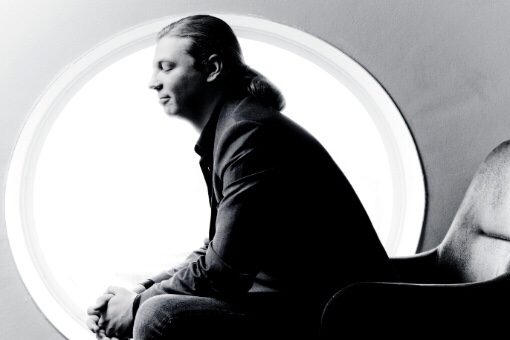
Artist photo: Marco Borggreve