
In this, the first in a new occasional series of articles on repertoire, pianist Daniel Tong introduces a chamber work with a fascinating “melting pot of cross-reference” which first captivated him as a teenager.
Mendelssohn’s Piano Trio, in C minor, Op. 66 was published in 1846 amidst illustrious company, dedicated to superstar violinist-composer Louis Spohr, premiered with another world-famous violinist Ferdinand David alongside the composer, and presented to Fanny Mendelssohn as a fortieth birthday present. It is a piece full of fire and passion, but also confession and intimacy. Although by no means rarely performed, for many years it has lain in the shadow of its lyrical predecessor in D minor from 1839, an audience favourite ever since Robert Schumann declared it the ‘master trio of the age’. But for me this C minor work is the more dynamic, challenging and multi-layered of the two, notwithstanding Mendelssohn’s low mood at the time: “Nothing seems good enough to me, and in fact neither does this trio”, he wrote to Spohr.
Artists can have a tendency towards the overly self-critical and certainly later composers seemed to agree with my more positive appraisal. Schumann paid homage to this work in his own final Trio from 1851, and Brahms also recalled it, both in his magnificent F minor Piano Sonata, Op. 5, and even more tellingly in the finale of his Op. 60 Piano Quartet. There is a world of allusion in Mendelssohn’s score, from Beethoven in the opening passagework to Chopin’s C♯ Minor Scherzo in the chorale section of the finale. I love this melting pot of cross-reference with Mendelssohn’s Trio at its centre; it is as if a whole host of composers are taking part every time we play the piece.
Indeed the piano trio itself was a medium rich in intertext and personal significance for Mendelssohn’s circle. The moment when it was written was particularly extraordinary: Felix was working on his trio during 1845, the year before Clara Schumann and Fanny Mendelssohn wrote their own Piano Trios. In 1847 Robert Schumann produced his first two trios, the first of which was obviously inspired by Mendelssohn’s 1839 Trio, as well as his wife’s work. I imagine them playing these pieces to one another alongside string player friends, each expressing enthusiasm, but also giving advice. There are many accounts of such meetings. And my mind travels further, imagining the feel of the old wooden-framed piano beneath the fingers of these four geniuses, the flicker of the fire in the grate, the starched collars of the men, cinched waists of the women, laughter and wine, because however much a work of art is set free to transcend its origins, these are works of a particular moment. One cannot play the Mendelssohn without the others in the room. Beethoven and Brahms too. Life, in those days, was precious; by the end of 1847, both Felix and Fanny Mendelssohn were dead.
The trio opens (Allegro energico e con fuoco) with swirling piano figures, whilst the strings play threatening, sustained chords. The whole movement tumbles forward with unstoppable momentum, new themes often beginning before the previous one has finished. The piano part alternates between demonic flashes of virtuosity and the simplicity of a chorale-like second theme, in a Faustian tussle, all achieved through a thematic development of which Beethoven would have been proud. There is a sublime, prayer-like oasis in the middle section, but the power of the minor tonality is in the end too much; the opening material first sneaks back in and then hammers the chorale into a desperate fortissimo before Mephistopheles leaves, slamming the door behind him. It is a movement of dramatic concision and pent-up energy that seems to mirror its composer’s mood and hint at the precarity of life, leaving you (literally, as a performer) breathless.
Next comes the movement that captivated me as a teenager, amongst the drama and pathos, a profoundly beautiful song without words, cast as a lilting sicilienne (Andante espressivo). Again Mendelssohn makes use, to beguiling effect, of overlapping phrases where the end of one is also the beginning of the next, but this time there is a disarming simplicity to the action, set in stanzas of three lines each. The middle section increases the tension and momentum as dark clouds pass, before the motion is carried into a reprise of the song, the piano turning arabesques with great delight whilst the singing strings develop their harmony as two soulmates who have experienced life together.
Third comes the scherzo, Molto allegro quasi presto, the three players ready to pounce like tigers, glancing at one another in adrenaline-fuelled anticipation. The violinist gives the merest hint of a nod and the strings are off, deft and fleet, my job initially to support their scurrying semiquavers with dark rumbles of harmony. Once the headlong flight is instigated it cannot be stopped; my hands dance around the keyboard in a complex choreography learned through painstaking repetition. The notes are too fast to devote conscious thought to each one at speed. The central trio section explodes with gleeful laughter, continuing the moto perpetuo without respite, even bursting back in when it has no right to, after the scherzo material has returned. Finally the movement retreats to the shadows with string pizzicatos, the audience let out their breath, often audibly, and we all wonder yet again just quite how we managed it.
Poised on the threshold of the finale, the narrative could still take many turns. Mendelssohn plunges us back into the stormy world of the opening movement with a galloping Allegro appassionato night-ride, the anguished phrases of the cello soaring above, but as in a good thriller, we are still unsure as to how the piece will conclude: will it be in tragedy, along the lines of Beethoven’s ‘Appassionata’ [Piano Sonata] or Brahms’s B Major Trio, or a more positive resolution? When the second theme arrives it recalls the chorale-like music of the first movement – Gretchen perhaps, to complete the Faustian trio of characters – but the masterstroke is still to come. In the central part of the movement, the music fragments and dissipates, as if exhausted or in mental turmoil. A true chorale now emerges, evolving from the Gretchen material that has its root in the first movement, pianissimo, pure and soothing. Initially this seems as if it may just be a typical contrasting episode, as the main themes of the movement re-assert themselves, but during the coda, as the music seems set to spiral into crazed oblivion, the chorale reappears, majestic and fortissimo, like a mighty archangel, to banish the darkness forever. The Trio ends in exalted triumph, hard won, but all the more joyous for it.
My London Bridge Trio, David Adams, Kate Gould and myself, are performing this piece three times in January: on 20th at the Assembly Rooms in Norwich, 22nd in Seaford, Devon, and on 23rd at Conway Hall in London.
Here is the first movement played by a previous incarnation of our trio, when Tamsin Waley-Cohen was violinist:
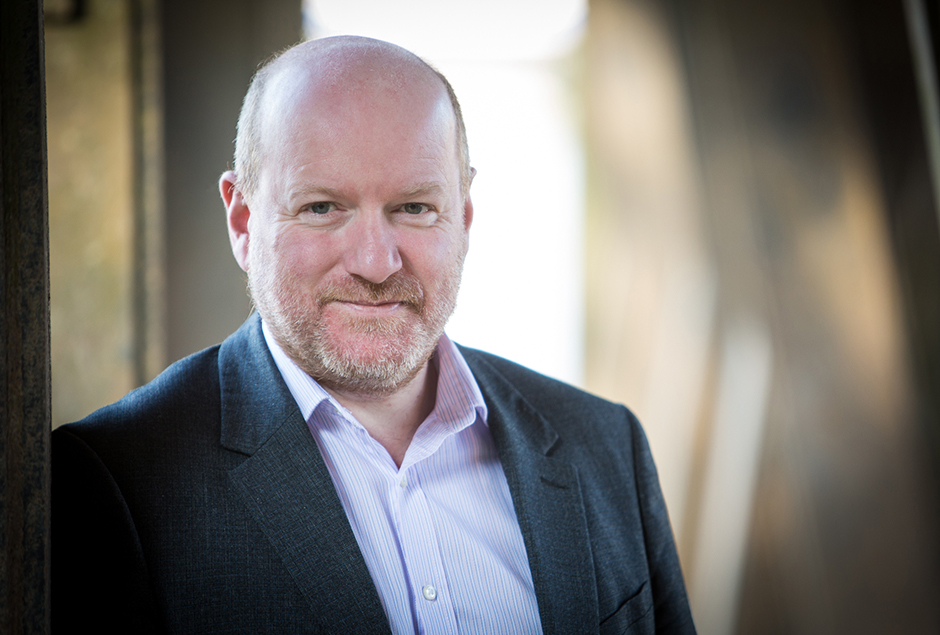 Pianist Daniel Tong enjoys a diverse musical life and is regarded as one of Britain’s most respected and probing artists. He performs as soloist and chamber musician, and directs two chamber music festivals, as well as teaching and writing. Born in Cornwall, Daniel first came to prominence as piano finalist in the BBC Young Musicians competition (more years ago than he cares to remember) and his life has subsequently embraced a rich variety of musical experience, from concerto performances at Kings Place and St Martin-in-the-Fields in London, chamber concerts at the Wigmore Hall and frequent broadcasts on BBC Radio, to a current role as Head of Piano in Chamber Music at the Royal Birmingham Conservatoire. He released his first solo CD of works by Schubert for the Quartz label in 2012 and has recently recorded the three Op. 10 Piano Sonatas by Beethoven for Resonus Classics, due for release in Spring 2022. Later next year he records piano works by Brahms for the same label. He also recorded short solo works by Frank Bridge for Dutton as part of a London Bridge Ensemble disc and broadcast Janacek’s piano sonata live on BBC Radio 3. He has appeared as concerto soloist at St Martin-in-the-Fields and King’s Place in London.
If you would like to contribute to the Repertoire in Focus series, please see this article for further information
This site is free to access and ad-free, and takes many hours to research, write, and maintain. If you find joy and value in what I do, please consider making a donation to support the continuance of this site





 The Cross-Eyed Pianist