Franz Schubert's eyeglasses on the manuscript of the song "Gretchen am Spinnrad", Schubert Museum, Vienna
Music journalist and author Jessica Duchen makes a passionate case for the music of Franz Schubert in a recent article on her blog.
I’ve had a lifelong fascination with Schubert’s music, from an LP of the ‘Unfinished’ Symphony in my parents’ record collection to hearing my father playing ‘The Shepherd on the Rock’ on his clarinet, and my own early explorations with the Impromptus as a teenage piano student, explorations which continue to fascinate me today. I think Jessica says it all – read her article here.
I was in London this week working with a group of young composers (http://lso.co.uk/composing). This has been a marvellous new initiative over the last few years from the education and outreach department of the London Symphony Orchestra. Basically, six young new composers are chosen every year to compose a short work for the orchestra. They are mentored through the year by the composer Colin Matthews. They regularly meet the players, some of whom give specialist workshops and instruction. I have seen and heard sessions on writing for viola, harp, percussion etc. The class also attend many orchestral rehearsals and concerts throughout the year too. They get to know the players.
Last year Colin had a sabbatical so I was asked to step in and do the mentoring. I met the young composers on various occasions to see how the music was developing and to discuss progress, touching on practical, technical, stylistic and aesthetical questions.
This year, was Colin was back, and I was asked to conduct the final workshop. This is open to the public and takes place at the wonderful St Luke Centre, the LSO’s new base near the Barbican. It was a fascinating insight into the new generation of composers. Most were British this year, but there was also a German and a Korean. Last year some of the composers came from Canada, South Africa and Armenia.
There is no single style or approach discernible, but I have noticed that they are not afraid of writing fast music! It may seem strange to say this, but 30 years ago when I was their age, many of us found it difficult to write fast music. The general pulse was slow, but each beat seemed to be filled with frantic activity. I think we thought it was old-fashioned to write fast music, and the connections between rhythm and harmony seemed broken so long ago that we felt lost as to whether music should have ‘direction’ and ‘aim.’
Not so nowadays with the young. Some felt that the reason for this might have been the influence of minimalism over the last three decades, or perhaps the openness to popular culture. There is certainly less self-consciousness now with harmony and a sense of drama, which may have been off-bounds for composers in the previous generation, more in thrall to the ideological experiments of ‘modernism’.
Anyway, it was intriguing to hear the contributions on all of this from the composers, the players and those who turned up to hear the works being rehearsed and dissected. The place was full of composers! Many were from the London colleges who may have been friends and associates of the chosen group. Their teachers were present, including Julian Anderson and Simon Bainbridge.
I know that this kind of project is taking off all over the country. It helps young composers immensely, and introduces others to the kind of thinking that goes on in the minds of musical creators today. Long may it continue.
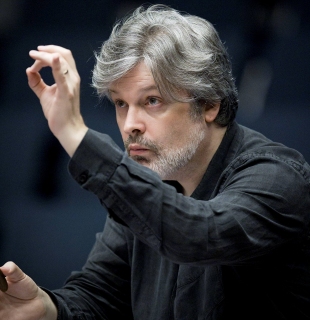
James MacMillan is one of today’s most successful living composers and is also internationally active as a conductor. His musical language is flooded with influences from his Scottish heritage, Catholic faith, social conscience and close connection with Celtic folk music, blended with influences from Far Eastern, Scandinavian and Eastern European music. His major works include percussion concerto Veni, Veni, Emmanuel, which has received more than 400 performances, a cello concerto for Mstislav Rostropovich, large scale choral-orchestral work Quickening, and three symphonies. Recent major works include his St John Passion, co-commissioned by the London Symphony Orchestra, Concertgebouw Orchestra, Boston Symphony and Rundfunkchor Berlin, and his Violin Concerto, co-commissioned by the London Symphony Orchestra, Philadelphia Orchestra, Concertgebouw Zaterdag Matinee and the Ensemble Orchestral de Paris.
Who was the busiest conductor in 2011? Who was the most performer composer? How is opera faring, despite the high price of tickets? What were the most performed works in 2011? Find out the answers to these questions – and lots more – on Bachtrack’s Concert and Opera League Tables
2012 is the 150th anniversary of the birth of Claude-Achille Debussy (22 August 1862–25 March 1918), and, all being well, there will be plenty of performances of his fabulous music to celebrate the occasion.
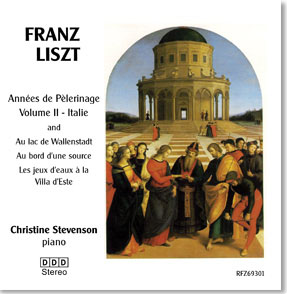
2011 was of course Franz Liszt’s year, but despite many fine performances to mark the occasion (a couple of which I was fortunate enough to attend – reviews here and here), I suspect the case for Liszt still needs pleading (not something Debussy need worry about, given the perennial popularity of his music). Much of Liszt’s music remains obscure or impenetrable, or simply totally ‘over the top’ to many listeners and performers, and a common misconception remains that much of his music is unplayable, except by top flight virtuosi.
Not so the music of Debussy, which is accessible and generally easy on the ear, and which can be enjoyed by the proficient amateur as well as the professional musician. I can’t remember how old I was when I first heard Debussy’s music: I suspect it may have been a recording of La Mer, a richly evocative piece completed in 1905, after the composer enjoyed a stay at the English seaside resort of Eastbourne. The first piano piece by Debussy I learnt was a simplified version of the languorous Prélude ‘La fille aux cheveux de lin’ (‘the girl with the flaxen hair’); my father and I also played a clarinet and piano version of this, and later I learnt the original piano version. In my teens, I learnt another of the Préludes, ‘La cathédrale engloutie’ (‘the submerged cathedral’), in which the composer evokes the ancient Breton legend of the cathedral of Ys, which was said to rise from the waves, with its bells tolling, priests chanting, and the organ playing. Subsequently, I’ve dabbled with other Préludes, some of Children’s Corner, and the first two movements of the suite Pour le Piano. This year I’ll be learning more, probably the Hommage à Rameau, more Préludes, and the Valse Romantique.
Together with Maurice Ravel, Debussy is considered to be one of the most prominent figures in the “impressionistic” movement, though he himself disliked the term intensely when applied to his compositions. It is too sweeping a term, making a strong connection with Impressionist painters such as Claude Monet (the Dover editions of Debussy’s piano music have reproductions of paintings by Monet on their covers), and suggesting that Debussy’s music is all about blurred edges and misty harmonies. In a letter from 1908, Debussy described his music as being “an effect of reality”. His musical influences and style are far wider, and his early music demonstrates his interest in the Symbolist movement of art and literature with its dreamy, often morbid romanticism. Already, he was experimenting with harmonic colour, the use of whole-tone scales, and a move away from strictly classical forms of musical construction towards music with a single, continuous theme.
At times, he seems the natural heir to Chopin, with his sensitive approach to melody, filigree passagework and articulation, and fioriture, and his music bridges the gap between the Romantic period and the twentieth-century. In other works, he looks back to ancient music such as Gregorian chant, or East to Javanese gamelan music. In Pour le Piano, he makes direct reference to his French Baroque antecedents in both the organisation and style of the material. His two books of Préludes are related to Bach’s and Chopin’s, but they are impressionistic tone poems, their titles suggesting literary or artistic stimuli. Each is complete within its itself, but by including the title at the end of the piece, Debussy implied a “story” within the music. Meanwhile, his Prélude à l’après midi d’un faune is a revolutionary work, both in style and execution, perhaps the first piece of truly ‘modern’ music, and demonstrating the key features of his music: uncertain or parallel harmonies, unprepared modulations which lack a harmonic ‘bridge’, the use of harmony and chord progressions for colour and timbre, and the use of whole-tone and pentatonic scales.
Debussy is regarded as one of the most influential composers of the twentieth century. His use of harmony had a direct influence on composers such as Ravel, Stravinsky, Bartok, Messiaen, Boulez, as well as the minimalist composers Steve Reich, Philip Glass and Toru Takemitsu, and jazz musicians including George Gershwin, Bill Evans and George Shearing.
Today, in performance, his piano music in particular seems to “suffer” occasionally from too impressionistic a reading: there is a misconception that all his music is dreamy, fluid and gentle. It was, compared to the style prevailing at the time of its composition, but we have almost gone too far now. In any event, I am sure we can look forward to plenty of varied performances this year.
I expect everyone has their favourite works by Debussy. I list a handful of my own here:
La plus que Lente (literally “as slow as can be”). A decadent, tender and languorous cocktail waltz, full of subtle ambiguities and sly ironies.
Images: the Piano Music of Claude Debussy – Paul Roberts (Amadeus Press)
The Piano Works of Claude Debussy – E. Robert Schmitz (Dover Publications)
Debussy at the Piano – interesting website with accounts describing Debussy as a pianist. Some useful insights into his playing style and how he wanted his piano music to be played.
Playing Debussy’s Piano Works – website by an amateur pianist with playing notes and analysis of many of Debussy’s piano music.
Notes from a Pianist – pianist and blogger Christine Stevenson will be writing about Debussy this year, following on from her journey through the music of Franz Liszt in 2011
The Cross-Eyed Pianist is free to access and ad-free, and takes many hours every month to research, write, and maintain.
If you find joy and value in what I do, please consider making a donation to support the continuance of the site