DanTong7423

Who or what inspired you to take up the piano, and make it your career?

Neither of my parents are musicians but there was always music in the house. My mother made tapes for me of Rubinstein or the Cortot/Thibaut/Casals trio and I fell in love with the music and these wonderful artists who were so full of love in their playing. I’ve kept that with me throughout my life as an ideal of what music is all about. My elder brother is also a concert pianist and, growing up, I always had someone to keep up with! I remember quite clearly deciding that I wanted to spend my life with the piano – when I was about twelve or thirteen.

Who or what were the most important influences on your playing? 

I was lucky to have wonderful piano teachers who were all very different. Hilary Coates at school and then Irina Zaritskaya and Paul Roberts at music college in London. Gyorgy Sebok and Andras Keller subsequently made a big impact when I played to them. But really, I am constantly being influenced by concerts that I attend, books that I read, interviews I hear (most recently a wonderful hour with Nikolaus Harnoncourt) and, perhaps more than anything, the wonderful musical colleagues with whom I’m fortunate enough to spend my life. I have grown up with some of the most inspiring and intelligent artists around, many of whom have remained close friends. A lot of us get together annually in January in the Wye Valley.

What have been the greatest challenges of your career so far? 

Life as a musician is one of constant challenges. You are put in charge of some of the greatest works of art in the world and must do your best not to damage them and show them in their best light. Long periods of concerts, one after another, can take a physical toll and it can occasionally be a gruelling existence, finding more and more mental and physical strength from somewhere for each performance. Of course, the pay off is that we spend our lives with the most sublime music, visit many places and meet many interesting and wonderful people. The greatest specific challenges have been keeping my festival (now in its fifteenth year) and London Bridge Ensemble alive, dynamic and creative over so many years.

Which performances/recordings are you most proud of?

I am hardly ever proud of recordings. Listening to yourself on a cd is a trying thing! Still, I think some of my discs with the London Bridge Ensemble just about pass the test; the Bridge piano quintet, Schumann’s Liederkreis op 24 and, most recently, Faure’s C minor piano quintet. In terms of concerts, I was proud of recent performances of Schumann’s C major Fantasy and Mozart’s C minor Fantasy. I am always particularly proud of performances that are acceptable, if broadcast live. This is always a nerve-wracking experience. I find microphones off-putting and they have an unwanted psychological effect that is hard to shake off. I recently stumbled across a tape of myself playing the Berg Op 1 piano sonata when I was sixteen years old. It became clear that I was pretty good when I was sixteen!

Do you have a favourite concert venue to perform in? 

The Great Room in Treowen Manor, home of my chamber music festival each January in the Wye Valley. It’s bursting at the seams with eighty people, many of whom are musical colleagues and there’s always a crackling log fire. Otherwise St Georges in Bristol and the Wigmore Hall in London. I’ve also recently been asked to curate a couple of projects at Kings Place in London, which is a fantastic venue for chamber music.

Favourite pieces to perform? Listen to? 

I always love performing Mozart’s E flat Piano Quartet, Beethoven’s ‘Archduke’ Trio, Janacek’s Piano Sonata and Schubert’s last Piano Sonata. Those of you who know all of these pieces (especially the three Viennese ones) will notice a certain shared temperament between them which probably says something about my character! I love listening to opera. I always return to Mozart and Britten, but Debussy’s Pelleas and Tchaikovsky’s Onegin are particular favourites.

Who are your favourite musicians? 

Alfred Cortot, Adolf Busch, Bela Bartok, Gerard Souzay. Ask me again tomorrow and the answers will be different. One cannot just live off the music-making of the past, though. I have been to wonderful concerts by Quatuor Mosaiques, Radu Lupu and Miklos Perenyi/Andras Schiff. The last, magical Susanna (Figaro) I saw was Aleksandra Kurzak. I always fall in love with Melisande, no matter who is singing.

What is your most memorable concert experience? 

Playing nearly a complete movement of Dvorak’s E flat Piano Quartet in the dark and from memory after the lights failed. I don’t know how we did it but it won us the biggest round of applause of the season! Playing Schumann’s Dichterliebe when both pianist and singer had just been jilted by the fairer sex. Poignant and painful, although I’m sure we were never better method actors! Hearing the first movement of Beethoven’s ‘Harp’ Quartet at a friend’s wedding.

What do you consider to be the most important ideas and concepts to impart to aspiring musicians? 

If you don’t love music unconditionally then it’s not the job for you.

There’s always more to learn. Be an avid student and have respect for the musicians of the past as well as the present.

Forget your instrument – it’s just a means to an end.

Every note means something.

Always be open. Nothing kills music more quickly than dogma.

Music doesn’t speak for itself. It speaks through us, the performers.

Tell us more about Beethoven Plus! 

It’s a very exciting project with violinist Krysia Osostowicz, based on the ten Beethoven Sonatas for violin and piano. We commissioned a new piece to partner each sonata, all written by different composers as their reaction to the Beethoven work in question. We have some great composers involved including David Matthews, Jonathan Dove, Matthew Taylor, Kurt Schwertsik and Judith Bingham. Beethoven is still such an important and influential figure, even for today’s composers (when we have approached them with the idea, enthusiasm has been immediate). It’s always rewarding and great fun to work with Krysia. She’s a wonderful artist, an eternal student, despite her huge experience with Domus, performing and recording sonatas, most notably with Susan Tomes, and latterly as leader of the Dante Quartet. 

What is your idea of perfect happiness? 

Being with someone you love, after a great performance of one of Mozart’s Da Ponte  operas, just as you open a very nice bottle of red wine.

What do you enjoy doing most? 

Watching cricket.

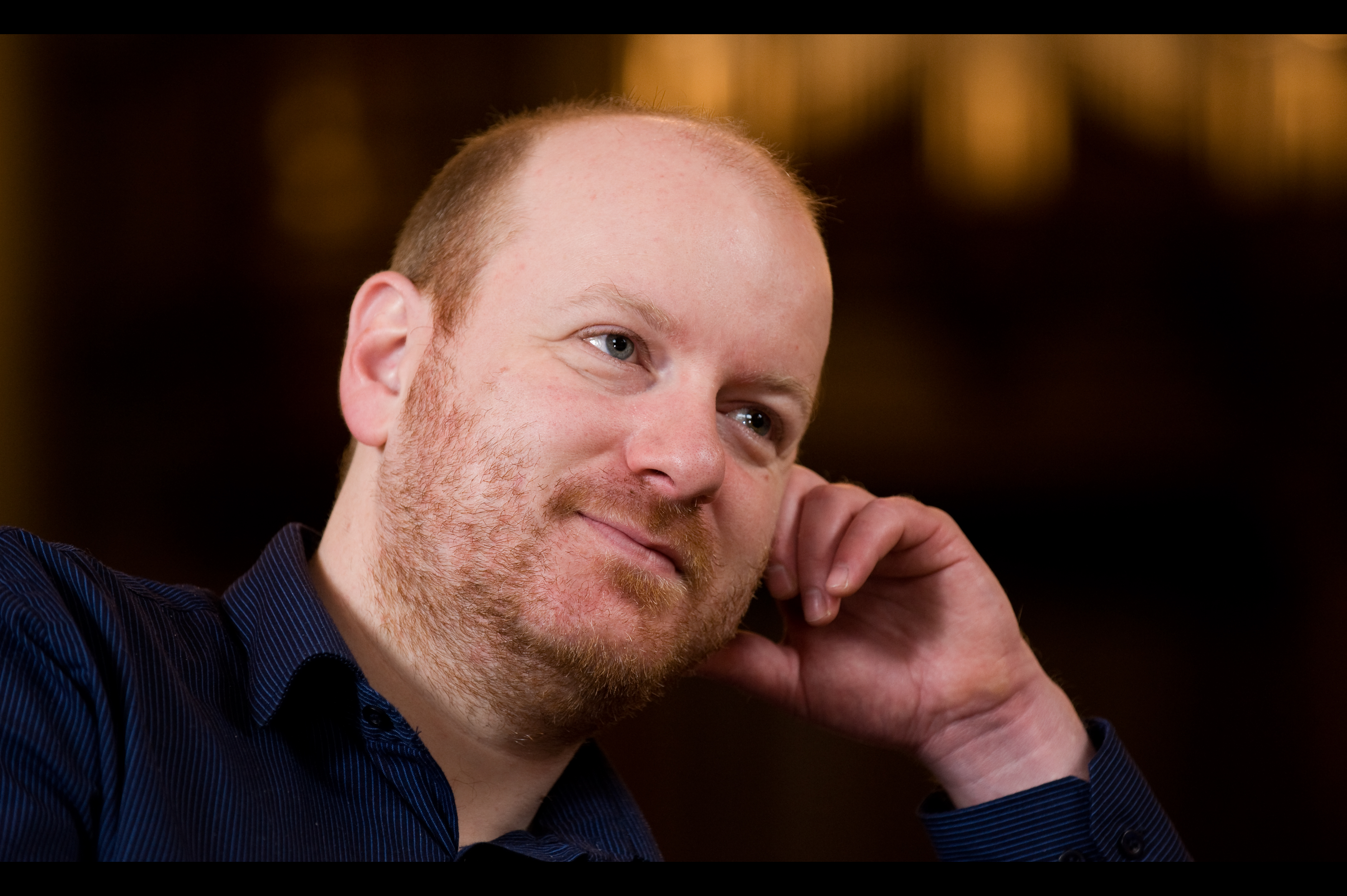
Daniel Tong was born in Cornwall and studied in London, where he now lives. His musical life is spent performing as soloist and chamber musician, as well as directing two chamber music festivals, teaching and occasionally writing. Outside the UK he has performed in Sweden, France, Belgium and Portugal. He has recently released his first solo CD of works by Schubert for the Quartz label. He also recorded short solo works by Frank Bridge for Dutton as part of a London Bridge Ensemble disc and broadcast Janacek’s piano sonata live on BBC Radio 3.

Full biography here

A new website has been launched by Jovan Haji-Djurich, a student of Kemal Gekic and his studio teaching assistant for 2 years at the Florida International University, Miami FL. Prior to studying with Kemal, Jovan worked worked with Alan Fraser (The Craft of Piano Playing Method) for several years.

Here Jovan introduces his new project:

It’s a subscription based website/service where awesome piano teachers like Alan or Kemal Gekic get to upload their teaching videos, masterclasses for other pianists to watch and they get paid for it.

Some of the core features are:

  • Up to 70% of the money collected from subscription fees gets used to pay the teachers.
  • Teachers are paid by the number of cumulative video views at the end of the month.
  • Various algorithms prevent misuse by the students and teachers as well. For example, a teacher can not create views on his own videos…etc
  • I developed a a unique ‘cost per view’ mechanism, which determines a cost of a single lesson view based on the number of total users, lessons, and total number of lesson views.

I built it myself using latest web technologies. I felt the need to share Alan’s, Kemal’s, or any great teacher’s teaching videos to the general public. How often can we afford to travel and play for a really good teacher. Or even just observe their masterclasses.

Head over to www.pianotechnique.org to find out more.

feat-800x357

A guest post by James Holden

I am not practising but playing the piano.

It has not always been like this. I was younger once and like all pupils would be given my notes on how to play the notes. I would each week be handed a few handwritten, barely legible lines marking out my teacher’s expectations for the coming week: a list of scales to perfect, contrary motion; the names of the pieces to work up.

I am older now. I no longer have to decipher any comments or reach any point by a particular time. I no longer have to worry that my lack of practice will show. I’m not working towards any exams. I’m not studying for a GCSE or A Level. I’m certainly not building up to my Grade 6, Grade 7 or Grade 8. I’ve not had to pick any pieces from List A; I’ve not even looked at List B. And I’m definitely not looking forward to any concert performance.

I am older now and I no longer practise the piano. It’s not practice because I’m not practising the piano for anything. I’m not practising a work in readiness for some point in the future when I’ll finally be asked to play it, when I’ll be asked to perform it, when I’ll be marked, given a merit or a distinction or not. I’m not setting aside time at the keyboard now against some prospective moment. I’m not preparing for anything. No, I’m not practising but just playing the piano.

The difference is one of quality. It is a difference that I can feel in every note, even the wrong ones. I’m not practising the piano, I’m just playing it and that playing belongs entirely to this present moment, this instant as I press down each key. This is it; it’s happening now and not in some future time of a potential recital. It belongs entirely to me, even and especially when I play not the right notes but the wrong ones.

It is an experience that as well as being more immediate in time is also now closer in space. It is nearer to me. The playing begins and ends with me at the piano. There is no inevitable audience. I’m not playing to the upper circle or to any icy examiner but for myself.

The difference between practice and play is also one of quantity. I play the piano far more now than I ever did when I was younger. I play every day when I’m at home. And when I’m not playing the instrument I’m listening to recordings of other people playing it. The piano is no longer a distraction but the thing from which I’m distracted.

And with this increased quantity of time at the keyboard has come an increased quantity – or at least variety – of music on the stand. The difference between practice and play has been for me a greater freedom to choose any piece I want, from any List, A or B, any piece by Liszt or otherwise, from the most simple to those that remain beyond me at the moment, and may well always stay out of reach. It is equally a greater freedom not to choose certain pieces and to abandon any work I want. If I find a work unrewarding (which is different to finding it difficult) I can simply take the music down and put it away without any sense of failure. There is no longer any merit or distinction in playing something that more than challenging me is making me unhappy.

This playing still does not come easy. I’m only moderately competent at the piano. I still have to work out which note is which when there are multiple leger lines. I still have to work hard to eliminate those wrong notes which multiply themselves across the keyboard. And I still patiently have to work my way through complex passages hands separately first and then hands together after, counting in my head as I go, one and two and… getting a feel for the cantabile melody line before adding the accompaniment.

And yet for all these difficulties it is still a joyful and intensely rewarding experience. And so I would recommend that everyone diligently practise the piano and then whenever possible also make time just to play it as well.

© James Holden 2014

Dr James Holden was born in Ashford and educated at Loughborough University. He graduated with his PhD in 2007. He is the author of, amongst other things, In Search of Vinteuil: Music, Literature and a Self Regained (Sussex Academic Press, 2010). His website is www.culturalwriter.co.uk and he posts on Twitter as @CulturalWriter


Who or what inspired you to take up composing, and make it your career? 

It wasn’t an instantaneous decision. More like a big hole that I fell into – ha ha! In studying an Arts degree with a music component, I became more interested in composing, having heard some student concerts. I though “I could do that”. In fact I had been composing throughout my teen years, but never thought it to be a ‘proper’ activity. Playing Beethoven was the serious thing to do. I won a couple of composition competitions in my early 20s and decided to ‘give it a shot’ after that. Having said that, it has been a long pursuit full of considerable heartache at times. There have been some points of wanting to ‘throw in the towel’ but I have persisted and I’m glad I’ve done so.

Who or what were the most significant influences on your musical life and career as a composer? 

A few personalities here. Firstly, Peter Sculthorpe heard some of my music at a very fledgling stage and said “keep going”. Those two words from someone as influential as Peter meant an awful lot. Later I studied with him and it was as fascinating process. I’ve also had tremendous support from Ross Edwards – never strictly a teacher but more a friend and mentor and someone I’ve looked up to over the years. My good friends and fellow composers, Matthew Hindson and Stuart Greenbaum, have helped me a lot too. We give each other feedback about new works and develop a sense of trust and mutual support.

What have been the greatest challenges of your career so far? 

There was a point in my early 30s, when I had finished a period of scholarship study in London and returned to Australia when opportunities dried up. This was a moment of crisis, wondering if I would have to re-evaluate things. Things changed again when I won a major international composition award. I guess you can never know what is around the corner and that is a big challenge!

What are the special challenges/pleasures of working on a commissioned piece? What are the special challenges/pleasures of working with particular musicians, singers, ensembles and orchestras.

The knowledge of the opportunity at the other end, especially when working with a major symphony orchestra or the level of musicians that I have been able to work with of late. That provides both challenges and pleasures – you want to do your absolute best for them and for yourself. There is a lot of pressure to deliver your best piece every time. The technicalities of writing for large forces alone are huge. Commissions help, of course, in giving you enough of a fee and an impetus to get a new work up and running. I have only probably written one or two non-commissioned works in the last decade.

Which works are you most proud of?  

Ha ha – they are all my little children in a way! But over time you realise that some pieces stand out. I think my Second String Quartet stands up pretty well. Two orchestral works – my Fantasia on a Theme of Vaughan Williams and Machinations are, having heard them a few times now, strong essays in music for large forces. Some of my choral works get performed quite a bit, and it may be those pieces that last the distance.

Do you have a favourite concert venue? 

Not the Sydney Opera House, I’m afraid. Beautiful piece of sculpture – problematic inside space! I really like the Adelaide Town Hall for its balance of clarity and warmth, and in Sydney the City Recital Hall is terrific for its clarity. Melbourne Recital Centre is also outstanding in music for small forces. I’ve conducted a concert in the Taiwan National Concert Hall, and that is probably the best concert space I have been in so far!

Who are your favourite musicians/composers? 

I’m a big fan of early music and tend to listen a lot to the likes of Palestrina, Victoria and Monteverdi. Stravinsky is a real hero of mine, and of late I have been impressed by the modern Brits from Birtwistle through to Adés.

What is your most memorable concert experience?

Probably two of these which both happened at the National Music Camp, hosted by the Australian Youth Orchestra – the first was a performance of an early String Quartet when I was in my 20s. The response from the audience and the really terrific performance was a huge shot in the arm. And another was a performance of a chamber orchestra piece while I was on the staff at the same camp some 18 years later, when the yelling and screaming from the audience brought on an encore performance. Not sure that will ever happen again!

What do you consider to be the most important ideas and concepts to impart to aspiring musicians? 

Patience, inner resolve. Obsession with music as a living entity and a tradition – realising that you are a part of something bigger and that it is a tremendous privilege to be involved in making music.

What are you working on at the moment? 

A new dramatic cantata called “Jandamarra: Sing for the Country”. It’s a choral/dramatic work for the SSO in collaboration with Gondwana Choirs and members of an indigenous community from the Kimberley in Western Australia.

What is your idea of perfect happiness?

Having a proper break, not having to worry about deadlines, and enjoying the company of friends and family.

What do you enjoy doing most? 

Swimming in the surf. Enjoying a really good glass of red. Probably not simultaneously…

Paul Stanhope (b. 1969) is recognised as a leading composer of his generation not only in Australia but internationally with prominent performances of his works in the UK, Europe, Japan, and both North and South America. After studies with Andrew Ford, Andrew Schultz and Peter Sculthorpe, Paul was awarded the Charles Mackerras Scholarship which enabled him to study for a time at the Guildhall School of Music in London.

He writes: “My music presents the listener with an optimistic, personal geography . . . whether this is a reaction to the elemental aspects of the universe or the throbbing energy of the inner-city”.

In May 2004 Paul’s international standing was confirmed when he was awarded first place in the prestigious Toru Takemitsu Composition Prize. In 2011 he was awarded two APRA/Australian Music Centre Awards for Instrumental Work of the Year and Vocal/Choral Piece of the Year and in 2012 was again a finalist for the Instrumental Work of the Year. Paul is also the recipient of a Sidney Myer Creative Fellowship for 2013-2014 – the first Australian composer to be granted this honour. In 2010 Paul was Musica Viva’s featured composer: his String Quartet No. 2 received nation-wide performances by the Pavel Haas Quartet as part of this season as did his Agnus Dei – After the Fire for violin and piano, performed by the stellar duo Alina Ibragimova and Cédric Tiberghien. Other choral and chamber works received national tours by the Choir of Trinity College, Cambridge and the Atos Piano Trio from Berlin. Paul’s music has also been featured at the Vale of Glamorgan Festival by the BBC National Orchestra of Wales in 2009 and also at the City of London Festival in 2011.

Recent works include his Piccolo Concerto (2013), premiered by the Melbourne Symphony Orchestra and subsequently performed by the Adelaide and Tasmanian Symphony Orchestras, The Magic Island (2012) commissioned by the Hush Music Foundation which was recorded and premiered by the Tasmanian Symphony Orchestra, Qinoth (2011) written for the Australian Chamber Orchestra and Exile Lamentations (2007-2011) a cantata written for soloists, choir and the virtuosic talents of oud master Joseph Tawadros.

Forthcoming works include a large choral-orchestral cantata about the life and deeds of Western Australian indigenous hero Jandamarra written together with librettist Steve Hawke as well as a new piece for string quartet.

Paul Stanhope teaches composition part-time at the Sydney Conservatorium of Music.


