Programme for Wieniawski’s concert, 26 June 1891 ©Cambridge University Library

The musician as promoter – by which I mean one who organises and promotes concerts – is nothing new and there are historical precedents in the activities of Handel and Mozart, for example, who both organised their own subscription concerts. As the musician became elevated to celebrity status so the role of the “impresario” became more important: one who talent-spotted, and organised and financed concerts. Famous impresarios have included Thomas Beecham, Richard d’Oyly Carte and Sol Hurok (who managed, amongst many others Ashkenazy, Gilels, Richter, Rostropovich, Pavlova and Segovia). But today the impresario has largely been superseded (with a few notable exceptions such as Simon Cowell whose role as a “creator” and promoter of new pop stars is, frankly, questionable…..) as musicians have taken over the responsibility of organising and promoting concerts themselves.

There are practical reasons for doing this, perhaps the most obvious being financial, as an independent promoter or impresario will take a percentage of the concert’s income. Musicians I spoke to in the course of researching this article also highlighted a need to remain in control of all aspects of the concert, from hiring the venue to deciding what should form the programme. Composer, singer and crossover musician Clio Em says “the positives include carrying out one’s artistic vision fully and collaborating with the musicians you yourself choose to worth with“, but she also cites social media, marketing and communication with the venue as potential admin headaches. A paid promoter or impresario will take on these administrative roles, liaise with and pay the venue hire, organise marketing and ticket sales and so forth, leaving the musician to concentrate on the music……But in return for this, the musician may be required to play a particular programme to please promoter/venue/audience.

Here is violinist Beatrice Philips who runs Lewes Chamber Music Festival, on the administrative aspects or creating and promoting concerts: “I find that it is important for me to separate my performing state of mind from my “organising a Festival” state of mind……………in the end, having created the programmes and chosen the performers, there comes a deluge of ‘non-musical’ things to deal with in order to make it happen which require a totally different part of the brain.”

Terry Lowry, composer, conductor and pianist, says: “Being responsible for concert promotion has been a strong positive for me.  Knowing how to promote an event myself makes it easier to help venues and presenters who are trying to promote a concert for me be effective.  It also forces me to stay in contact with my audience, which – while I enjoy this part very much – doesn’t come naturally to me.  I think pianists and composers become pianists and composers because they are very comfortable being alone.  Concert promotion forces me to interact in ways that are both effective and personally rewarding.”

Double-bassist Heather Bird says: If nothing else it has given me a greater insight and appreciation of what goes on behind the scenes in putting on gigs. And there’s nothing more satisfying than putting on a successful night that you’ve thought of, fixed, found the venue for, sorted out the tech specs, promoted and played in and watching people enjoying listening to and performing in the gig.”

Pianist Emmanuel Vass says: Art doesn’t pay my mortgage, unfortunately. If I want people to buy into what I do, it has to have an element of “consumer” or “product” orientation. Part of being a product = marketing. Otherwise, you’re just art on the shelf, which consumers will rarely want to automatically buy.

Today the world of classical music is extremely competitive which means one constantly needs to find new and creative ways to attract and engage audiences. Not many musicians, especially young musicians who are just embarking on a professional career, can afford to pay for a specialist promoter, and so putting on and promoting their own concerts, either singly or in collaboration with other colleagues, is the way forward. At London’s Trinity-Laban Conservatoire of Music and Dance, the BMus degree course includes a module called ‘Engaging Audiences’ which encourages students to consider how to market themselves, create effective promotional materials and think about their own ‘brand’ – i.e. who they are as an artist. This gets students thinking more commercially before they have left the relative comfort of the conservatoire, and a number of Trinity students who are friends of mine have been busy organising and performing in their own concerts in the years prior to graduation. As one student at Trinity-Laban said to me: “You can’t sit back and expect things to happen: musicians need to play an active role in promoting themselves and making things happen!”

A number of people whom I spoke to in the course of researching this article cite retaining control and giving free rein to their own artistic vision as important aspects of being one’s own promoter. Pianist Jeremy Young, artistic director of Alfriston Summer Music Festival, says: “I have a wonderful freedom to programme concerts that are intellectually stimulating and perhaps more daring than other concert promoters might be. Of course, my festival will not be successful if I don’t provide a broad scope of experience for the audience but now that I have built up a loyal audience I sense their hunger for new things and feel less need to consistently programme ‘classical favourites’. Of course, there is still an appetite for that too by both the artists and the audience…………I feel as intrinsically linked to artistic directorship as I do to playing the piano these days and my position as Head of Chamber Music at the RNCM also gives me opportunity to be educationally creative on behalf of the students.”.

The musician as promoter can also enjoy a special relationship with the audience, especially if one organises a regular series of concerts or an annual festival which gives one the opportunity to get to know one’s audience and build loyalty. This has several benefits: an element of familiarity and “trust” is established between performers and audience, which in turn can allow performers the artistic freedom to create more adventurous formats or experimental programmes which may include contemporary music or new commissions.

Pianist Daniel Tong, whose activities include Wye Valley Chamber Festival and a chamber festival based in Winchester, says: “I do see it as a natural extension of artistic directorship to come up with a concept and take ownership of it. To put one’s own stamp upon a concert, festival or series and help to shape it. Often these are the most personal and meaningful concert experiences. I think of my own festival in the Wye Valley, where we have built up a real rapport between artists and audience over the years…… That festival has always had a real family atmosphere, welcoming ambience and this, I am convinced, has in turn fostered a really creative and supportive spirit amongst the musicians. Some of the best performances I have heard have taken place down there……. Having musicians involved in the running of their events also means that some practical issues are understood more intimately. On the one hand, they know what it takes to create the right conditions and atmosphere for musicians and can pass this on to fellow organisers. Conversely, it introduces us to the kinds of details of which we are not always aware – how to publicise and promote, as well as how to look after an audience. We understand the business better and perhaps then sympathise and empathise more with those in administrative roles.”

For all musicians the desire to create, communicate and share music is (or should be) at the foundation of what we do, and organising concerts can be a wonderful way of expressing this desire while also controlling the environment and manner in which we present our music. Of course, practicalities include venue hire, marketing, ticket sales and front of house activities. When one retains responsibility for all these things, the admin and organisational aspects can be migraine-inducing, especially anxieties about selling enough tickets to cover one’s costs. In my experience of co-organsing the South London Concert Series we have had a couple of occasions when ticket sales have been very slow and this definitely creates stress. However, the satisfaction of organising our own concerts, working with musician friends and colleagues, and creating a friendly and convivial atmosphere in which to share music in some of London’s most beautiful and unusual venues outweighs the anxiety. This way of working makes our artform more democratic and, hopefully, brings classical music to a wider audience by making it more accessible. Ultimately, the music benefits – but also the musicians, the audience and the venue.

©Frances Wilson 2015
Who or what inspired you to take up composing, and pursue a career in music? 

In my late teenage years I’d dropped out of school and was working in a dull office job in London, but also playing keyboards in a rock band and having piano lessons. My piano teacher was also a composer, and one day I sat down and wrote a piano piece and immediately I knew that this was what I wanted to do with my life – write music. It was very much a ‘Road to Damascus’ moment. After that things changed completely and I went to university and music college for the next seven years to catch up on the training I’d missed.

Who or what were the most significant influences on your musical life and career as a composer? 

All my composition teachers taught me useful things, but my lessons with Oliver Knussen were especially helpful. I studied with him privately for a couple of years. He’d put the music up on the piano and play it whilst scribbling alterations and improvements. It was very practical, and great to be around a musical mind with so much to offer.

What have been the greatest challenges of your career so far?

Developing a musical language that is coherent and expressive. It’s been a slow journey for me, from atonal composing through to a style that is tonal/modal. I see music as about communication (what else can the arts be?) and for that one needs clarity of images and ideas; through this one reaches towards the strangeness that lies beyond our quotidian existence. As Paul Valéry once wrote “what is there more mysterious than clarity?”. I think that’ll go on my gravestone.

What are the special challenges/pleasures of working on a commissioned piece? 

The pleasures are being paid to write it and having a performance at the end. The challenge is the deadline. I compose very slowly, almost every day for hours but only producing a few bars of music each week. I sometimes prefer to write pieces without a commission because they can develop at their own speed.

What are the special challenges/pleasures of working with particular musicians, singers, ensembles and orchestras? 

Working with orchestras and ensembles is incredibly exciting but there’s always limited rehearsal time, which can be frustrating. Because of this I particularly like working with soloists, especially keyboard players and guitarists as their instruments are capable of doing so much. I’ve written quite a lot of music for piano (and harpsichord) and had some fantastic performances where the players have really taken the time to get inside the music. Giving a pianist some music is like handing over a novel, they can immerse themselves in it in their own time and space.

Which works are you most proud of?  

Probably the pieces that reflect a temporary cohesion of my musical language at a given moment, in whatever guise that language presents itself. These would include the early orchestral piece Invisible Cites, the tango Milonga Azure, the White Books for piano, and recently Beyond the River God for harpsichord, and others.

Who are your favourite musicians/composers?

Bach, Couperin, Stravinsky, Debussy, Mozart, Ravel, to name just a few.

What is your most memorable concert experience? 

It’s impossible to pick one as there have been many memorable concerts, in a generally terrifying way; first performances in particular are always nervy experiences. One of the most unusual performances, although it wasn’t a concert, was when an orchestral piece of mine was used as the modern test piece in the last Leeds Conductors’ Competition. I was able to hear it conducted and rehearsed in the semi finals by six different competitors.

What do you consider to be the most important ideas and concepts to impart to aspiring musicians? 

Hard work and perseverance. I know that sounds very boring, but much the same advice was given out by the likes of Rilke, Mozart, Rodin, Ravel, and Cezanne. Plus, a relationship with all the arts. I’m a complete art gallery and book addict, and all these other arts feed into the music I’m writing.

What is your idea of perfect happiness? 

West Ham winning the Premier League, but as that’s never going to happen I’d settle for the FA Cup.

What is your present state of mind? 

Positive!

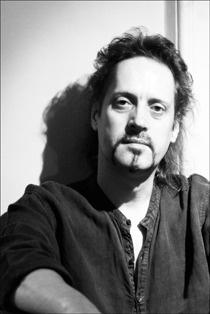
Graham Lynch was born in London. He has a PhD in composition from King’s College London, and he also spent a year at the Royal College of Music, as well as studying privately with Oliver Knussen.

Graham’s music has been commissioned and performed in over thirty countries, as well as being frequently recorded to CD and featured on radio and television. Performers of his music include the BBC Symphony Orchestra, BBC National Orchestra of Wales, BBC Singers, Orchestra of Opera North, BBC Concert Orchestra, and El Ultimo Tango from the City of Birmingham Symphony Orchestra. He has also worked as an arranger for the Belcea Quartet. His works have been played in venues as diverse as the South Bank, Wigmore Hall, Merkin Hall New York, Paris Conservatoire, Palace of Monaco, and from the Freiberg Jazz Club to a cake shop in Japan, and everything in between.

In 2009 his orchestral work, Invisible Cities, was used as the modern test piece in the Leeds Conductors Competition, and the same year saw the release of the first CD devoted entirely to his music, Undiscovered Islands, which received high critical acclaim. Since that time many of his works have been recorded across a wide variety of CDs.

Graham’s interest in many musical styles has resulted in pieces that reach from complex classical works through to compositions that tread the line between classical music and other genres such as tango nuevo, flamenco, jazz, and café music. These diverse works are in the repertoire of ensembles such as Las Sombras, Ardey Saxophone Quartet, Terra Voce, Dieter Kraus and Tango Volcano. He has also written educational music as part of the Sound Sketches piano series.

Recent commissions include Present-Past-Future-Present for harpsichord (Finland), Arche for violin (UK), Sing-Memory for guitar and harpsichord (Finland), and Lyric Duo for two saxophones (Chile). Premieres for 2014 will include Apollo Toccate for guitar (Finland), Beyond the River God for harpsichord (Finland), Trio Cocteau for piano trio (UK), and French Concerto for baroque violin, harp, and harpsichord (France).

Graham has been the recipient of funding and awards from many organisations, including the Arts Council, Britten-Pears Foundation, PRS, RVW Trust, and the Lyn Foundation.

http://grahamlynch.eu/

Six pianos and six passionately committed pianists: Piano Circus came together to play Steve Reich’s ‘Six Pianos’ back in 1989 and have never looked back. Fast-forward to 2015 and a new generation of pianists make up Piano Circus, still innovating and thrilling audiences with their performances and with over a hundred pieces in their repertoire.

Described as ‘Totally Compelling’ by the Guardian; Piano Circus are one of the world’s leading contemporary music ensembles. They regularly collaborate with film and video makers, theatre and circus performers, dancers and choreographers, and in a variety of educational settings. They’ve recently been seen at the BBC Proms Family Music Intro for Multiple Piano Day (broadcast on bbc Radio 3) and Keyboard Collective Project (Sound Festival, Scotland). They’ve also released seven cds with Decca and now on their own label; the latest release is ‘Skin & Wire’, featuring drummer Bill Bruford.

Known for stunning audiences both visually and musically, they’ve performed throughout the UK and internationally and have gained an enviable reputation for the dynamic rapport they establish with young people in their educational work.

For their 25th Anniversary relaunch concert Piano Circus comes to London’s Bush Hall in Shepherd’s Bush on Thursday 2nd July 2015 to perform works by Steve Reich, Graham Fitkin and premiere two new pieces by Dave Maric (Steve Martland Band and Colin Currie group) and Adrian Sutton (‘War Horse’).

Further information and tickets11072433_10155458056750417_6045247214293465366_o

ArielLanyi_Piano13_72Sq

Who or what inspired you to take up the piano, and make it your career?

Music was an inseparable part of my life from the very beginning. I heard it from the day I was born, beginning with Bach’s Well-Tempered Clavier. Just as most people don’t remember when they learned to speak, I don’t remember when I learned to make music. The act of performing music came entirely naturally to me. My first interest is music, then comes the piano. I always enjoyed music more than anything else, so I always wanted to make it my career.

Who or what were the most important influences on your musical life and career?

Most important were probably my piano teachers: Lea Agmon and Yuval Cohen. My recent musical thinking has been heavily influenced by several workshops I attended with Leon Fleischer.

What have been the greatest challenges of your career so far?

The greatest challenge has always been keeping up with my ever increasing standards. Today I’m highly critical of recordings that once seemed to me stellar artistic achievements.

Which performance/recordings are you most proud of? 

In general, the performance I’m most proud of is my last one. But this ties in with the previous question. As my expectations of myself increase every day, performances I used to be proud of a few years ago strike me differently today.

Which particular works do you think you play best?

The composer to whom I feel closest at the moment is Beethoven. I played his works extensively, including solo works for the piano (like the cycle of the last three sonatas), chamber works, and concertos. I don’t want to create the impression that I’m specialising. In the next two recitals I’ll be playing in London are works by Bach, Mozart, Schubert, Chopin, Brahms, Debussy, and Ravel – and not a piece by Beethoven.

How do you make your repertoire choices from season to season?

I don’t have any guidelines for making repertoire choices, and I tend to avoid programming pieces with some common factor – a recital of “last sonatas” for example (I realise these clever extra-musical organising principles are quite fashionable today…) My programs consist of selections of compositions I’m working on at the moment. My only guideline is that the programs be balanced and make sense in musical terms.

Do you have a favourite concert venue to perform in and why?

I haven’t performed at enough venues to say which one is my favourite. Generally, I like venues with an intimate atmosphere, where there is an easy and sympathetic give and take between performer and audience. This is why, among others, I don’t do competitions, where the mood in the hall is judgemental and potentially negative.

Favourite pieces to perform? Listen to?

I find myself nowadays listening more and more to music that is not for the piano. I very much enjoy opera, chamber music and symphonic works. My favourite pieces to perform change all the time. Right now they probably include the works of Beethoven, among many others…

Who are your favourite musicians?

I cannot say. I don’t rank and I don’t think in ranking terms. Moreover, they are simply too many to list…

What is your most memorable concert experience?

The one that is yet to come.

What do you consider to be the most important ideas and concepts to impart to aspiring musicians?

I don’t have a set of aphorisms at hand. My advice is to be curious and open to new ideas, both musical and cultural, and to question generic advice. (I don’t think the next Richter will come from reading my blog.)


What is your most treasured possession?

A wonderful coffee machine. My mother got it as a New Year’s present, but I’m its primary employer.

What do you enjoy doing most?

Writing blogs?.. (Not really, although it is a form of relaxation and it forces me to clarify issues I haven’t given enough thought to.)


Ariel Lanyi, born in 1997, began piano lessons with Lea Agmon just before his fifth birthday and made his orchestral debut at the age of 7. Since then, he has given numerous recitals in London, Paris (including Radio France), Rome, Prague, Belfast, and regularly in concerts broadcast live on Israeli radio and television. He has appeared as a soloist with a variety of orchestras in Israel, and has participated in the Israel Festival, Prague Music Performance, Tempietto Festival in Rome, the Ravello Festival, and the Young Prague Festival. As a chamber musician, he has appeared with members (including leading members) of the Prague Philharmonia, the Czech Philharmonic, and the Israel Philharmonic, among others.

In 2012, Ariel released Romantic Profiles on LYTE records, a recital album featuring Schumann’s Carnival Scenes from Vienna, Liszt’s Fantasy and Fugue on the theme B-A-C-H, Brahms’ Fantasies Op. 116, and Janacek’s Piano Sonata I.X.1905.

Ariel has recently participated in three workshops with Leon Fleisher: the Beethoven and Schubert Institute in Prague (2013), the Schleswig-Holstein Musik Festival in Lübeck (2014), and the Menuhin Festival and Academy in Gstaad (2014). He played in masterclasses for renowned artists such as Richard Goode, András Schiff, Emanuel Ax, Murray Perahia, Thomas Adès, Andrei Gavrilov, Yefim Bronfman, Paul Badura-Skoda, Ivan Moravec, Imogen Cooper, Pascal Devoyon, Angela Hewitt, Dénes Várjon, Mitsuko Uchida, Jonathan Biss, and others.

Ariel studied at the High School and Conservatory of the Jerusalem Academy of Music, in the piano class of Yuval Cohen. He also studied violin and composition, and was concertmaster of the High School and Conservatory Orchestra. Currently, he studies as a full scholarship student at the Royal Academy of Music in London with Hamish Milne.


