Sunday morning coffee concerts devised
 by pianist Lucy Parham
Kings Place (Hall One), London N1

Following the success of the 2014/15 season of Word/Play, pianist Lucy Parham returns to Kings Place for another series of regular Sunday morning Coffee Concerts. Described by BBC Music Magazine as “one of the must-see events on the musical calendar”, the series celebrates the relationship between words and music, whilst exploring a variety of composers, genres and styles. 

‘I am delighted to present a third series of the Word/Play Coffee Concerts with my colleague, Lisa Peacock. I have always loved the combination of words and music and have tried to combine them both in a unique way for each concert. From the Celebrity Gala, via Just William, Beethoven and Rachmaninoff, I hope there will something for everyone to enjoy on a Sunday morning.’ – Lucy Parham

The series starts on Sunday 6th December, when Lucy will be joined by actors, writers, comedians and journalists for a morning of fun at the piano in the Word/ Play Celebrity Christmas Gala. The pianists will be performing from Schumann’s Album für die Jugend (Album for the Young), Op. 68, plus some festive surprises.

The line-up for the Christmas Gala:

Edward Fox actor

William Sharman Team GB athlete

Alistair McGowan actor

Sarah Walker BBC Radio 3 presenter

Alan Rusbridger former Editor, The Guardian and author of Play It Again

Richard Ingrams former Editor, The Oldie

Conrad Williams author

Stephen Boxer actor

Patricia Hodge actor

Niamh Cusack actor

Anneka Rice broadcaster
Cathy Newman Channel 4 News presenter

David Pickard Director, BBC Proms

Barry Wordsworth conductor, Special Guest

Further names to be announced

Iain Burnside presenter

Joanna David narrator
Lucy Parham piano

The Coffee Concert series continues on January 24 with Just William, Jarvis and Jeeves. Martin Jarvis, back by popular demand, brings his dazzling story telling gifts to Kings Place once again.   In The Outlaws and the Triplets, 11-year old William Brown finds himself masquerading as the elder brother of a trio of tots, and in the hilarious Jeeves and The Song of Songs, Jarvis (as ‘Bertie Wooster’) tells of a preposterously unpredictable musical entertainment. The musical accompaniment to both stories is composed and performed by the brilliant Richard Sisson.

Sunday 7 February sees A Morning with Beethoven: John Lill and John Suchet. Following their sell-out performance last season, internationally acclaimed pianist John Lill and Classic FM presenter and Beethoven biographer John Suchet will discuss the music and life of Beethoven, with John Lill performing two more popular Beethoven sonatas – No. 22 in F, followed by the No. 32 in C minor.

On the 6 March, national treasure Alan Titchmarsh shares his green-fingered love for all things horticultural in The Glory of the Garden, with readings from his own writings and others. Pianist and composer Richard Sisson joins him as the programme unfolds, including gems by Tchaikovsky, Chaminade and Billy Mayerl.

Known internationally for her ‘composer portraits’ in words and music, pianist Lucy Parham has created a new programme that chronicles the life of Sergei Rachmaninov –  Élégie: Rachmaninov, A Heart in Exile. Though he became an exile 1917, Russia remained deeply rooted in his soul. Rachmaninov’s cultural identity and his longing for his homeland imbue his music, not least the many much-loved works he wrote for his own instrument, the piano. In this Coffee Concert version Lucy Parham will be joined by renowned actor, Henry Goodman.

Venue: Hall One, Kings Place, 90 York Way, London, N1 9AG

Box Office:  020 7520 1490 / www.kingsplace.co.uk

Meet the Artist……Lucy Parham

It’s not unusual these days to find operas staged in unexpected locations; the plush velvet and gold of the traditional opera house exchanged for something more earthy and – to use a buzzword of the fringe opera movement – accessible. Here Alisdair Kitchen, director of Euphonia Opera, introduces his latest project – ‘Don Pasquale’ in a pub……

Mounting operas in such places has done much to popularise an often-misunderstood art form, and there is something thrillingly visceral about experiencing operatic voices up close. Certain trade-offs are inevitable; large casts must be slimmed-down, choruses cut, and very often the original language altered to a snappy vernacular translation. And of course, there is hardly room for a full orchestra in an intimate venue.

My company – Euphonia (www.euphoniaopera.com) – is venturing into this territory for the first time with Donizetti’s ‘Don Pasquale’ at the Drayton Arms Theatre in South Kensington. We have been honing our craft for the last five years with full-scale productions at the Rye Arts Festival, most recently presenting an ambitious staging of Mozart’s Don Giovanni set on a vintage train [http://www.ryenews.org.uk/culture/don-giovanni-goes-rails]. Donizetti’s sparkling domestic comedy is the first instalment in what will be a regular opera series at The Drayton, with future productions including ‘La Traviata’ and Gluck’s ‘Iphigénie en Tauride’. Legendary opera director John Copley, whom I am privileged to have as a mentor, is Patron of the season.
‘Don Pasquale’ is an absolute gem in the repertoire – a simple yet effective plot rendered in glorious bel canto. It’s intimacy lends itself well to the guiding principal of Euphonia’s work at this theatre, namely to produce chamber versions of operas which are distillations of the original. We hope to concentrate the essence of a work without distorting it. It’s a question of balance – if you take away the orchestra and grand stage resources that operas were conceived with, you have to ensure that the other side of the scale is well-stacked. For instance, there’s something special about the blend of music and words as the composer originally set them; for this reason, we perform in the opera’s original language.

But above all we aim to be entertaining! We have a splendid cast for ‘Don Pasquale’; the title role is something of a speciality for Graham Stone – it’s his tenth production! He is joined by the wonderful emerging vocal talents of Lauren Libaw, Joseph Doody and Christopher Jacklin, all accompanied by Euphonia’s excellent repetiteur Jonathan Musgrave.

‘Don Pasquale’ by Gaetano Donizetti

The Drayton Arms Theatre, 153 Old Brompton Road, London, SW5 0LJ

November 24th, 25th, 27th and 28th at 7.30pm

Autumn 2015 marks the start of a new venture for The Drayton Arms Theatre – an operatic season, presented by our Associate Director for Music and his vibrant young opera company Euphonia (President: Prof. Lord Robert Winston). These co-productions kick-off with Donizetti’s effervescent comedy, ‘Don Pasquale’, sung in Italian, with English surtitles.

After disinheriting his nephew Ernesto (Joseph Doody), wealthy old Don Pasquale (Graham Stone) seeks a wife to produce an heir for his estate. Dr. Malatesta (Christopher Jacklin) sympathizes with Ernesto and devises a crackpot plan to help him regain his inheritance and his true love, Norina (Lauren Libaw). Also featuring Edward Jowle (Notary) and accompanied on the piano by Jonathan Musgrave.

Music and Stage Direction: Alisdair Kitchen

Patron of Opera at The Drayton Arms Theatre: John Copley, CBE

Tickets (£15, £11 concessions) available at www.ticketsource.co.uk/euphonia

For further information about Euphonia and the opera season at the Drayton Arms Theatre, please visit www.euphoniaopera.com.

Delicious pre-theatre dining is available until 7pm Monday to Saturday, two courses for only £10! 
Call 020 7835 2301 to reserve your table.

Praise for Euphonia’s recent Don Giovanni at the Rye Arts Festival: “It was such a joy, and easily a match for anything seen on much grander stages. The superb professional young cast and orchestra assembled by Alisdair Kitchen, the director and conductor, and the driving force behind Euphonia, would grace any auditorium.” – Rye and Battle Observer


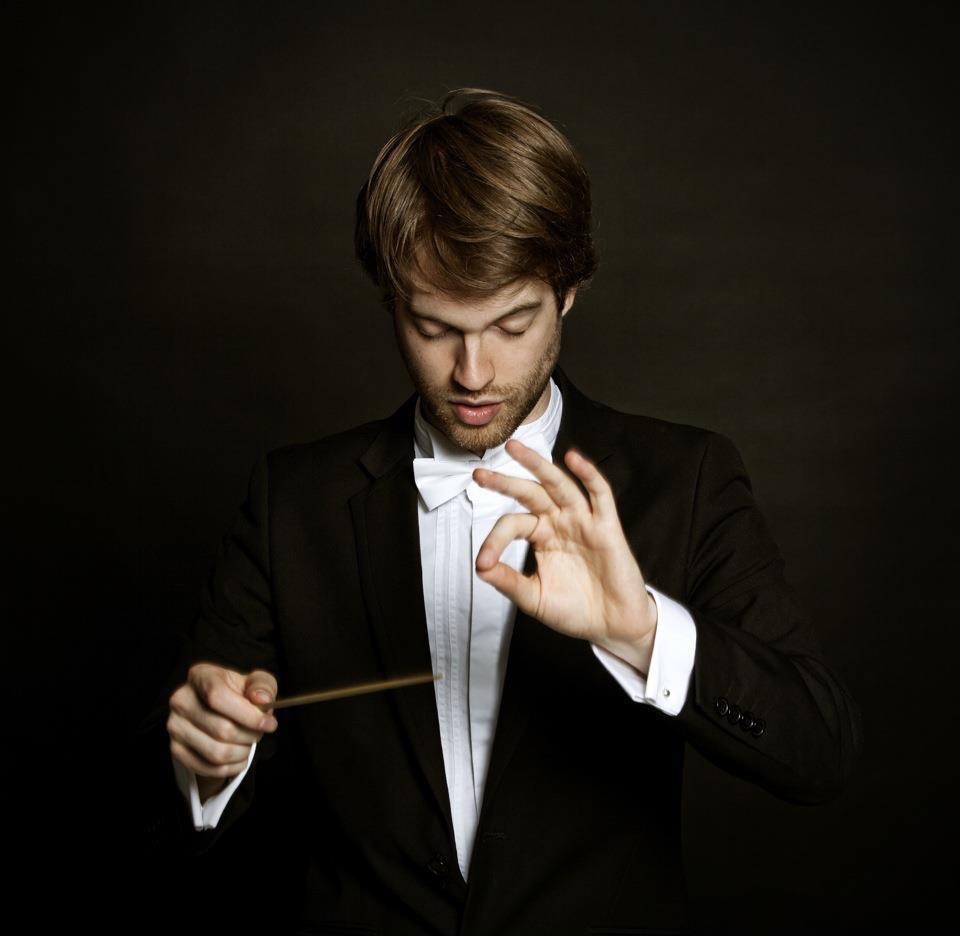
Who or what inspired you to take up conducting, and pursue a career in music?

Carlos Kleiber! More seriously, I was feeling a bit frustrated playing the cello, not having the big picture. The instrument seemed to be almost “getting in the way” of the music and me. Also I have always enjoyed managing people and was excited by the added challenge of getting the musicians to feel they are fully part of the creative process. Finally I felt I had something to say and express about music. 

Who or what have been the most important influences on your musical life and career?

I have met some fantastic people in my life, ranging from my nursery school teacher to my passionate cello teacher when I was a teenager, and my music teacher in high school. Working with Benjamin Zander was also a great experience. He taught me a lot as a musician and as a person. I believe it is crucial as an artist to keep learning from others throughout your life. It is often said that a great musician should know about philosophy and other arts, cultures etc. and this is absolutely true.

What have been the greatest challenges of your career so far?

Getting it started!

Which performance/recordings are you most proud of?

My concert last year with Sinfonia Tamesa, when we performed Nielsen (Aladdin), Grieg (Peer Gynt) and Rimsky-Korsakov (Sheherazade), was pretty amazing – really electrifying and colourful! I was also thrilled to perform Albéric Magnard’s Hymne à la Justice last year on the 100th anniversary of his death. He hasn’t been played at all in France and for me it is a real shame! I am also very proud to be conducting a concert on 11 November at St James’s Piccadilly with the amazing Sarah Connolly in aid of UNICEF Syria Children’s Appeal. Such a worthy and important cause.

Which particular works do you think you play best?

I experience and therefore conduct the music in a passionate way. Of course there is always a necessary intellectual approach to the score: you’ve got to analyse it and understand the notes and their relationship, but what’s most important is to love the music, to feel it and make the audience experience it with you. I particularly relate to powerful and expressive composers like Beethoven, Mahler, Sibelius, Bruckner etc. Plus I am an advocate of playing unknown composers; the feeling of discovering something new, another language, another personality is always extremely rewarding and motivating.

How do you make your repertoire choices from season to season?

I always try to put three kinds of pieces in my programmes: something famous to attract the more traditional audience, a premiere or contemporary piece, and a little-known piece or composer to feed the audience’s curiosity. There are so many wonderful things out there we haven’t heard yet!

Supporting new music is also essential. I believe performers should be more involved and work with composers themselves. For example, I think what Fenella Humphreys did with Bach to the Future was really inspiring.

Do you have a favourite concert venue to perform in and why?

I have played in too few venues to have a favourite. Maybe the state-of-the-art concert hall which Simon Rattle has been calling for in London?

Favourite pieces to perform? Listen to?

I can be quite obsessive sometimes, and right now I am completely mad about Bruckner’s 8th Symphony. It’s incredibly powerful, meditative, epic…

Otherwise, I like to listen to YouTube channels featuring unacclaimed masterpieces and other hidden gems. The Corymbus blog is also definitely worth following!

Who are your favourite musicians?

Carlos Kleiber (again)! He is such an inspiration. He breathes the music, loves it so much that the way he conducts seems so organic. I’ve also always been fascinated by Furtwängler and his bizarre but magical conducting. Of course we’ve got some fantastic conductors today as well: Mariss Jansons, Sir John Eliot Gardiner, Andris Nelsons, Sir Simon Rattle.

What is your most memorable concert experience?

Probably my very first concert as a conductor in 2009! Hopefully there is much more to come. The UNICEF concert on 11 November promises to be quite a highlight too and because of the cause it supports, a memorable one too.

What do you consider to be the most important ideas and concepts to impart to aspiring musicians?

“You know nothing!” No matter where you are or how good you are, you have to keep learning and be humble. But remember if music is life, life is not only about music!

What is your most treasured possession?

The St Christopher pendant my grandmother gave me a long time ago. Not for religious reasons at all but because it is a reminder of where I come from. Also my cello: it symbolises the efforts and sacrifices I had to make to get where I am and all the support I got from my parents. And very soon my wedding ring!
Sarah Connolly and some of the top professional musicians in London are uniting under the direction of Nicolas Nebout in a special fundraising concert for Syrian refugee children. The concert takes place on 11th November 2015, 7.30pm at St James’s Piccadilly, London W1

Programme:

Ludwig van Beethoven – Symphony No.5

Gustav Mahler – Kindertotenlieder (soloist: Sarah Connolly)

Malek Jandali – Phoenix in Exile (World Premiere)

Book tickets http://www.brownpapertickets.com/event/2265817

Donate https://www.justgiving.com/MusiciansForSyria/
Nicolas Nebout’s website http://www.nicolasnebout.com

Two of my students, siblings as it happens, are working on pieces which include a continuously moving left hand, scored in triplets. One is a Rondo by Diabelli, the other a Sonatina by Clementi. I am also working on a movement of a Schubert sonata which includes the same figure. The other day, during a lesson with one of these students, I showed her the Rondo from Schubert’s D959 and said, “look, I’m working on something similar”. Her eyes opened very wide and she looked absolutely astonished, as if she couldn’t believe that there could be two pieces of music which were so similar. “I’ve encountered some similar technical issues with this,” I said to her, meaning that I too had had to work on forearm lateral movement (a “polishing” movement in the wrist and forearm) to achieve evenness in the notes, and to prevent my hand and arm becoming tired (also an issue for the student).

This episode highlights two important aspects for me: first, that students should never study music in a vacuum; and secondly, that I think it’s helpful for students to know that their teacher is also studying.

Dealing with my second point first, I firmly believe it is crucial for teachers to continue to study, whether this is independently of a teacher or mentor or by continuing to take formal lessons, and through attending seminars, workshops and courses for continuing professional development (CPD). Learning new repertoire, revising previously-learnt repertoire – no matter how easy or difficult it is – sharpens and informs our teaching skills and enables us to reference such music within the context of simpler repertoire when working with our students. And just because our repertoire may be “harder”, I do not see why we should not share it with our students, to demonstrate aspects as described above, to highlight scale and arpeggio patterns or other technical issues, or simply to share music with our students. Sadly, in my experience, many young people who learn a musical instrument have very little exposure to classical music outside of their lessons: they do not go to public concerts and have limited contact with music in school (and this is not going to improve with continual government attacks on the arts in the UK state education system). I believe one of the crucial roles of the music teacher is to broaden students’ cultural horizons by encouraging them to explore as much music as possible – whatever the genre. I also believe that by demonstrating to my students that I am also studying, there is the sense of a shared experience, that I understand how to practise properly, or prepare for a performance or exam. And for me as a teacher to be taught myself by a master teacher is incredibly useful as I draw on my own teacher’s vast knowledge and experience, and distil his wisdom into easily comprehensible nuggets for my students. And a good teacher will teach in such a way that seemingly complex concepts or technical issues can be simplified for students of any level.

Music should never be studied in a vacuum. And yet I come across students I have inherited from other teachers who have not been taught the context in which the music was created. They may be playing music from the Baroque period, but they have no idea what this means: for them, the music is simply a collection of dots on the page. Some students go right through to Grade 8 having learnt only exam repertoire (a total of 24 pieces) and come out of the process with a limited understanding of the very broad canon of classical music and its historical context. Giving students the opportunity to explore a broader range of repertoire outside the narrow confines of the exam syllabus allows them to experience different styles and genres but also to reference and put into practice technical and artistic aspects learned from their other pieces. Thus their learning – and mine – becomes a continuous process, a learning curve.