ben-socrates_0464_1 copy

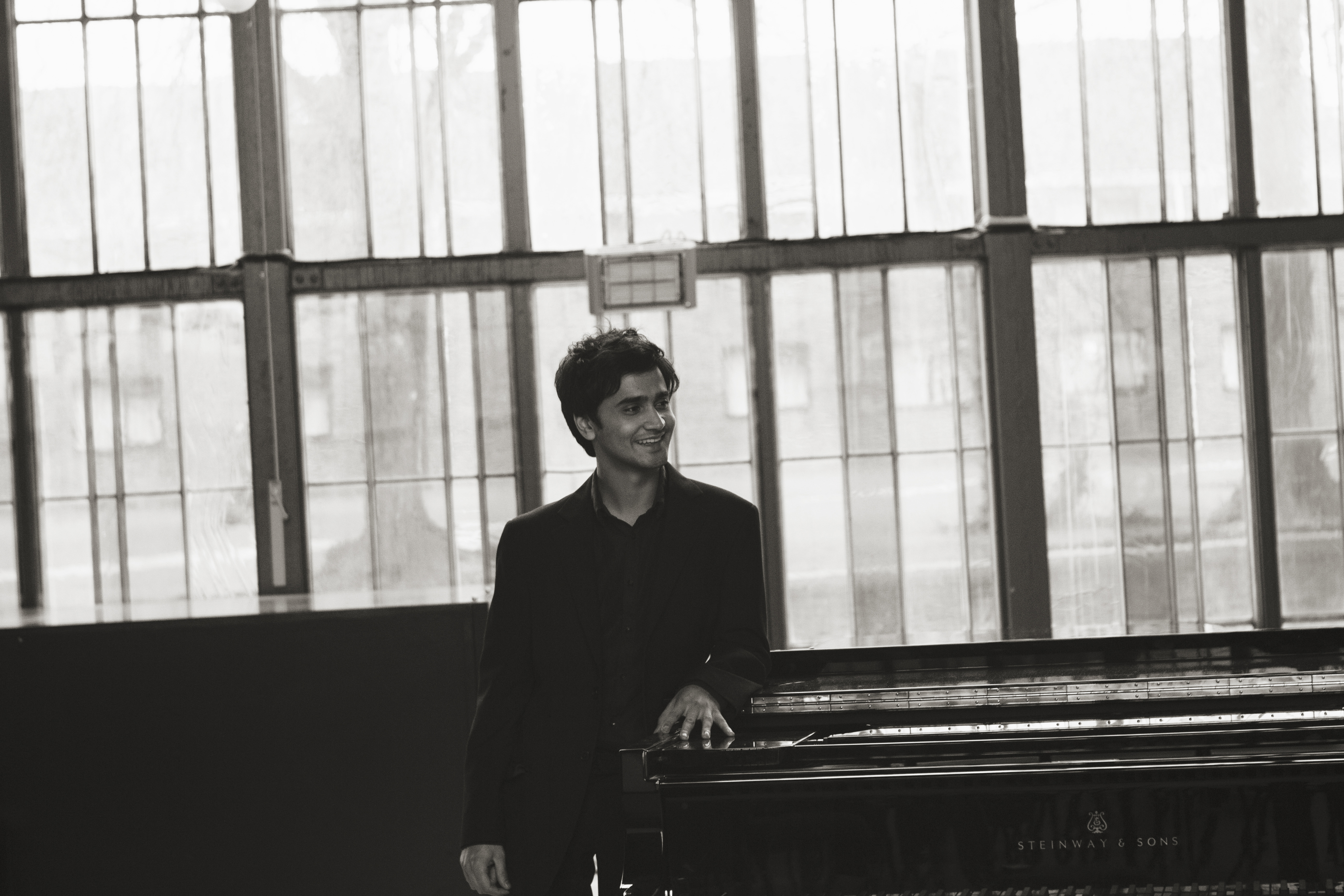
Who or what inspired you to take up the piano and pursue a career in music?

I have a half brother to thank for this – Luke, who lives in Arizona, or at least he used to, and I’ve only met him once in my life. He came to visit us in Devon when I was younger, and my mother convinced my father to get an old pub piano – Luke is a singer/songwriter and she hoped we would appreciate hearing his music. I did, and I took a particular liking to that creaky piano, began making noises and was soon taking lessons. I don’t come from a musical family, and there wasn’t exactly a fertile scene for it in my hometown, so the desire for a career in music came later, when I enrolled on a music course at The University of Chichester, met some inspiring musicians and mentors, and discovered the breadth and potential of what was out there

Who or what were the most important influences on your musical life and career?

My first major influence would be my first band The Plastic Hassle – which helped me learn how to improvise and write music, play with rhythm and make naïve psychedelic jazz-rock noise, at the age of 15. My first piano teacher had moved to Yorkshire by then and I was feeling a bit discouraged about music so this was a welcome kick! When I came back to classical piano aged 19 I found I had much more to express and ‘something to say’, and I never lost my love of improvisation. Adam Swayne, my teacher at university, switched me on to modern music, and showed me the scope and variety of piano repertoire outside the repressive ABRSM exam bubble. Finally, my teacher at Trinity Laban, Douglas Finch, who has always challenged conventions and collaborated successfully within other disciplines, which is something that became very important to me. There are of course many more influences, but these are the most important!

What have been the greatest challenges of your career so far?

Finding time and a space to practice away from irritable neighbours. Finding other musicians and artists to work with, which is easy enough when you’re part of a big collaborative conservatoire but harder when you’re in the wider world chasing up jobs, gigs, and endless life admin! Organising interesting concerts and events myself, which I would like to do more of, it is a huge investment of time and energy but incredibly worthwhile, and can raise awareness for good causes. I would like to pursue my other musical interests – whether that’s composition, jazz, harmony, learning accordion, or electronic music – but as is known, getting and staying half decent at piano is time consuming enough in itself!

Which performance/recordings are you most proud of?

My debut recital at Chichester Cathedral last year was special for me, so much of my musical development happened in that area, and coming back to perform for an audience of over 500 was quite overwhelming. I’ll be back there on the 8th March next year, excuse the plug. While studying for my Bachelors I was invited to perform the Shostakovich Piano Concerto No 2 with the university orchestra – the support and goodwill from the musicians, conductor and audience, and how it all came together on the night, is an enduring memory. Other than that, I enjoyed putting together a performance of Ravel’s La Valse, arranged for two pianos, with a choreography devised by contemporary dance students at Laban, for the first CoLab festival at Trinity Laban. I got to play some of Eric Satie’s Vexations at 4 in the morning, for a project at Chichester University. The performance, split between all the pianists that the university could muster, had been broadcast online for a good 12 hours prior to this and the music was firmly lodged in my psyche before I dragged myself out of bed to the concert hall!

Which particular works do you think you perform best?

I think it’d be easier to say what I perform badly! I suppose I feel most at home with music of the 20th century, which is very vague, and in itself contains a vast variety. I never tire of exploring whats out there, trying to find out how it all came about, and it’s place in history. Alex Ross can help with this.

How do you make your repertoire choices from season to season?

I try and learn a programme or two worth of new repertoire every season, but then it is also satisfying to come back to something I struggled with years ago and find that I now better understand the music or am no longer wrestling with the technical problems, or I might find a whole new approach to take. A teacher told me that the best performances are of the pieces we learn and forget, then relearn, then forget, then relearn, and by then they are just so well internalised and part of our musical DNA.

When it comes to programming, I try and include a diverse selection from across the four main periods of Western music, but the challenge is in giving it some kind of unifying  thread. My recitals this year are loosely themed around the title ‘Visions & Dances’, with the music grouped around Visions (visionary, impressionistic, colourful, innovative, imaginative pieces, usually of the 20th century and beyond) and Dances (self explanatory), which really means I am able to incorporate all the music I love to play! I find that unpretentious and demystifying introductions can really help ‘sell your idea’ also.

I like to include contemporary repertoire in most of my concerts, not so much the wilfully difficult and obtuse stuff, but experiments in sound by Henry Cowell, Rautavaara, Somei Satoh and Frederic Rzewski have all been memorable for audiences (for good or bad!).

I occasionally start to write a ‘bucket list’ of the music I want to perform in the next year, 5 years, decade, lifetime, but such a list is never finished and can be overwhelming. It’s good to be spontaneous in our selections also.

Favourite pieces to perform? Listen to?

I never get tired of performing Prokofiev – I haven’t yet approached the sonatas but I became hopeless addicted to the Visions Fugitives, the Ten Pieces opus 12 and some of the etudes. There is something very seductive about the expressive language, the kaleidoscopic colours, the hallucinatory changes of character. It seems like this kind of music emerged out of nowhere, from a timeless and intangible place, and I can’t really figure out where it went after Prokofiev departed. I admire the nationalistic, folkloric strain in music at the turn of the century – the Dvorak Slavonic Dances, and of course Brahms’ Hungarian Dances that inspired Dvorak, are pretty much the most fun I’ve had at the piano, and I love Janacek’s piano music.

When it comes to listening that is a very difficult question in the age of Spotify, as there is so much that I have loved, forgotten, come back to – but at the moment I am enjoying the more meditative music of Olivier Messiaen, Morton Feldmann, John Adams, Arvo Pärt. Also anything with a rhythm that makes me stop in my tracks, or want to dance, whether it’s Scarlatti, Villa Lobos, Gershwin or all kinds of electronic and world music.

Who are your favourite musicians?

I have a lot of admiration for musicians that have taken creative U-turns, in spite of achieving a certain amount of success, and turned their hand to different styles rather than play it safe, bringing a new audience and appreciation to other forms – Jonny Greenwood, Scott Walker, Robert Wyatt, David Byrne, PJ Harvey, for example. As far as pianists go I love what Chilly Gonzales is doing, bringing back the somewhat lost character of composer/performer, he is also a formidable improviser, and I recommend you listen to the online snippets from his 27 hour marathon piano performance (he was the Guinness World Record holder for the longest solo performance, but only for a few months!) you’ll be impressed by the variety of music at his fingertips. In the classical world it’s hard not be in awe of Daniel Barenboim at the piano or the podium, Grigory Sokolov for the Romantic repertoire, Martha Argerich in everything she does. Alice Sara Ott has done some really wonderful things with Chopin. They’re my favourites for now. I have to mention Art Tatum and Bill Evans also, for their boundless creativity at the piano, and the music of Charles Mingus never fails to blow me away. Why are all my favourite jazz musicians dead??

What is your most memorable concert experience?

Can I pick a few?

The second time I heard an orchestra was in Ravel’s Daphnis et Chloe, which set the bar rather high. I heard three quarters of Wagner’s Ring Cycle in the space of a week, it was the Berlin Statskapelle conducted by Barenboim at the 2013 Proms, and time seemed to stop for those 12+ hours. I was transfixed by Steve Reich’s Music for 18 Musicians performed by the Colin Currie Group, and Cordelia Williams performing Messiaen’s 2.5 hour Vingt Regards sur l’enfant Jésus from memory, with this superhuman ferocity and passion. I vividly remember when Douglas Finch improvised a set of subversive variations on Christmas themes we’d suggested, in the dark, at a party. There is a German composer called Haushcka who prepares a grand piano by filling it with ping pong balls, contact microphones, E-Bows (magnetic devices invented for guitarists to sustain sounds indefinitely), other gizmos – I expected a load of gimmicks and party tricks but it was quite an amazing transformation. When I was younger I was inspired by some of the modern jazz artists who for some reason came to play in my sleepy hometown of Barnstaple, particularly Seb Rochford’s Polar Bear, and Basquiat Strings, a string quartet of incredible improvisers backed by double bass and drums. When I got a place at Trinity Laban and found some of these very musicians were on the faculty, I was very excited; unfortunately my jazz chops hadn’t really kept up!

What do you consider to be the most important ideas and concepts to impart to aspiring musicians?

Despite my philosophical sounding name I don’t have a lot to say that hasn’t been said better already. I went to hear Daniel Barenboim speak at this year’s Edward W. Said Lecture and wrote down loads of quotes I considered important. They’ve been lost since I moved house, but essentially – use music to understand life, and life to understand music, and always impart this to everyone you encounter as a musician and teacher.

Happily the lecture is on YouTube for anyone who wants it in a bit more depth/less paraphrased!

Where would you like to be in 10 years’ time?

In some remote part of the world with some good companions, a piano and just enough free time!

FestPromo
The Dulwich Music Festival is now in its fifth year. It is an annual event that takes place several times during the year to provide performance and feedback opportunities for pianists, harpsichordists and fortepianists. In 2016, the Festival comprises two separate events:
  • The Clementi House Piano Competition – a chance to perform in the London home of pianist and composer Muzio Clementi. Alongside the competition, there will be concerts by leading harpsichordists and fortepianists. 6th March 2016
  • The Piano Competition – a full day of classes from beginners to advanced and adult recital classes. 11th June 2016

These events are designed to celebrate the piano (and harpsichord and fortepiano) and to encourage enjoyment and progress amongst players of all levels.

Repertoire has been carefully chosen to allow complete beginners the chance to gain their first experience of performing to a friendly and welcoming audience. We seek out innovative repertoire by contemporary composers who also adjudicate the classes. In addition to the contemporary repertoire, we also have graded classes and recital and exhibition classes. The piano competition is well established and fully booked months in advance. We recommend early booking. Some of the June classes are already fully booked.

I am delighted to be involved with the Dulwich Music Festival once again in 2016 as an adjudicator, a role which offers me the opportunity to hear young pianists in action in a variety of repertoire.
Full details about the Festival can be found here:

http://www.dulwichmusicfestival.co.uk/

Who or what inspired you to take up composing, and pursue a career in music?

As far as I can remember, and from the stories my mother tells, I was always composing music in one form or another.

I began playing the recorder whilst I was in Infant School and then started to learn to play brass instruments (initially the cornet in the local brass band) at the age of 7. As soon as I could play a few notes I was rearranging them and experimenting with them.

My mother often tells of times when I was only 7 or 8 years old, armed with a couple of decant recorders, a cornet, a script I had scribbled on a scrappy piece of paper and my sister I would make up and record “radio programmes” onto a cassette player that I would then inflict on the rest of the family. In these shows, I was not only the scriptwriter and presenter, but I also composed all the music that was featured!

Sadly, when I was at school, composition wasn’t really a thing in the way it is these days and, although I continued writing short little pieces for myself to play at home, I didn’t really have any “performances” of pieces until I was in my early teens.

It was whilst at sixth-form college in Andover, on the Pre-Professional Music Course at Cricklade College) that I realised that I seemed to have a bit of a flare for composing, and being on that course meant I had the opportunity to write for lots of players who were quite able. College sorted me out a composition tutor (Tom Eastwood) and gradually I had more and more pieces being performed.

Who or what were the most significant influences on your musical life and career as a composer?

I think that my time at Cricklade College was fundamental to me becoming a composer.

Tom Eastwood, my composition tutor, was fantastic teacher – inspiring and very realistic about what I needed. He pushed me in the right direction.

Cliff Bevan, who had been my tuba teacher (yes, as I grew so did the brass instrument I played get larger) and then became the head of the course at Cricklade, was also a massive influence, as he found me opportunities to get pieces played and, because he also ran a small publishing company, he published my first two compositions: Delta IV – a fugue for four trumpets; and Sonata in One Movement for solo tuba – which I wrote as a audition piece for myself to play for County Youth Orchestra and university interviews.

What have been the greatest challenges of your career so far?

I’m fortunate in that I find composing relatively easy, and I work quite quickly. I think, as a composer, the challenges come from trying to persuade people that they’d like to have a new work written, or that they could include a new piece in a concert. Sometimes, it’s such an uphill struggle – and, in fact, it can be soul destroying to think that 200 years ago audiences and performers wanted new music more than they wanted to listen to older things – what went so wrong?

Personally, I guess the biggest struggle for me, as a composer, was about three years ago when I suffered very badly from depression due to a combination of work and home problems. I had it very bad and got to a point where I was being closely watched because I was considered to be a suicide risk. I was put on a complex cocktail of medication that, I felt, turned me into a bit of a zombie and removed my spark and creativity. In July 2012, a couple of weeks before I went to London to be a Games Maker for the Olympics, I stopped taking all the medication and decided to fight back against the depression. My GP was fantastic and supported me throughout this, even though she didn’t necessarily think it was the right thing to do, and, as a result, my composing resumed.

What are the special challenges/pleasures of working on a commissioned piece?

The hardest part of working on a commissioned piece is getting the commission in the first place (oh, and getting the second, third, fourth performances).

I love sitting down with a commissioner to discuss a new work – but, of course, by that point they’ve dipped their toe in the water and made the decision that they want a new work written!

I normally talk to a commissioner for ages to find out their needs, about the event, things they’d like, things they wouldn’t like…. I do love the collaboration of working with someone else – it’s like solving a puzzle making sure all the pieces are placed in the right way so that the performer has the piece they want! 

What are the special challenges/pleasures of working with particular musicians, singers, ensembles and orchestras?

Every musician is different and that’s what makes things so exciting and, to be honest, inspirational.

Yes, as a composer there are things I want to write but I realise I can’t just compose what I want (I’m certainly not a big enough name for that – yet!) so I have to adjust my ideas to fit with what someone else wants. A lot of the time I think this helps me hone my thoughts and, I hope, the final piece is better as a result.

Which works are you most proud of?

I’m always most proud of the piece I’m currently working on but, of finished pieces, I am particularly proud of pieces that have had a life beyond the premiere and beyond the first performers: my MAGNIFICAT has had a wide range of performances in its different versions; BE NOT AFEARD,THE ISLE IS FULL OF NOISES is a piano sonata that I wish my meagre piano-playing skills would enable me to perform; IN FLANDERS FIELDS was performed a lot last year – it’s a setting of John McRae’s First World War poem in versions for various different choirs!

There is also MASS IN BLACK, which was commissioned by Basingstoke Choral Society in 1987. It’s had a premiere scheduled twice, by two different choirs, but, on both occasions, it’s been cancelled because the choir has decided the piece is too controversial (it combines a requiem mass text text with the prophecies of Nostradamus and poems on environmental issues and the end of the world). I think it’s one of the best and most original pieces I’ve ever written – but, so far, it remains unperformed!

Who are your favourite musicians/composers?

I have a very eclectic taste in composers (and have only recently fallen back in love with classical music after a trial separation of a few years!

Of modern composers, I adore the music of John Adams who is, to my mind, the greatest of all living composers. I also very much enjoy the music of Michael Nyman and Michael Torke.

Of twentieth-century composers, I always had a thing for the music of Michael Tippett (I wrote a dissertation about him for my O-level music exam) but then it’s the usual suspects: Stravinsky; Bartok; Reich. I am not a fan of serialism though I’m glad it happened (actually, aged about 8, having never heard of Schoenberg or the Second Viennese School, I “invented” a system not dissimilar to the 12-note row…).

Of earlier composer, I particularly like Berlioz and Bach. I’ve recently re-discovered Beethoven (and especially like his later works) and then there’s renaissance choral music, which I adore.

What is your most memorable concert experience?

My most memorable concert experience has to be when I conducted a school orchestra at the Royal Albert Hall at the Schools Prom in 2005. We played a suite from Jurassic Park and then Elgar’s Pomp & Circumstance March No. 1 – I’m not one for the whole flag-waving jingoistic nonsense but, with a bunch of youngsters that I had coached, it was a truly memorable experience.

What do you consider to be the most important ideas and concepts to impart to aspiring musicians?

I think that Roy Castle hit the nail on the head in the lyrics to the song he performed at the end of episodes of Record Breakers: “Dedication’s what you need”.

You need to be dedicated to your art, honing your skills, keeping an open mind and listening carefully to everything around you. You need to be continually learning and you must never accept second best! Being a bit OCD is a positive!

Where would you like to be in 10 years’ time?

In 10 years I’d like to be doing more composing and less of the other bits I do to try to please my bank manager! 

What is your idea of perfect happiness?

Composing – composing without interruption and then hearing a perfect performance without interruption (though I do hate being in a hall when a piece of mine is being performed because I have no control over it – it’s one of the few times I get nervous).

What is your most treasured possession?

My most treasured musical possession are some of my own hand-written manuscripts from the days before computer notation (I began using notation software in 1990).

My most treasured non-musical possession is a set of encyclopedias I inherited from my paternal grandfather (who I never actually met). They’re from 1921 and have such a different world view.

What do you enjoy doing most?

Composing – and if I’m not composing, I love to cook or watch movies.

I’m a vegetarian, and have been since my Freshers’ Year at uni, but I cook meat for those who need it – yes, in an ideal world everyone would be vegetarian, but, sadly, they’re not! In fact, I’d prefer to be vegan, but I think it would still be too difficult. Maybe in a few years time…

What is your present state of mind?

That’s a tricky one! I have days when I am manic with ideas to the point I feel my head will explode, and other days when I am more relaxed. I’m in a good place now, much better than I was a few years back.

Robert Steadman is a prolific composer of music ranging from symphonies and operas to musicals and pieces for brass band. He has written a great deal for amateurs and children.

Robert has been commssioned to compose works for the percussionist Evelyn Glennie, saxophonist Sarah Field, London Brass Virtuosi and the Royal Philharmonic Orchestra.

His opera Sredni Vashtar was written to a libretto by Richard Adams.

He has also written radio jingles and a song used on Chris Evans‘ Radio One Show.

As well as composing, Robert has written many articles on music education and a number of books alongside teaching and leading creative music workshops for schools, museums and charities.

robertsteadman.com


(photo: BBC)

‘Masterchef – The Professionals’ is back on BBC TV, the competition for professional chefs. I admit to being glued to the programme every night, and this year I’m watching even more attentively as my son is training to be a chef (and of course this proud mum would love to see him on the programme in the future….)

At the start of the competition, the chefs undergo a variety of “skills tests”, including making brandy snaps, boning, trimming and tying up a joint of meat, preparing a lobster or crab, or making the classic Omelette Arnold Bennett. For a “classically trained” chef, these tests shouldn’t present too many problems, as many of these skills and dishes are standard fare in the chef’s basic training. Of course in the TV spotlight and under the eagle-eyed stare of Michelin-starred chef Marcus Wareing, nerves can get the better of the contestants and mistakes inevitably happen….

During last year’s contest, I enjoyed lively conversations on Twitter with pianist and writer Susan Tomes, and once again we are exchanging thoughts about the competition. One thing that has puzzled both of us is how these chefs seem to lack basic skills, skills which one would expect them to have mastered within the first few years of their training (my son, for example, who is in the second year of his diploma course, learnt to make Omelette Arnold Bennett in his first year). And it set me thinking about what the equivalent skills would be for a pianist.

So, if the pianistic equivalent of Omelet Arnold Bennett is the first Prelude & Fugue from Bach’s WTC (a suggestion received via Twitter), what other basic attainments should a pianist have, based on an equivalent list of culinary skills? I would love to have your suggestions, which I will then collate into a further blog post exploring this theme. Feel free to post your suggestions in the comments section at the foot of this post.

How to chop an onion

Make a roux sauce

How to cook pasta properly

Salmon en croute

Prepare an artichoke

Black Forrest Gâteau

Make a soufflé

Coq au Vin

Steak Tartare

Prepare oysters

Deboning, trimming and tying a joint of lamb

