A chance to experience all of Mozart’s piano concertos. Not just the famous, much-loved ones, but all 27 of them, from his earliest forays of the form when he was still a boy to his mature late works. I was delighted to be invited to the launch lunch for this exciting new series at Kings Place and to have the opportunity to discuss it further with those involved, from the CEO and creator of Kings Place, Peter Millican, to the Chief Executive of the Aurora Orchestra, John Harte, conductor Nicholas Collon and members of the orchestra, including the indefatigable and endlessly creative principal violist Max Baillie.

As Resident Orchestra, Aurora collaborates with Kings Place to launch Mozart’s Piano in January 2016 – a five-year journey built around a complete cycle of the Mozart piano concertos. A onceinageneration opportunity for audiences to hear the whole cycle performed live by the same orchestra in single venue, this 25concert odyssey takes Mozart’s life, music and legacy as the starting point for a kaleidoscopic journey across centuries and musical styles in the company of a spectacular roster of guest soloists. 2016 will see the first seven concertos performed by pianists including John Butt (16 January), Robert Levin (23 April 2016), Cédric Tiberghien (17 September 2016), Lara MeldaMartin James Bartlett (both 16 December 2016), and Aurora’s own John Reid (19 March 2016), alongside a rich tapestry of other music from CPE  Bach to Peter Maxwell Davies via Haydn, Schubert and Ravel. Alongside Mozart’s Piano, Aurora also launches The LockIn – a linked informal late-­night series in Hall Two at Kings Place, offering audiences a chance to rub shoulders with the performers, and hear them follow the musical explorations of the main evening programmes in new and unexpected directions. (source: press release)

It is was deliberate decision on the part of the orchestra and creators of this series to have a wide variety of pianists involved in the concerts. Of course, no series focussing on Mozart and the piano would be complete with a contribution from pianist and noted Mozart scholar Robert Levin. Levin performs two concertos, Nos. 3 and 4, in a concert entitled Child’s Play on 23rd April 2016, and will be exploring Mozart’s talent for boundless and inventive improvisation. However, some of the pianists selected for the series may not, on first sight, seem natural Mozart players, and this aspect will add special interest and excitement of the series. By selecting young artists as well as more established and well-known musicians, new insights and angles on Mozart’s piano concertos will be revealed, with each musician bringing their own special voice and viewpoint to the music.

This a unique opportunity for total immersion in Mozart’s piano concertos and marks a significant, long-term project and investment by the Aurora Orchestra. It promises to be an exciting, stimulating and revealing series.

Further information and tickets here
 

J_Bae-140_LR_BW
(photo: Kelley Eady Loveridge)
Who or what inspired you to take up the piano and pursue a career in music?

My dear teacher and mentor, Dr. Rae de Lisle, senior lecturer at School of Music, University of Auckland, who has taught me for 12 years. Maestro Chung Myung-Hoon who was the first South Korean pianist who became the Silver Medalist (no Gold-Medalist awarded) at 1974 Tchaikovsky International Piano Competition, who is now an internationally sought-after conductor.

Who or what were the most important influences on your musical life and career?

My mentor, Dr. Rae de Lisle who has taught me since I was 9 years old until I graduated from University of Auckland with First Class Honours. She has seen me grow up and has guided me to where I am right now.

What have been the greatest challenges of your career so far?

I grew up in New Zealand until I came to London last year. London life is completely different to New Zealand life where its population is only 4 million people. Studying at the Royal Academy of Music and living in London, the metropolitan city has been very challenging since I didn’t know anyone and I didn’t have anyone who supported me. I had to completely depend on myself and this was great challenge.

Which performance/recordings are you most proud of? 

2009 my performance of Rachmaninov Piano Concerto No.2 when I was 17 years old. 2012 My debut recital at Auckland Town Hall, Chopin Preludes Complete, Bach/Busoni Chaconne. Recent performances of 2013 New Zealand Wallace Piano National Piano Competition of my Liszt Piano Sonata, Ravel Gaspard de la Nuit, Rachmaninov Piano Sonata No.2 and 2014 New Zealand Wallace Piano Festival my complete recital programme of J.S. Bach Partita No.6, Rachmaninov Moments Musicaux complete.

Which particular works do you think you perform best?

Rachmaninov Piano Sonata No.2 Op.36 (Original version), Rachmaninov Piano Concerto No. 2 and Rachmaninov Moments Musicaux Op.16 complete.

How do you make your repertoire choices from season to season? 

First of all, I have to know which venue I would be playing in and also what kind of audience, and this depends on the country, suburbs (whether it is a small town or big city). In small towns, I have to play relatively well-known works or well-known composers. In the big cities, I can introduce more contemporary works and new composers.

Do you have a favourite concert venue to perform in and why?

Auckland Town Hall Great Hall and Concert Chamber. Auckland is where I grew up and I went to almost every single concert in this venue where I received inspiration and motivation.

Favourite pieces to perform? Listen to?

Rachmaninov Piano Concerto No.2 Op.16. I have worked so hard to prepare this work and performed it so well. Now, I like listening to Rachmaninov Piano Concerto No. 3 which I am currently working on.

Who are your favourite musicians?

Stephen Hough, Leif Ove Andsnes, Arcadi Volodos, Gil Shaham, Joshua Bell, Hilary Hahn, Maxim Vengerov, Vasily Petrenko and Vladmir Ashkenazy.

What is your most memorable concert experience?

2012 Auckland Town Hall Concert Chamber Debut – Sold out. 2009 Lev Vlassenko International Piano Competition 2nd Prize – Brisbane, Australia. 2013 Tchaikovsky Piano Concerto No.1 with Auckland Philharmonia – Auckland Town Hall Great Hall, New Zealand.

What do you consider to be the most important ideas and concepts to impart to aspiring musicians?

Always have to remember that I am making music in order to solely share with audience. It’s never about showing off my talent but inspiring audience making them to appreciate the beauty of the classical music. Always aiming at making audience to feel that their couple of hours of listening to my performance was life-changing experience.

What are you working on at the moment? 

Chopin 4 Ballades, Rachmaninov Piano Concerto No. 3.

Where would you like to be in 10 years’ time?

Becoming an artist in residence for Wigmore Hall, London, Seoul Arts Centre, South Korea. Regular concerto soloist with Philharmonia Orchestra, London Symphony Orchestra, Seoul Philharmonic Orchestra, New Zealand Symphony Orchestra and Sydney Symphony Orchestra.

What is your idea of perfect happiness?

Continuing to enjoy making music even though it is difficult journey and lonely life in order to share the music with many people around the world (not just in major concert halls, big cities but small rural towns as well). I would like to have a good family who can continuously support me to achieve my vision of sharing classical music to as many people as possible.

What is your most treasured possession? 

My experiences of travelling to many countries for my performances.

What do you enjoy doing most?

Meeting with my best friends for a good catch-up and conversation.

What is your present state of mind?

I am looking forward to preparing new works for 2015.

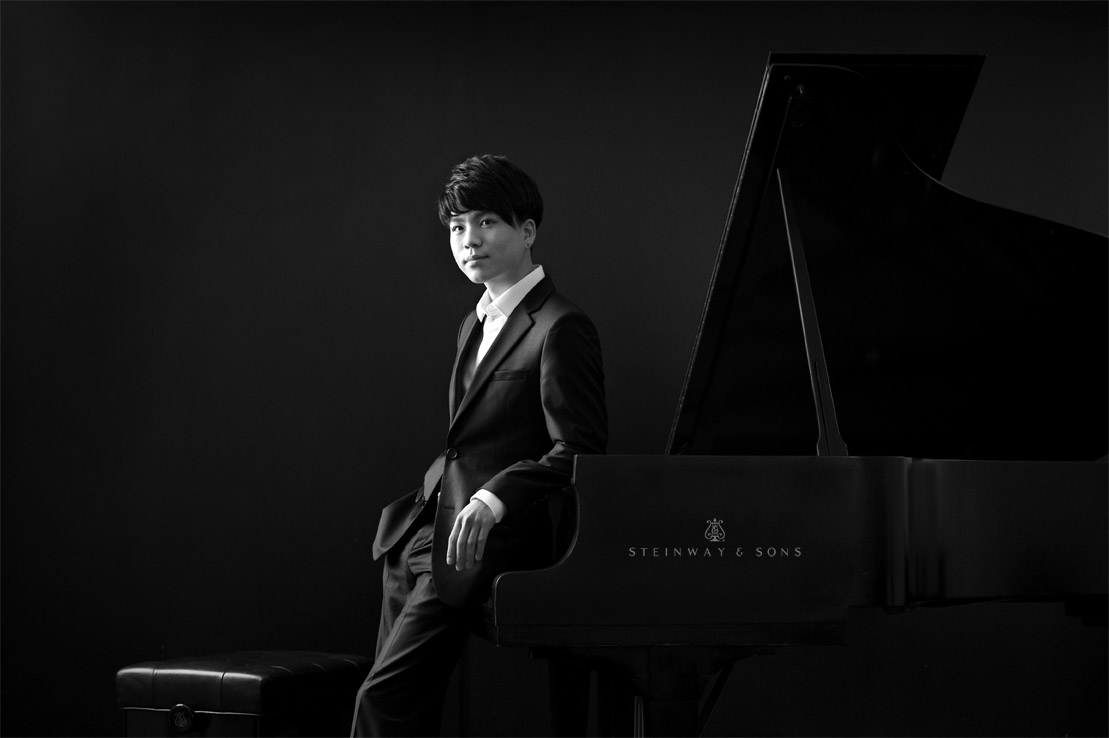
Jason Bae was born in Daejeon, South Korea in 1991 where he began studying piano at the age of five. At age 12, he has made his concerto debut with Auckland Symphony Orchestra performing Grieg Piano Concerto Op. 16. A year later, he became the youngest concerto soloist to perform with Auckland Philharmonia Orchestra for the ‘SkyCity Starlight Symphony Concert in the Park’ at the Auckland Domain in front of 200,000 people. Under the baton of Rossen Milanov, Jason performed Stravinsky’s Concerto for Piano and Winds as a soloist with New Zealand National Youth Symphony Orchestra in 2010. He has also appeared as a concerto soloist with the Queensland Symphony Orchestra of Australia, Auckland Youth Symphony Orchestra, Christchurch Symphony Orchestra and Bach Musica. 

Jason’s full biography is on his website

pavel_kolesnikov_1_c_colin_way
(photo: Colin Way)

My concert-going year got off to a wonderful start with a solo performance by Pavel Kolesnikov, a sensitive young pianist who showcased Debussy’s evergreen and ever-popular Préludes Book 1, with L’isle joyeuse to round off a most satisfying and engaging lunchtime recital at London’s Wigmore Hall

Debussy’s Préludes are amongst his most popular repertoire for the piano, Book 1 being the most well-known. When Debussy first published these works, he headed them with a number only, their titles being hidden at the foot of each piece. The intention clearly was that their stories, pictures and moods were revealed gradually to pianist and listener. In Kolesnikov’s performance, there was a similar sense of the music unfolding before us, with new voices and inner lines of melody revealed gradually or unexpectedly.

Read my full review here

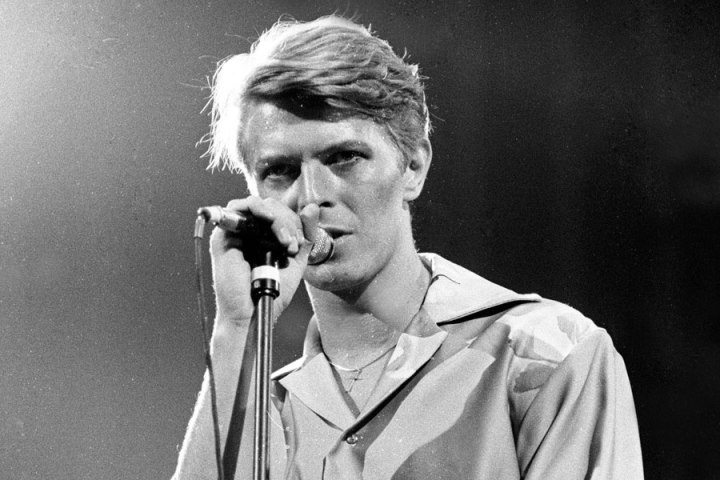
I don’t often write about pop music, but I can’t not mention David Bowie following the very sad news that he has died at the age of 69.

bowie_2067738b
(picture The Daily Telegraph)
Bowie’s music was a major part of the soundtrack to my teens. I can’t even remember how I discovered his music: perhaps a friend played me a track or two and I was instantly hooked, voraciously listening to his (then) extant oeuvre from Ziggy Stardust to Aladdin Sane, through Hunkydory, Low and Station to Station. I loved the inventiveness of his music, the quirky poetic lyrics and above all his ability to reinvent and reshape himself for each successive album. Some of his songs were anthems – ‘Heroes’ being the most obvious – others were tender ballads or trippy existential ramblings (Aladdin Sane). There were folksongs and rock n roll numbers: no two were the same.

When I met my husband I was delighted to find he had the same collection of Bowie albums as me, together with some I didn’t own (‘Low’, ‘Lodger’): it felt significant somehow that we had this shared cultural landscape.

Bowie once described Bob Dylan as having “a voice like sand and glue”, but his own voice was unique too, slightly nasal, always distinctive. He could croon or exclaim, whisper or shout.

His music dropped off my radar in the 1990s when I was becoming more immersed in classical music, but of course he was always there, in the background. When he released his penultimate album, The Next Day, in 2013, I made an effort to listen again. In tracks like Where Are We Now? we find Bowie the mature artist, reflective yet still inventive.

2014davidbowie_getty75944035_10161014
(picture NME)
His refusal to engage much with the media or do interviews suggests not a reclusive artist but one who felt at ease with himself and his multiple artistic and musical personae. This confidence, a secure sense of self, is undoubtedly reflected in his music.

His death – like Pierre Boulez’s in the classical world – robs us of a true creative artist, an innovator, visionary and a fine musical craftsman.

David Bowie 1947-2016