British pianist Stephen Hough has sparked a lively debate by suggesting in an article that classical concerts could be “shorter” to attract younger or new audiences, or allow venues and musicians to offer two concerts in one evening. He has also hinted that intervals could be ditched in favour of a performance lasting around 70 minutes, and that concerts could start at different times (in the UK the standard start time for an evening concert is 7.30pm) perhaps to allow two performances in the same evening. Reactions online to these suggestions have ranged from outrage (at the thought of anyone messing around with the “traditional concert format”) to applause (for creative thinking).

In fact what Stephen Hough is suggesting is not that new. Many musicians, ensembles, orchestras and venues have been experimenting with different ways of presenting classical music for some time, from rush-hour concerts at 6.30pm to Wigmore Lates, 45-minute lunchtime concerts or lecture-recitals. Earlier this year I met and interviewed John Landor whose innovative Meet the Music concerts allow audience members to get right up close and personal with the musicians and the music, literally, while the Orchestra of the Age of Enlightenment has for some time offered concerts in pubs and late-night “speed-dating” sessions where the audience can meet the musicians after the performance.

Trying to encourage “young people” to come to classical music concerts is an ongoing preoccupation of ………well, anyone with an opinion on the future of classical music, it would appear. There seems to be a current misconception about young people that because they are used to the instant gratification of the internet and platforms like YouTube, Spotify, Netflix et al, they are incapable of sitting through a concert or performance lasting more than 30 minutes, maximum, in one go. Personally, I think it is less to do with this and more to do with education – or lack thereof – that has inculcated in them the idea that classical music is “boring”.

Personally, I have never had a problem with the length of concerts. I think this is partly due to the fact that from a very young age I was taken to concerts and opera at which I was asked by my parents to sit quietly and attentively. In fact, my mother used to say to me that it was “very rude to yawn or fidget” during the performance “because the musicians can see you and will be offended if they think you’re not listening properly!”. Having been on the other side of the stage, so to speak, as a performer in recent years, I am not so sure she was right (I tend not to look at the audience, as a pianist, until I stand to bow), but I think her comments certainly taught me to be a well-mannered and attentive concert goer. In over 40 years of concert going I have only twice fallen asleep during a concert, once during a Prom which I had rushed up the M3 in the car to get to (and I also fell asleep momentarily at the wheel of the car during the journey). I also feel slightly embarrassed if I leave during the interval (again, something I rarely do).

The length of a concert is dictated by many factors, including the programme of music being performed, type of venue, and time of day. Sometimes performers like to run a whole 70-90-minute programme without a break (Pierre-Laurent Aimard did this a few year’s ago with his Liszt Project cycle at the Southbank), and certain works, such as Messiaen’s Vingt Regards, are best performed (in my humble opinion) without a break to allow listener, and performer, to appreciate the arc of the narrative. But some repertoire is very demanding for the soloist and an interval may be necessary not only for the performer/s to have a break, a pee and a drink, and regroup before going back on stage, but also for the audience to pause and reflect on what they have heard, have a break, chat with friends and go back for the second half with refreshed ears and mind.

And I think it’s easy to forget too that for many people going to a concert is very much a social experience: it’s not just about the music, though of course that is the greater part of the evening, but it is also about meeting friends, sharing the excitement of live music, the conversations afterwards about what you heard.

Other factors dictate how long one can last in the auditorium, such as comfort of seats (Cadogan Hall has the comfiest seats in London), climate (the Royal Albert Hall can sometimes be unbearably hot and airless), and quality of the “social areas” (bars, foyers etc).

So I think what Stephen Hough is really suggesting is that it’s important to keep thinking of creative and exciting ways to present classical music. Concerts may be short or long, with or without interval, or formal dress. Performers may speak to the audience beforehand, or be interviewed, or maybe there is a pre-concert talk, or a post-concert Q&A session. We don’t need “gimmicks” to sell classical music – and most young people can spot a gimmick which has been thought up by a focus group or a bunch of middle aged people trying (and failing) to get on down with the kids. The most important thing is not to patronise audiences or talk down to them.

This is a very interesting discussion – feel free to leave your thoughts on this subject in the comments box below.

Meet the Artist……Stephen Hough

Readers may be interested in the Music Marathon project at St John’s Smith Square, London which takes place over the weekend of 17 and 18 September as part of Open House London 2016. Soloists, choirs and ensembles will perform over a 24-hour period while the doors of St John’s will be open during the entire weekend to allow people to come in and explore the building, while also enjoying performances by a wide range of musicians (I will be performing there from 1.15-1.30pm on Saturday 17 September).
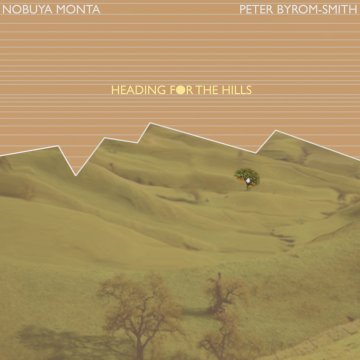
 

‘Heading for the Hills’ by Nobuya Monta and Peter Byrom-Smith
a1757970457_10
Performed by Strata String Quartet
Violin 1: Oliver Morris
Violin 2: Alexandra Dunn
Viola: Laurie Dempsey / Alice Billen
Cello: Roderick Skipp

Recorded at Blueprint Studios, Salford
Mixed and Mastered by Gaz Hadfield
Cover design by Louis Barabbas

Debt Records, released July 15, 2016

This first classical release by Debt Records celebrates a groundbreaking East-West collaborative partnership between Japanese composer Nobuya Monta and British composer Peter Byrom-Smith. ‘Heading for the Hills’, a suite in 10 movements for string quartet, is the main work on the album, bookended by Sonata Lamentosa and Sinfonia by Monta. Peter Byrom-Smith’s work, which lends its title to the album, is a tribute to the landscape of the Peak District close to where Peter and his wife Gillian, a poet, have made their home in Glossop in Derbyshire.

“The title of the album was taken from a poem written by my wife Gillian Byrom-Smith. The poem was inspired by the frequent rail journeys we have taken across the flat Vale of York towards the beauty of the Pennines.”

The main six movements of the work are musical images of real journeys between the east and west of England, depicting things the composer observed, or thought he had observed during the course of these journeys (Galleons, Swallows, Raindrops, Heading for the Hills Lanterns, Buds). A Prelude and Postlude were added to complete the work – and the journey – so that the suite works as an entire narrative when performed in concert. No. 7, Buds, was composed by Nobuya Monta and Peter Byrom-Smith.

This haunting, expressive and evocative music contains hints of British minimalist composer Michael Nyman, but without the (sometimes tiresome) insistent repetitions. Byrom-Smith seems more intent on using melody, harmony and dialogue between the instruments to create interesting textures and musical interactions. Motifs are stated, restated and developed, for example the dancing figure which opens over a drone in ‘Raindrops’  develops into a playful, twirling dance between the instruments. Here there are more than a few hints of English folksong and dance before the middle section unfolds in a more contemplative manner. Later, the folksy motif returns and an insistent little fanfare is heard in all instruments. 

‘Swallows’ creates a feeling of space, of birds wheeling and circling in the sky, with its contoured melodic lines and delicate fioriture, redolent of the solo violin line in ‘The Lark Ascending’ by Vaughan-Williams. ‘Buds’ unfolds slowly, just as a flower or plant opens to reveal itself. The final work in the suite, Postlude, recalls themes heard previously in the Prelude and introduces new material to bring the narrative and imagery to its conclusion.

Nobuya Monta’s ‘Sonata Lamentosa’ is an emotional response to the tragedies that have occurred all over the world. The textures here are more florid, the mood more urgent with an almost Schubertian melancholy (cf String Quartet No. 14, ‘Death and the Maiden’), though, as in Schubert, there is also a sense of hope. 

The closing work on the album, ‘Sinfonia’, is also by Monta, and once again seems infused with the moods and motifs of late Schubert and the harmonic and rhythmic piquancy of the early twentieth century (Ravel, Debussy). It utilises contrapuntal textures and the second movement is a thrilling fugue.

‘Heading for the Hills’ – CD or download

Composer Peter Byrom-Smith will featured in forthcoming Meet the Artist interview


crmasy4waaawday

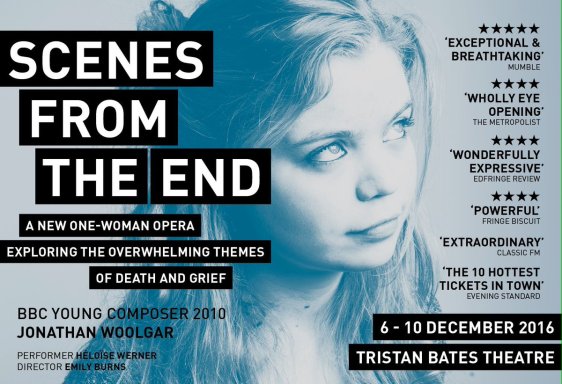
‘Scenes from the End’ by British composer Jonathan Woolgar is a one-woman opera focusing on grief in a variety of forms, from the abstract to the deeply personal, from the philosophical to the everyday. It explores big ideas – the notion of “the end” and what it might mean at different times and in different forms – concepts far bigger and complex than our individual comprehension can easily grasp or make sense of; and the frustration of the individual in a state of grief, surrounded by people whose prosaic or patronising attempts at offering “comfort” merely compound one’s sense of loss and anger.

ywtdacbiHeloise Werner is a young soprano and cellist with a particular interest in new music and music as drama. She is co-director of contemporary ensemble The Hermes Experiment and a member of new vocal ensemble SHARDS. ‘Scenes from the End’ developed from previous collaborations with Jonathan Woolgar and Heloise’s interest in exploring the boundaries between theatre and singing, and how that might work in a one-woman show.

Each of its three parts has a specific musical and textural focus. The first part explores grief for the end of the universe, a concept so vast we cannot possibly understand nor process it. The second part grieves for the human species and explores the arrogance of humankind (“We have done well, but we forgot to survive“), and, to my mind at least, offers a comment on our reckless plundering of the earth’s resources and man’s seemingly insatiable need to wage war on others. The final part grieves for an individual life, the pain of personal grief and the griever’s frustration at those around her who seem unable to respond appropriately (“Do not speak to me……but, stay with me“).

Sparsely staged, with only a chair and stool as props, the work has an immediacy which is arresting and very powerful. Heloise’s voice has a piercing clarity and depth, one moment beautiful, the next visceral and freighted with distress. The sung episodes are interspersed with spoken words (whispered, shouted), and gasping and panting, which calls to mind the gulping sobs of a grieving person who almost cannot cry any more. There are also recorded episodes, Heloise’s voice heard hauntingly from a distance, and percussion. Quotations are projected onto a screen which inform and expand on the narrative. The work is direct and thought-provoking with a raw intimacy enhanced by the simple staging and small size of the venue: one is close enough to see the broad range of emotions passing across Heloise’s face as she performs.

While the performance unfolded, the sounds of Hampstead Road filtered into the theatre – people talking, the rumble of traffic, a police or ambulance siren – reminding us, perhaps appropriately, that human life in all its humdrum and everyday continues.

‘Scenes from the End’ is at Tristan Bates Theatre, London WC2 from 6-10 December 2016.

Further details and tickets here


heloisewerner.com

Who or what inspired you to take up the piano, and pursue a career in music?

I come from a musical home, both of my parents are piano teachers. Music was everywhere around me when I was growing up.

You are also a composer and a visual artist. Can you explain the connection between your music and visual art?  

I’m a pianist who composes and paints. There are many parallels between visual art and music – tonalities, colours, textures, form/structure, proportions. One art form feeds the other. I’ve been drawing since I can remember myself. In recent years I’ve been creating a lot of digital art on my iPad. I also use the iPad to read music.

Who or what have been the most important influences on your musical life and career?

I was fortunate to have wonderful teachers. First, when I moved to Israel I studied with Arie Vardi; then with Seymour Lipkin and Claude Frank at the Curtis Institute of Music. They formed my musical understanding. Later on, András Schiff was very instrumental to my development. But perhaps the biggest influences are the personalities of the composers whose music I’m playing at the moment.

What have been the greatest challenges of your career so far?

Finding mental space in the midst of traveling and playing a lot of different repertoire at the same time.

Which performance/recordings are you most proud of?

I don’t think too much about past performances.

Which particular works do you think you play best?

It’s difficult to be objective about what I play best. I love many things and I have a big and eclectic repertoire, ranging from Couperin to pieces that I commission. I would say that right now I feel very connected to the music of Haydn and Schumann.

How do you make your repertoire choices from season to season?

The process of putting together a recital programme is fascinating and at the same time can be quite daunting. The possibilities are huge. Firstly, I play music that I love and feel connected to. For example, at the moment I’m quite obsessed with Haydn. I’m working on 24 Haydn sonatas for the Lammermuir Festival in September. It is an enormous amount of work. This informed the last season, in which I programmed a different Haydn sonata in each of my recitals. I try to have a thread in my programs. It can be a thematic thread or motivic one.

Do you have a favourite concert venue to perform in and why?

I’ve played in many beautiful halls in Europe and in the USA. It is hard to choose one, but if I had to it would probably be Wigmore Hall. It is just such a gorgeous and intimate place to make music.

Favourite pieces to perform? Listen to?

To perform: anything by Haydn, Beethoven Opus 101, Stravinsky’s Petrushka, Rachmaninov and Prokofiev concertos.

To listen to: Sibelius symphonies, Mozart operas, Bach cantatas.

Who are your favourite musicians?

Bartok, Rachmaninov, Edwin Fischer, Schnabel, Szigeti, Furtwangler, Harnoncourt, Carlos Kleiber, Radu Lupu, Murray Perahia.

What is your most memorable concert experience?

András Schiff playing Goldberg and Diabelli Variations, and Opus 111 for an encore.

What do you consider to be the most important ideas and concepts to impart to aspiring musicians?

Be patient and know your priorities in whatever you do.

Where would you like to be in 10 yearstime?

Wherever life takes me.

What is your idea of perfect happiness?

Being outside, either in the woods or the mountains.

What is your most treasured possession?

The present moment.

What do you enjoy doing most?

Making music.

What is your present state of mind?

Curious.


Roman Rabinovich - Papa HaydnFor further information about Roman, his art and performances please visit his website: http://www.romanrabinovich.net