Every year, around the time of the start of the BBC Proms, that wonderful 2-month long festival of music, the thorny issue of when to applaud rears its head. In fact, the debate over the appropriateness of applause is ongoing, but it seems to become more vociferous during the Proms season. And why? Because at Proms concerts clapping may be audible between movements! This year there seems to be more applause between movements than ever before – and more entrenched  and noisy views expressing an extreme dislike of this practice……

In a way, the Prom concerts are not like other classical music concerts in the UK. Originally conceived by Robert Newman and Henry Wood to introduce classical music to a wider audience, the atmosphere at Prom concerts tends to be rather more relaxed, though often no less reverent, and the audience demographic far broader than at, say, London’s pre-eminent chamber music venue, the Wigmore Hall. The Proms attracts the classical music newbie and the committed classical music geek, who goes to every single concert in the season, and in between a whole host of other people who enjoy the Proms experience. The etiquette of the classical concert is less rigid at the Proms – it’s much more “come as you are and enjoy yourself”, but in spite of this, the issue of applause remains a tricky one.

“I’ve never experienced anything more embarrassing. After the first movement the hall was silent.”

– Herman Levi, on conducting Brahms’ second symphony, 1878

The custom of not applauding between movements of a symphony or concerto or other multi-movement work developed during the latter part of the nineteenth century. Both Mendelssohn and Schumann made attempts to prevent audiences from applauding between movements. Mendelssohn asked that his ‘Scottish’ Symphony, premiered in 1842, should be played without a break to avoid “the usual lengthy interruptions” and Schumann took charge of the matter in a similar way in his piano and cello concerti as well as his Fourth Symphony, but it was Richard Wagner who really instigated the custom as we know it today during the premiere of his opera ‘Parsifal’. By the turn of the twentieth century the concert hall had become the hallowed place it is today, and the conductor Leopold Stokowski even went so far as to suggest clapping be banned altogether lest it interrupt the “divinity” of a performance. Now if one dares to applaud between movements one may be met with angry hisses of opprobrium, shushing, tutting or very stern looks.

Music evokes emotions and people should be able to express them freely – with respect to the performers of course

– Kirill Karabits, conductor

Some concert-goers regard applauding between movements as ignorant or boorish behaviour, an indication that you do not know the music properly (while the aforementioned concert-goers clearly do!). For some it is downright sacrilegious. Others regard it as disrespectful to the performers or disruptive because it can interrupt the flow of the performance. The curious thing is that this attitude would have been totally alien to Mozart or Beethoven, Brahms or Grieg. In an earlier age, concerts were noisy affairs, the music played to the accompaniment of people talking and laughing, eating and drinking, and wandering in and out of the venue. Applause was given freely and spontaneously, indicating appreciation and enthusiasm for the performers and the music. There was numerous applause during the premiere of Grieg’s piano concerto, while Brahms concluded his first piano concerto was a flop because there was so little audience response (except for the hissing, that is). Today the pauses between movements are often filled with the sound of people coughing or unwrapping cough sweets, and applause is reserved for the end of the work being performed.

For the ingenue concert goer, knowing when to applaud can be stressful. I attended an all-Brahms Prom a couple of years ago, conducted by Marin Alsop, and shared a box with a family who were attending the Proms for the very first time. We got chatting and after some pleasantries about the programme and the performers (the Orchestra of the Age of Enlightenment), one of the party said “We’re really worried about clapping in the wrong place!”. I assured him that it didn’t matter at the Proms, and that he could clap when I did if that helped. I thought it was rather sad that these people, who really enjoyed the concert, felt so anxious about something so trivial, and it is this anxiety about how to behave, and specifically when to applaud, which inhibits some people from attending classical music concerts.
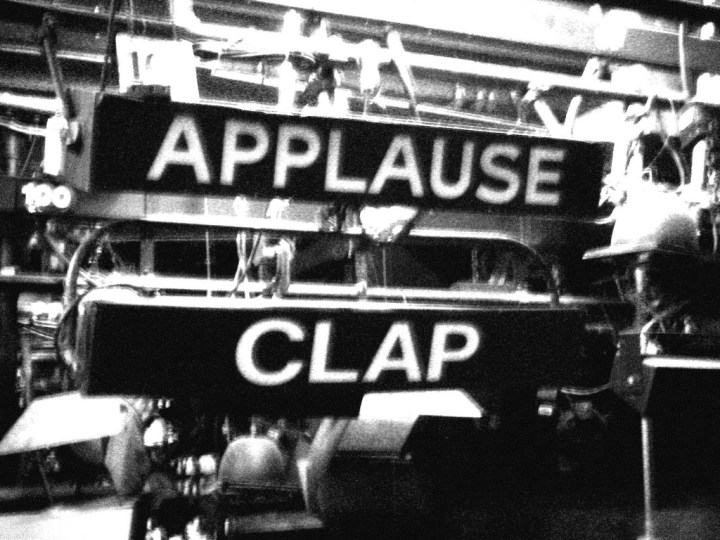
applause_sign

The current director of the Proms, David Pickard, declares that he “loves” hearing spontaneous applause at concerts, while some die-hard concert goers are horrified by his attitude, regarding such behaviour as “barbarous” on the part of other audience members. The curious thing is that at opera no one gets upset if you applaud after a particularly beautiful aria or chorus set piece, and it is almost de rigeur to do so. Ditto in jazz concerts, after some sparkling improvisation or a fine solo by one of the musicians. And conductors and musicians can of course control when applause occurs through their body language: a conductor may keep the baton raised aloft for a period of time after the last notes have faded away, or a pianist may keep his or her hands “in play” over the keyboard, defying anyone to break the spell with premature applause.

In addition to the issue of when to applaud, there is also the how of applauding. Some people seem desperate to applaud almost before the final notes have sounded (this is common at Prom concerts) and it does lead one to wonder whether this is in fact a form of attention-seeking, a “look at me! I know this piece so well I know exactly when to applaud!”. For some this can be really intrusive, especially at the end of the very intense or profound work. Sometimes, as if collectively impelled by an unseen force (in fact, the power of the music), there is a period of silence after the music has ended, and a sense of the audience holding its collective breath, savouring what has gone before. And occasionally (especially in contemporary repertoire in my experience), no one is really sure when to applaud and the impulse to clap is led by a discreet member of venue staff.

I am more bothered by those rare times when people feel the need to rush in to applaud at the final note of a piece without regard for the mood if it is a quiet ending

– Marin Alsop, conductor

applause-chart

At the Proms this year, it seems that the “applaud between movements” faction is gaining more currency. I attended a Prom performance of Schubert’s Unfinished Symphony and Mahler’s tenth symphony and there was applause – spontaneous and appreciative (to my mind) – between every single movement of both works (though as some wag suggested since both works were unfinished, perhaps members of the audience applauded because they didn’t know when the work had ended!), and other Prommers have mentioned there is noticeably more applause between movements this year. For some this is not an issue, but for others it clearly is a problem. Whatever your view, the most important thing is to show appropriate appreciation for the musical performance and those who created it, rather than worrying what the person sitting next to you might be thinking about your concert etiquette! The music, after all, belongs to us, the audience, the listeners – not to the snobs and critics.

Why not go the whole hog and bring back smoking, talking, eating and all the other disruptions that progress has excised – MR via Twitter

I think it will become noteworthy when there isn’t applause between movements at the Proms – HJ via Facebook

If given a choice between people coughing like bastards, the rustling of sweet papers, mobile phones beeping, and talking (!) during quiet movements (when did that become a thing?) or a rapturous applause in appreciation of the music I choose applause… every time – DO via Facebook


https://open.spotify.com/track/5Rty8OPVOnqIpJN8ZD1cpy


https://open.spotify.com/track/6U70qJA6gRi8ZrH1Bm7e8k


“today I finished the Fantasy and the sky is beautiful…..”

Fryderyk Chopin, 1841

The sky was indeed beautiful on perhaps the last day of summer, August Bank Holiday Monday, when I and my concert companion escaped the city heat and embraced the cool elegance of Cadogan Hall for an hour of poetry in music.

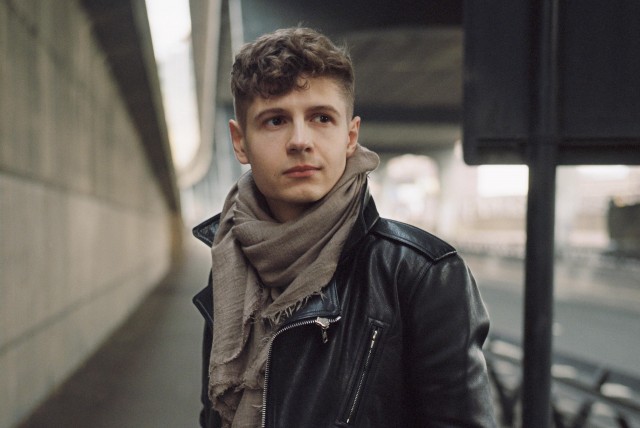
Russian pianist Pavel Kolesnikov is still in his twenties, yet he plays with all the assurance, poise and musical sensibility of an artist twice his age. His performance of piano music by Fryderyk Chopin was one to savour, to revisit (thanks to the wonders of the Radio Three iPlayer) and to hold in the memory for a long time to come. It is rare to be so transported, to lose time, suspended in sound, such was the effect of Pavel Kolesnikov’s playing.

A pianist from another era, Phyllis Sellick, declared that a concert featuring only one composer was “a list”. But how can one say that of the music of Fryderyk Chopin, so rich and subtle, so varied yet accessible that each performer, professional or amateur, can find their own personal way into it? Kolesnikov created a programme of pieces which “cast a different light” on Chopin, revealing not only his deeply Romantic mindset but also “an extremely refined, clear, clean style” (PK), perfectly complemented by Kolesnikov’s cultivated playing.

pavel-kolesnikov-3
Pavel Kolesnikov (photo: Eva Vermandel)

Some purists may balk at his elastic tempi, pushing rubato perhaps a little too far for some tastes (though not ours). This slackening of tempo, stretching of time, was felt most palpably in the repeats in the Waltzes, proof that no repetition is the same in the hands of a pianist. There were decorations too, sprinklings of improvisation, graceful musical seasonings, though always subtle and delicate as a breath. As a great admirer of Bach, I am sure Chopin would have approved of these embellishments, especially when delivered with such sensitivity and intuition.

From the opening work, a Waltz scored in A flat major but constantly hovering in the minor key, played with a tender poignancy and a caressing touch, Pavel Kolesnikov created a bittersweet intimacy in each work he touched, even in the grander, more expansive measures of the Fantasy in F minor and Scherzo no. 4, whose skittish good-nature closed this exquisite hour of music.

As I said, it is rare to be so transported by sound, by pianist and composer so perfectly in sympathy; yet I have heard Kolesnikov before in Debussy and Schumann, and I have been moved to tears by the poetic refinement of his playing. When so many young players seem to subscribe to the louder-faster school of pianism it is refreshing to hear a pianist who does not rush, who knows how to create breathing space and dramatic suspensions in the music, and who appreciates the smallest details as well as the most sweeping narratives.

Afterwards we stepped out into the Chelsea sunshine, found a shady spot for a drink and a long conservation about music, concerts, art, writing, and had the privilege of meeting the pianist, who was dining at the same cafe, to offer our congratulations for his wonderful, transporting performance.


My review for Bachtrack here and my companion’s response to the concert here

In 1952 a composer called John Cage told us there was music in silence, and the world hasn’t been the same since. Today, the gradual wearing away of stone by water, the echoes of gravitational waves, and the caloric metamorphosis of food into energy may all be understood as musical works, a privilege for which we are indebted to Cage.

September 5, 2017 would have been Cage’s 105th birthday, and to commemorate and honor our favorite sonic philosopher, Ace Hotel and the John Cage Trust, in partnership with Mode Records, present Untouchable Numbers, a 24-hour listening event beginning at 12am. Cage’s sounds, and silences, will play throughout lobbies and public spaces of all nine Ace Hotels as the earth completes one full rotation, freely and open to the public. Visit individual listings for Chicago, London, Los Angeles, Pittsburgh, New Orleans, New York, Palm Springs, Portland and Seattle for specific venue information.
Learn more about where to hear Cage across Ace Hotels properties here, and consider booking a room with the promo code SILENCE, valid for stays from 9/4-9/6. RSVP suggested but not required. Seating in public spaces is first come, serve.
Listening is a radical act.
NYC_JohnCage_suite_web_quote_1X_V3
(source: Ace Hotels press information)

gallery072

Who or what inspired you to take up the piano and pursue a career in music?

When I was a teenager, I never thought of pursuing a career as a pianist. I used to play a lot of classical and romantic piano repertoire but just for the personal joy of playing. I was much more into rock and punk music. The life of a classical musician seemed to be quite boring and bourgeois to me, even after starting my piano studies at university. At this point I was totally uninterested in any contemporary classical music and pieces I heard by composers like Boulez or Stockhausen sounded too academic for my taste. At the time, I didn’t know about contemporary genres like minimalism or any electro-acoustic music and I never imagined that there could be “classical” composers out there influenced by the same music as me. My view completely shifted after I started listening to “The people united will never be defeated” by Frederic Rzewski. The eclecticism of this work, the political attitude, and the combination of elements from both popular and classical music made me reconsider my view of what a pianist is able to express on stage. From this point on I wanted to be a professional pianist.

Who or what have been the most important influences on your musical life and career?

Frederic Rzewski definitely had a large effect on my decision to pursue a career as a pianist but, for my own musical style, there are a wide range of influences. I admire composers like George Antheil and Henry Cowell for their uncompromising and radical approaches towards the piano as a noisy sound monster, but also composers like Erik Satie or Philip Glass who are able to create an almost transcendental sound out of the most simplistic material. At the moment I’m very much into post-rock, which to me feels like a mash-up of both of these sound aesthetics. This mood somewhere between mania and meditation is what I try to transfer to the piano when doing my own arrangements.

What have been the greatest challenges of your career so far?

At the end of my studies after I was about to leave the comfort zone of the university, I recognised that I was a classical pianist but with quite a strange repertoire and an unusual way of setting up my concert programs. I felt too superficial for the contemporary music hardliners, too progressive for the classical traditionalists but still too serious to be part of the popular culture. Falling between these schools became my niche. I liked the idea of being kind of intangible for the audience, and it gave me the opportunity to reinvent myself with every new project or album. But that’s sometimes a long journey.

Which performance/recordings are you most proud of?

Every recording is a very unique project to me, reflecting just a current idea or an aesthetical statement at a certain point of my life so I would say that there isn’t one particular album I’m most proud of. There is, however, obviously always a moment after finishing each album when you feel a great sense of pride as a result of all of the hard work put in: from the first conceptual idea to the last mixing session.

Which particular works do you think you play best?

I stopped playing Beethoven piano sonatas in concerts after I recognised that my interpretations had nothing more to add to the interpretations I’d already heard by all those great pianists. I’m convinced that you can only be a true musician if you have something new to say through the music you play. My motivation as a musician is not to try and imitate what hundreds of pianists have previously done before me but to explore hidden links within different genres by reworking pieces or discovering rarely performed works. I hugely favour American piano music; from George Gershwin’s colourful jazzy rhythms, to the dark and sensual soundscapes of George Crumb, to the works of the American minimalists. This music suits me best.

How do you make your repertoire choices from season to season?

The process usually starts with a piece that I’m obsessed with at the time. This work then forms the conceptual basis for a new program. In the case of “Beauty in Simplicity”, there was a track called “A new error” by German techno group Moderat. This work reminded me of Philip Glass’ piano works. My first thought was then to prepare a program that picks up on classical minimalism but also explores elements of Techno and Ambient Music. There is a strong aesthetical connection between Brian Eno and the music of Erik Satie so there was suddenly a new storyline going back to the 19th century. For the next step, I went through a lot of original piano music repertoire as well as tracks I wanted to rearrange for piano. From this, I compiled a set ranging from the Paris salons to Berghain held together by the compositional ideas of patterns and loops.

Do you have a favourite concert venue to perform in and why?

I really love playing in planetariums. I started this two years ago with my “Insomnia” program and I am planning on doing this with my upcoming album “Beauty in Simplicity”. It’s a place that gives me the opportunity to create a very special concert experience by combining the music with fulldome visual art and building up a three-dimensional soundscape. You’ll hardly find this kind of hypnotic atmosphere in any other concert venue.

What is your most memorable concert experience?

I think it was when I first performed Rzewski´s “The people united will never be defeated” back in 2009. I worked on this masterpiece for almost two years until I had the courage to go on stage with it. I was totally absorbed into the background story of the piece. Playing this piece felt like being part of a revolutionary fight using the notes as weapons. There was just so much adrenaline released during these 65 minutes of music.

As a musician, what is your definition of success?

There is always a sense of ambivalence in the life of an interpreting artist: are you a servant of the performed work or should the work serve to the performer? I feel successful if both of these are fulfilled: by making another’s work my own either on stage or during a recording.

What do you consider to be the most important ideas and concepts to impart to aspiring musicians?

As a pianist I can say: don’t expect to be a universal genius, focus on a repertoire that fits your personality and makes you authentic. If you were a pop musician, no one would tell you to play jazz today, heavy metal tomorrow and drum ‘n’ bass the day after, just because it’s all part of the pop culture. Classical pianists are often expected to cover more than 300 years of music history. A classical education requires you to play Bach just as well as Mozart, Chopin or Stravinsky. Find the mistake.

What is your idea of perfect happiness?

Like a famous German entertainer once said: “having nowhere to be and being tipsy”.


Kai Schumacher’s new album Beauty in Simplicity is released on 1 September


Kai Schumacher delights in pushing the boundaries between classical and popular music while avoiding the wellworn clichés “Crossover.” Boasting an impressive pedigree, Kai studied at the renowned Folkwang University Essen with Prof. Till Engel, passing his „Konzertexamen“ with distinction in 2009. Since then, like a musical mad scientist, he has been constantly experimenting and combining seemingly incompatible elements with surprising results. His solo performances are acts of pure musical – and stylistic – alchemy, serving up heady mixes of Dadaism and Dancefloor, Avantgarde and Pop culture – sometimes all at once!

When not engaged in genre-defying pursuits, Kai Schumacher‘s repertoire focuses on American piano music of the twentieth and twenty-first centuries. His debut recording of Frederic Rzewski‘s monumental “The People United Will Never Be Defeated” (2009) was hailed by Fono Forum magazine as a “pianistic sensation” and voted CD of the month. On his second album, “Transcriptions” (2012), he bravely turned to the musical heroes of his youth – Rage Against the Machine, Nirvana, Slayer and others – remixing them and transforming the concert grand into a four squaremeter sound monster, a mechanical sound-effects board, complete with prepared percussion. His third album “Insomnia” (2015) is the story of a nocturnal odyssey, at once soothing and disturbing. It´s five restless “hymns” to the night feature the works of five American composers written over the past 80 years.

On his current album „Beauty in simplicity“ (September 2017, NEUE MEISTER) Kai Schumacher is combining original piano compositions with his own arrangements for „enhanced piano“ to create a repetitive set between meditation und mania. Including works from three centuries ranging from Erik Satie through Steve Reich to Moderat Minimal Music meets its classical pioneers and descendants in Ambient, Techno and Post-Rock.

Kai Schumacher also works as a producer, regularly appears as an orchestral soloist and has toured throughout Europe, Asia and North- and South-America.

kaischumachersite.wordpress.com

(artist photo by Bonny Cölfen)