Who or what inspired you to take up  the piano, and pursue a career in music?

I come from a large family of musicians. I am the youngest of seven and grew up in a house where both traditional and classical music could be heard from every room. The range of instruments in my family ranged from the accordion, uileann pipes, fiddle, guitar, flute, tin whistle, banjo and singing of course. My father taught me the tin whistle from when I was about three years old and then I went to the Cork School of Music at four years old. We always had a piano in our home and I still remember saying to my parents when it came to my time to choose an instrument that I would choose the piano as it might be lonely if no one played it!

Who or what have been the most important influences on your musical life and career?

Undoubtedly my father and mother. From an early age they always supported me and encouraged me. My father loved playing the accordion and we actually recorded together on my debut album ‘The Ivory Lady’ which was released back in 2015. My father was a primary school teacher and we all went to school with him. The school was about 20 miles away from our home in Cork city and on the way we would learn Irish tunes, sing Irish songs and in general have a great journey! My Mum always loved music and was at every concert we gave and encouraged us. They gave us all such a love for music and we made so many wonderful friends through both traditional and classical music events that it became a wonderful social outlet too. Growing up I just wanted to be part of the whole family music scene, it was fun and music was always my passion.

In later years I studied with some wonderful musicians in the Paris Conservatoire, the Birmingham Conservatoire, the Franz Liszt Academy of Music Budapest and at the Royal Irish Academy of Music. I was influenced by both wonderful teachers and fellow students.

I met my wonderful husband five years ago and it was on holiday in Vence in France that he gave me the idea to set about recording ‘The Ivory Lady’. He has a real love for Irish airs and ballads and knew how much I loved to incorporate my own arrangements of the songs I grew up with into my classical concerts and recitals. From the moment I met him Tim has been a wonderful influence on my career and encouraged me to follow my musical dreams.

If I may mention some legendary musicians that I admire today here is my list, though I could add many more:

Pat Moynihan – my father was a wonderful accordion player and singer

Murray Perahia, Annie Fischer, Zempleni Kornel, John O’Conor, Claudio Arrau, Brigitte Engerer – a list of iconic pianists that will be well-known and loved here!

Matt Molloy – celebrated flautist from The Chieftains

Placido Domingo – Tenor

Emanuelle Morris – a wonderful musician, voice coach and teacher

What have been the greatest challenges of your career so far?

I always welcome a challenge and like to think I challenge myself every concert season. I was the first person to perform the Complete Piano Sonatas of Mozart in their entirety in Ireland in the stunning Hugh Lane Gallery in 2010. Since then I have performed several series including the piano sonatas of Haydn and Clementi and a series comprising of Schubert’s works of 1827: the Impromptus, both piano trios and Winterreise. I am incredibly excited about my next challenge: to perform the Completed Piano Sonatas of Schubert in the celebrated Triskel Arts Centre, Cork. This series will begin on February 2nd and will consist of four lunchtime recitals and a finale recital at 8pm on June 8th. There is such a beautiful piano and acoustic at the Triskel, such a wonderful artistic director Tony Sheehan and always an enthusiastic welcome from the audience. More details at: www.triskelartscentre.ie

I am also very proud to have been the first person to be awarded a Doctorate in Music Performance from The Royal Irish Academy of Music and the Dublin City University in 2009. It was a challenge and an achievement I am immensely proud of.

Which performance/recordings are you most proud of?

I am very proud of my first album ‘The Ivory Lady’. It brings my love for both Irish traditional music and classical music together. It showcases some of the music most close to my heart including the title piece ’The Ivory Lady’ which my brother, uileann piper Diarmaid Moynihan, composed for me over a decade ago. My father recorded the well-loved Irish air ‘Inisheer’ with me. He passed away in December 2014 and it means the world to me to have that special recording of us together. It was recorded in my brother Donncha’s recording studio in Cork, a great sound engineer, guitarist and arranger.

I am incredibly proud of a recent Clementi recording I did for RTE Lyric FM in April 2016. I recorded a recital of six piano sonatas by Clementi including two with my brother, flautist Kieran Moynihan.

I am proud to have played in so many countries and to have performed such iconic works as The Goldberg Variations, the Schumann piano concerto, the complete piano sonatas of Mozart, Haydn and Clementi and so much more. I love to perform, I love to perform in different countries, different venues and in a range of musical styles. It is what makes me who I am and I am incredibly lucky to have such a wonderful husband, family and friends who always encourage me and support me.

Which particular works do you think you play best?

I strive to play all works to the highest standard and I think one never reaches perfection. But this longing for musical perfection is what enables us musicians to grow and develop throughout our musical life I think.

I particularly love the Baroque era, the Classical era and the Impressionist era and also Irish traditional music. I have also recorded some small works for films over the years and thoroughly enjoyed it.

How do you make your repertoire choices from season to season?

Sometimes the repertoire is not my choice but the request of a particular music venue or festival. If choosing myself it is often a body of work I have ‘fallen in love’ with, a work which challenges me, my musical thought and my pianistic technique.

Do you have a favourite concert venue to perform in and why?

I have several favourite venues and several venues on my wish list! I am always delighted to be invited to perform in new venues and love experiencing different pianos and acoustics.

Who are your favourite musicians?

The ones who bring the heart of the music to all who will listen!

What is your most memorable concert experience?

Every concert brings something special: it is lovely to have a great response from an audience, to have a truly uplifting performance with a colleague, to meet new musicians, to play with musicians one has know for years, to perform a work for the first time and to be proud of what one has accomplished…. The list could go on.

Some memorable concerts have been:

Performing the Complete Piano Sonatas of Mozart in the Triskel Arts Centre and the Hugh Lane Gallery.

Performing with family members in Warsaw, Budapest and on a tour of Japan. Perfoming in the Lorient Festival of Music in Brittany, France when I was only seven years old.

Performing in Moscow in the Glinka Museum of Culture to celebrate the works of Ireland’s own classical composer John Field.

Performing Gershwin Variations and the MacDowell piano concerto with the RTE Concert Orchestra in Ireland’s beautiful National Concert Hall.

As a musician, what is your definition of success?

To improve everyday as a musician, pianist and performer. To bring every piece of music I perform to life and to bring my love for the music to the hearts of people in the audience.

What do you consider to be the most important ideas and concepts to impart to aspiring musicians?

Your best teacher will always be your ears. Learn new repertoire, go and see and support live performances and enjoy performing with others

Where would you like to be in 10 years’ time?

I hope my loved ones and myself are healthy and happy and I hope to be enjoying my career as a concert pianist, celtic pianist, recording artist and music arranger.

What is your most treasured possession?

My life with my wonderful husband Tim, family and friends. And I love my beautiful Kawaii grand piano too!!!


Dr. Fionnuala Moynihan completed her doctorate in Music Performance at the Royal Irish Academy of Music where she studied with Dr. John O’Conor and Professor Reamonn Keary. She is the first person to be awarded a Doctorate in Music Performance from the Royal Irish Academy of Music and the Dublin City University. Fionnuala began her piano studies at the Cork School of Music where she studied with Eleanor Malone. In 2001 she received her Honours Bachelor of Music degree from the Birmingham Conservatoire where she studied with Irish pianist/composer Philip Martin. She graduated with the Graduate award for pianists and the prestigious Weingarten scholarship enabling her to commence her studies at the Franz Liszt Academy of Music in Budapest. From 2001-2004 Fionnuala studied with Professors Kornél Zempleni and Balazs Szokolay at the Franz Liszt Academy after which she returned to Ireland where she was awarded her Masters of Music degree from the Royal Irish Academy of Music and Dublin City University. Fionnuala also studied at the Paris Conservatoire from 1999-2000 where she studied with Madame Brigitte Engerer and at the Aspen Music Festival and School where she studied with Yoheved Kaplinsky.

Fionnuala is widely acknowledged as one of Ireland’s leading pianists. She has a particular affinity with the works of both baroque and classical composers. In February 2009 she performed Bach’s Goldberg Variations to critical acclaim in the John Field Room of the National Concert Hall, Dublin and in November 2012 was invited by the prestigious Ardee Baroque Festival to perform both the Goldberg Variations and the Aria Variata in A minor. Fionnuala performed the Complete Piano Sonatas of Mozart in the Hugh Lane Gallery, Dublin, in a series of five recitals which ran from February to June 2010. She is the only pianist to have undertaken the formidable challenge of performing this cycle in its entirety in Ireland. In February 2014 she completed another monumental project – to jointly perform ‘The Complete Piano Sonatas of Haydn’, a series of twelve recitals over two years.

Fionnuala has been awarded many prizes both at home and abroad including a Bank of Ireland Millenium Scholarship, the prestigious Maura Teissier Bursary and the Rena Menasche Award from the Tel-Hai Piano Masterclass series held in Israel. She was awarded the John Field Prize at the 2009 AXA Dublin International Piano Competition.

Fionnuala has given solo recitals and concerto performances throughout the UK, France, Holland, Italy, Israel, U.S.A, Slovenia, Croatia, Serbia, Russia, Poland, Japan and Hungary as well as in Irish venues such as the John Field Room at the National Concert Hall, Áras an Uachtarán, Hugh Lane Gallery, Cork Opera House, Bantry House, the Mansion House and the Crawford Art Gallery. Fionnuala was invited by the University of Warsaw and the Irish Embassy in Warsaw in November 2010 to give a recital of works by John Field and a lecture recital exploring the link between Chopin and Field to commemorate the bicentenary of the composer’s birth in November 2010. In September 2011 she gave a recital of his works in the Glinka Museum of Musical Culture, Moscow, Russia, a special occasion as it is the city where Field both spent a great deal of his life and is buried. Fionnuala is an active chamber musician and has recently performed with violinists Helena Wood, Mia Cooper, pianist Sara Bryans, sopranos Deirdre Moynihan, Mary O’ Sullivan, Norah King, baritone Gavin Ring, oboist Sanja Romic and Gael Winds wind quintet.

In July 2014 she gave a Summer concert tour in Japan with five of her brothers and sisters. Their fusion of both the classical and traditional genres has earned them praise both at home and internationally. Her debut CD ’The Ivory Lady’ was launched in January 2015. This CD is a classical-trad fusion CD and showcases Fionnuala’s love for both the classical and traditional music genres. Fionnuala’s third classical series ‘Clementi: The Piano Sonatas’ began on November 23rd at the Hugh Lane Gallery, Dublin and consisted of eight recitals over two years. She was also an artist at the 2015 prestigious ‘Great Music in Irish Houses’ Festival. By kind invitation from the Irish Embassy Fionnuala gave two concerts in Zagreb, Croatia and Ljubljana, Slovenia to celebrate St. Patrick’s Day in March 2016. In April 2016 she recorded a recital of sonatas by Muzio Clementi for The Lyric Concert on RTE Lyric FM Radio. She has recently been invited to perform ‘The Complete Piano Sonatas of Mozart’ in a five-recital series in the Triskel Arts Centre Cork. This series will take place between January and May 2017 and is kindly supported by the Arts Council of Ireland.

Fionnuala currently teaches piano performance at the National University of Ireland, Maynooth.

Where does inspiration come from, the spark to create, to make?

….even fairly mundane activities can feed in to the discovery of new insight, new knowledge and new means of expressing ideas in all sorts of ways

– Professor John Rink

It may surprise you to learn that creativity tends to spring from routine, from the mundane. “Light-bulb” moments are rare, and sitting around waiting for the fickle muse to strike is largely wasted time. The personal routines of creative people may be wildly eccentric or incredibly precise, but the common thread is the routine, and the dedication to commit to practising your craft or art on a regular basis.

Forget the idea that inspiration will come to you like a flash of lightning. It’s much more about hard graft……Routine is really important. However late you went to bed the night before, or however much you had to drink, get up at the same time each day and get on with it.

– Mark-Anthony Turnage, composer

A self-respecting artist must not fold his hands on the pretext that he is not in the mood

– Tchaikovsky

People often ask me how I manage to get so much done – writing and updating this blog regularly, editing Meet the Artist interviews, practising the piano, teaching, attending and reviewing concerts, in addition to my commitments to my family. The answer is quite simple: my days and weeks roll by with what might appear to be rather dull regularity. I rise at the same time each day and follow a generally unchanging routine of piano practise (usually first thing in the morning when my brain is most alert), writing and teaching. The boundaries of my daily routine give my mind the chance to wander freely, to the extent that ideas for blog articles may come during the middle of my piano practise, and vice versa. By rendering aspects of daily life automatic and routine we “free our minds to advance to really interesting fields of action” (William James, psychologist). The self-discipline of a daily routine brings comfort and a kind of personal meditation which allows creativity to flourish. Routine also lets us to plan our work schedule and any deadlines which need to be met, which means we can be more realistic in estimating how much time we have to complete a writing project or learn a piece of music ready for a concert, for example. If this all sounds far too regimented, it’s worth noting that a well-organised schedule means one actually has the time to “go with the flow”, to fit in unexpected, spontaneous or last-minute events and activities, and it can help avoid procrastination. (Consider for a moment why disorganised people might complain that they have “no time” to get things done……)

Be regular and orderly in your life, so that you may be violent and original in your work.

– Gustave Flaubert

Creativity is important for musicians. Paradoxically, it is the very discipline and routine of regular practising which can spawn new ideas and bring freedom and spontaneity in performance. Our regular encounters with our music, and its composers, set by the parameters of daily practising, open the mind to new ideas, experimentation, reflection and reworkings. But don’t begin each day with the assertion “today I will practise for X hours or minutes” and then worry about finding the time for it; resolve to practise and then just go and do it!

Sportspeople understand this too. Look at the hours of regular, routine training they undertake to hone their skills, to enable them to run faster or jump higher, to reach their goals. We may describe the top tennis pros or highly-acclaimed concert pianists as uniquely “talented”, but no one, not even the greatest pianist in the world or the winner of the US Open, gets by on talent alone. That “talent” has to be nurtured, honed and finessed, and the only way to do this is through regular and concentrated work on one’s craft.

Our goals can only be reached through a vehicle of a plan, in which we must fervently believe, and upon which we must vigorously act. There is no other route to success.

– Pablo Picasso

For musicians, regular practising brings freedom, flexibility, and a sense of being and playing “in the moment”. This in turn brings creativity and originality to one’s playing and performance, enabling one to forge a personal and more deeply internalised interpretation and vision of the music, which does not rely on external validation from, for example, teachers, peers or critics. At this point, one can be said to have fully “taken ownership” of the music and in performance this can lead to even greater freedom, risk-taking, excitement and spontaneity – all aspects of performance which are palpable to audiences.

Don’t begrudge the time spent routinely practising. Not only are you training the procedural (“muscle”) memory, building security into your playing, and advancing your musical abilities, you are also allowing the mind to open, ready to explore and experiment, reflect and re-evaluate.

quote-the-great-composer-does-not-set-to-work-because-he-is-inspired-but-becomes-inspired-ernest-newman-61-59-06


Further reading

Musicians may be most creative ‘when not actually playing instrument’

Daily Routines – how writers, artists and other interesting people organize their days

The first guest post in a new series – The Cross-Eyed Pianist’s Mixtapes

Here Adrian Ainsworth, keen concert-goer and blogger as Specs, shares his mixtape

Art song is almost certainly my favourite area of classical music, which probably explains why Schubert – the master of the form – is also my favourite composer. Appropriately for this blog, he created inventive, unforgettable piano parts that ensure the accompanist is the singer’s equal partner. With over 600 songs to choose from, it was (*adopts Vincent Price voice*) exquisite agony to settle on a dozen or so – but these will do for today. Also, with so many classical performances in the archives, I’ve tried to focus on currently active singers and pianists, who we can still see performing these masterpieces today.

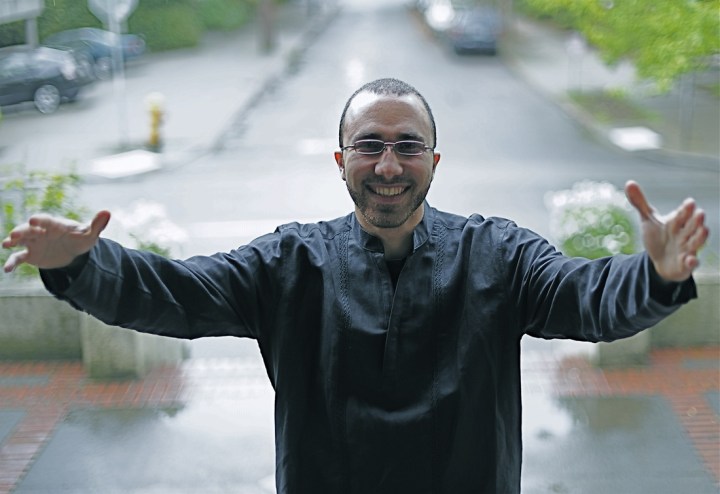
Who or what inspired you to take up conducting and pursue a career in music?

I don’t know if there was one person or event in particular that led me to pursue this career. I wanted to be a conductor and to have a new platform to communicate with musicians, music lovers and people who are not aware of classical music. I wanted to have an opportunity to inspire the future generation of young musicians. I also wanted to engage people who are not fans of classical music and get them excited for it. I know many colleagues who always dreamed about being a conductor but I came to that realization when I was 22.

What, for you, is the most challenging part of being a conductor? And the most fulfilling aspect?

The most challenging part of being a conductor or a Music Director of a group is inspiring musicians to accept the challenges I present. New music is a challenge, unique collaborations are a challenge and these are paths that every orchestra (youth, community, professional) should take from time to time. As a leader one should find the determination to excite the orchestra to take on challenges with no fear. The fulfilling aspect is the final product, the inspired musicians, the excited audiences and most importantly the feeling of accomplishing something that presented a challenge.  

How exactly do you communicate your ideas about a work to the orchestra?

Every orchestra I work with I learn from. Communication is a complex topic and there are no masters. I work hard in diversifying my approach and with each experience I realize that it’s not just about the music but about the people. In my communication with the orchestra I try to inspire them with my passion and love for the music, I engage them to be collaborators and of course teach them through this process. To maximize the potential of any group it requires the energy of each individual and this can be achieved through communication not only on the podium but off the podium as well.

How exactly do you see your role? Inspiring the players/singers? Conveying the vision of the composer?

The role of a Music Director should be all encompassing. As a MD one should inspire the players through passion and enthusiasm for the music, engage audiences, and be in constant search of projects and collaborations. MD should also find ways to challenge to musicians and audiences because that is the only way we grow; that is the only way to the future. As an MD one should never assume that people know the music or the history and stories beyond the score. As conductors we have to educate not only the musicians but the audiences from the stage. Pre-concert talks do not provide a direct tool to teach and one never engages everyone in attendance. I believe that collaborations are vital for the growth of arts and classical music specifically. I think we live in a time where we absolutely have to collaborate with artists and other fields to maximize the reach of our art form.Which performances/recordings are you most proud of?I am always proud of the youth I work with and I am proud of them for accepting my challenges. I have commissioned new works, initiated unique collaborations with many organizations and invited artists from many genres to work with us. I want to thank the many young musicians I have had the privilege to work with and know that they will be leaders and inspiring individuals no matter what they do. Stepping on the podium to work with the future generation of rock stars is the greatest joy in my life, I feel honoured.

How do you make your repertoire choices from season to season?

Picking repertoire for youth and community orchestras is tough. This is something I constantly think about. I try to include a piece that will challenge the orchestra, a piece that will be fun for the audiences, and a piece that the orchestra will not feel overwhelmed with.

Do you have a favourite concert venue to perform in and why?

There are many beautiful spaces I have conducted in and can’t pick one in particular. I like spaces with windows and no formal stage. I like the orchestra to be surrounded by the audience and to feel as close to the people as possible.What is one piece that you’ve always wanted to conduct? And have you had that chance yet?

There is a wonderful Armenian composer Avet Terterian and I would love to conduct any of his symphonies when I have an opportunity to do so.

As a musician, what is your definition of success?

I currently work with many youth and community orchestras in the U.S. state of Washington. My definition of success is the consistent growth of the musicians I work with, the development of their understanding of music and most importantly the continuous passion, love and care for classical music. I want to see the youth in my orchestras be passionate advocates for arts and culture regardless of what they pursue as a career. Decades later I want to see a world full of people from diverse professional and cultural backgrounds support the arts in large numbers. As an educator and conductor I want to instill in them the importance of music.

What do you consider to be the most important ideas and concepts to impart to aspiring musicians and conductors?

As conductors it is important to understand our role within the music organization and in our community. It does not matter if you conduct the greatest orchestras in the world, a community group or a youth organization you have to stay grounded and understand the importance of impacting the youth and community. I don’t mean just advocating for the arts but actually getting your hands dirty in the daily, weekly projects of inspiring the community. There are many great conductors in the world but one thing that is evident with many is the lack of consistent commitment to youth, community and outreach events. I want to see more conductors involved in outreach events, these concerts are not just for assistant and pops conductors. Music Directors are equally responsible for these performances and should do more than just a few in a year. I want to see the role of the Music Director taken more seriously. We live in a world that is fast paced and it is easier than ever to travel across the world. Holding more than one major symphony conducting role is not only disrespectful to the orchestra but most importantly it is disrespectful to the city and community the conductor is serving. A major symphony is one of the most important cultural organizations in a city and we need to have the Music Directors fully involved in the community which again is a rare fine these days. Classical music is suffering and this is definitely one of the factors. We need our leaders a lot more than just 12-15 weeks out of a year while the rest of the year they are holding other “full-time” jobs and guest conducting 30 other orchestras.Where would you like to be in 10 years’ time?

I want to continue working with orchestras whether they are professional or not, I want to keep inspiring the youth and the community it serves.  

What is your idea of perfect happiness?

I don’t know if that exists for me but I am content with the constant challenges despite the absence of perfect happiness.

What is your most treasured possession?

I don’t know about possessions but I have treasured people who are: my wife, my brother, my parents, family, friends and the many people who help and inspire me.

What is your present state of mind?

The moment.

Armenian-American conductor Tigran Arakelyan is the Music Director of Bainbridge Island Youth Orchestras, the Federal Way Youth Symphony Orchestra and the Artistic Director /Conductor of Port Townsend Community Orchestra. Arakelyan held conducting positions with California Philharmonic, Los Angeles Youth Orchestra, Whatcom Symphony Orchestra, Rainier Symphony and the Northridge Youth Philharmonic. His primary conducting studies were with renowned conductors Ludovic Morlot and David Alexander Rahbee.

His recent conducting engagements were with the Fort Wayne Philharmonic, Olympia Chamber Orchestra, Armenian Pops Orchestra, Centum Youth Orchestra (S. Korea) and the Northwest Mahler Festival Orchestra.  Arakelyan toured South Korea twice (2014, 2017) with the Federal Way Youth Symphony conducting over a dozen concerts from Seoul to Busan. He recently initiated the Inaugural Bainbridge Island String Orchestra Festival with award winning guest artist Andrew Joslyn. Arakelyan also commissioned/premiered a work by international award winning composer Yiğit Kolat. 

Previously, he was the Music Director of Whidbey Island Orchestra (WA), Lark Musical Society Youth Orchestra (CA) and the Founder Conductor and Artistic Director of Cadence Chamber Orchestra (WA). At the university level Arakelyan was the Music Director of the University of Washington Campus Philharmonia and UW Summer Orchestra. He has been instrumental in initiating innovative collaborations with composers, soloists, visual artists, dancers, and choirs. Arakelyan helped in creating youth scholarship programs, festivals, young composer competitions, and led orchestral performances at unconventional venues. 

Arakelyan conducted the Pacific Northwest premiere of Paul Hindemith Kammermuzik Nr. 1. He has also conducted the Yakima Symphony Chamber Orchestra, University of California Los Angeles Philharmonia, Redmond Academy of Theatre Arts, Korean Music Association Choir (WA), Inverted Space Modern Ensemble, U.W. Symphony, California State University Northridge Symphony, CSU Northridge Discovery Players, and the Nimbus Ensemble (CA). A strong advocate of new music, he premiered works by Iosif Andriasov, Stepan Rostomyan, Eleanor Aversa, Jeff Bowen, Jon Brenner, Arshak Andriasov, and Felipe Rossi. 

Arakelyan played alongside Sir James Galway during his induction into the Hollywood Bowl Hall of Fame with the Los Angeles Philharmonic. He is a recipient of numerous awards including: Armenian General Benevolent Union (AGBU) Performing Arts Fellowship (2013, 2014, 2015), Edward Hosharian Award, and the Armenian Allied Arts Competition (1st place), among others.  Arakelyan participated in the Conductors Guild Workshop, Pierre Monteux School for Conductors, Idyllwild Music Festival, Dilijan Chamber Music Series, Seasons Festival Academy, and Fairbanks Summer Arts Festival. He conducted in masterclasses with notable conductors David Loebel, Frank Battisti, Donald Thulean, Ennio Nicotra, David Effron, Neal Stulberg, Michael Jinbo, and Lawrence Golan. 

Arakelyan received a Doctorate in Musical Arts degree in conducting from the University of Washington. His primary conducting studies are with Ludovic Morlot, David Alexander Rahbee, John Roscigno and flute studies with Paul Taub, John Barcellona, Laura Osborn, Stephen Preston, and Shigenori Kudo.​ Outside of conducting, he is the founder/director of the Armenian Orchestral Music Project and the Classical Program Coordinator at Music Works Northwest. Arakelyan is also the founder and host of Off The Podium-Music Podcast where his guests are renowned musicians and artists. 

www.tigranarakelyan.com