1940-fitandcrop-635x357

Who or what inspired you to take up composing, and pursue a career in music?

I began learning to play the piano at 10. I fell in love with the concertos of Liszt and Rachmaninoff and decided to write one of my own – at about age 12. (My family were consistently opposed to music as a career, and indifferent to music generally).

Who or what were the most significant influences on your musical life and career as a composer?

My biggest influence was from Stockhausen, my teacher for 3 ½ years, especially his professionalism and architectural approach to music. He began work on a piece in a similar way to that of an architect designing a skyscraper. Hugely logical, practical, always with an eye on the big picture, and no fuzzy thinking whatsoever. No detail in a Stockhausen piece was vague or left to chance.

The second big influence was African textiles (and later African music), which showed me possibilities that were outside the remit of serial composition.

And the third and possibly the most long-lasting influence was Morton Feldman, whose anti-conceptualism was in direct opposition to Stockhausen’s conceptualism, and very similar to what I had observed and delighted in in African music and art.

What have been the greatest challenges/frustrations of your career so far?

The greatest challenge and frustration for any artist is probably dealing with arts administrators (of all kinds) who have a different agenda, work ethic and time-scale.

What are the special challenges/pleasures of working on a commissioned piece?

Difficult to say. It depends on the commission. The greatest pleasure perhaps is writing for performers one knows and admires.

Some instruments present a special challenge. The most difficult commission I’ve accepted is a recent concerto for Uilleann (Irish) pipes and large orchestra. The pipes presented many unexpected challenges, not least of which is that the instrument and its traditional music is something of a national treasure (and therefore has to be treated fairly gently) and that traditional players do not normally read notation. And it has a very limited dynamic and pitch range. Writing a piano concerto, say, by comparison is a piece of cake.

What are the special challenges/pleasures of working with particular musicians, singers, ensembles and orchestras?

Possibly the only advantage of a career in music is that one gets to work with great musicians. I find great musicians give you 120% of what you write – they discover things you didn’t know were in your own work or you didn’t even know were possible. Poor musicians give 80% (and are often quite happy with that!). The most satisfying part of the composition process is the rehearsal period – it’s during the rehearsals that the piece is completed. Musicians or ensembles who are prepared to work (at some length) with the composers are the ones who nearly always produce the best results. I have no time, nor respect, for musicians who fancy themselves as sight-readers. Sight-reading skill for me is not an indication of musicianship nor is it music-making. It’s a primary tool – nothing more.

Of which works are you most proud?

Difficult again… Proud? I don’t know. I like what I achieved, maybe, in my 1st (White Man Sleeps), 2nd (Hunting:Gathering), 9th (Shiva Dances) and 12th String Quartets, I enjoyed playing Cicada for 2 pianos, and I’m fond of violin:piano and some of my newest pieces which haven’t been performed yet, like 7 Bass Winds, and a new clarinet trio (called clarinet:violin:piano (and CPE), which I think marks a departure.

How would you characterise your compositional language?

I have devoted most of my work to non-conceptual, or, if you like, existential composition: writing with no pre-planning, no concepts, and allowing the material (rather than an ‘idea’) dictate where the music goes.

How do you work?

I sit down and write (at the computer) usually very early in the morning, until I am tired and lose focus. I never work in the evening. Starting just before sunrise can mean (in summer) that you get 5 hours’ work done before any interruptions.

Who are your favourite musicians/composers?

Huge question, huge answer. Depends what you mean, too – people I’ve worked with or not? My list of musicians I’ve worked with and with whom I love working is too long.

So my bucket list of whom I would like to work with begins with pianist: Mikhail Pletnev; violinist: Patricia Kopatchinskaja; orchestra: Berlin Philharmonic …

Favourite pianists from the past – I have a weakness for virtuosos: Sviatoslav Richter, Vladimir Horowitz, Josef Lhevinne, David Saperton (strangely unknown), Moritz Rosenthal…

Composers: 20th Century, Stravinsky, (Ravel), Stockhausen, Feldman

19th: Chopin Liszt Debussy 18th Beethoven of course, Mozart of course, CPE Bach, 17th Bach, Sainte Colombe, etc etc etc.

As a musician, what is your definition of success?

Doing a satisfying piece of work.

What do you consider to be the most important ideas and concepts to impart to aspiring musicians?

The more you work, the easier it gets.

The more you know, the better your work.

Where would you like to be in 10 years’ time?

At home, working (or in the sun, maybe).

What is your idea of perfect happiness?

Being with the one you love and both being in perfect health.

What is your most treasured possession?

Possession? Can one possess a dog?

What do you enjoy doing most?

Sleeping, eating, in that order.

What is your present state of mind?

Happy.


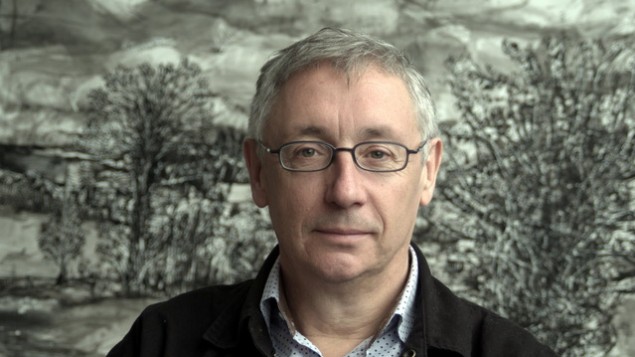
Kevin Volans was born in Pietermaritzburg, South Africa, and studied with Karlheinz Stockhausen in Cologne. He now is an Irish citizen.

In 1979 after research trips to South Africa, he began a series of pieces based on African composition techniques, which occupied him for the next 10 years.

After a productive collaboration with the Kronos quartet in the 1980s his work, principally in the field of chamber and orchestral music, has been regularly performed worldwide.

In 1997 the BBC Music Magazine listed him as one of the 50 most important living composers and he was described by the Village Voice as “one of the most original and unpredictable voices on the planet”.

Latterly, he has turned his attention to writing for orchestra and as well as collaborating with visual artists. Principal performances in the last years include the Berliner Musikfest, Vienna State Opera, Lincoln Center New York, Conzertgebouw Amsterdam, Pompidou Centre Paris and the BBC Proms.

kevinvolans.com

“Ideas lie everywhere like apples fallen and melting in the grass for lack of wayfaring strangers with an eye and a tongue for beauty, whether absurd, horrific, or genteel.”

– Ray Bradbury, writer

A very good friend of mine is a writer, and our conversations often touch on the subject of creativity and the notion of “feeding the muse” – how we stoke up reserves of inspiration when these become depleted through our creative work.

Inspiration itself is hard won. It does not come from nowhere. “Light-bulb moments” are rare and most creative people – musicians, writers, artists – will agree that the best way to foster creativity is through a consistent daily routine. But when that creativity fades, “what comes out must be put back”, as my writer friend would say.

In his collection of essays entitled Zen in the Art of Writing, the writer Ray Bradbury set out his techniques for cultivating inspiration. Although primarily aimed at writers, these techniques are equally applicable to musicians, and I have highlighted a number of them below, using Bradbury’s original suggestion as a basis to guide the musician seeking inspiration.

“Collect Experiences Instead of Things”

Experiences are the staple diet of the Muse, and the richer our experience, the better fed and healthy the Muse will be. For the musician, experiences are not only musical ones (listening to music, going to concerts, collaborating with other musicians), but life experiences in general – relationships, travel, sights and smells, interactions with others, events large and small. All feed the creative Muse and have a bearing on our personal music making.

“Read Both Trash and Treasure”

For “read” substitute “listen”, and value every listening experience – the good, the bad and even the ugly! Listening is a fantastic source of inspiration for the musician (something which I feel some younger musicians and students in particular do not engage with enough). Listen to great artists and recordings, and the “pulp fiction” of recordings too. When working on a specific piece of music, listening to a selection of recordings of the same work can offer remarkable insights and enable one to create a personal vision for the music. If one remains open-minded, there is always something to be learnt from a recording or performance one dislikes, or a piece of music one regards as “bad”. 

“Write [Play] With Zest”

Our passion, love and excitement for what we do drives us and feeds the Muse. We should approach each practice session with excitement, asking ourselves “what can I do today that is different, or new?”

“Make Lists”

Make notes of experiences which fuel the Muse and reflect on how those experiences have influenced your music making. Lists enable us to organise our thoughts more coherently and provide focus when it comes to practising and reflecting on our music.

“Run Fast, Stand Still”

Bradbury urges writers to “strike while the iron is hot!” to get ideas down quickly

The faster you blurt, the more swiftly you write, the more honest you are”

This is tricky for musicians, for whom slow, considered practising is essential to learn music deeply and retain it. But I agree with his statement that “in delay comes the effort for a style”. In order to create a personal musical identity, vision and sound, we should strive to be spontaneous, driven by our musical instincts rather than the desire to imitate or aspire to be someone we are not.

“Choose Your Friends Well”

Musicians, like writers and artists, seek affirmation and endorsement from those around them. The best critique often comes from those who best understand the exigencies of the profession – i.e. fellow musicians. Seek feedback and critique from trusted friends, colleagues, teachers and mentors whom you know will support and encourage you.

As Bradbury says, “Who are your friends? Do they believe in you? Or do they stunt your growth with ridicule and disbelief? If the latter, you haven’t friends. Go find some.”

“Train Your Muse”

Just as we practice regularly and intelligently, as an athlete trains, so the Muse must also be trained. A well-trained, well-fed Muse allows us to say what we want in our music without feeling restrained and to be spontaneous, making music “in the moment” which brings vibrancy, excitement and genuine expression to our performances.


krpan

Winner of the 61st Ferruccio Busoni International Piano Competition, Ivan Krpan shares his thoughts on influences, inspirations and performing

Who or what inspired you to take up the piano, and pursue a career in music?

My parents inspired me to start learning about music when I was a child. My father is a violinist and my mother a musicologist so I have been surrounded by music my whole life. When I was six years old I started to go to Blagoje Bersa music school in Zagreb and for some reason I liked the piano more than other instruments so that’s how it started.

Who or what have been the most important influences on your musical life and career?

My parents had a big influence on me especially during the first years of music school. My first teacher, Renata Strojin Richter, taught me all the basics of piano playing and music in general so I am really grateful to her. And of course, my current teacher, Ruben Dalibaltayan, taught me a lot during our piano lessons in the Music Academy in Zagreb.

What have been the greatest challenges of your career so far?

I cannot really say but I think that the greatest challenge in life of any artist is to pursue and develop your ideas every day.

Which performance/recordings are you most proud of?

When I look back I see that every performance has its own place in my musical development and that every performance is a representation of my state of mind at that point. All my performances make a big picture for me so I appreciate them all.

Which particular works do you think you play best?

I like to think that I play best any work I am currently playing.

How do you make your repertoire choices from season to season?

I play works I like or works I am interested in. And when I play works I am interested in, I start to like them. Also, I am still studying so I have to play what is required for exams.

Do you have a favourite concert venue to perform in and why?

No, I don’t have a favourite concert venue. I enjoy playing in lot of different places. Also, I think that people who I play for are more important than the hall itself.

What is your most memorable concert experience?

I don’t know because every concert is different, so I remember them because of all those different things I encounter. For example, I remember some concerts because of the beautiful pianos I played and some because the awful pianos that I played on! Also I remember some when the audience was very noisy during the concert and at some other concerts I had the feeling that people were really interested in what I was trying to give them.

As a musician, what is your definition of success?

I think that you are successful if you are going forward following your ideas. The most important thing in art and in life in general is that nothing ever stays the same. Everything is changing and so we should also change and evolve. It is not easy but if you manage to do it then you are really successful.

What do you consider to be the most important ideas and concepts to impart to aspiring musicians?

The most important thing for anyone is to be yourself without pretending and to do what you love to do.

What is your idea of perfect happiness?

Perfect happiness is when you do what you love to do and when you can help others live that way.


Ivan Krpan’s debut recording is available exclusively on IDAGIO and juxtaposes two giants of the Romantic era: Robert Schumann and Frédéric Chopin. 

Listen here


Ivan Krpan was born in Zagreb in 1997. He began studying the piano at the age of 6 at the Blagoje Bersa Music School in Zagreb, under the tutelage of Renata Strojin Richter. From 2013, he has been studying piano with Ruben Dalibaltayan at the Music Academy in Zagreb. He has won several first prizes in national and international piano competitions: first prize in the EPTA International Piano Competition in Bruxelles in 2014, 1st prize in the International Piano Competition Young Virtuosi in Zagreb in 2014, 2nd prize in the International Danube Piano Competition in Ulm (Germany) in 2014 and 1st prize in the International Piano Competition in Enschede (The Netherlands). In 2015 he won 4th prize in the 1st International Zhuhai Mozart Competition in Zhuhai (China). Recently he won the annual Ivo Vuljević prize awarded by the Jeunesses Musicales Croatia for the best young musician in Croatia in 2015. He has participated in masterclasses of Dalibor Cikojević, Siavush Gadjiev, Ruben Dalibaltayan, Djordje Stanetti, Kemal Gekić, Pavel Gililov and Klaus Kaufmann. He won a special prize from Dean of Zagreb Music Academy in 2014.

Why play or listen to an early or “period” piano? An instrument which may have significant limitations compared to a precisely made and carefully calibrated modern instrument, and surely “better” and infinitely more sturdy and reliable than an old piano?

Aside from the visual aesthetic of period pianos (many are very attractively designed, with fretwork music desks, elegantly turned legs, and veneered or inlaid cases), playing a period piano reveals how the instrument informed and guided the composer, and how composers such as Beethoven, Schubert or Chopin responded to the piano technology available at the time, a technology which was developing very rapidly.

Dismiss any fanciful notions of “musical time travel” when playing or hearing such instruments: the intention is not to transport us back to a Viennese Schubertiade or a nineteenth-century Parisian salon, because it is impossible to know exactly how these instruments sounded to the composers who wrote for them. But these instruments do offer us a direct connection to the music: we are so used to hearing the great works in the repertoire played on a modern grand piano (usually a Steinway), whose sound is far more homogenised, brighter and even across the entire register, that it is easy to forget that the style and the soundworld of piano pieces written prior to the 1850s are intrinsically linked to the instruments.

Playing these period pianos, many of which are very delicate and require a different touch from the “pounding” that a robust modern piano can take, offers special insights into compositional details such as articulation, tempo, dynamics (the “double escapement” mechanism pioneered by French piano maker Érard, for example, enabled the pianist to achieve very fine pianissimo playing), use of the pedal, touch and key release, shorter sound decay, musical semantics and aesthetics. These instruments may be more softly-spoken than their modern counterparts, instruments designed to project into the largest concert halls, but their voices are richly-hued and characterful with myriad overtones. An 1820s Conrad Graf fortepiano, for example, an instrument with which Schubert would have been very familiar, has a bass sound which recalls bassoons, horns and kettledrums, and a silvery treble allowing for great clarity of articulation and music thought (listen to the final movement of Beethoven’s Moonlight Sonata, played on a fortepiano by Malcolm Bilson, and you’ll hear every single note in that whirlwind of sound). Once the ear has tuned in to the soundworld of these instruments, surprisingly varied colours, textures, articulation and expression are revealed.

The Russian pianist Alexander Melnikov has made several recordings using period instruments, and his latest disc features music by Schubert, Chopin, Liszt and Stravinsky on instruments from the 1820s, 1837 and 1875, and a modern concert Steinway (he has also performed this programme live on similar instruments), offering listeners and audiences the chance to experience four great works of the piano repertoire interpreted in their original instrumental environment. It’s a fascinating exploration of familiar repertoire through the medium of different pianos and how the composers responded to them. Meanwhile, the organisers of the International Chopin Competition have launched a new competition in which participants will perform on period instruments. The inaugural competition takes place in September this year and I hope this competition will offer competitors and audiences something more than a novelty or “living museum recital”, and will cultivate sensitivities and sensibilities in pianists, who can appreciate and respond to what period pianos provide.


