Last week I went up to Stratford to attend a concert given by the Orchestra of the Swan, conducted by Tom Hammond, a friend and colleague for whom I have been doing some publicity work.

There’s a nice symmetry in all of this because Tom and I first met online through a blog article he wrote, bemoaning the fact that critics and concert reviewers rarely seem to make the effort to travel outside of the M25, or indeed Zone 6 on the Underground, to cover the excellent and varied music-making which goes on outside the capital. The issue came up for discussion at the Music Into Words event I co-organised back in 2016, where an arts editor from a leading broadsheet newspaper basically admitted that they tend only to cover the “premier division” of concerts, and that these are by and large in London. It’s a great pity because there is so much fantastic music-making going on outside of the capital: since moving to Dorset I have attended three excellent music festivals, which, by the way, attract international artists, and Tom is co-artistic director of an excellent music festival based in Hertfordshire – easily accessible by road and rail from London, but largely overlooked by mainstream critics because, despite also attracting international artists, it takes place in what is sneeringly call “the provinces”.

There is nothing provincial about the Orchestra of the Swan (OOTS), nor the programme at Tuesday night’s concert. Led by David Le Page, one of the most self-contained and sincere musicians I have ever met, OOTS can match any London chamber ensemble in its creative programming and outreach and educational projects. Tom had been invited by David Le Page, who is AD of the orchestra, to create a programme and he chose to focus on Jean Sibelius, whose music first attracted him to classical music when he was a child. Some may regard a programme focusing on a single composer as “a list”, but this imaginative programme combined well-known works, such as The Swan of Tuonela and the layered complexity of the Seventh Syphony, with the rarely-performed Humoresques for Violin & Orchestra and excerpts from the Tempest suite. Entitled Intimate Voices, it gave the audience the opportunity not only to experience some of Sibelius’ lesser-known music but to also appreciate the breadth of his musical imagination and artistic development for the programmed spanned the outer limits of his compositional life. It made for a fascinating and absorbing evening, and the orchestra rose to the challenge of this complex, multi-faceted music with great aplomb. They were joined for the Humoresques by violinist Tamsin Waley-Cohen and there was a very palpable sense of mutual cooperation and enjoyment between soloist and orchestra.

But there was more, beyond the music itself, which made this a particularly enjoyable and uplifting evening, and that was the audience, who filled the Stratford Playhouse auditorium with the kind of warm enthusiasm that many promoters can only dream of. It was quite evident that this audience was as committed as the orchestra, and this created a wonderful sense of a shared experience – which is what music making is all about, after all.
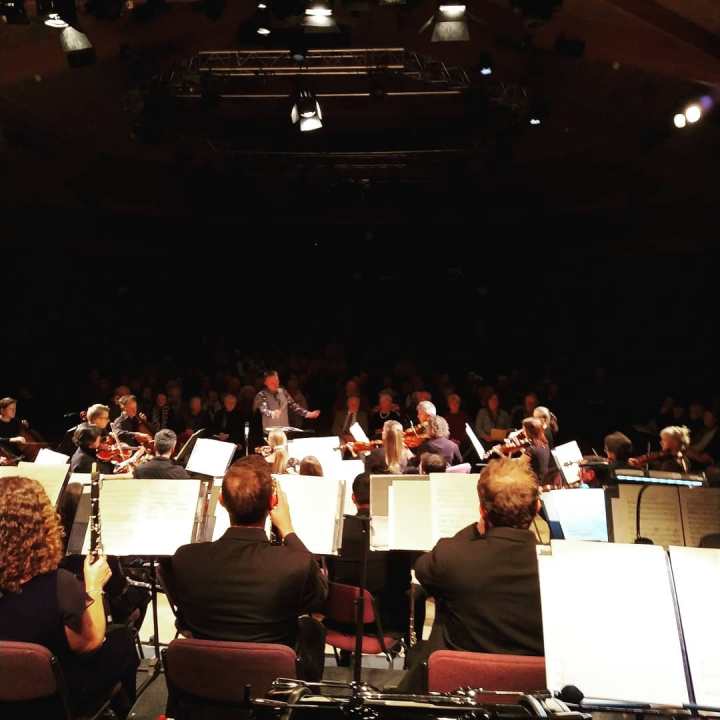

82590819_10157549399048935_9045941483248549888_o
Tom Hammond conducting Orchestra of the Swan, 21 January 2020


The key is trying to limit yourself to perform only the pieces that will be best for you and the audience. Otherwise, you’re doing everyone—yourself, the composer, and the audience, a huge disservice.

Richard Goode, concert pianist

I’m sure most performers would agree with Richard Goode’s statement, yet many, especially younger artists, are under tremendous pressure to “play to order” and to offer programmes which will satisfy promoters or venue managers.

It’s a physical and mental impossibility to play everything well (though there are a number of musicians out there who do seem to have mastered this, but they are rarities!), and the best performers understand their limitations. This is not to say that they offer limited repertoire, rather that the music they choose to play truly demonstrates their artistry. During their training, however, musicians are discouraged from specialising and instead tend towards a broad repertoire. Obviously, this has its advantages, as it introduces the student musician to a wider variety of music and will give them an appreciation of the breadth of their instrument’s repertoire.

The advantages of performing what you know you play best seem obvious, yet it’s common to attend a concert and feel that the performer is playing music with which they are not entirely comfortable. For young artists, teachers and mentors may encourage them to select certain works to impress potential agents or promoters, while other artists play music which they think their audiences want to hear. And in the desire to offer as wide a repertoire as possible, some performers run the risk of dilution or of not studying the music deeply enough because of the pressure to learn so much.

As they mature, certain performers may develop an affinity with specific composers or genre and may choose to focus on that. Andras Schiff is one such example with his predilection for J S Bach and the Viennese masters; Piotr Anderszewski and Richard Goode are other examples. All these pianists offer their audiences impeccable and insightful performances of the music they know they play well, because when musicians know what they play well, they play to their strengths while also revealing something of themselves to their audiences. This in itself gives audiences a more meaningful concert experience, a contrast to a performance which may be reliable but just doesn’t reveal enough of the person behind the instrument and the notes. And when we play what we know we play well, we play with confidence, flair and enjoyment – all facets which audiences appreciate.

Knowing one’s limitations requires a level of humility which can be quite hard won and take time to achieve, for both professional and amateur musicians. The training of young musicians today is such that they are taught to believe they can play anything – and many have the technical and artistic facility to play some of the most challenging works in the repertoire from a relatively young age – but appreciating one’s limitations and working within them is a mark of self-insight and musical maturity.

….we’re not machines, so part of being successful at this is understanding your own limits—your taste, your approach, and only performing things that work for you.

– Richard Goode


St Martin-in-the-Fields welcomes the Piccadilly Sinfonia for five concerts that celebrate the 250th anniversary of Beethoven’s birth. Featuring British concert pianist, Warren Mailley-Smith, acclaimed by Classic FM as “stunning”, the concert series will take audiences through a journey of all five of Beethoven’s masterful piano concertos, alongside selections of Beethoven’s famous symphonic works and music of composers who influenced and were influenced by Beethoven.

The concert series will be conducted by British conductor, Tom Fetherstonhaugh, who has been described as “a spark to watch” by BBC Radio 3. Explore the fate of a man who composed for princes and kings, who ushered in a new era in classical music becoming its hero, and is remembered today as an emperor among men, one of the greatest composers of all time.

Born in 1770, a point in history wrought by tumult and great change, Beethoven composed music that began a new era. The first concert in the series, Fate, features Beethoven’s Third Piano Concerto and his Fifth Symphony, a work known worldwide by only four simple notes. Prince and King explore the works composed for and associated with royalty. Showing the intensity of Beethoven’s earlier works, Hero begins with his First Piano Concerto, a work composed when Beethoven was only 25, paired with his Eroica Symphony. The series concludes in a complete celebration of Beethoven’s life with Emperor, commemorating Haydn’s influence on a young Beethoven and ending with Beethoven’s final piano concerto, the Emperor Concerto.

TICKETS PRICES £29/£25/£18/£13/£9

Save 25% and see all 5 concerts

CONCERT 1
Fate: Beethoven’s Fifth Symphony and Third Piano Concerto
Tuesday, 28 January, 2020 7.30pm

CONCERT 2
​Prince: Beethoven’s Fourth Symphony and Fourth Piano Concerto
Tuesday, 17 March, 2020 7:30pm

CONCERT 3
​King
: Beethoven’s Seventh Symphony and Second Piano Concerto
Tuesday, 28 April, 2020 7:30pm

CONCERT 4
​Hero
: Beethoven’s Third Symphony and First Piano Concerto
Tuesday, 30 June, 2020 7.30pm

CONCERT 5
​Emperor
: Beethoven’s Eighth Symphony and Fifth Piano Concerto
Tuesday, 29 September, 2020 7:30pm

To buy tickets/further information please visit or learn more about our season, visit www.piccadillysinfonia.com/beethoven250, or call St Martin-in-the-Fields’s Box Office Services at 020 7766 1100


Launched under the artistic direction of British concert pianist Warren Mailley-Smith, the Piccadilly Sinfonia is formed from some the UK’s leading young professional talent, with notable guest soloists so far having included violinists Zoey Beyers, Fenella Humphreys, Martyn Jackson, and Harriet Mackenzie. Their repertoire draws largely from a wide range of baroque and classical works for chamber orchestra including a number of virtuoso concerti.

Warren Mailley-Smith recently became the first British pianist to perform Chopin’s complete works for solo piano from memory in a series of 11 recitals at St John’s Smith Square. Hailed by the critics as an “epic achievement”, Mailley-Smith will repeat the series at several venues in 2020. He has given acclaimed solo recitals at Wigmore Hall, Carnegie Hall and has performed for the British Royal Family on numerous occasions. One of the busiest concert pianists of his generation, he regularly gives over 100 solo performances a year. His career has taken him all over the world, with solo performances in Australia, Europe and most recently solo tours in China and the USA. He has 30 piano concertos in his repertoire, having made his concerto debut with the Royal Philharmonic Orchestra.

Tom Fetherstonhaugh is a British conductor. Described as ‘a spark to watch’ by BBC Radio 3, his recent projects include a concert for peace in the Korean Demilitarised Zone, the development of a new piano concerto with players from the Ulster Orchestra and assisting Sir Mark Elder at the Royal Academy of Music. Tom made his debut in Asia in 2019, performing in the Korean Demilitarised Zone (DMZ) with the Lindenbaum Festival Orchestra. Entitled ‘One Harmony’, the festival promotes peace between the Koreas through music, and the performance included a collaboration with the National Children’s Chorus of America. As well as the Fantasia Orchestra, Lindenbaum Festival Orchestra, Oxford University Sinfonietta and the orchestra of the Oxford Chamber Music Festival, Tom has conducted players from the Ulster Orchestra, the Southbank Sinfonia, Leicester Symphony Orchestra, Hereford Symphony Orchestra, the Royal Academy of Music Symphony Orchestra, the Junior Royal Academy of Music Sinfonia, Senior Orchestra and Main Choir, the orchestra of the Pro Corda Senior Course, the choir of Merton College, Oxford, and, aged 13, the choristers of Westminster Abbey on their tour to Russia. Tom is also active as an organist and pianist; he was organ scholar at Merton College, Oxford, and is a prizewinning Associate of the Royal College of Organists. He has played for live BBC Radio 3 broadcasts, and in 2017 played for the first Anglican Evensong at St Peter’s Basilica, Rome. He has appeared as soloist in the UK, Europe, Hong Kong and Singapore, including the Oxford Chamber Music and Oxford Lieder Festivals. On the piano, Tom has recently performed the complete Beethoven Violin Sonatas with violinist Athena Hawksley-Walker in the Holywell Music Room; the duo played live on Radio3’s In Tune as part of the project.


source: press release

Who or what inspired you to take up composing, and pursue a career in music?

My music teachers at school. They were so enthusiastic about it that I thought they must be in on some very special secret….it turned out the music I’d hear in my head wasn’t that different to what they were doing….it has to get out some way or another. They helped me to get it out!

Who or what were the most significant influences on your musical life and career as a composer?

At an early age ( 8-9) it was seeing three films at the cinema within a two week period….”You Only Live Twice” , ” The Jungle Book” and ” Oliver”. All astonishing musically and visually, but music was so front and centre for these films that it made me feel like  I wanted to be a part of the process that had made me feel the way I did when I saw them in that dark theatre.

What have been the greatest challenges/frustrations of your career so far?

Challenges and frustrations are almost the same thing for me….the most fretful being the first day of composition when you have nothing but a blank page and a lot of people are waiting somewhere for me to send them something of which  they have very high expectations

What are the special challenges/pleasures of working on a commissioned piece?

The pleasure is getting it done and people being happy with it…the challenge is getting it done so people are happy with it

What are the special challenges/pleasures of working with particular musicians, singers, ensembles and orchestras?

I’m fortunate that I’m able to work with the best in the world in terms of performers. Anything I  put in front of them, they will play brilliantly and make it sound and feel immediately better. I’m spoiled in that regard. It’s important to treat individual performers with care and  attention so that they feel free and secure enough to give it their all. Then the relationship, much like that which I have with directors, is one of part therapist, part musician.

Of which works are you most proud?

I generally don’t like much of what I do, in as much as I can’t hear it without thinking I wished I had done it differently, mostly better, but there’s not much I’d change about ‘The Tiger Who Came To Tea’; it’s a piece that feels about right to me, it makes me happy to watch it.

How would you characterise your compositional language?

Sympathetic to what ever I’m writing about or for.

How do you work?

I hear lots of music in my head whilst just being around and about so I sing ideas into the phone or sketch the odd sequence down, depending on where I am.  Then it’s to an instrument for working out an idea  which will either survive or be abandoned – and that’s on guitar or piano working ideas up in a DAW [digital audio workstation] so others get the idea too and there’s something tangible to play to people. If it’s a film,  I’ll watch it once and then walk around with the film in my head and let it all percolate.

Who are your favourite musicians/composers?

So many. Probably the most influential would be John Barry, Stevie Wonder, Debussy and Tchaikovsky. As I get older, there’s a bit more Mahler but mainly I love great melody

As a musician, what is your definition of success?

Not having to do anything other than music and to be happy with what I’m doing and with whom I’m doing it

What do you consider to be the most important ideas and concepts to impart to aspiring musicians?

Don’t try to please others, write honestly and maybe think this:  if the person whom you admire most in the world musically was standing next to you, could you play them whatever it is you’re working on right now and not have to make an excuse for it?

Where would you like to be in 10 years’ time?

If I’m alive in ten years time, I’ll be happy to be anywhere doing anything

What is your idea of perfect happiness?

Having nothing to worry about

What is your most treasured possession?

I have things that I love but they’re just things and I’ve stopped thinking about things being precious. My family will always be the greatest and I have no desire or ability to own them

What do you enjoy doing most?

Being childish and also cooking

What is your present state of mind?

Tangled, Busy, Yearning, Hopeful, Cynical, Stupid

David Arnold composed the score for the recent tv adapation of Judith Kerr’s classic children’s story ‘The Tiger Who Came to Tea’. The soundtrack is now on CD and digital format from Sony Music Masterworks.


David Arnold is a multi-award-winning British film and television composer.  Best known for his work on blockbuster films such as Independence Day, Stargate and Chronicles of Narnia, he also took over the mantle from John Barry to compose the music for five James Bond films (including Casino Royale, for which he was nominated for a Grammy, a BAFTA and won ‘Best Song’ at the World Soundtrack Awards).  Other films scores include Godzilla, Shaft, Zoolander, Hot Fuzz and Stepford Wives.

David Arnold’s television work includes Sherlock (Emmy winner for best score with Michael Price) Little Britain, Randall & Hopkirk (Deceased), Dracula and Good Omens.  Over his 20-year career, he has won Grammys, Ivor Novello, International Emmys and Royal Television Society Awards. He was recently twice nominated for an Emmy for the Amazon /BBC production “Good Omens”

In 2012 David Arnold was appointed to the prestigious role of Musical Director for the London Olympics & Paralympics Closing Ceremonies and was also involved in one of the highlights of the Jubilee Thames Flotilla, composing a new arrangement of the ‘James Bond theme’ as HM The Queen passed by the MI6 headquarters.

As well as being a world-renowned score composer, David Arnold is a highly esteemed artist, record producer, songwriter and conductor who has worked with some of the biggest names in music, including Queen, The Who, Kate Bush, kd lang, Bjork, Chrissie Hynde, Iggy Pop, George Michael, Massive Attack, the Kaiser Chiefs, Shirley Manson, Shirley Bassey and Sir Paul McCartney.


Photo credit: Julie Edwards

