dm9xki0xoaehe2wClara Schumann: Prodigy, Muse, Virtuoso

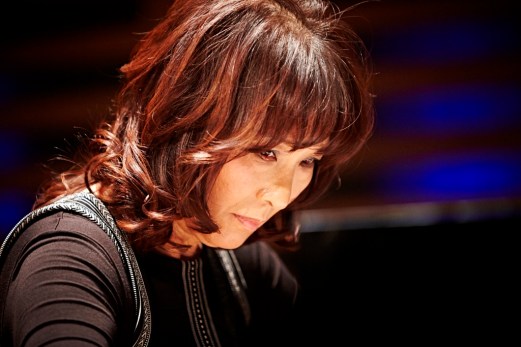
Reiko Fujisawa, piano

Brahms – Intermezzo Op 119, no. 2

Clara Schumann – Scherzo Op 10, Romance Op 21, no. 3

Chopin – Impromptu no. 1

Schumann – Faschingsschwank aus Wien Op 26

Schumann/Liszt – Fruhlingsnacht & Widmung

The Sherling Studio, a small theatre space at the Lighthouse Poole, proved the ideal venue for Reiko Fujisawa’s lunchtime recital celebrating the life and career of Clara Schumann and the key personalities in her artistic and musical circle.

This concert marked the premiere of this programme, part of Reiko’s new Clara Schumann project – a series of narrated recitals, chamber music and concerto performances which will take place throughout the 2018/19 season and autumn 2019, to coincide with the 200th anniversary of Clara’s birth.

The size of the performance space, with the audience arranged on three sides of the pianist, combined with Reiko’s poised and self-contained presence, created an intimate ambiance which was entirely appropriate for this programme of music which would have been enjoyed in the home or salon rather than the concert hall. It allowed for very close communication between pianist, music and audience, from Brahms at his most passionately introspective in a late Intermezzo to the sparkling virtuosity of Clara Schumann’s music (written for herself to perform) and Robert Schumann’s exuberant ‘Carnival Jest from Vienna”, written to show off their twin talents as composer and agile performer. This engaging programme was presented with elegance, colour and commitment.

More about Reiko Fujisawa’s Clara 2019 project

Meet the Artist interview with Reiko Fujisawa

reiko-rehearsal-nov-2013-530aa

Still only a tender three year old, the London Piano Festival, organised by pianists Charles Owen and Katya Apekisheva is already a significant part of the London piano concert calendar, an event much looked forward to by myself and piano friends. In just three years it has grown from a weekend festival to a 5-day extravaganza and it looks set to extend further, such is the quality and variety of its programmes and performers. The secret of its success and evident popularity (judging by the commitment and enthusiasm of the audiences) lies in a simple formula: an impressive line up of pianists, imaginative programmes and a friendly atmosphere. Owen and Apekisheva curate the festival and also perform in it, thus creating a wonderful sense of common purpose, very much music with friends, for friends, and amongst friends. This year the young Russian pianist Pavel Kolesnikov stole the show, at least as far as I was concerned, in both his solo concert on Saturday afternoon (review here) and his performance with his duo partner Samson Tsoy which opened the 2-piano marathon on Saturday night.

While last year’s 2-piano marathon had a rather epic sweep to its programme, this year’s was more thoughtful, the main focus being the centenary of Claude Debussy’s death, and the tone was set by the opening works, Schumann’s Six Pieces in Canonic Form, performed with exceptional control, poetry and musical maturity by Pavel Kolesnikov and Samson Tsoy. It would be hard to match the exquisite intimacy of this performance, but the great thing about the 2-piano Marathon is that each pianist brings their distinctive voice to the repertoire performed, the pairs of performers sparking off one another, collaborating and interacting with evident enjoyment. Two works by Arnold Bax provided an impressionistic follow up to the Schumann, expressively played by Margaret Fingerhut and Charles Owen. Three works by Poulenc offered further contrasts, the triptych closing with his joyous l’Embarquement pour Cythere. The first half closed with Stravinsky’s Concerto for Two Pianos, a work which requires lightning-fast reflexes, masterfully played by Kolesnikov and Tsoy. It was good to see this extraordinarily mature duo together in more extrovert music.

The deliciously sensuous post-interval works by Debussy – En Blanc et noir and Danse Sacree et Danse Profane – were welcome bookends to Thomas Ades Lisztian Concert Paraphrase on Power Her Face, which while expertly played felt over-long and self-indulgent. It was good to see Stephen Kovacevich grace the stage once again at this year’s festival, side by side with Charles Owen in Debussy.

The closing work, Rachmaninov’s Russian Rhapsody for two pianos, was memorably played by Konstantin Lifschitz (who gave a solo performance earlier in the festival) and Katya Apekisheva, and left us with a hummable foot-tapping folk tune for the homeward journey.

Plans are already well underway for the 2019 London Piano Festival and full details will be announced in the new year.


Photo credit: Viktor Erik Emanuel / Kings Place 


Friday 21st September, Church of St John the Divine, London SW9

Christina McMaster, piano

Lie down and Listen is a unique multi-sensory classical music experience created by pianist Christina McMaster and designed to bring the positive effects of classical music on body and mind to a wide audience in unusually relaxed settings. A pioneering combination of music, meditation, Virtual Reality technology and restorative yoga led by Will Wheeler create a deep sense of relaxation.

Neil Franks writes….

The event took place at the lovely St John the Divine Church in Kennington. It was the perfect venue as it has plenty of floor space to “lie down and listen”, with a magnificent Steinway Model D in the middle so that we could surround the piano on our yoga mats. The evening started with a gentle but very well-presented yoga session that even the novice could follow and with no pressure to manoeuvre feet behind ears or anything extreme. In fact the moves presented allowed the inexperienced to participate within their comfort levels. Of course there were plenty of very flexible friends there both to encourage and impress us, and create the atmosphere Christina was aiming for – the first success of the evening.

To the standard classical concert-goer, this appeared to be an ambitious programme and I might be as bold as to suggest that if this concert was planned in the standard format, the choice might limit its audience unless it were specifically targeted. On the other hand, this was a great success as it drew in a lot of young people (and other ages too!), largely because of the experimental interest, and there is no doubt everyone was pleasantly surprised as Christina’s programme was beautiful and absorbing – nowhere near as intimidating as many might fear, by the likes of Philip Glass, John Cage, Arvo Part etc. Taking my daughter Charlotte along was in itself an experiment for me, and we both enjoyed the evening. (She has grown up with me thumping away at the piano and having to sit through numerous piano recitals that she would rather not go to, but it was successful and enjoyable for her as it was with many other audience members who I’m sure will now seriously consider going to, and enjoying, a standard concert presentation of this sort of music.

In addition to the piano music, the programme featured two beautiful choral works, including The Fruits of Silence by Latvian composer Peteris Vasks, a magnificent and absorbing finale from the choir with subtle accompaniment from Christina.

Of course I and any other old traditionalists went to hear Christina’s performance of Debussy’s La cathédrale engloutie, and, as expected, we were immensely satisfied, considering Christina’s talent and empathy with this music. But to add to the expected was the unexpected bonus of the special environment: Beethoven’s ‘Pathétique’ Sonata wouldn’t work in this format, but Debussy flourishes.

It may be that, as mentioned in the programme, this concept was conceived in and amongst the thinking rooms at New York’s National Addiction Centre and studies related to their subject and efforts to improve the well-being of people under their care, study and attention. I gather that early experiments used the minimalist music of Terry Riley, but I don’t think I could categorise Christina’s programme as “minimalist”. I suppose it might been drier had we all been wearing shirts and ties at the South Bank, and if some of these pieces were in presented in a more traditional programme/concert setting, but I have to believe this audience were instantly converted and I know they will go to more. They will go to the South Bank and listen to a Debussy recital now, something they wouldn’t have dreamt of doing before.

The only traditional thing I had to do was to take the initiative of leading the applause as the audience didn’t quite know what to do at the end (the programme was presented so that there was no applause between pieces as that would have interfered with the atmosphere).

I wish Christina every success in this venture and in spreading the word in this way as it will draw much attention, and I very much hope that the good work in the thinking rooms I referred to will be hugely successful too.


The next Lie Down and Listen concert is on 16 November at St John the Divine church. Full details and tickets here

Meet the Artist interview with Christina McMaster


Neil Franks is Chairman of Petworth Festival, a regular concert-goer and a advanced amateur pianist.

Concerto night is a regular feature of the Chetham’s International Summer School and Festival for pianists, and on Sunday 19th August, we were treated to four concertos, performed in the magnificent Stoller Hall by members of the Chets teaching faculty, who also happen to be international concert pianists.

The concerto is one of the greatest corners of the pianist’s repertoire. A showcase for performer and instrument, it’s an opportunity for the composer to capitalise on the combined forces of soloist and orchestra, often with thrilling and highly expressive results. The concerto format inspires great music and is a spectacle for the audience and the genre continues to tempt composers today. The romantic image is of the soloist doing battle with the orchestra, but in most instances piano and orchestra are collaborators, creating wondrous musical conversations and exciting contrasts of sound, texture and mood – very much the case in the four works performed in this concert.

The soloists in these concerts were accompanied by the Stockport Symphony Orchestra, an amateur orchestra of considerable talent and stamina, conducted by Stephen Threlfall, who is a member of staff at Chetham’s School.

Seta Tanyel gave a committed and colourful account of Richard Addinsell’s Warsaw Concerto, a one-movement work of grand romantic gestures and post-Rachmaninov melodies. Written as part of the soundtrack for the 1941 film Dangerous Moonlight, the music has a dramatic narrative, rich in nostalgia and sweeping climaxes. This was followed by Tchaikovsky’s Piano Concerto No. 2 in G Major, played by Leslie Howard, always a popular member of the Chets team (and a regular behind the bar during the piano summer school). Not as popular, nor as satisfying as Tchaikovsky’s first concerto, Leslie Howard nonetheless gave a masterful and enjoyable performance, at times pushing the orchestra to the limit with tempi. The Stockport Symphony Orchestra rose impressively to the challenge and one felt them begin to catch fire in this work.

In the second concerto concert of the evening, Dina Parakhina played Rachmaninov’s Rhapsody on a theme of Paganini with an exquisite sound, rhythmic vitality and musical imagination, matched by the orchestra who clearly enjoyed this piece.

This was followed by a highly imaginative rendering of Grieg’s Piano Concerto by Philip Fowke. The interaction between soloist, conductor and orchestra was clear throughout (and especially evident for those of us seated in the choir stalls with a view down to the pianist and conductor). Philip’s compelling and generous performance was rich in interesting voicings and a rare improvisatory quality, which brought renewed vigour and colour to this much-loved work.


Photographs by Martin Lijinsky