
9/11 : 20
Memorials on the twentieth anniversary of September 11th
Adam Swayne, piano
British pianist Adam Swayne’s latest disc marks the twentieth anniversary of 9/11 – a date which is deeply, painfully etched on our collective modern memory – and seeks to demonstrate ways in which composers memorialise or commemorate disaster through works by three American composers which deal with the events of 9/11 and their aftermath.
Karen Walwyn’s suite ‘Reflections on 9/11’ reference September 11, 2001 directly, and the time since, but the attacks themselves are absent. Instead, in Anguish (No. 3) a plaintive melody is grafted onto an unsettled arpeggio accompaniment, redolent of Ravel’s Ondine. Growing increasingly textural and virtuosic, the music descends into trauma, with dissonant bell-sounds heard through a hectic melee of notes, before a reprise of the opening. Burial (No. 6), by contrast is sombre and introspective with an ostinato bass overlaid by an elegaic melody. A series of key changes lift and pierce before the music settles back into f minor with a sense of acceptance and, ultimately, hope.
These two pieces set the tone for the whole album: here we have music which memorialises rather than portrays the actual cataclysmic events, with a range of emotions from profound melancholy to anger, sorrow to resignation.
The centre-piece of the disc is ‘Sudden Memorials’, a brand new work by Kevin Malone, who has written eight works to date reflecting on the events and aftermath of 9/11. In 2006, he visited Shanksville, Pennsylvania, close to the crash site of United Airlines Flight 93. The perimeter fence is adorned with objects of remembrance and honour, left by visitors to the site; such public forms of commemoration have become common in recent years (flowers, candles, stuffed animals, religious objects) as a means for people to mark their own history and to create a public space for individuals and communities to unite in and express their grief. Malone’s 30-minute composition captures in sound the instant and transient memorials that friends and relatives leave at the scene of a tragedy. Specially commissioned by Adam Swayne, the music reflects these myriad, fleeting memorials through brief quotations and “found” fragments from and references to, for example, hymn tunes, sports songs, gospel, Debussy, Chopin, lounge jazz and even birdsong; like the personal memorials on the Shanksville fence, these musical fragments are intended to trigger emotional responses from innocence and hope to grief, resignation and spiritual contemplation. The piece is dedicated to Adam Swayne, Adam, who gives the world première of the piece at London’s Wigmore Hall on 11th September 2021 at 1pm, the exact hour in Britain twenty years on the from the beginning of 9/11.

The other contemporary work on the disc is ‘Missing Towers’ by David Dei Tredici, the third part of his four-part Gotham Glory (2004). A two-part canon is used to symbolise the Twin Towers, while the music seeks to portray in miniature the epic scale of the absence and emptiness created by the collapse of those buildings. An arresting, reflective piece and a fitting close to the album.
This is not angry music (for that see Adam Swayne’s previous album). It does not rage against circumstances nor wring its hands in sorrow; yet one senses the grief and fury, held in check but only just beneath the surface. The music is spare, stoical, fragile, tender as a bruise, yet we know the wounds go much, much deeper. It’s music of extraordinary beauty and poignancy, shot through with memories, riven with emotion, yet never sentimental.
These contemporary pieces are interleaved with works by American composers from a century earlier. ‘The Tides of Manaunaun’ by Henry Cowell (1897-1965) was inspired Irish mythology and portrays the marine effects created when Manaunaun, the Irish god of the sea swayed the particles of the cosmos in rhythmical, tidal movements “so that they should remain fresh when the time came for their use in the building of the universe” (Henry Cowell). The pieces requires the pianist to use the forearm to play large note clusters and the resulting timbres, textures and rolling rhythms are evocative of the violent movement of the ocean (and by association, perhaps, the roar of explosions and the sounds of falling buildings?). Over this dramatic, plangent bass line is a melody suggestive of an American hymn tune or spiritual. By contrast, ‘Fabric’ is almost romantic in style, but its contrapuntal lines and twining melody ensure the music never fully settles. In ‘Aeolian Harp’, Cowell utilises the piano’s strings which are strummed and plucked to create a piece of naive intimacy and delicacy.
Solace by Scott Joplin draws on Cuban habanera and Argentine tango, as well as the African American Ragtime for which Joplin is best known. Not only does the work create a wistful interlude of calm and reflection, it is also a reminder of the diversity of America’s culture and its people.
 Adam Swayne is masterful and convincing in this repertoire, bringing virtuosic swagger when required, tempered by sensitively shaped phrases and spare rubato. The emotions and memories aroused by the music are never far from the surface, but Swayne ensures the main message remains clear: this is music about remembrance, reflection and commemoration. Like his previous album, Speak To Me, Swayne has brought together a fascinating range composers and music whose fundamental messages will resonate with many people. This is his personal memorial to the terrible events of 9/11.
The album cover image is a print of a wire sculpture by Scottish artist Vanessa Lawrence called “Together”. Vanessa was undertaking an artist residency in the North Tower on 9/11 and witnessed the terrible events at close-hand.
9/11 : 20 is released on September 11, 2021 on the Coviello Contemporary label and via streaming services. Album launch and concert at London’s Wigmore Hall on 11th September.

Adam Swayne’s career spans the roles of soloist, composer, conductor and teacher. He takes an inclusive and innovative approach to performance, putting communities at the heart of the music-making.
Adam is Deputy Head of Keyboard Studies at the RNCM and a Senior Fellow of the Higher Education Academy. He studied as a Fulbright Scholar with Ursula Oppens at Northwestern University in Chicago between 2003 and 2006. He has been fascinated by America and American music ever since.
Adam’s first CD for Coviello, (speak to me), featured American political music ranging from Amy Beth Kirsten to Rzewski, was selected as an Instrumental Monthly Choice by BBC Music Magazine, and received two nominations at the 2019 Opus Klassik awards in Germany.
Adam is concerned with the importance of music in commemoration. In 2012 he organised concerts for the centenary of the Titanic disaster, including a performance of Gavin Bryars’ The Sinking of the Titanic in Southampton’s Guildhall on the exact anniversary of the tragedy.
Track list for ‘9/11:20’:
- Karen Walwyn: Reflections on 9/11 (Nos. 3+6)
- Henry Cowell: The Tides of Manaunaun, Fabric + Aeolian Harp
- Kevin Malone: Sudden Memorials
- Scott Joplin: Solace
- David Del Tredici: Missing Towers
 Of the recording, Honeybourne says: “It was a joy to devise this programme, featuring some masterpieces I’ve known for a long time and love dearly, alongside the stunning Pantcheff Sonata, which I premiered in 2019 in London at an English Music Festival concert. It is a special privilege to present the recorded premieres of some terrific pieces that have languished in manuscript for many decades, and I hope listeners will get as much pleasure from hearing these wonderful gems as I have from all the excavation and preparation. It’s a great honour to bring them all together on this release.”
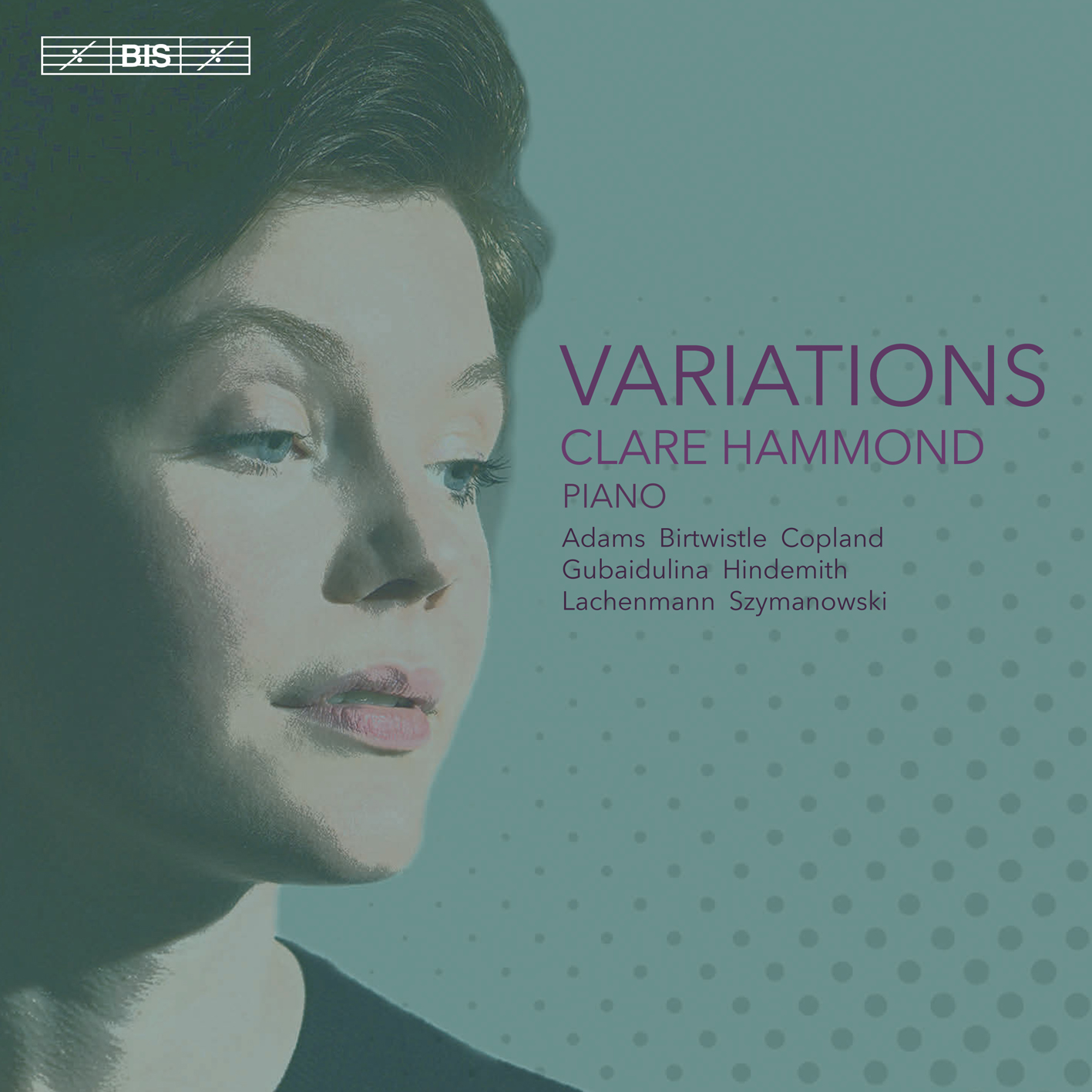 It’s a simple concept – a theme, or melody, initially stated in its original form, is put through a series of transformations, often quite complex and including textural, dynamic and key changes, to take player and listener on a fascinating musical journey. The Theme and Variations remains a popular genre amongst composers and the myriad ways in which composers respond to this simple form has resulted in some of the most inventive, intriguing and daring music in the piano’s repertoire.
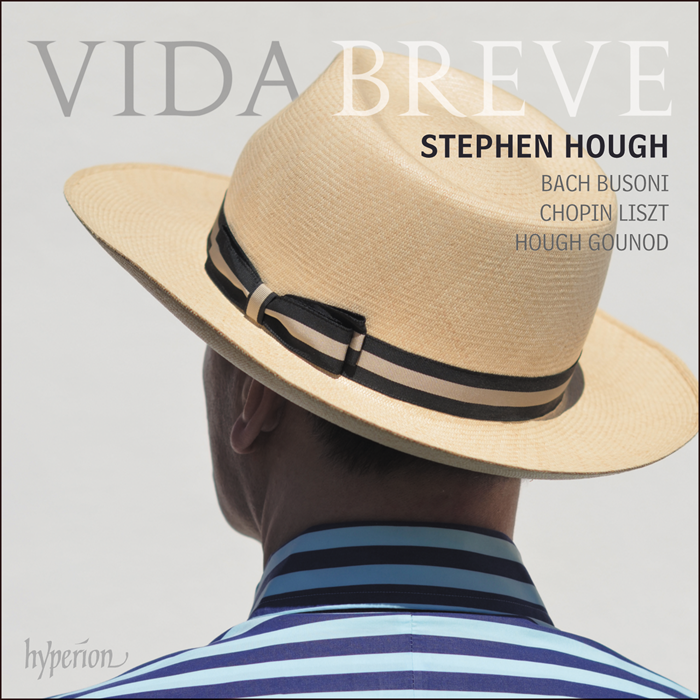 ‘Vida Breve’ (Short Life) – Stephen Hough, piano (Hyperion CDA68260)



 The Cross-Eyed Pianist