British pianist Sarah Beth Briggs has built her reputation on performing and recording the “core canon” of piano repertoire, and she has a particular affinity with the music of Haydn, Mozart and Schubert. Her playing is always elegant and tasteful, intelligent and sensitive, and in this new release she brings all these qualities to repertoire which she clearly adores.
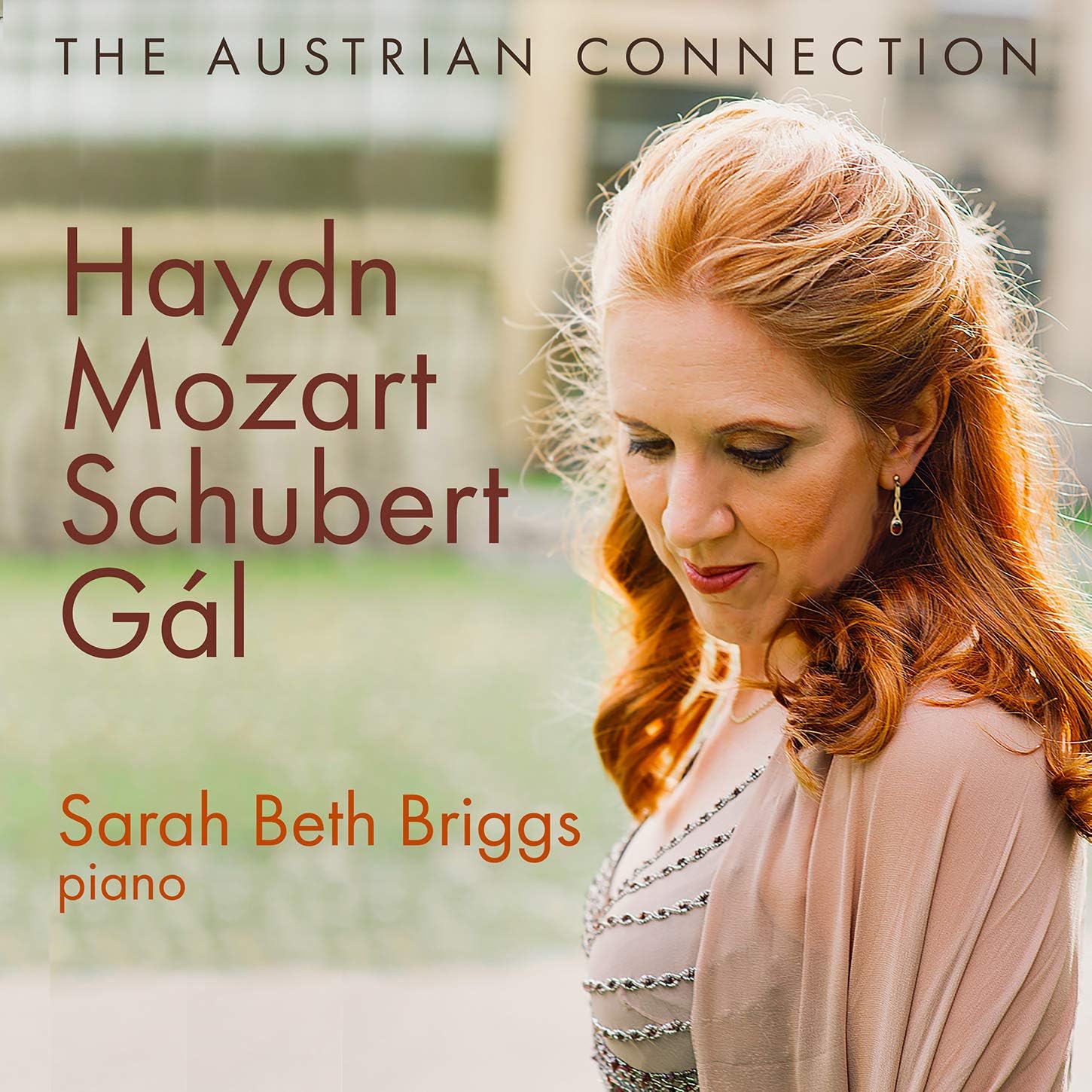
‘The Austrian Connection’ traces the compositional links between four Austrian composers: Hans Gál (1890-1987) was perhaps the last great composer to uphold the tonal Austro-German tradition that began with Haydn and Mozart, and, arguably, reached its apogee in the music of Schubert (and also Brahms). Sarah Beth Briggs is a keen advocate of Hans Gál’s music – she made a world premiere recording of his Piano Concerto in 2016 – and the three preludes included on this disc perfectly complement the three sonatas which precede them.

As the focus of this disc is on Austrian connections, it is perhaps fitting that the opening piece is Haydn’s variations on “Gott erhalte Franz den Kaiser”, Austria’s first national anthem. From a simple hymn theme, a set of four variations follow, and where one might expect grandeur, given the theme’s significance, Sarah instead offers an intimate and charming account which provides the perfect introduction to one of Haydn’s best-known and loved piano sonatas, Hob. XVI/50 in C.

This sonata was written in 1794, during a visit to London, where Haydn discovered and – if this sonata is anything to go by – delighted in the sonorities of the English fortepiano. He fully exploited the instrument’s boldness, resonance and range, and expanded technical capabilities, in a sonata which is rich in inventiveness, characteristic wit and joie de vivre. The quirks and frivolity of the outer movements are contrasted with an Adagio whose beautiful cantabile qualities Sarah fully appreciates in an elegant and spacious reading. The translucent clarity of the piano sound in the upper registers is somewhat reminiscent of a fortepiano (though without the latter’s distinctive “twang”!).

By contrast, Mozart’s Sonata in A minor K310 is restless and urgent, full of striking drama and dissonances, but like the Haydn before it, this sonata has a slow movement of operatic lyricism, interrupted by a turbulent middle section. Sarah is sensitive to the music’s chiaroscuro, responding deftly to Mozart’s mercurial emotional shifts and the underlying intensity of this work.

In the Sonata in A, D664 we find Schubert at his most genial, though that affability is offset by the shadowy poignancy and tender intimacy of the middle movement. However, a sunny mood is soon restored in the finale, a movement of joyful light-heartedness. Sarah achieves a persuasive warmth of tone and sensitive phrasing which highlights the glorious song-like melodies in this sonata. There is chiarscuro and drama aplenty here too, and once again, these emotional voltes faces are handled with an eloquent sensitivity (Sarah is not a pianist who exploits the “psychobabble” surrounding Schubert’s life, preferring instead to focus on the details within the score to allow the music to speak for itself).

Hans Gál’s ‘Three Preludes’, composed in 1944, have classical characteristics interleaved with distinctly modern twists: the pithy quaver figurations and playful cascades, and quicksilver wit in the first and third Preludes are redolent of Haydn, while the middle one, “Lento Tranquillo”, recalls Schubert in its graceful melody and introspective demeanour. Sarah brings virtuosic sparkle to the first, a quiet, reflective poetry to the second, and a beguiling humour and lightness of touch to the third, which disappears into the ether in a delicate flurry of notes.

An enjoyable “recital disc”, which takes the listener on a varied and stimulating Austrian musical journey.

‘The Austrian Connection’ was recorded in January 2020 at The Clothworkers Centenary Concert Hall in Leeds, produced, engineered and edited by Simon Fox-Gál, and released on the Avie label
Meet the Artist interview with Sarah Beth Briggs

71iqtbpqvfl._ss500_John Ireland      Sarnia: An Island Sequence

John Ireland      The Island Spell

Tchaikovsky      The Seasons Opus 37a

Tom Hicks, piano


At first sight, pairing a twentieth-century British composer with a nineteeth-century Russian romantic seems an unusual combination, but in this debut disc by young British pianist Tom Hicks the music of these two composers sits well together, creating an enjoyable recital disc of music inspired by nature and infused with pastoralism.

The disc opens with ‘Sarnia’, whose first two movements were composed in 1940 while John Ireland was staying on Guernsey, shortly before it was occupied by the Germans. There is a nice connection between music and pianist here as Tom Hicks hails from Guernsey; ‘Sarnia’ is the Roman name for the island. This atmospheric, dramatic and expansive work portrays aspects of the island and Hicks’ sensitive attention to detail and understated bravura brings this music fully to life with colour, spacious expression, pungent sonorities, and a tender poignancy when required.

‘The Island Spell’, inspired by Jersey and the earliest of Ireland’s Channel Islands pieces, is evocative and impressionistic, redolent of Debussy’s perfumed harmonies and filigree traceries (Ireland was described as an “English Impressionist”), its delicate textures rendered with grace and clarity.

Tchaikovsky’s ‘The Seasons’ follow, a suite of 12 miniatures which encapsulate the composer’s distinct style in microcosm. These characterful, contrasting works are the perfect canvas for Hick to paint a full palette of colours and expression, capturing their intimacy and wistfulness, with a keen ear for details and textures.

Overall, an enjoyable and engaging debut recording from this impressive young pianist.

Recommended


For American pianist Jonathan Biss, Beethoven has been a near-constant companion for almost his entire life. He has been playing and writing about the 32 Piano Sonatas, has spent nearly ten years recording Beethoven’s sonatas and has embarked on a cycle of concerts performing all the sonatas at London’s Wigmore Hall and in the US (and let us hope this wonderful series will be able to resume….).

the intensity of my current immersion with his music has become one of the most profound experiences of my life.

Jonathan Biss

This handsomely-produced boxset of the complete Piano Sonatas (Orchid Classics) presents the sonatas not in chronological order, as many sets do, but rather with a cross-section of sonatas on each disc, to demonstrate Biss’s conviction that each one stands as a brilliant masterpiece in its own right. This approach – one which he is also taking in his concert cycle – allows the listener to appreciate the individual qualities and distinct structures of each sonata, and the extraordinary development in Beethoven’s piano writing. Thus, the final sonatas, usually presented as a trilogy, in concert and on disc, are placed on separate discs within the context of sonatas from different periods of Beethoven’s compositional life. Biss refutes the notion that Beethoven had three distinct compositional periods as an over-simplification and instead urges the listener to view Beethoven’s compositional style in “a perpetual state of evolution”; even the final sonatas still betray some of his gruffness and a desire to shock, while the slow movements of the early sonatas look forward to later ones in their heart-stopping beauty and eloquence.

As individual works, each is endlessly compelling on its own merits; as a cycle, it moves from transcendence to transcendence, the basic concerns always the same, but the language impossibly varied

Jonathan Biss

As mentioned in my review of his most recent Beethoven sonatas concert at the Wigmore, Biss is a “thinking pianist”, with an acute intellectual curiosity and an ability to articulate the exigencies of learning, maintaining and performing this music, its challenges and its joys, offering remarkable insights, “behind the notes”, as it were, from the point of view of the performer. “Here was vivid expression, vitality and flamboyance; no standing back from the music as if in modest reverence but rather a deep dive into its every nook and cranny to winkle out and reveal details afresh.”

So does Biss achieve a similar spontaneity, vitality and expressivity in the recording? I think so – and the set gets off to an energetic start with the Sonata in C minor, No 5, Op 10/1, its first movement dramatic and commanding, the finale a throbbing, quickfire rondo bookending a slow movement of immense elegance.

Biss also appreciates Beethoven’s humour and wit, and selects pacing, particularly in the up-tempo movements, to highlight this. He often finds the humour in the music which others often gloss over: quirky ritardandos and accelerandos, which may irritate purists, and laugh-out-loud fermatas. 

Purists may also baulk at shifts in pace which are not always marked in the score, but I like the often dizzying, sometimes unruly tempi, as if Beethoven couldn’t get his ideas down fast enough. There’s a strong sense of storytelling here too, with dramatic bursts of narrative presented with a gripping immediacy – the finale of ‘Les Adieux’, for example, overflows with heartfelt joy. Slow movements, meanwhile, become transcendent poetic interludes infused with grace, tenderness and warmth; and these often reveal the true depths of Beethoven’s imagination.

The famous opening movement of the ‘Moonlight’ sonata (too often the subject of rather lugubriously clichéd readings) is hushed and haunting, just teetering on the edge of tragedy, but always eloquent. Biss’s sound is luminous (“moonlit”?!) and liquid, his pace a gently rippling moderato. This is contrasted by a finale of almost unrelenting restlessness, occasionally bordering on a comic hysteria. It’s this kind of playing, combined with airy passagework, dramatic tempi, crisp articulation, and a vivid aural imagination that can harness the breadth of the piano’s sonorities (listen to his pedalling in the finale of the Waldstein and the kaleidoscopic sound effects he achieves), that had me on the edge of my seat for much of Biss’s recent Wigmore concert.

But it’s not all about fleet fingers. Biss gives us thoughtful long-spun melodic lines, well-balanced harmonies, taut, driving rhythms, rumbling tremolandos, dramatic fermatas, carefully-considered voicing, subito dynamic swerves, and colourful orchestration – all devices Beethoven employs to express an amazing range of emotions from joy to despair, wit and uproarious humour, stubbornness and rage, passionate ardour and transcendent serenity. The sheer force of Beethoven’s personality, his capriciousness and inventiveness, is illustrated by Biss with clarity and proportion, beauty and commitment. His Beethoven is direct, lively and spontaneous, ever alert to Beethoven’s shifting moods. And while he undoubtedly respects the composer and his music, Biss does not allow reverence to get in the way of telling an entertaining story (certain other Beethoven pianists would have us believe that because this is “great music”, it must also be Very Serious). Instead, Biss’s approach is delightfully optimistic – one senses his constant curiosity and open-mindedness about this music – and refreshingly liberated from more mainstream interpretative choices. One also has the sense of a pianist with a profound affection for this music which comes from a long association with it, but also an ongoing fascination; for Jonathan Biss, the journey is far from over.

This is, in short, beautiful, thoughtful and incredibly vivid playing, and because of the organisation of the sonatas, each disc feels complete and satisfying in its own right, like a recital. An invigorating addition to the catalogue of Beethoven piano sonatas.

Recommended


Jonathan Biss | Beethoven: The Complete Piano Sonatas is available on the Orchid Classics label.

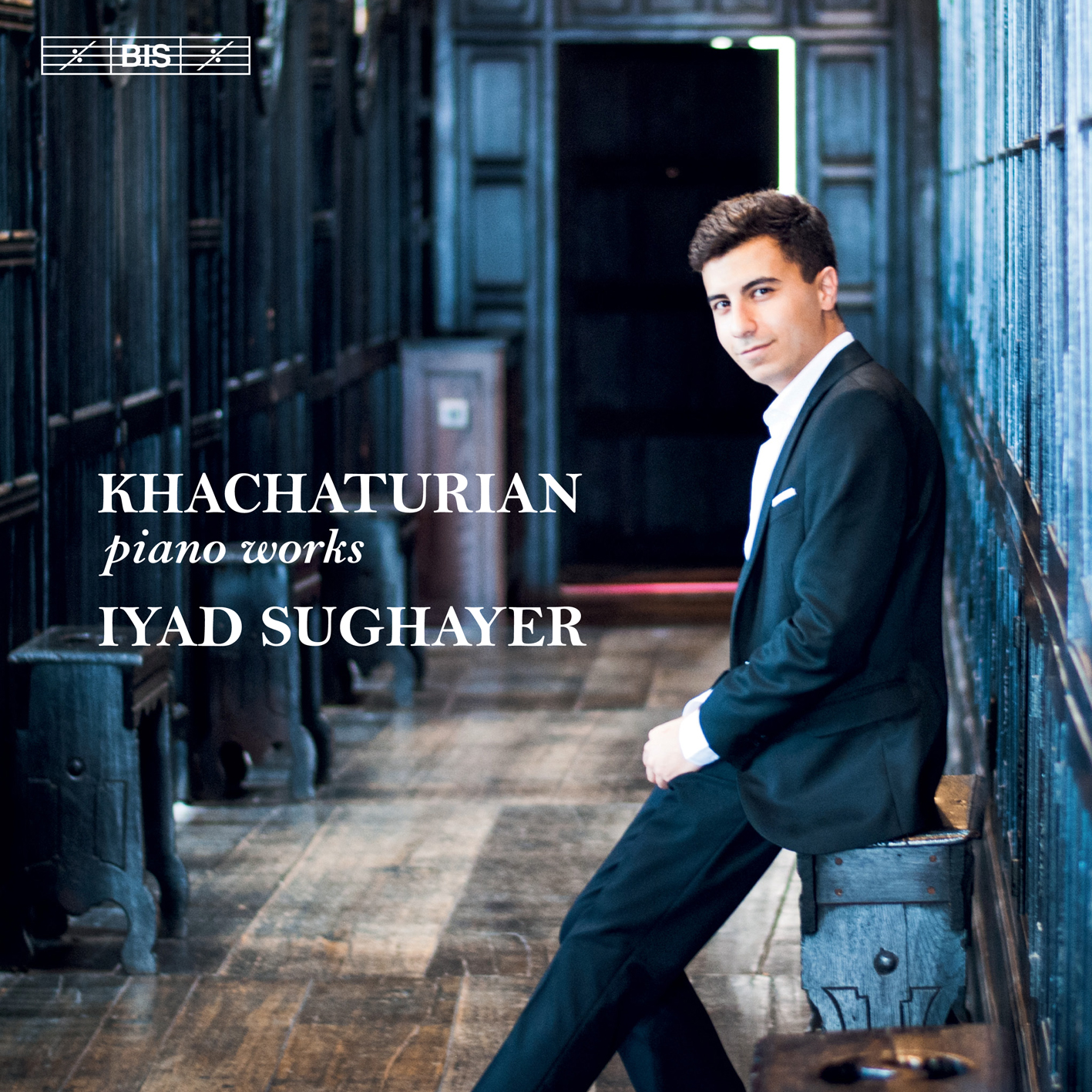
5044275-origpic-df6a41The young Jordanian-Palestinian pianist Iyad Sughayer makes an excellent case for the piano music of Aram Khachaturian in this impressive debut album.



Most people are familiar only with Khachaturian’s ballet music for Gayaneh and Spartacus, which regularly appears in concert programmes, but he also wrote a considerable amount of piano music, though only the sparkling, technically-challenging Toccata (here despatched with finesse and élan by Sughayer) has made it into the recital repertoire. This disc is a very welcome opportunity to explore his rarely-played piano music.

Organised as a recital, the disc opens with the virtuosic and expansive E-flat Piano Sonata of 1961. Two big-boned, tumultuous outer movements are offset by a haunting, perfumed lyrical middle movement. Sughayer expertly handles the varying moods and technical demands of this work with a confident polish and a crisp direct sound.

The rest of the album comprises shorter works, including the charming Children’s Album, also known as The Adventures of Ivan. Originally written for pedagogical purposes, these appealing miniatures are by turns poignant, witty and playful, often infused with folk idioms, and Sughayer neatly catches their contrasting characters, elevating these pieces beyond teaching music with his expressive tone control and sensitivity to this music’s changing moods (attributes which are in fact evident throughout this disc).

The disc closes with the showpiece, the Toccata (1932), which Sughayer manages with an impressive aplomb. Overall, this disc is fine showcase for Iyad Sughayer’s talent and an excellent introduction to the piano music of Aram Khachaturian.

Recommended

Khachaturian – Piano Works is available on the BIS label.