An important new recording, ‘The Spirit of Love’, featuring chamber music and songs by British composer Alisa Dixon (1932-2017), will be released on the Resonus Classics label on 22nd August.

This landmark recording highlights Dixon’s chamber works, many of which have remained largely unknown, until now. With the combined talents of the Villiers Quartet, soprano Lucy Cox and ondes Martenot player Charlie Draper, this recording represents a vital step in rediscovering the depth and breadth of Dixon’s music.

Born in 1932, Ailsa Dixon began composing before reading music at Durham University, and later studied with Paul Patterson, Professor of Composition at the Royal Academy of Music. Her works include a two-act opera, several pieces for string quartet, songs, chamber music and instrumental works including a sonata for piano duet.

In July 2017, five weeks before she died, her anthem for choir, These Things Shall Be, was premiered by the London Oriana Choir at the Cutty Sark in London. This marked the beginning of a revival of interest in her music and has led to a host of new performances of choral, vocal and instrumental works in concerts across Britain

Hailed as a ‘stunning find’, with its ‘lush harmonies’ and ‘strange yet still beautiful dissonances’ (Nottingham Chamber Music Festival, 2024), The Spirit of Love gives the title to this recording – a selection from her most fertile period of composition in the 1980s and 1990s. One of the many works found in Ailsa Dixon’s manuscript archive after she died, these songs for soprano and string quartet were premiered posthumously at St George’s Bristol, where a spellbound reviewer for the British Music Society registered ‘a feeling that something special had just occurred’.

Ailsa Dixon

A collection of three songs for soprano and string quartet, composed between 1987-88, and originally commissioned through Dixon’s lifelong musical friendship with Irene Bracher, The Spirit of Love sets texts by Dixon herself, along with works by A.E. Housman and F.W. Bourdillon. The work was given its posthumous premiere in 2020 at St George’s Bristol by the performers on this recording.

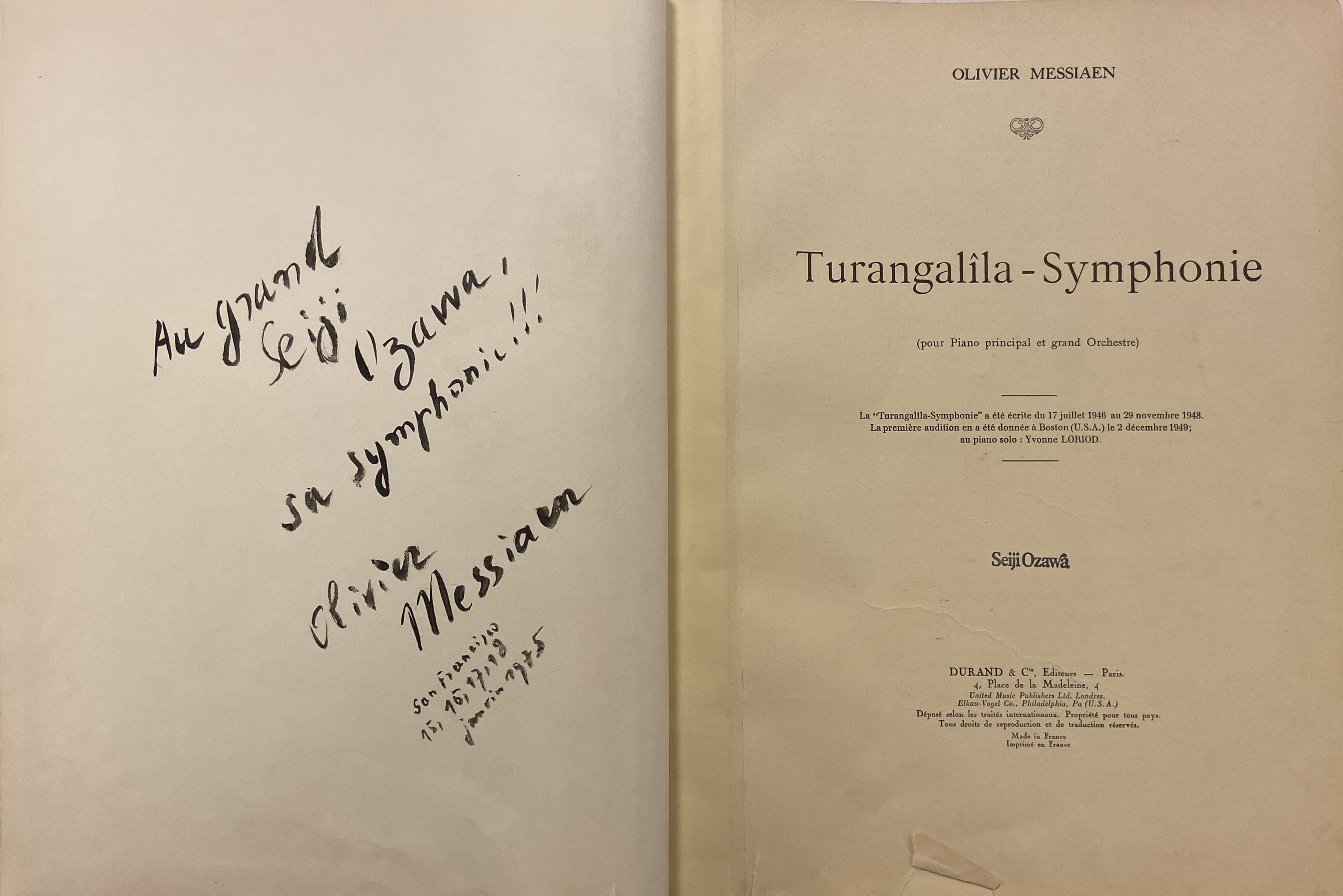
Another distinctive piece is Shining Cold for soprano, ondes Martenot, viola and cello. This work is characterized by its haunting vocalise and uniquely explores the sonorities created by the soprano voice, strings, and the ondes Martenot, an electronic instrument famously associated with Messiaen’s Turangalîla-Symphonie. This work highlights Dixon’s innovative use of instrumentation and vocal expression.

Other significant works on this recording include:

The ‘lost’ Scherzo for string quartet. Written in the 1950s while Dixon was at Durham University, this piece disappeared for over half a century before the manuscript came to light after her death. The recording presents its first performance, 70 years after it was written. Its changes of time signature may show an early interest in Bartok whom Dixon cited in later life as an inspiration for his ‘elasticity of musical motifs’.

Sohrab and Rustum for string quartet. This ambitious, through-composed work from 1987-88 was inspired by Matthew Arnold’s poem of the same name, depicting the tragic encounter between a father and son in battle. The music is a vivid response to the poem’s human drama and atmospheric setting.

Variations on Love Divine for string quartet. Written in 1991-92, this is Dixon’s final string quartet work and an exploration of religious chamber music, perhaps inspired by Haydn’s Seven Last Words. Woven around John Stainer’s Anglican hymn tune, it explores themes from St John’s Gospel, the Incarnation, Nativity, Passion and Ascension, culminating in a vision of heavenly joy. The Villiers Quartet recently gave the work its first complete concert performance.

This is more than just a new album; the release of The Spirit of Love represents a pivotal moment for the rediscovery and appreciation of Alisa Dixon’s diverse and compelling chamber music – music which combines lyrical lines, adventurous harmonies, and a spiritual undercurrent, brought to life with vibrant intensity and finesse by the Villiers Quartet, Lucy Cox and Charles Draper. This recording offers listeners an insightful journey into the rich, previously under-exposed world of a significant British composer.

The project has received support from the Vaughan Williams Foundation, and the release of this recording coincides with the publication of Ailsa Dixon’s scores by Composers Edition, making much of her previously unpublished material available for the first time, thereby enhancing scholarly and public access to her complete works.

Scores of the pieces featured on the recording are available from Composers Edition. The album is released on the Resonus Classics label, on CD and streaming, on 22nd August.

VIVUM MUSIC RELEASES CHORAL SINGLE TO CELEBRATE LINDSAY GRAY AND HIS CHORAL MUSIC LEGACY

‘May the Spirit Sing in Your Heart’ by Thomas Hewitt Jones is a choral single, originally composed for the 70th birthday of Lindsay Gray on 22 July 2023. This release marks the retirement of Lindsay from his role as founder and conductor of Caritas Consort, and celebrates his choral music legacy. The anthem is in the rich key of A-flat major, and sets a new text by Gordon Giles, which celebrates spirituality and the value of music. The piece was commissioned by Lindsay’s daughter Susanna, who sings soprano on the recording, and the music is published by Encore Publications.

Lindsay Gray says, ‘I feel very honoured indeed to have been the recipient of such a fine piece of music written for my 70th birthday by such a highly regarded composer! It has been fabulous to work with Tommy [Hewitt Jones] over the years, and we have greatly enjoyed performing his music in Caritas ever since the choir’s very first ever concert in March 2013, which Tommy so kindly attended. Warmest thanks; this is massively appreciated by me, by Caritas and by the Nepal charity which has also benefited so much!’

Thomas Hewitt Jones says, ‘Lindsay’s wonderful legacy in choral music needs to be celebrated, as does his tireless work raising money for good causes. As well as an esteemed musician. Lindsay has championed countless young musicians over the years (including me, when I started out). I am delighted to call him both a friend and colleague and very pleased we could release this recording to help celebrate the legend that is Lindsay Gray!

MAY THE SPIRIT SING IN YOUR HEART

Music by Thomas Hewitt Jones, words by Canon Gordon Giles

Caritas Consort conducted by Lindsay Gray

Recorded in St German’s Church, Cardiff, by Thomas Hewitt Jones for Vivum Music

Available now on all major streaming platforms


ABOUT LINDSAY GRAY AND CARITAS CONSORT

Lindsay Gray has had a distinguished career as singer, conductor, musical director and educator. He served as Director of the Royal School of Church Music (RSCM) from his appointment in 2007 through to 2012, having previously been a school headmaster for sixteen years, including fourteen at The Cathedral School, Llandaff. After his tenure at the RSCM, he continued to promote choral excellence through initiatives such as the Caritas Consort, embodying his lifelong commitment as an educator, enabler and supporter of sacred music and charities.

In 2013, Lindsay founded the Caritas Consort, a chamber choir that performs concerts to raise funds for charities and other good causes, directing it with a focus on high-quality sacred and classical music. Under his leadership, the ensemble has supported a wide range of causes, with over £80,000 raised from performances and donated to over 70 charitable organisations working in areas such as health, community support and education; in the case of this recording, £500 was raised for a project which supports disadvantaged families in Nepal.

In September 2025 Lindsay hands over the reins of Caritas Consort to focus on his other charitable work, in particular as Director of the Cardiff and District Branch of Samaritans, a leadership rôle in which he oversees 140 volunteers; this release helps celebrate his musical legacy.

www.caritasconsort.org

Guest post by Michael Johnson

Morton Feldman’s delicate, will o’ the wisp compositions demand a spiritual investment, a belief in music’s potential to enter the human consciousness almost unnoticed. The simplicity can be deceptive. One is tempted to say, as a young English mother whispered to me recently at a Feldman recital, “My ten-year-old could play this.”

Marc-André Hamelin and a large fan club disagree. Hamelin once told me that the first time be heard Feldman’s For Bunita Marcus he felt he was transported to an entirely new dimension. He was stunned, and went on to perform, and finally to record (Hyperion  B06Y3L26GC)  the entire one hour and twelve minutes of Bunita Marcus. Now I was stunned and transported.

Here is the Feldman sheet music played by Hamelin.

Ivan Ilic, the Serbian-American pianist based in France, is also leading a renaissance of the Feldman oeuvre – dormant for decades. He says he might be tempted to retort to the mystified mother, “Madame, either you get it or you don’t.”

Ilic and Hamelin and I got it, profoundly, as a result of an effort to get into Feldman’s head and play him the way his work was intended. Ilic says he is determined to show the way to the rapture  he felt, which he describes as wanting “the spell to continue … interruption seems unthinkable”.

His Bunita Marcus CD, ‘Ivan Ilic Plays Morton Feldman’ (Paraty/Harmonia Mundi), delivers a rarefied performance that gets to the very essence of music. “Nothing distracts from the backbone of single notes or quiet chords,” he wrote.  In one of the tracks, Feldman creates a tremendous feeling of space, with a hollow chord in the left hand and only two notes in the right hand. “Few composers can do so much with so little,” says Ilic.

To quote poet Robert Frost, the minimalist playing enters your mind on “little cat feet”. Feldman and his mentor John Cage believed in the wisdom of India that says quietude in music can trigger divine intervention in the mind.

Feldman also saw a morbid side. He has written,“In my art I feel myself dying very, very SLOWLY.’ The last third of For Bunita Marcus’ is a wonderful illustration of that idea.

Ilic has attempted to describe in his liner notes the Feldman ceffect. “Ever patient, using the same notes, (Feldeman ) wears me down. Then slowly I start to forget my feelings. I hear the music again, but now it has a glow to it. My ears and mind have adjusted, and  my ego fades into the background.”

Who was this enigmatic Bunita Marcus? They met at the University of Buffalo, in New York State, in 1975. She was a doctoral student in composition and her professor Feldman was clearly star-struck. No photos survive.  “I am very enthusiastic about this girl,” he once said. “I think she is something to be enthusiastic about. I am never going to have another student like her as long as I live. Never.” Although he  called her compositions “gorgeous and elegant” they left no trace in the repertoire. Nevertheless, his hour-long tribute guaranteed a certain notoriety.

Ilic admits that his first brush with Feldman left him feeling “edgy”. He says he felt that “the music isn’t going anywhere”.  He warns that others might feel the same initial barrier. But his experience consisted of “puzzlement-tension-release-trance”. 

He discovered that his sense of time could disappear. “The piece can last one hours, or four hours; I know I’ll follow it to the end.”

Feldman the writer published his music philosophy in a collection of his works, Give My Regards to Eighth Street. He offers this thought – that the “chronological aspect of music’s development is perhaps over, and that a new mainstream of diversity, invention and imagination is indeed awakening. For this we must thank John Cage.”

In the years following his voluminous oeuvre, he has proven to be at least partially right.


MICHAEL JOHNSON is a music critic and writer with a particular interest in piano. He has worked as a reporter and editor in New York, Moscow, Paris and London over his journalism career. He covered European technology for Business Week for five years, and served nine years as chief editor of International Management magazine and was chief editor of the French technology weekly 01 Informatique. He also spent four years as Moscow correspondent of The Associated Press. He is a regular contributor to International Piano magazine, and is the author of five books. Michael Johnson is based in Bordeaux, France. Besides English and French he is also fluent in Russian. He is a regular reviewer for this site’s sister site ArtMuseLondon.com.

Do Not Mistake Activity for Progress: A Lesson for Musicians

The phrase “Do not mistake activity for progress” serves as a powerful reminder that being busy is not the same as being effective. Nowhere is this more relevant than in the life of a musician, where countless hours are spent practicing, refining technique, and mastering pieces. A romantic misconception persists, amongst musicians themselves as well as the general public, that musicians must spend hours and hours in the practice room to achieve perfection.

This article explores how the distinction between mere activity and genuine progress is particularly important for musicians, and how understanding this difference by employing focussed, thoughtful practice – quality rather than quantity – can lead to more productive and meaningful practice and results.

For many musicians, the act of practicing can become habitual. Sitting down you’re your instrument, playing through scales, or repeating pieces from memory may feel productive because it takes time and effort. But if these routines are executed without thoughtful engagement, they may offer little return in terms of technical and artistic development. In other words, you can be very active without actually improving. This is where the warning not to conflate activity with progress becomes critical. Just because a musician is practicing does not mean they are practicing well.

Effective practice requires focus, intention, and feedback. It’s not just about the quantity of time spent, but the quality of that time. For example, a violinist who practices a difficult passage for thirty minutes without addressing the underlying technical issues – such as bowing technique, intonation, or rhythm – is likely to repeat and reinforce mistakes. This is, in effect, simply “going through the motions” rather than engaging in deep, thoughtful, considered practicing. In contrast, a musician who spends just ten minutes isolating and correcting these problems may make far more progress. Thus, mindful, goal-oriented practice can achieve more in less time than mindless repetition.

The concept of deliberate practice, popularised by psychologist Anders Ericsson, is particularly useful in this context. Deliberate practice involves working just beyond one’s current abilities, identifying weaknesses, setting specific goals, and seeking constructive feedback. For musicians, this might mean slowing down a difficult section, using a metronome, recording oneself for critique, or working with a teacher, mentor or even a trusted colleague or friend to identify areas for improvement. Each of these activities is targeted and purposeful, aimed at achieving real growth rather than simply filling practice hours.

In addition, mistaking activity for progress can lead to frustration, burnout and even injury. (‘over-practicing’ is a real issue!). Musicians may feel that despite spending many hours practicing, they are not advancing, which can be discouraging and demotivating. Understanding that not all practice is equal allows you to assess the effectiveness of your practice routines and make the necessary adjustments. It encourages reflection, a crucial aspect of productive practicing: What am I trying to achieve? Is this exercise helping me reach that goal? What could I change to improve my results?

By focusing on the quality rather than the quantity of practice, musicians can ensure that their activity translates into meaningful progress. Ultimately, it is not how much one practices, but how one practices, that leads to mastery.