

Who or what inspired you to take up composing and make it your career?
I started improvising and composing as soon as I began playing. My teachers, friends and family were very supportive, nurturing and inspiring throughout, and I spent all my breaks and lunchtimes at school singing, playing, improvising and composing nonsense songs with friends. I would write songs and play and sing in school concerts, and I remember helping to arrange music for the school orchestra at middle school! I knew from quite early on that writing and making music was what I had to do.
Who or what were the most important influences on your composing?
I believe my music comes from a melting pot of everything musical I’ve encountered – whether it’s music I’ve played, loved or hated, just experiencing it has an effect on my musical voice. However, some influences will have more sway than others. Javanese gamelan music has played a large part in my life for a number of years, and its influences can be heard throughout my music. Musical theatre is another huge influence on my music, alongside big band music, Beethoven, Debussy and Karl Jenkins. I must also mention that I find a lot of ‘current’ composers hugely inspiring – including many I’ve met through social media such as Twitter.
What have been the greatest challenges of your career so far?
I think the greatest challenge to many who work in the arts is the issue of balance in their lives. For me, it’s balancing composition with family life – especially when I’m looking after a toddler and a new idea bounces into my head!
Which compositions are you most proud of?
That’s a hard one! I’m proud of Surakartan Haze as it was the first full orchestral piece of mine that was workshopped and performed. I’m also proud of Bells in the Rain as it’s a piece I’m very happy with, and that I wrote in the first couple of months of my daughter’s life.
Do you have a favourite concert venue to perform in?
As with most composers, I’m quite happy with any venue in which my music is to be presented! However, I’m becoming more interested in less traditional venues, which are consequently more accessible to those who are not normally accustomed to classical music. We need to do something to help engage others in classical music, and the traditional concert hall seems to be a large obstacle – so why not remove it from the equation? Venues such as Kettle’s Yard in Cambridge and St Ethelburgas church in Liverpool Street, London are examples of venues I’ve visited or performed in recently that I feel make good, accessible venues.
Favourite pieces to perform? Listen to?
I wouldn’t say I have specific favourites to perform, but two that would make the list (choir wise) are Fauré’s Requiem (as an alto) and the Chichester Psalms. I love playing in orchestras and big bands, but I find there’s something so personal and powerful about the voice. Listening wise, there are too many favourites to pick. Epic, powerful pieces tend to be my music of choice, with In The Hall of the Mountain King and Wieniawski’s Szcherzo-Tarantelle being high on the list.
Who are your favourite musicians?
Again, I don’t really have favourites. The qualities I admire and seek out in musicians are that they are skilled at their craft, but that they communicate through their music, and add that all important extra dimension to their performance.
What is your most memorable concert experience?
There are a few, but one in particular is Steve Reich’s prom celebrating his 75th birthday at the 2011 BBC Proms series. I was particularly mesmerised by Ensemble Modern’s interpretation of his Music for 18 Musicians.
What do you consider to be the most important ideas and concepts to impart to aspiring musicians?
I think the most important concept is to remember that music is an incredibly powerful force, and that in the end it’s just that – music. It’s an organisation of sounds in time, and there are no rights or wrongs. Composers and performers of years gone by lived in musical societies where certain styles of music were the order of the day, or certain performance practices had to be conformed by to be accepted. That’s no longer the case, and we live in such a free musical society that nothing is wrong. However, as a result, there is a saturation of music everywhere, which can mean as composers we have a battle to be heard. My advice would be to be determined and keep working at it – and to value all your colleagues, as you never know who may help you find your next opportunity.
What are you working on at the moment?
My composition practice tends to involve working on several pieces at the same time. Right now I’m working on a Requiem (my labour of love, which gets some attention in between other projects!), a string quartet, and a collection of works for piano.
What is your present state of mind?
My state of mind at the moment tends to flick between happy and at peace, and slight frustration. I think I’m finally achieving balance and have a nice range of projects ongoing –the frustration comes in when the rest of the world takes over and I have the next section of a work in my head but no time to get it down on paper (or on computer!).
A unique combination of influences and interests help make composer Jenni Pinnock a distinctive voice in contemporary composition world. A versatile performer on piano, oboe and saxophone, a range of ensembles and opportunities have given Jenni an incredibly varied musical diet of genres, instrumentation and styles. Alongside more typical ensembles are the Javanese gamelan and church bell ringing.
Recent performances include her work Ori for small ensemble and electronics, her bassoon and ‘cello duet Double Helix and her art song Bells in the Rain. Current projects include a string quartet, a Requiem, and a work for brass quintet and electronics. In recent years she has had works performed at the International Youth Arts Festival, the London Festival of Contemporary Church Music (as part of the Orgelbüchlein project), and at Colchester New Music workshops and events.
Originally from Hertfordshire, Jenni graduated with first class honours from her BMus (hons) at Kingston University and then embarked on an intensive Masters in composition at Trinity Laban Conservatoire of Music and Dance studying with Stephen Montague and Greg Rose. A member of the ISM, alongside her compositional endeavours she teaches instrumental lessons and arranges music, both of which act as constant sources of inspiration. She is a member of Colchester New Music and Liquorice composers collectives.


 Visiting Craxton Studios for a Sunday afternoon recital by acclaimed British pianist Sarah Beth Briggs was like stepping back into another era: the antique Bluthner piano, the Arts & Crafts decor, the audience and even the generous high tea after the concert all created an atmosphere of “music for friends amongst friends”, and a reminder of how music was enjoyed over 100 years ago. The concert was in memory of pianist and teacher Denis Matthews, who died in 1988. He was good friends with the Craxton family and visited the house on Kidderpore Avenue many times.
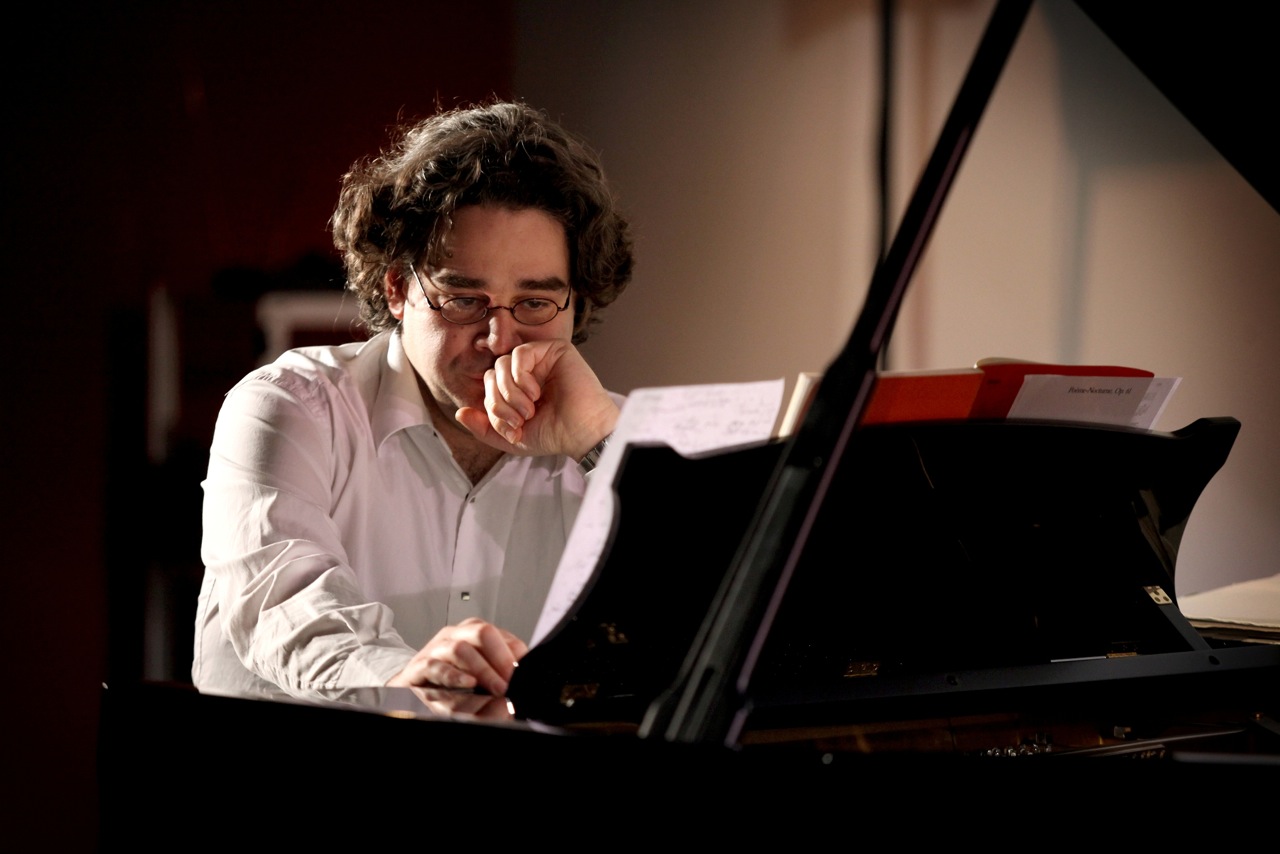




 The Cross-Eyed Pianist